Showing posts with label H1N1. Show all posts

mBio: Taubenberger et al. On the 1918 Spanish Flu

image

Credit CDC PHIL


# 6549


mBio, the American Society for Microbiology’s online, open access journal, has published a long and fascinating review this morning on what we’ve learned over the past 15 years about the 1918 H1N1 `Spanish Flu’ pandemic virus, written by some of the biggest experts in the field.


At this point, I’ll just step aside and invite you to read:


Reconstruction of the 1918 Influenza Virus: Unexpected Rewards from the Past


Jeffery K. Taubenberger, David Baltimore, Peter C. Doherty, Howard Markel, David M. Morens, Robert G. Webster and Ian A. Wilson


doi:10.1128/mBio.00201-12


Highly recommended.

»» Read More

PNAS: Virulence & Transmissibility Of H1N2 Influenza Virus In Ferrets


# 6547


Timing is, as they say, everything.


And coming on the heels the announcement 10 days ago of three human infections with a swine-origin H1N2 influenza (see Minnesota Reports Swine H1N2v Flu), a study that appears today in PNAS is certainly well timed.


The study, conducted at Chungbuk National University South Korea examined viruses circulating in Korean swine (H1N2 & H3N2), and found - for the most part - they were not particularly pathogenic in ferrets.


The exception was a triple reassortant H1N2 virus dubbed Sw/1204, that had picked up two notable mutations, and it not only transmitted efficiently, it also caused severe (even fatal) disease in the test animals.


The study, is called:


Virulence and transmissibility of H1N2 influenza virus in ferrets imply the continuing threat of triple-reassortant swine viruses

Philippe Noriel Q. Pascua, Min-Suk Song, Jun Han Lee, Yun Hee Baek, Hyeok-il Kwon, Su-Jin Park, Eun Hye Choi, Gyo-Jin Lim, Ok-Jun Lee, Si-Wook Kim, Chul-Joong Kim, Moon Hee Sung, Myung Hee Kim, Sun-Woo Yoon, Elena A. Govorkova, Richard J. Webby, Robert G. Webster, and Young-Ki Choi


Ed Yong, writing for Nature has the details  on this paper:


Need for flu surveillance reiterated

Study of Korean pigs finds virus with pandemic potential.

Ed Yong 10 September 2012


One to the two mutations discussed in this paper is hemagglutinin (HA) (Asp-225-Gly) – also known as D225G – which is something we’ve looked at a number of times in the past.


This mutation involves a single amino acid change in the HA gene at position 225 (H3 numbering) from aspartic acid (D) or Asp to glycine (G), and was first linked to more severe pandemic flu by Norwegian Scientists in 2009.


The evidence for the D222G/N  amino acid substitution driving increased virulence, and deep lung infection, has been mixed, however. A few earlier blogs include:


Eurosurveillance: Debating The D222G/N Mutation In H1N1
Study: Receptor Binding Changes With H1N1 D222G Mutation
WER Review: D222G Mutation In H1N1


The second mutation, called NA-315 (serine to asparagine the in neuraminidase) isn’t as well studied, but is believed to assist the virus in breaking out of infected cells after replicating.


As Ed Yong mentions in his article - viruses often have multiple amino acid changes – and we are really just beginning to understand the ramifications of these different genetic combinations. 


Whether this particular virus ever ends up posing a public health threat is impossible to say, but it does illustrate these swine reassortant viruses aren’t always mild in mammals.


New strains of influenza come about from reassortment; the swapping of genetic material between two different flu strains in a common host. We tend to focus on swine, simply because they are highly susceptible to a variety of influenza viruses, and have a history of producing reassorted viruses.  


Reassortant pig


The pandemic virus that emerged in the spring of 2009 was the end product of several influenza strains that had kicked around the world’s swine population for many years, trading bits of genetic material back and forth, until they produced a version capable of jumping to humans.


But any host (human, swine, avian, or other mammal) could produce a reassorted virus.


For more on the flu risks from swine reassortments, I continue to heartily recommend Helen Branswell’s terrific piece in SciAm  from late 2010 called Flu Factories.

Flu Factories

The next pandemic virus may be circulating on U.S. pig farms, but health officials are struggling to see past the front gate

By Helen Branswell  | December 27, 2010 |


And for some of my earlier looks at swine influenza, you may wish to revisit:


H3N2v: When Pigs Flu

You Say You Want An Evolution?

The (Swine) Influenza Reassortment Puzzle

»» Read More

Study: Kids, Underlying Conditions, And The 2009 Pandemic Flu

image

Credit CDC FluView


# 6522


The chart above illustrates the sharp rise in pediatric deaths from flu-related complications during the 2009-2010 H1N1 pandemic seasons in the United States.  As grim as this charts is, it probably doesn’t fully represent the burden the 2009 pandemic placed on the pediatric community.


In another chart, again from the CDC, we get an estimate of deaths related to the 2009 pandemic, broken down by age groups through April of 2010.


image


While just over 300 pediatric deaths were recorded during this time period, the CDC estimates that 4 times (n=1280) that many children likely died from flu-related illness in the United States.


Globally, the number was undoubtedly many times higher than that (see Lancet: Estimating Global 2009 Pandemic Mortality).


All of which serves as prelude to a new study that appears today in the journal  Pediatrics, that looks at 336 documented pH1N1-associated deaths, and finds a high number of kids with underlying neurologic conditions.


Two-thirds of all deaths in children under the age of 17 occurred in kids with at least 1 underlying medical condition (n=227), and just under half of all cases (n=146) involved neurological disorders, such as cerebral palsy, epilepsy, or intellectual disability.


Neurologic Disorders Among Pediatric Deaths Associated With the 2009 Pandemic Influenza

Lenee Blanton, MPHa,Georgina Peacock, MD, MPH, FAAPb, Chad Cox, MD, MPHa, Michael Jhung, MD, MPHa, Lyn Finelli, DrPHa, and Cynthia Moore, MD, PhDb

ABSTRACT (Excerpts)

RESULTS: Of 336 pH1N1-associated pediatric deaths with information on underlying conditions, 227 (68%) children had at least 1 underlying condition that conferred an increased risk of complications of influenza. Neurologic disorders were most frequently reported (146 of 227 [64%]), and, of those disorders, neurodevelopmental disorders such as cerebral palsy and intellectual disability were most common.

CONCLUSIONS: Neurologic disorders were reported in nearly two-thirds of pH1N1-associated pediatric deaths with an underlying medical condition. Because of the potential for severe outcomes, children with underlying neurologic disorders should receive influenza vaccine and be treated early and aggressively if they develop influenza-like illness.


According to a statement released last night by the CDC:


Of the children with neurologic disorders for whom information on vaccination status was available, only 21 (23 percent) had received the seasonal influenza vaccine and 2 (3 percent) were fully vaccinated for 2009 H1N1.


With September just around the corner, the annual push for flu vaccinations is upon us, and today’s study will hopefully help inspire parents to get all kids – regardless of underlying conditions - vaccinated against influenza.


While the effectiveness of flu vaccines vary from year-to-year, and indeed, from one person to the next, they remain the single most important preventative step you can take to avoid getting the flu each year.


Despite the hyperbolic anti-vaccine rhetoric often found on the Internet, the truth is, serious adverse reactions to the vaccine are exceedingly rare (see the CDC’s  Influenza Vaccine Safety).


With two new strains of seasonal flu expected to be in circulation this winter (Yamagata B, and the Victoria H3N2) ones that will be covered by this year’s vaccine – getting the flu shot this year is doubly important.


CDC recommends that just about everyone aged 6 months and older get an annual influenza vaccination, and stresses their importance for those who are at greater risk of serious complications.


For more on vaccine safety and effectiveness, the CDC maintains extensive web pages, and resources, on seasonal flu vaccines, including:


What You Should Know for the 2012-2013 Influenza Season


Preventing Seasonal Flu With Vaccination


Children, the Flu, and the Flu Vaccine

»» Read More

EID Journal: Flu In Healthy-Looking Pigs


image

Credit Wikipedia


# 6497


Over the past month we’ve been watching a small but growing number of human infections with a novel H3N2v influenza virus - most of which are associated with direct contact with pigs being displayed at county and state fairs.


Efficient and sustained human-to-human transmission has not been established by the CDC, and so their recommendations at this time revolve around preventing disease transmission from pigs to humans.


Earlier this week the CDC issued advice to Fair organizers, that included:


Animal Health Recommendations:
  • Monitor animals daily for signs of illness, including discharge from nose and/or eyes, lethargy (sleepiness), no appetite, fever, or sometimes coughing. Ensure that a veterinarian, such as the fair vet or state vet, is notified of any ill animals.
  • Ill pigs, animals suspected or known to be infected with influenza viruses, and animals from herds with a recent history of respiratory disease should not be exhibited. They should be immediately isolated or sent home.


Yesterday, a dispatch appearing in the CDC’s EID Journal illustrated just how difficult identifying and separating influenza-infected pigs from the rest can be. 


It’s called:


Volume 18, Number 9—September 2012
Dispatch

Influenza A(H1N1)pdm09 Virus among Healthy Show Pigs, United States

Article Contents

Gregory C. Gray , Jeffrey B. Bender, Carolyn B. Bridges, Russell F. Daly, Whitney S. Krueger, Michael J. Male, Gary L. Heil, John A. Friary, Robin B. Derby, and Nancy J. Cox

Abstract

Within 5 months after the earliest detection of human influenza A(H1N1)pdm09 virus, we found molecular and culture evidence of the virus in healthy US show pigs. The mixing of humans and pigs at swine shows possibly could further the geographic and cross-species spread of influenza A viruses.


Asymptomatic carriage of viruses is not uncommon in humans, of course.  A few examples we’ve looked at in the past include:


  • During the 2009 pandemic I wrote They Walk Among Us, that looked at the difficulties of identifying those who might be infectious based on symptoms such as fever.
  • Earlier this year, in The Very Common Cold, we looked at a study of rhinovirus among college students tested over an 8 week period – that found asymptomatic infections led symptomatic infections by a factor of 4 to 1.
  • And last year, in EID Journal: Pre-Symptomatic Influenza Transmission, we saw evidence of presymptomatic spread of the H1N1 virus in three clusters in Japan, which also suggests that asymptomatic carriers ought to be able to spread the virus as well.


The idea that pigs might carry influenza viruses asymptomatically, therefore, is hardly surprising. But the amount of available scientific research has been limited.


Yesterday’s study found that nearly 1 in 5 healthy-looking pigs they tested were actually infected with a flu virus.


Last night Lisa Schnirring and Robert Roos of CIDRAP NEWS  wrote extensively on this study, and so at this point, I’ll simply invite you to read their excellent report.


Study finds flu in healthy-looking pigs at state fairs

Lisa Schnirring and Robert Roos * Staff Writers

Aug 15, 2012 (CIDRAP News) – Testing of a sampling of pigs shown at the Minnesota State Fair during the 2009 H1N1 influenza pandemic revealed that 19% of them were infected with flu viruses, even though they looked healthy, according to a new study.


The findings highlight the challenges of preventing pigs and humans from passing flu viruses back and forth at fairs and swine shows, especially this summer when several states are tracking human illnesses from a novel H3N2 virus that has been detected in both pigs and people.

(Continue . . . )


During the 2009 H1N1 pandemic Japan, India, and China were among the nations that attempted to identify, interdict, and isolate those who might be carrying the H1N1 virus when they entered their country.


While their efforts may have slowed the introduction of the virus, they certainly didn’t stop it.  Earlier blogs on these attempts include:


Japan: Quarantine At Ports Ineffective Against Pandemic Flu
Experts: Extreme Measures Won’t Stop The Flu


Their failure was likely due to the large number of presymptomatic, and asymptomatic carriers of the virus that arrived without showing signs of illness.


And the same is likely true with pigs on display at county fairs this fall.


Removing symptomatic pigs certainly makes sense - and will certainly reduce the risks of spreading the virus - but it is unlikely to totally eliminate it.


Which means that additional human cases of H3N2v are likely, even with the enhanced biosecurity measures in place at county fairs.


Before anyone gets freaked out over the risks of going to the county fair, so far this summer there have been only about 200 confirmed cases of this H3N2v flu, involving 5 brief hospitalizations and no deaths. 


During roughly the same time period, there have been nearly 700 West Nile Infections, involving hundreds of hospitalizations, and 26 deaths.


So if you are looking to lower your risks of illness when you go to the county fair this fall, it only makes sense to carry and use a hand sanitizer, and avoid eating or drinking around animal displays. 


But to avoid serious illness, the better advice is to wear an insect repellant whenever you go outside, as your risks of contracting viral illness are greater right now from infected mosquitoes, than they are from sick pigs.


image

»» Read More

Lancet: Estimating Global 2009 Pandemic Mortality


# 6505


Sounding a bit like a broken record, during the first 12 months of the 2009 pandemic I wrote repeatedly on our inability to accurate count – or even estimate – the number of H1N1 flu deaths in the United States and around the globe.


Just a few of those posts include:


Dead Reckoning
The Tip Of The Iceberg
When No Number Is Right
Apples, Oranges, And Influenza Death Tolls


The CFR, or case fatality ratio is generally seen as the most important statistic in any pandemic, and yet it is often the hardest to quantify. This number is the percentage of people who, once infected, die (either directly or indirectly) as a result of that infection.


While that may seem a simple enough task , the truth is that even during a `normal’ flu season the CDC can only estimate the number of deaths in the United States related to influenza.


The problem is, influenza can provoke or exacerbate many other medical problems. Influenza can obviously lead to pneumonia and death, but it has also been linked to heart attacks, strokes (CVAs), and other potentially fatal health crises.


Most of the time, the attending doctor signs the death certificate and puts down the most immediate or obvious cause of death.  If influenza was a factor, it rarely is noticed or noted.


The official numbers we get from the CDC, the World Health Organization, and from individual countries are almost always referred to as `the tip of the iceberg’, or as in the graphic below, the tip of the pyramid.


surveillance


And this is the best we can do in developed countries, where the majority of people have at least some access to medical care and where governments make an attempt to maintain public health records and death registries.


For much of the rest of the world, these are luxuries that are too often unavailable.


As an example, in November of 2009, in Zhong Nanshan On China’s Death Toll, one of the real heroes of the 2003 SARS epidemic, openly questioned the low number of deaths being reported out of China.


The truth is, in many countries, no one was counting the dead. 


In South Africa, where nearly 1,000 AIDS/HIV deaths occur each day, no one was looking to see if flu was a factor.  No one had the time, and it simply wasn’t in the budget.  


The `official’ death toll, as reported by the World Health Organization was roughly 18,000 deaths globally,  but the WHO offered this disclaimer:


The reported number of fatal cases is an under representation of the actual numbers as many deaths are never tested or recognized as influenza related.World Health Organization.


Unfortunately, the mainstream media often reported the low official number of deaths without adequately explaining the acknowledged gaps in the data, leading many to believe that the 2009 pandemic was a damp squib.


The CDC stopped counting H1N1 influenza deaths in the summer of 2009, realizing that their official tally was more misleading that helpful.


In November of that year, they released their first estimate of the number of U.S. pandemic flu infections, hospitalizations, and deaths (see  CDC Releases Revised Hospitalization & Death Estimates), where they estimated that between about 2,500 and 6,000 2009 H1N1-related deaths occurred between April and October 17, 2009.


Two months later (see CDC Updates Estimates Of Infections, Hospitalizations, and Deaths From H1N1) the the CDC updated their estimates to carry through to the 12th of December. Their mid-range estimates were of 55 million infections and 11,160 deaths in the US from H1N1 since April of 2009.


Today, a study appears in The Lancet that attempts to estimate the number of global H1N1 deaths during the first year of the pandemic, and it comes up with a number than runs between 15 and 30 times higher than reported to the WHO.

Estimated global mortality associated with the first 12 months of 2009 pandemic influenza A H1N1 virus circulation: a modelling study

Dr Fatimah S Dawood MD , A Danielle Iuliano PhD, Carrie Reed DSc , Martin I Meltzer PhD , David K Shay MD, Po-Yung Cheng PhD, Don Bandaranayake MBBS , Robert F Breiman MD , W Abdullah Brooks MD , Philippe Buchy MD , Daniel R Feikin MD, Karen B Fowler DrPH , Aubree Gordon PhD , Nguyen Tran Hien MD , Peter Horby MBBSl, Q Sue Huang PhD , Mark A Katz MD , Anand Krishnan MBBS , Renu Lal PhD , Joel M Montgomery PhD , Kåre Mølbak MDo, Richard Pebody MBBS, Anne M Presanis PhD , Hugo Razuri MD , Anneke Steens MSc , Yeny O Tinoco DVM , Jacco Wallinga PhD , Hongjie Yu MDr, Sirenda Vong MD , Joseph Bresee MD , Dr Marc-Alain Widdowson VetMB

Findings

We estimate that globally there were 201 200 respiratory deaths (range 105 700—395 600) with an additional 83 300 cardiovascular deaths (46 000—179 900) associated with 2009 pandemic influenza A H1N1. 80% of the respiratory and cardiovascular deaths were in people younger than 65 years and 59% occurred in southeast Asia and Africa.


While most of this report is behind a pay wall, the CDC - which co-authored the study -  has posted a summary on their website.


CDC Releases First Global Estimates of 2009 H1N1 Pandemic Mortality

Photo: transparent globe representing the scope of the global estimates used in the CDC study of 2009 H1N1 pandemic mortality.

June 25, 2012 -- A study published today in The Lancet Infectious Diseases Online FirstExternal Web Site Icon provides the first global estimates of how many people died as a result of the 2009 H1N1 influenza pandemic. The study, co-authored by 9 members of the CDC Influenza Division, used an improved modeling approach which resulted in an estimated range of deaths from between 151,700 and 575,400 people who perished worldwide from 2009 H1N1 virus infection during the first year the virus circulated. A disproportionate number of deaths occurred in Southeast Asia and Africa, where access to prevention and treatment resources are more likely to be limited. Study authors hope that this work can be used not only to improve how influenza deaths are estimated, but also to improve the public health response during future pandemics in parts of the world that suffer more influenza-related deaths.


These global estimates are more than 15 times higher than the number of laboratory-confirmed deaths reported to the World Health Organization (WHO). WHO has acknowledged for some time that official, lab-confirmed reports are an underestimate of actual number of influenza deaths. Diagnostic specimens are not always collected from people who die with influenza; for others, influenza virus may not be detectable by the time of death. Because of these challenges, modeling is used to estimate the actual burden of disease.

<SNIP>

2009 H1N1 Pandemic Hits the Young Especially Hard

This study estimated that 80% of 2009 H1N1 deaths were in people younger than 65 years of age which differs from typical seasonal influenza epidemics during which 80-90% of deaths are estimated to occur in people 65 years of age and older. To illustrate the impact of the shift in the age distribution of influenza deaths to younger age groups during the pandemic, researchers calculated the number of years of life lost due to 2009 H1N1-associated deaths. They estimated that 3 times as many years of life were lost during the first year of 2009 H1N1 virus circulation than would have occurred for the same number of deaths during a typical influenza season.

(Continue . . . )


This age shift to younger victims was frequently noted during the pandemic, and in the spring of 2010 a study appeared that found that the mean age of death from the novel H1N1 virus has been calculated to be half that of seasonal flu, or 37.4 years.


In terms of years of life lost (YLL), the average pandemic flu death had a many fold greater impact than the average seasonal flu fatality – often robbing decades of potential life from its victims.


Preliminary Estimates of Mortality and Years of Life Lost Associated with the 2009 A/H1N1 Pandemic in the US and Comparison with Past Influenza Seasons

By Cecile Viboud, Mark Miller, Don Olson, Michael Osterholm et al (5 authors)


All of which makes the impact of the 2009 pandemic – in real terms – greater than most people realize.


Today’s new estimate is unlikely to be the last word on this subject. As more data is analyzed and new mathematical models are developed, better estimates will be generated.


We’ll never know the true number, of course.  Some things are not directly measureable. But having more accurate estimates can go a long ways towards helping us plan for the next pandemic.


And as most researchers acknowledge: that isn’t a matter of `if’, it’s just a matter of `when’.

»» Read More

PNAS: H1N1 Vaccination Produced Antibodies Against Multiple Flu Strains


image

Photo Credit – CDC PHIL

# 6338


In January of 2011 we saw a report out of Emory University and the University of Chicago that found that some people infected with the 2009 H1N1 virus appeared to have developed antibodies against other flu strains as well (see H1N1 And The Road To A Universal Flu Vaccine). 


An unusual and unexpected result, leading researchers to wonder if receiving the inactivated H1N1 vaccine (as opposed to being infected with the virus) produced a similar response.


Yesterday, the results of another study (from the same researcher centers) were published in PNAS that looked at the B cell responses of 24 healthy adults immunized with the inactivated pandemic 2009 H1N1 vaccine.  


And much like the earlier study, they found that a majority of vaccinated subjects had produced broadly cross-reactive B cells (antibodies).


First a link to the study and abstract, followed by excerpts from the press release.


Pandemic H1N1 influenza vaccine induces a recall response in humans that favors broadly cross-reactive memory B cells

Gui-Mei Li, Christopher Chiu, Jens Wrammert, Megan McCausland, Sarah F. Andrews, Nai-Ying Zheng, Jane-Hwei Lee, Min Huang, Xinyan Qu, Srilatha Edupuganti, Mark Mulligan, Suman R. Das, Jonathan W. Yewdell, Aneesh K. Mehta, Patrick C. Wilson, and Rafi Ahmed


Public release date: 21-May-2012


Emory University

Pandemic 2009 H1N1 vaccination produces antibodies against multiple flu strains

Discovery brings researchers closer to goal of 'universal' flu vaccine

The pandemic 2009 H1N1 vaccine can generate antibodies in vaccinated individuals not only against the H1N1 virus, but also against other influenza virus strains including H5N1 and H3N2. This discovery adds an important new dimension to the finding last year that people infected with pandemic 2009 H1N1 virus produced high levels of antibodies that were broadly cross-reactive against a variety of flu strains.


<SNIP>


The researchers analyzed B cell (antibody) responses in 24 healthy adults immunized with the inactivated pandemic 2009 H1N1 vaccine. Vaccination caused a rapid increase in production of monoclonal antibodies that were capable of neutralizing multiple flu strains. Three of the antibody types also were able to stick to the "stalk" region of the virus that does not change as much as other regions and thus could provide a basis for a vaccine with broader and more reliable protection.


Antibodies that are broadly reactive against multiple influenza strains are rarely seen in people after infection or vaccination with seasonal flu, the authors note. In the 24 vaccinated individuals in the current study, the majority of flu antibodies neutralized more than one influenza strain and also seemed to be the result of B-cell memory resulting from previous exposure to other flu strains.

(Continue . . . )


The generation of broadly cross-reactive antibodies after either infection with, or vaccination against, the 2009 H1N1 virus is an unusual outcome and scientists are working to determine exactly why this occurred.


Although flu viruses mutate constantly, it is known that there are parts of the flu virus (notably in the `stalk’) that change little over the years and are common across multiple strains. 


One of the strategies being employed in the creation of a universal vaccine is to target these stable regions of the virus, and hopefully create protection against a wide range of flu strains over multiple years with just one shot.


According to an MSNBC report, researchers involved in this study speculate that because H1N1 was such a "new" strain of flu, it forced the body to activate a rare type of B cell that produced antibodies that targeted this stable region in the `stalk’ of the virus.


While test subjects showed signs of antibody cross-reactivity against  H1N1, H3N2, and even H5N1, it isn’t certain whether these antibody responses are vigorous enough to prevent infection or illness, or how long they may last.


Still, one can’t help but wonder if the relatively mild flu season of 2011-12 might not have been due - at least in part – to some lingering levels of protection derived from the 2009 H1N1 pandemic vaccine or virus.


No doubt fodder for another study as scientists continue to work to understand the mysteries of influenza.


While the goal of creating a universal flu vaccine is still a ways off, it is hoped that these latest results will one day assist in the development of that holy grail of influenza virology.

»» Read More

Indian Government Responds To Concerns Over H1N1


# 6274


A couple of days ago I wrote about aggressive reporting in the Indian media over the number of H1N1 `swine flu’ cases being reported in many parts of India (see Indian Expert: `Nothing Scary About Outbreak’).


Media speculation has included the mention of `possible mutations’ in the virus, prompting considerable alarm.


The Indian government, which has had made little comment until now, has released a statement indicating that nothing unusual is going on regarding influenza activity in India.


Specifically they deny any signs of unusual mutation in the virus. Here is the text of their statement (slightly reformatted for readability):


No Cause for panic about Pandemic Influenza A H1N1

Ministry of Health and Family Welfare


11-April, 2012 13:53 IST

The situation with respect to instances of H1N1 is well under control and is being monitored. As reported in some section of the press, the virus has not mutated to a more virulent form or changed its character.


Director, National Institute of Virology, Pune has clarified that the presently circulating strain of H1N1 pandemic virus belongs to clade 6 and 7. (Clade is the medical terminology used to describe related organisms descended from a common ancestor). These clades are circulating in many countries. All are treatable with Oseltamivir (an antiviral drug which slows the spread of influenza (flu) virus). The currently available vaccine can be used, as antigenic (antigen is a substance that when introduced into the body stimulates the production of an antibody. Antigens include toxins, bacteria, foreign blood cells, and the cells of transplanted organs) differences are not significant. There is no mutation to suggest change of virus to 'dangerous form'.


World Health Organisation while declaring the Pandemic to be over in August 2010, had conveyed that the influenza H1N1 pandemic virus would take on the behaviour of seasonal influenza virus and continue to circulate for some years to come. Hence, in the post-pandemic period, localized outbreaks of varying magnitude with significant level of H1N1 transmission are expected.


Subsequent to this declaration, our country had experienced major outbreaks during the period August to October, 2010 and again from May, 2011 to July 2011. Now, in March-April, 2012, there is increased number of cases of Pandemic Influenza A H1N1 reported from the State of Andhra Pradesh, Maharashtra, Rajasthan, Karnataka and Tamil Nadu. Small pockets of population who remained unexposed to the pandemic and susceptible would be affected. In first week of March almost 30% of referred samples were positive for H1N1 in Pune which has come down to approx. 10% now.


A large number of these cases would be presenting with mild influenza like illness and as such requires no testing or anti viral drug treatment. However, it is important to get oneself examined at the nearest hospital in the initial part of illness to detect moderate illness and other associated risk factors/ diseases that require hospitalization. The anti viral drug Oseltamivir is available free of cost through the State public health system. They are also available with retail chemists licensed to keep Schedule X drugs. A central stockpile of about 8 million doses of Oseltamivir is also maintained. As the virus is circulating with in the country, there is no need to impose any travel restrictions or screening at inter-state point of entry, railway stations etc.
SBS


While a public statement from the Indian Government is certainly welcome, one does wonder what took them so long to respond.

»» Read More

Indian Expert: `Nothing Scary About Outbreak’


# 6268


For several weeks newspaper headlines in India have been warning about the spread and rising death toll from the H1N1 `Swine flu’ virus. This story has been covered with the kind of exuberance typical of the Indian Press; a few headlines from this past weekend serve to illustrate the point:


Swine flu cases spark alarm in Vizag The New Indian Express

Swine flu redux: is this a mutated summer strain?-First Post.India


Swine flu panic goes viral in Chennai The New Indian Express

Tamil Nadu sitting on swine flu tinderbox The Asian Age

Fear of H1N1 outbreak puts Kerala on alert Gulf News

Officials try to hush up flu toll Deccan Herald

DMO cautions against spread of H1N1 The New Indian Express


To spare you from having to read all of these reports, they contain rumors of government cover ups, stories of crowded clinics, a mounting death toll interspersed with almost obligatory speculation over the possibility that some (as yet unidentified) `mutation’ in the H1N1 virus has revived its ferocity.


The reason why I’ve not devoted blog space to these media reports is that - while it is always possible that something unusual is going on with the virus in India - thus far I’ve seen nothing to lead me to that conclusion.


Today the New Indian Express has printed an opinion piece by T. Jacob John - a vaccine expert and Professor Emeritus of Virology at CMC (Christian Medical College) in Vellore – that attempts to calm some of the public’s fears and put all of this media generated sound and fury over the swine flu into perspective.


Nothing scary about outbreak

T Jacob John

Express News Service

Last Updated : 09 Apr 2012

CHENNAI: Why this panic over pandemic flu? The pandemic is long over; it was declared on 11 June 2009 – and declared ended on 10 August 2010.


Like in the past, the new virus strain continues to circulate and is qualified “seasonal” (in cold countries) and “endemic” in warm countries. The virus is no longer swine flu, but human influenza virus A/pandemic 2009/H1N1, which is endemic in India. It is no surprise that it is found when specifically looked for, but it will be found only where it is looked for. The pre-pandemic endemic virus A/ H3N2 also continues to circulate.

(Continue . . . )


In addition to dispelling some of the worries over the (not unexpected) outbreaks of influenza (H1N1, H3N2, & B) across India, Professor John also touches briefly on H5N1, concerns over India’s growing threat from antibiotic resistant bacteria, and deficits in India’s disease surveillance and reporting systems.


While it doesn’t happen often, it is always possible that the H1N1 virus (or any other flu virus) could abruptly mutate in India – or elsewhere – and spark a new wave of serious disease.


That appears to be what happened in the winter of 1950-51 when a new, and quite deadly flu emerged during an otherwise mild flu season out of Liverpool, England and for a few weeks caused a higher death toll in that region than did the 1918 pandemic (see Pseudo Pandemics And Viral Interlopers for the full story)


Influenza viruses mutate.  It’s what they do.


Most of the time, these mutations are benign, or even detrimental to the virus.  But rarely a mutation will crop up that makes the virus more `fit’, and enhances its ability to spread.


Sometimes it can increase its virulence as well.


And so we watch news accounts of influenza activity around the world with interest, even if we must take some of the reporting with a sizable grain of salt.


But the flu doesn’t have to mutate in order to cause severe disease and even death. Influenza claims hundreds of thousands of lives every year around the globe, and can be particularly dangerous for those with pre-existing risk factors.


Which is why the smart move is to get the seasonal flu vaccine each year, and to practice good flu hygiene all year round (washing your hands, covering your coughs, staying home when sick).


For while the pandemic is ended, the malady lingers on.

»» Read More

NEJM: Oseltamivir Resistant H1N1 in Australia


# 6042

image


A correspondence appears in today’s NEJM that provides some detailed information on a story we began to follow last August (see Australia Reports Cluster Of Antiviral Resistant H1N1); the detection of an unusual number of oseltamivir (Tamiflu ®) resistant H1N1 viruses in and around the Newcastle area of New South Wales.


First, a little background.


During 2008 and early 2009 -prior to the emergence of the 2009 H1N1 pandemic virus - the old seasonal H1N1 virus developed nearly complete resistance to the antiviral drug oseltamivir.  


The H1N1pdm09 virus which replaced the old H1N1 – while resistant to the older amantadines – has remained largely sensitive to oseltamivir. The concern is, that over time, this newer strain might one day develop resistance as well.


During the first two years, only 1%-2% of samples tested have shown the most common mutation known to convey oseltamivir resistance; H275Y, where a single amino acid substitution (histidine (H) to tyrosine (Y)) occurs at the neuraminidase position 275.


(Note: some scientists use 'N2 numbering' (H274Y) and some use 'N1 numbering' (H275Y))


Most of the resistant cases we’ve seen reported have been isolated and sporadic, with no apparent epidemiological links. They have  often occurred in patients under therapeutic or prophylactic treatment with oseltamivir, and are assumed to have been the result of spontaneous resistance. 


Which brings us to today’s report in the NEJM that looks at the:


Community Transmission of Oseltamivir-Resistant A(H1N1)pdm09 Influenza

N Engl J Med 2011; 365:2541-2542 December 29, 2011


What the authors found was evidence for the sustained community transmission of a resistant strain of the H1N1pdm09 virus. 


After analyzing viral samples pulled from 182 patients seen in emergency departments, intensive care units, and doctor’s offices in New South Wales between May and August of 2011, they found 29 (16%) carried the H275Y resistance mutation.


Most of the patients lived within 50km of Newcastle, and while 10 of the cases could be epidemiologically linked (2 in 4 households, 2 in a shared car trip), the rest could not.


Only one had been treated with oseltamivir prior to testing.


The good news is that while 7 of these cases were hospitalized (24%), none ended up in the Intensive care unit, and none died. This resistant strain also appears to be antigenically similar to the vaccine strain.


The authors recommend:


As winter approaches in the Northern Hemisphere, it remains important to ensure that A(H1N1)pdm09 strains from early in the season are analyzed rapidly for any indication that this transmissible oseltamivir-resistant variant has spread.


So far, this appears to be regional phenomenon, and numbers like these have not been reported in other parts of the world.


For more on this evolving story, you may wish to revisit:


WER: Update On Anti-Viral Resistant Influenza
ECDC: Risk Assessment On Australia’s Antiviral Resistant H1N1 Cluster
»» Read More

CIDRAP News: Signs Of Tamiflu Resistant H1N1 Spreading


# 6020


Lisa Schnirring, writing last night for CIDRAP News, has a terrific piece on the slow, but still worrisome spread of Tamiflu resistant H1N1 influenza strains over the past couple of years.


This is a topic this blog has covered a couple of times in recent months (see WER: Update On Anti-Viral Resistant Influenza and ECDC: Risk Assessment On Australia’s Antiviral Resistant H1N1 Cluster), but Lisa brings us details of two new studies, one in the EID Journal and the other in the Lancet.


So I’ll just step aside and invite you to read:


Signs of Tamiflu-resistant 2009 H1N1 flu transmission cited

Lisa Schnirring * Staff Writer

Dec 19, 2011 (CIDRAP News) – An analysis of 2009 H1N1 influenza virus isolates from the 2010-11 flu season suggests that low-level community transmission of an oseltamivir-resistant strain took place, a development that bears close watching, researchers reported today.


Though the conclusion was based on a small number of patients, the authors said a higher prevalence of the resistant strain last year in people who weren't exposed to oseltamivir (Tamiflu) compared to the pandemic months is a notable difference. Researchers from the US Centers for Disease Control and Prevention (CDC) and their state partners reported their findings in an early online release from Emerging Infectious Diseases.

(Continue . . .)

»» Read More

Study: Kids, Pandemic H1N1 & MRSA Co-Infection


# 5945


We’ve looked at a connection between enhanced flu mortality and bacterial co-infections many times in the past, most recently last September in mBio: Lethal Synergism of H1N1 Pandemic Influenza & Bacterial Pneumonia.


In that study scientists at NIAID and the Institute for Systems Biology (ISB) infected experimental mice with both seasonal flu and the 2009 H1N1 pandemic flu, and after 48 hours exposed some of them to Streptococcus pneumoniae, one of the main causes of pneumonia.


Mice that were exposed only to the two flu strains showed expected flu symptoms, but all survived.


Mice that were exposed to seasonal flu and S. pneumoniae experienced minor lung damage, but once again, all survived.


But all of the mice infected with the pandemic H1N1 virus, and S. pneumoniae showed severe weight loss, lung damage, and 100% mortality


Indicating that pandemic H1N1, more than seasonal flu, exacerbated an S. pneumoniae co-infection.


In 2008, we saw a study in The Journal of Infectious Diseases by Morens, Taubenberger, and Fauci that looks at the role of bacterial pneumonia in the high death toll of 1918 (see Viral-Bacterial Copathogenesis).


An excerpt from their study reads:


Conclusions. The majority of deaths in the 1918–1919 influenza pandemic likely resulted directly from secondary bacterial pneumonia caused by common upper respiratory–tract bacteria.


Less substantial data from the subsequent 1957 and 1968 pandemics are consistent with these findings. If severe pandemic influenza is largely a problem of viral-bacterial copathogenesis, pandemic planning needs to go beyond addressing the viral cause alone (e.g., influenza vaccines and antiviral drugs).


2008 also saw additional studies published in the CDC’s EID Journal that looked at the synergy between pandemic flu and bacterial pneumonia, including:


Brundage JF, Shanks GD. Deaths from bacterial pneumonia during 1918–19 influenza pandemic. Emerg Infect Dis. 2008 Aug;


Ravindra K. Gupta,*  Robert George, and Jonathan S. Nguyen-Van-Tam Bacterial Pneumonia and Pandemic Influenza Planning Emerg Infect Dis. 2008 Aug;


Shanks and Brundage found, for instance, that during the 1918 pandemic 5% of the deaths attributed to the 1918 pandemic occurred in the first 3 days of infection, while the median time from illness onset to death was 7–10 days, with many deaths occurring >2 weeks after initial symptoms..


Which they believed was more indicative of death due to secondary bacterial infection than directly from a flu virus, or a cytokine storm response (see Influenza's One-Two Punch).


These studies, along with a number of others, have enforced the idea that pneumococcal vaccines like PCV7 Pneumococcal Vaccine Would Save Lives In A Pandemic.


Given this past research, it shouldn’t come as a terrible surprise that a study that appears today in the journal Pediatrics found, among other things, that a co-infection with MRSA was associated with a higher mortality rate among healthy kids infected with the 2009 H1N1 pandemic virus.


First a link to the study, and an excerpt from the abstract, then I’ll be back with more.


Critically Ill Children During the 2009–2010 Influenza Pandemic in the United States

Adrienne G. Randolph,Frances Vaughn, Ryan Sullivan, Lewis Rubinson, B. Taylor Thompson, Grace Yoon, Elizabeth Smoot, Todd W. Rice, Laura L. Loftis, Mark Helfaer,Allan Doctor, Matthew Paden, Heidi Flori, Christopher Babbitt, Ana Lia Graciano, Rainer Gedeit, Ronald C. Sanders, John S. Giuliano, Jerry Zimmerman, Timothy M. Uyeki

(EXCERPT)

Overall, 71 (8.5%) of the patients had a presumed diagnosis of early (within 72 hours after PICU admission) Staphylococcus aureus coinfection of the lung with 48% methicillin-resistant S aureus (MRSA). In multivariable analyses, preexisting neurologic conditions or immunosuppression, encephalitis (1.7% of cases), myocarditis (1.4% of cases), early presumed MRSA lung coinfection, and female gender were mortality risk factors. Among 251 previously healthy children, only early presumed MRSA coinfection of the lung (relative risk: 8 [95% confidence interval: 3.1–20.6]; P < .0001) remained a mortality risk factor.

Conclusions: Children with preexisting neurologic conditions and immune compromise were at increased risk of pH1N1-associated death after PICU admission. Secondary complications of pH1N1, including myocarditis, encephalitis, and clinical diagnosis of early presumed MRSA coinfection of the lung, were mortality risk factors.


The entire study is behind a pay wall, but we’ve a lengthy press release available with considerable detail.


Why Did Healthy Children Fall Critically Ill in the 2009 H1N1 Flu Pandemic?

Largest study to date finds co-infection with MRSA increased death risk 8-fold; flu vaccination urged


BOSTON, Nov. 7, 2011 /PRNewswire-USNewswire/ -- During the 2009 H1N1 influenza pandemic, many previously healthy children became critically ill, developing severe pneumonia and respiratory failure, sometimes fatal. The largest nationwide investigation to date of influenza in critically ill children, led by Children's Hospital Boston, found one key risk factor: Simultaneous infection with methicillin-resistant Staphylococcus aureus (MRSA) increased the risk for flu-related mortality 8-fold among previously healthy children.


Moreover, almost all of these co-infected children were rapidly treated with vancomycin, considered to be appropriate treatment for MRSA. The fact that they died despite this treatment is especially alarming given the rising rates of MRSA carriage among children in the community.


"There's more risk for MRSA to become invasive in the presence of flu or other viruses," says study leader Adrienne Randolph, MD, MsC, of the Division of Critical Care Medicine at Children's Hospital Boston. "These deaths in co-infected children are a warning sign."


The researchers hope their findings, published November 7 by the journal Pediatrics, (eFirst pages) will promote flu vaccination among all children aged 6 months and older. (No flu vaccine is currently available for children younger than 6 months.)


(Continue . . . )


As we’ve discussed before, a small percentage of the population is known to carry either MRSA or non-resistant S. aureus in their nasal cavities.


This from the CDC:
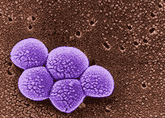
Definition of MRSA

colorized scanning electron micrograph (SEM) of MRSA


While 25% to 30% of people are colonized* in the nose with staph, less than 2% are colonized with MRSA (Gorwitz RJ et al. Journal of Infectious Diseases. 2008:197:1226-34.).

*Colonized:
When a person carries the organism/bacteria but shows no clinical signs or symptoms of infection. For Staph aureus the most common body site colonized is the nose.


While 2% doesn’t sound like a lot, there are signs that number may be increasing. Once considered primarily a hospital acquired infection, CA-MRSA (community acquired) is growing in incidence.


For instance, In Firefighters & Paramedics At Greater Risk Of MRSA and Firefighters & MRSA Revisited we looked at research showing a 10x’s greater incidence of MRSA colonization (20%) among a sampling of firefighters tested in Washington State.


Most of the time our immune systems keep these bacteria in check, and we display no outward signs of infection.


But when our immune systems are weakened, such as when we are stricken by influenza, these resistant bacteria can suddenly bloom and become invasive.


Again, from the Press Release:


Influenza appears to suppress the immune response, making children who are already colonized more susceptible to invasive bacterial disease.


"Previously, MRSA has not been considered a common cause of pneumonia in kids but this may be changing," Randolph says. "It's likely that flu and other viral infections let MRSA invade and that there's some synergistic reaction between flu and these bacteria."


While this study specifically links MRSA to bad outcomes among children with pandemic H1N1, the 2008 study by Shanks and Brundage found that during the 1918 pandemic:


. . .  the bacteria most often recovered from the sputum, lungs, and blood of pneumonia patients, alive or dead, were common colonizers of the upper respiratory tracts of healthy persons, i.e., Hemophilus influenzae, Streptococcus pneumoniae, S. pyogenes, and/or Staphylococcus aureus.


Whether it is the routine carriage of bacteria in our respiratory system, or the make up of the microflora in our gut biome, scientists are increasingly linking our health, and the progression and outcome of some diseases, to our individual body’s ecosystem.


Which may explain, at least partially, why 99 out of 100 people can catch the flu and recover quickly and without incident, while an unlucky 1% may endure a serious and sometimes fatal illness.


The authors of today’s study advise:


Physicians seeing children with serious lower-respiratory-tract disease during flu season are urged to give early antiviral treatment (Tamiflu or zanamivir [Relenza]) and antibiotics covering MRSA and other flu-associated bacteria, even before suspected infections are confirmed in the lab, the researchers say.


But other approaches are urgently needed. "MRSA is hard to develop a vaccine against – researchers have been trying since the 1960s and have been unsuccessful," says Randolph. "So the only way to prevent these severe complications is to get everyone vaccinated against the flu, and do more studies of MRSA colonization so we can prevent it in the community and in kids."


Further evidence, as if we needed it, that influenza and its complications can be complex, difficult, and occasionally deadly foes.

»» Read More

An Influenza Double Whammy


image


# 5936


Although we’ve seen this sort of thing a few times before, the news yesterday that researchers in Cambodia detected two patients with dual influenza infections (back in 2009) has made quite a splash in the media overnight.


Some of the headlines include:


It's Possible to Come Down With Two Flu Viruses at Once Yahoo! 

Cambodians infected with both swine, seasonal flu The Straits Times

Global flu watch: Report of rare flu coinfection in Southeast Asia hot... PhysOrg.com


Like the influenza virus itself, the UK papers tend to go for the throat with their headlines:


Britain On Alert For New Super-flu Daily and Sunday Express

Deadly strain of super-flu 'could spread to Britain within 24 hours' Daily Mail


Before these hyperbolic headlines entice anyone to head down to the bunker, the study on which these stories are based found no `super flu’.


In fact, while researchers detected a relatively rare dual infection of seasonal H3N2 and the new pandemic H1N1 virus in a pair of Cambodian patients, in neither case did they find a reassortant virus.


The point is, this is the sort of set up that could have produced a new, potentially dangerous hybrid virus.


First stop, the study which appears in the American Journal of Tropical Medicine & Hygiene, then we’ll come back and look at the potential ramifications of dual influenza infections.


Dual Infection of Novel Influenza Viruses A/H1N1 and A/H3N2 in a Cluster of Cambodian Patients

Christopher A. Myers, Matthew R. Kasper, Chadwick Y. Yasuda, Chin Savuth, David J. Spiro, Rebecca Halpin, Dennis J. Faix, Robert Coon, Shannon D. Putnam, Thomas F. Wierzba and Patrick J. Blair


The details are behind a pay wall, but as the authors point out in their abstract:


This incident confirms dual influenza virus infections and highlights the risk of zoonotic and seasonal influenza viruses to coinfect and possibly, reassort where they cocirculate.


Earlier this year you may recall we saw a similar co-infection in Canada that actually led to the creation of a unique hybrid reassorted virus (see Webinar: pH1N1 – H3N2 A Novel Influenza Reassortment).


In this case, the patient was a 16-month old boy from the Greater Toronto Area who was admitted briefly to a local hospital for respiratory and gastrointestinal symptoms in January of 2011.


The child was sent home, and recovered without incident, and no other family members or contacts reported flu-like symptoms.


It wasn’t until later, when viral cultures showed a hybrid (reassorted) H1N1-H3N2 virus, did scientists realize that something unusual had occurred.


Details of this event were presented in an online webinar on June 16th of this year. 


From the abstract:


pH1N1 – H3N2: A Novel Influenza Virus Reassortment

Presenter:

Dr. Jonathan Gubbay- Medical Microbiologist, OAHPP

Abstract

Dr. Jonathan Gubbay, medical microbiologist at the Toronto Public Health Laboratory, will present on a new influenza virus that has been discovered by the Ontario Agency for Health Protection and Promotion (OAHPP). It is the first Canadian confirmed finding of a patient with a coinfection of seasonal H3N2 and pH1N1 followed by reassortment.

(Continue . . .)


A little more than a year ago, in EID Journal: Co-Infection By Influenza Strains, I wrote about a study in New Zealand during the opening months of the 2009 pandemic that discovered at least 11 co-infections (out of 1,044 samples tested) with the older seasonal H1N1 virus and the newly emergent pandemic H1N1 virus.


Pandemic (H1N1) 2009 and Seasonal Influenza A (H1N1) Co-infection, New Zealand, 2009

Matthew Peacey , Richard J. Hall, Stephanie Sonnberg, Mariette Ducatez, Shevaun Paine, Mackenzie Nicol, Jacqui C. Ralston, Don Bandaranayake, Virginia Hope, Richard J. Webby, and Sue Huang


The authors state that the rate of co-infection could actually be higher, since samples were not checked for any other flu strains such as H3N2 and influenza B.


And going back even further, Maryn McKenna wrote – in an article for CIDRAP News – of an Indonesian teen who was found to have been co-infected with an avian (H5N1) and a human (H3N2) influenza strain.


Avian, human flu coinfection reported in Indonesian teen

Maryn McKenna * Contributing Writer

Mar 17, 2008 – ATLANTA (CIDRAP News) – An Indonesian teenager has been brought forward as a case of simultaneous infection with seasonal and avian strains of influenza—a possibility that health planners have long warned could give rise to a pandemic flu strain.

(Continue . . . )


In the Indonesian and New Zealand cases above, no reassortant viruses were detected. Still, this research suggests that humans, like swine, could be `mixing vessels’ for influenza. 


While gene swapping is possible under a co-infection scenario, it isn’t by any means assured.


And even should a reassortment take place, the resulting virus might not prove biologically `fit’, or if it is `fit’, any worse than either of its parental strains.


However, the potential for creating a devastating novel flu strain cannot be discounted.


Last August, in Professor Peter Doherty On Bird Flu, we looked at his worries on the possibility that the H5N1 virus might one day swap genes (reassort) with the H1N1 virus and produce an easily transmitted, highly virulent flu strain.


And in September we saw research (see Study: Reassorted H1N1-H5N1 Produced Virulent Strain) where a laboratory-created reassortant virus with genes taken from the H5N1 and H1N1 virus produced a highly transmissible and virulent strain.


Of course, while the world was waiting for bird flu, in 2009 a reassorted Swine flu virus unexpectedly sparked a global pandemic. We were fortunate that it wasn’t any more severe than it was, but it illustrates that there are many ways a pandemic can evolve.


Zoonotic Jump


In addition to the various clades of human flu strains ( both pdmH1N1 & H3N2) now circulating, and a growing constellation of avian flu strains (H5N1, H9N2, H7N7, etc), we continue to see rare sporadic human infections by reassorted swine viruses as well (Maine Confirms A 2nd trH3N2 Case).


Further evidence that nature’s laboratory is open 24/7, and that influenza viruses are constantly mutating and reassorting, looking for an evolutionary advantage.


While most of these reassortant viruses are doomed to end up in the evolutionary dustbin, failing to thrive and compete with other viruses, it only takes one fit, virulent, and easily transmissible virus to spark a global pandemic.


And that is something that might emerge tomorrow, next month, or perhaps not until years from now.  


But history as history has us shown over and over:


Pandemics happen.  Count on it.

»» Read More

WHO: Call It A(H1N1)pdm09


image

Photo Credit – CDC PHIL 

# 5916


Two-and-a-half years after its emergence, the virus responsible for the 2009 influenza pandemic continues to go by many names.


The most common nom de flu - embraced by the media and most of the public - has been `swine flu’


But that not only raised the hackles of hog farmers, it isn’t terribly specific. After all, there are many different swine influenzas out there, and there is always the possibility of another novel swine virus emerging.


Calling it simply H1N1 makes no distinction between it, and the many iterations of seasonal H1N1 which came before it.


While I’ve used `novel H1N1’ often in this blog, and sometimes  A/H1N1/09 or even pdmH1N1 – there hasn’t been any clear consensus over what to call the 2009 pandemic virus.


Today, in the World Health Organization’s  Weekly Epidemiological Record we learn that a decision was reached late last month at the WHO to call the virus:


A(H1N1)pdm09


While it doesn’t exactly roll off the tongue like `swine flu’ does, it has the decided advantage of being more precise. The scientific community may well embrace this recommended nomenclature, but we’ll have to see if it ever catches on with the media.


Standardization of terminology of the pandemic A(H1N1) 2009 virus


The pandemic A(H1N1)2009 virus has become a seasonal influenza virus, continuing to circulate with other seasonal viruses since August 2010 when WHO declared the end of the influenza A(H1N1) 2009 pandemic. However, the nomenclature of this virus has never been standardized resulting in the use of diverse names for the same virus.

In order to minimize confusion and to differentiate the virus from the former seasonal A(H1N1) viruses circulating in humans before the influenza A(H1N1) 2009 pandemic, the advisers to the WHO technical consultation on the composition of influenza vaccines for the southern hemisphere 2012 season, after discussion on 26 September 2011, advise WHO to use the nomenclature below:

 
A(H1N1)pdm09


This standardization will help to minimize confusion
among scientific community and the general public. 


»» Read More