Showing posts with label Vaccination. Show all posts

Pakistan To Resume Polio Vaccinations

image


# 6822


Three times in recent weeks we’ve seen horrific coordinated attacks made against aid workers, either involved with or associated with the Polio Vaccination drives in Pakistan.


The first attack (see Pakistan: 6 Polio Workers Murdered) was reported on December 18th, the next day (see Pakistan: Fresh Attacks On WHO/UNICEF Polio Workers) we learned of 3 more deaths, and on January 1st  the headlines read : 7 More Aid Workers Killed In Pakistan.


Pakistan is one of 3 countries where the polio virus is still endemic (the others being Afghanistan and Nigeria).


Taliban leaders condemned polio immunization campaigns after the use of a sham hepatitis vaccination campaign as a CIA cover in the pursuit of Osama Bin Laden (see Maryn McKenna’s Update: Pakistan, Polio, Fake Vaccines And The CIA).


Today, news from Agence France-Presse that rather than reinstituting a high profile national vaccine campaign, small well-guarded teams will begin local, targeted and low profile vaccination campaigns.


Security measures include excluding female health workers from participating in some of the higher risk zones, and banning motorcycles in and around vaccination sites in an attempt to prevent drive-by shootings.


Follow the link below for further details from AFP.


Pakistan resumes polio vaccines under tight security

Published on 04 Jan 2013


For more perspective on why Pakistan’s vaccination program is considered so vital by many public health authorities, we have this excellent report by CIDRAP NEWS editor Robert Roos.


WHO says polio drive must push on despite Pakistan setbacks

Robert Roos * News Editor

Jan 3, 2013 (CIDRAP News) – In the wake of recent killings of polio vaccinators in Pakistan, some questions are being raised about the all-out push to eradicate polio, but the World Health Organization (WHO) says the world can't afford to back off on the eradication drive now.


"We've never had so few cases or such a small footprint of the virus, so we know this opportunity is not going to come back," Sona Bari, the WHO's polio eradication spokesperson, told CIDRAP News. "We've never been here before. It's now or never."

(Continue . . . )


The above is a small excerpt of a very long, and informative article. Well worth reading in its entirety.

»» Read More

Pre-Pandemic Vaccinations Revisited


image

Photo Credit PHIL


# 6428


In the wake of the publication of the Fouchier & Kawaoka studies (see here & here) - which suggest that the H5N1 virus may be only a few mutations away from being able to transmit among mammals – once again concerns over the possibility of a bird flu pandemic have taken center stage.


Despite its relative mildness, the 2009 H1N1 pandemic demonstrated the difficulty (read: impossibility) of creating, manufacturing, and rapidly deploying an emergency pandemic vaccine to billions of people in the face of a fast spreading influenza virus.


Were an H5N1 pandemic to break out today, even with small quantities of a vaccine already stockpiled, the vast majority of people around the world would not see a vaccine in anything less than six to twelve months.


And while the true CFR (Case Fatality Ratio) of the H5N1 virus remains disputed (see Revisiting The H5N1 CFR Debate), many researchers still believe it has the potential to be as deadly – or deadlier – than the 1918 Spanish Flu.


All of which as recently led to the resurfacing of a controversial, but potentially life-saving idea: the creation and distribution of a pre-pandemic vaccine.


While we’ve discussed this idea before, it was recently aired in the journal Science in an article called:


Influenza: Options to Improve Pandemic Preparation

Rino Rappuoli, Philip R. Dormitzer


While other solutions, including development of a `universal vaccine’, and improvements in our capacity to quickly produce and distribute vaccines were on their list, number one on their hit parade was the creation and distribution of a pre-pandemic H5 vaccine.


A pre-pandemic dose of an adjuvanted H5N1 vaccine – even if it were not an exact match to an emerging pandemic strain – is expected would blunt the impact of the H5N1 virus while the population waits for the arrival of a booster shot.


This idea is explored today in a Reuter’s story:


ANALYSIS-Bird flu vaccine now? More than a shot in the dark


As this article points out, an effective pre-pandemic vaccination program could take 3 to 5 years to conduct, and would cost billions of currently hard-to-find healthcare dollars. 


One of the biggest obstacles would be the public’s reaction to accepting a vaccination against a virus that – as yet – does not routinely infect humans.   


And no doubt, the anti-vaccine and internet conspiratorialists would have a field day with such a program.


This proposal, however, isn’t new.


We looked at this option in May of 2010 (see The Prime Of Our Lives), when the Journal Nature ran an opinion piece by Dr. Klaus Stohr, former head of the World Health Organization's global influenza program, supporting the idea of global pre-pandemic vaccination.


The problem is (aside from the not-insignificant costs, logistics, and difficulties gaining public acceptance) is predicting which influenza strain is likely to emerge next.  


Few would have pegged the H1N1 virus – a cousin to one that had been circulating for decades – to show up as a pandemic virus in 2009.


Which means we could spend billions priming against an H5 pandemic, only to get blindsided by an H7 or H9 virus.


It’s a calculated risk, though many scientists would point out that an H5 pandemic – at least right now – seems to pose a greater risk simply due to its record of lethality in humans.


And in fact, this strategy was employed in Japan back in 2008, when their limited stockpile of H5N1 bird flu vaccine was about to expire. 


They decided to `store it’ in the arms of healthcare and public safety workers, rather than pour it down the drain (see Japan Begins Pre-Pandemic Inoculation Of Health Care Workers). A similar program was launched in 2010 (see Taiwan Offers Public Bird Flu Vaccinations.)


Of course, we won’t know how well this little experiment works until an H5N1 pandemic breaks out, and recipients of this vaccine are shown to have fared better than those who weren’t `primed’.


But the idea is rooted in science.


In the summer of 2008 we saw a study, published in the of The Journal of Infectious Diseases, which showed that people who received an experimental H5N1 vaccine in Hong Kong 8 years before developed a strong immune response after receiving a single booster shot of a clade 1 H5N1 vaccine.


Influenza vaccines have an exceptionally good safety record, yet when millions of shots are given a small number of adverse reactions – some of them serious – are expected to occur.


When a clear and immediate viral threat is at hand, it is fairly easy to accept the risk-benefit equation presented by accepting a vaccine. But when no threat currently exists, one’s tolerance for risk – no matter how slight – tends to diminish.


Making a pre-pandemic jab a tough sell to an increasingly dubious public.


While the science makes sense (and yes, I’d probably avail myself of a shot were it made available), when you add up the costs, public relation concerns, and the sheer logistics of delivering a pre-pandemic shot to hundreds of millions (or even billions) of people, you have a formidable task.


One that, despite the potential benefits, governments don’t appear to be inclined to undertake right now.

»» Read More

Study: Safety Of Drive-Thru Vaccination Clinics


image

Photo Credit PHIL


# 6422


During a severe influenza pandemic some health departments have developed plans to conduct drive-thru vaccination clinics in order to speed up the dispensing of vaccines and to prevent the cross-exposure of people queuing up for the shots.


While studies have shown the advantages of conducting drive-through vaccination clinics (see The Efficiencies Of Mass Vaccination Clinics) there have been nagging concerns over the slight possibility that a vaccine recipient might experience a syncopal event (fainting) after driving away.


We’ve a study today, recently published in the Journal of Emergency Management, that finds the odds of a driver fainting post-vaccination to be extraordinarily low. 


In fact, they liken it to being less than the odds of being struck by lightning.


First a link to the study, then some excerpts from the press release.


Drive-thru influenza immunization: Fifteen years of experience

Ruth M. Carrico, PhD, RN, FSHEA, CIC; W. Paul McKinney, MD, FACP; Nicholas Adam Watson, JD; Timothy Wiemken, PhD, MPH, CIC; John Myers, PhD, MSPH
May/June 2012; pages 228-232

Abstract
Background: In 1995, a yearly drive-thru immunization program was initiated in Louisville, KY. Since then, more than 50,000 doses of influenza vaccine have been administered, with no reports of syncopal episodes or vehicular accidents.

(Continue . . . )


The press release, from the University of Louisville is excerpted below:


University of Louisville study dispels concerns about drive-thru flu clinics

Critics have pointed to fainting risks and subsequent auto accidents as reasons for concern when using drive-thru influenza immunization clinics, according to Ruth Carrico, PhD, RN, FSHEA, CIC, associate professor, division of infectious diseases, University of Louisville School of Medicine.


A review conducted by Carrico and UofL faculty W. Paul McKinney, MD, FACP, Timothy Wiemkan, PhD, MPH, CIC and John Myers, PhD, MSPH found these fears to be unfounded. Since the beginning of an annual drive-thru immunization program initiated 1995 at the University of Louisville Hospital, more than 50,000 doses of the influenza vaccine have been administered, with no reports of fainting episodes or related auto accidents. The study, Drive-thru influenza immunization: Fifteen years of experience published recently in the Journal of Emergency Management.

<SNIP>

This summer, Carrico plans to release a toolkit about how communities can develop drive-thru immunization clinics. It will include information on how to organize a clinic, how to train and orient staff, how to set-up the clinic and how to evaluate the success. The toolkit will point to experiences and lessons learned from the 2009 H1N1 influenza pandemic and will be available through the UofL Center for Health Hazards Preparedness website: www.publichealthtools.com


(Continue . . . )

»» Read More

PNAS: H1N1 Vaccination Produced Antibodies Against Multiple Flu Strains


image

Photo Credit – CDC PHIL

# 6338


In January of 2011 we saw a report out of Emory University and the University of Chicago that found that some people infected with the 2009 H1N1 virus appeared to have developed antibodies against other flu strains as well (see H1N1 And The Road To A Universal Flu Vaccine). 


An unusual and unexpected result, leading researchers to wonder if receiving the inactivated H1N1 vaccine (as opposed to being infected with the virus) produced a similar response.


Yesterday, the results of another study (from the same researcher centers) were published in PNAS that looked at the B cell responses of 24 healthy adults immunized with the inactivated pandemic 2009 H1N1 vaccine.  


And much like the earlier study, they found that a majority of vaccinated subjects had produced broadly cross-reactive B cells (antibodies).


First a link to the study and abstract, followed by excerpts from the press release.


Pandemic H1N1 influenza vaccine induces a recall response in humans that favors broadly cross-reactive memory B cells

Gui-Mei Li, Christopher Chiu, Jens Wrammert, Megan McCausland, Sarah F. Andrews, Nai-Ying Zheng, Jane-Hwei Lee, Min Huang, Xinyan Qu, Srilatha Edupuganti, Mark Mulligan, Suman R. Das, Jonathan W. Yewdell, Aneesh K. Mehta, Patrick C. Wilson, and Rafi Ahmed


Public release date: 21-May-2012


Emory University

Pandemic 2009 H1N1 vaccination produces antibodies against multiple flu strains

Discovery brings researchers closer to goal of 'universal' flu vaccine

The pandemic 2009 H1N1 vaccine can generate antibodies in vaccinated individuals not only against the H1N1 virus, but also against other influenza virus strains including H5N1 and H3N2. This discovery adds an important new dimension to the finding last year that people infected with pandemic 2009 H1N1 virus produced high levels of antibodies that were broadly cross-reactive against a variety of flu strains.


<SNIP>


The researchers analyzed B cell (antibody) responses in 24 healthy adults immunized with the inactivated pandemic 2009 H1N1 vaccine. Vaccination caused a rapid increase in production of monoclonal antibodies that were capable of neutralizing multiple flu strains. Three of the antibody types also were able to stick to the "stalk" region of the virus that does not change as much as other regions and thus could provide a basis for a vaccine with broader and more reliable protection.


Antibodies that are broadly reactive against multiple influenza strains are rarely seen in people after infection or vaccination with seasonal flu, the authors note. In the 24 vaccinated individuals in the current study, the majority of flu antibodies neutralized more than one influenza strain and also seemed to be the result of B-cell memory resulting from previous exposure to other flu strains.

(Continue . . . )


The generation of broadly cross-reactive antibodies after either infection with, or vaccination against, the 2009 H1N1 virus is an unusual outcome and scientists are working to determine exactly why this occurred.


Although flu viruses mutate constantly, it is known that there are parts of the flu virus (notably in the `stalk’) that change little over the years and are common across multiple strains. 


One of the strategies being employed in the creation of a universal vaccine is to target these stable regions of the virus, and hopefully create protection against a wide range of flu strains over multiple years with just one shot.


According to an MSNBC report, researchers involved in this study speculate that because H1N1 was such a "new" strain of flu, it forced the body to activate a rare type of B cell that produced antibodies that targeted this stable region in the `stalk’ of the virus.


While test subjects showed signs of antibody cross-reactivity against  H1N1, H3N2, and even H5N1, it isn’t certain whether these antibody responses are vigorous enough to prevent infection or illness, or how long they may last.


Still, one can’t help but wonder if the relatively mild flu season of 2011-12 might not have been due - at least in part – to some lingering levels of protection derived from the 2009 H1N1 pandemic vaccine or virus.


No doubt fodder for another study as scientists continue to work to understand the mysteries of influenza.


While the goal of creating a universal flu vaccine is still a ways off, it is hoped that these latest results will one day assist in the development of that holy grail of influenza virology.

»» Read More

EID Journal: Revisiting The `Canadian Problem’


image

Photo Credit PHIL

# 6267


In September of 2009, just as the second wave of the H1N1 pandemic was ramping up, news of an unpublished study began to surface in Canada that suggested that those who had received a seasonal flu shot the previous year were more susceptible to the new pandemic virus than those who hadn’t.


Helen Branswell, science and medical reporter for the Canadian Press, was among the first to report on it (see Branswell On The Canadian Flu Shot Controversy).


This bombshell – which began to be known as `the Canadian problem’, sent shockwaves through public health agencies, many of whom were just days away from starting up their seasonal flu vaccination campaigns as they waited for the arrival of the H1N1 pandemic vaccine expected later in the fall.


Suddenly, there was genuine concern that with a pandemic virus on the way, that rolling out the seasonal vaccine might be the wrong thing to do.


The CDC and the World Health Organization both scrambled to look at their available data, and stated that they could find no correlation between the seasonal vaccine and susceptibility to the pandemic flu . . . but that they would continue to look.


Meanwhile, with concerns rising, a number of Canadian Provinces halted or announced delays in their seasonal flu shot campaign, even though the study had yet to be published (see Ontario Adjusts Vaccination Plan).


October saw a number of new reports and studies that failed to corroborate the (still unpublished) findings, including a study published in the BMJ (British Medical Journal) that suggested exactly the opposite - that getting the seasonal flu vaccination may be slightly protective against the swine flu  (see When Studies Collide).


By November, with no compelling corroboration of the `Canadian Problem’, Canada’s National Advisory Committee on Immunization (NACI) came out in favor of resuming seasonal flu jabs (see NACI: Canada Should Resume Seasonal Flu Vaccinations).


The controversy wasn’t over, however.


In April of 2010 these Canadian studies were finally published by PLoS Medicine. Writing for CIDRAP, Maryn McKenna   detailed their findings.


New Canadian studies suggest seasonal flu shot increased H1N1 risk

Maryn McKenna * Contributing Writer

Apr 6, 2010 (CIDRAP News) – Despite a rapidly launched range of studies, investigators in Canada are still unable to say—or to rule out—whether receiving a seasonal flu vaccination in the 2008-09 season made it more likely that Canadians would become ill from 2009 pandemic H1N1 flu.

(Continue . . .)


Other studies, however, failed to show any correlation, leaving us with a bit of a mystery on our hands. 


Fast forward to today and we’ve another study that appears ahead of print in May’s edition of the CDC’s EID Journal that looks at this supposed link, and once again, finds no evidence to support it.


Volume 18, Number 5—May 2012
Research

No Association between 2008–09 Influenza Vaccine and Influenza A(H1N1)pdm09 Virus Infection, Manitoba, Canada, 2009

Salaheddin M. Mahmud , Paul Van Caeseele, Gregory Hammond, Carol Kurbis, Tim Hilderman, and Lawrence Elliott

Abstract

We conducted a population-based study in Manitoba, Canada, to investigate whether use of inactivated trivalent influenza vaccine (TIV) during the 2008–09 influenza season was associated with subsequent infection with influenza A(H1N1)pdm09 virus during the first wave of the 2009 pandemic.


Data were obtained from a provincewide population-based immunization registry and laboratory-based influenza surveillance system.


The test-negative case–control study included 831 case-patients with confirmed influenza A(H1N1)pdm09 virus infection and 2,479 controls, participants with test results negative for influenza A and B viruses. For the association of TIV receipt with influenza A(H1N1)pdm09 virus infection, the fully adjusted odds ratio was 1.0 (95% CI 0.7–1.4). Among case-patients, receipt of 2008–09 TIV was associated with a statistically nonsignificant 49% reduction in risk for hospitalization.


In agreement with study findings outside Canada, our study in Manitoba indicates that the 2008–09 TIV neither increased nor decreased the risk for infection with influenza A(H1N1)pdm09 virus.


While the bulk of studies have shown no causal link between receipt of the seasonal vaccine and contracting the 2009 H1N1 virus, the results have not been 100% in alignment.


Leaving us with a bit of a mystery.  Why should some Canadian studies differ from those done elsewhere?


One fascinating hypothesis that might explain these disparate findings was proffered back in 2010 in the journal Eurosurveillance.


The authors suggested that infection by any influenza (or perhaps, any I-L-I) ramps up the body’s immune system for a time, making that person temporarily less susceptible to infection by another respiratory virus.


Since the pandemic arrived on the heels of the flu season in the northern hemisphere, those who received flu shot in the fall and thereby avoided illness might have been more likely to catch the pandemic strain than someone who had endured a bout of flu (and thereby acquired temporary generic immunity) over the winter.


You’ll want to read the entire paper, but I’ve included excerpts (reparagraphed for readability) from the abstract below.


Eurosurveillance, Volume 15, Issue 47, 25 November 2010

Perspectives

Seasonal influenza vaccination and the risk of infection with pandemic influenza: a possible illustration of non-specific temporary immunity following infection

H Kelly , S Barry, K Laurie, G Mercer

ABSTRACT (Excerpts)

We found no evidence that seasonal influenza vaccine increased the risk of, or provided protection against, infection with the pandemic virus.


Ferret experiments have suggested protection against pandemic influenza A(H1N1) 2009 from multiple prior seasonal influenza infections but not from prior seasonal vaccination.Modelling studies suggest that influenza infection leads to heterosubtypic temporary immunity which is initially almost complete.


We suggest these observations together can explain the apparent discrepant findings in Canada and Victoria. In Victoria there was no recent prior circulation of seasonal influenza and thus no temporary immunity to pandemic influenza. There was no association of seasonal influenza vaccine with pandemic influenza infection.


In Canada seasonal influenza preceded circulation of the pandemic virus. An unvaccinated proportion of the population developed temporary immunity to pandemic influenza from seasonal infection but a proportion of vaccinated members of the population did not get seasonal infection and hence did not develop temporary immunity to pandemic influenza.


It may therefore have appeared as if seasonal vaccination increased the risk of infection with pandemic influenza A(H1N1) virus.


It’s an attractive theory, and it has been suggested that this form of temporary immunity might even help explain why influenza pandemics tend to come in waves.


But it’s just a theory.


While results from today’s EID study match well with most of those in the literature, the authors warn that:


Additional epidemiologic and experimental investigations are needed to clarify the relationship between TIV use and infection with the pandemic strain.


Good science takes time.


And that means that while the evidence is currently lopsided against there being a link, more research will be needed before the `Canadian Problem’ can be fully and truly resolved.

»» Read More

NPM11: Giving Preparedness A Shot In The Arm


Note: This is day 9 of National Preparedness Month.  Follow this year’s campaign on Twitter by searching for the #NPM11 hash tag.

image

This month, as part of NPM11, I’ll be rerunning some edited and updated older preparedness essays, along with some new ones.


# 5826


While it may not leap immediately to mind when one thinks about emergency preparedness, getting and staying current with appropriate vaccines is one of the best ways to prepare for a disaster.


As it is September, now is the time to be arranging for your yearly flu vaccinationACIP  recommends that virtually everyone over the age of 6 months get the flu vaccine every year.


And it’s good preparedness advice, particular since during a disaster or prolonged emergency you are more likely to be tired, run down, and are probably at a greater risk of catching the flu.


In the wake of a disaster thousands of people may find themselves temporarily crowded together in shelters, where an influenza virus could spread rapidly.


Imagine trying to evacuate your home quickly with a couple of very sick kids, or the difficulties you might encounter finding a place to stay if your family were visibly ill with a communicable disease.


A simple flu vaccination each fall could go a long way towards preventing those difficult scenarios.


Most people think of vaccines as kids stuff.  Something you outgrow the need for.  But that isn’t true. 


Adults need vaccines as well.


During a major disaster - such as an earthquake, hurricane, or flood -  thousands, perhaps tens of thousands of people may sustain injuries ranging from small cuts and scrapes to major trauma.


And any of those who have let their tetanus booster vaccination lapse are at risk of serious, even life threatening, infection.


Even if you can obtain a tetanus shot immediately after an injury (and that could be problematic in a mass casualty event), that may not prevent infection.  It can take up to two weeks to build antibodies after getting the shot.


image


Tetanus is relatively rare in the United States (see Tetanus Surveillance --- United States, 1998—2000) due to aggressive vaccination campaigns, but worldwide, this infection still claims hundreds of thousands of lives each year. 


And the Tetanus booster shot also protects against Diphtheria and Pertussis (Whooping Cough) – an old scourge that once was almost vanquished here in the United States, but has returned with a vengeance in recent years (see California Reports 9th Pertussis Fatality of 2010)


If you have kids, talk to their pediatrician or your family doctor about what vaccinations they require. Adults can either ask their physicians, or refer to this handy vaccination schedule for adults provided by Immunize.org.


image

(Click to load)


Vaccines have excellent safety records. Yes, taking any medicine – including a vaccine – entails some (usually miniscule) degree of risk. But those risks pale when compared to the dangers of catching the diseases they are designed to prevent.


Influenza alone kills tens of thousands of people every year in this country.


Ready.gov urges all Americans to follow these 3 steps to better preparedness:

image

GET A KIT

MAKE A PLAN

BE INFORMED


But if you want to be truly prepared, I would recommend you consider adding an important 4th step.


Get a shot


image

»» Read More

MMWR: ACIP Updated Flu Vaccination Recommendations


# 5764


ACIP, the Advisory Committee on Immunization Practices, issued their recommendations that practically everyone over the age of 6 months receive a yearly flu vaccine back in 2010.  


ACIP reinforces that recommendation in today’s release of the CDC’s MMWR providing updated guidance for the approaching flu season.  


Prevention and Control of Influenza with Vaccines: Recommendations of the Advisory Committee on Immunization Practices (ACIP), 2011

Early Release

August 18, 2011 / 60(Early Release);1-6


(EXCERPTS)

Vaccine Strains for the 2011--12 Influenza Season

The 2011--12 U.S. seasonal influenza vaccine virus strains are identical to those contained in the 2010--11 vaccine. These include A/California/7/2009 (H1N1)-like, A/Perth/16/2009 (H3N2)-like, and B/Brisbane/60/2008-like antigens. The influenza A (H1N1) vaccine virus strain is derived from a 2009 pandemic influenza A (H1N1) virus (3).

Recommendations for Vaccination

Routine annual influenza vaccination is recommended for all persons aged ≥6 months (1). To permit time for production of protective antibody levels (4,5), vaccination should optimally occur before onset of influenza activity in the community, and providers should offer vaccination as soon as vaccine is available. Vaccination also should continue to be offered throughout the influenza season.


Although influenza vaccine strains for the 2011--12 season are unchanged from those of 2010--11, annual vaccination is recommended even for those who received the vaccine for the previous season. Although in one study of children vaccinated against A/Hong Kong/68 (H3N2) virus, vaccine efficacy remained high against this strain 3 years later, the estimated efficacy of vaccine decreased over the seasons studied (6). Moreover, several studies have demonstrated that postvaccination antibody titers decline over the course of a year (7--10). Thus, annual vaccination is recommended for optimal protection against influenza.

Vaccine Doses for Children Aged 6 Months Through 8 Years

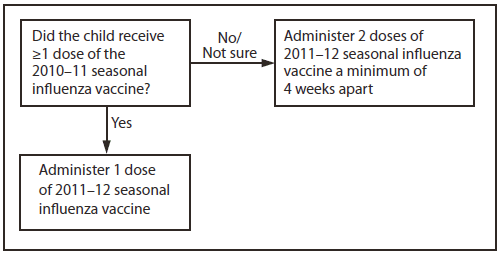
Children aged 6 months through 8 years require 2 doses of influenza vaccine (administered a minimum of 4 weeks apart) during their first season of vaccination to optimize immune response. In a study of children aged 5 through 8 years who received trivalent inactivated vaccine (TIV) for the first time, the proportion of children with protective antibody responses was significantly higher after 2 doses than after 1 dose (11).

(Continue . . .)


The figure shows an influenza vaccine dosing algorithm for children aged 6 months through 8 years. If the child did not receive ≥1 dose of the 2010-11 seasonal influenza vaccine or if the provider is not sure, 2 doses of 2011-12 seasonal influenza vacine should be administered a minimum of 4 weeks apart. If the child did receive ≥1 dose of the 2010-11 seasonal influenza vaccine, 1 dose of 2011-12 seasonal influenza vacine should be administered.

FIGURE 1. Influenza vaccine dosing algorithm for children aged 6 months through 8 years --- Advisory Committee on Immunization Practices (ACIP), 2011--12 influenza season


This ACIP release also focuses on those with egg allergies, who in the past have been advised against taking the flu vaccine.


Recent studies have indicated that many with mild to moderate allergies to eggs can safely take the flu vaccine, and so this release offers the following recommendations.


Recommendations Regarding Persons with Egg Allergy

Each of the following recommendations applies when considering influenza vaccination of persons who have or report a history of egg allergy.

  1. Persons who have experienced only hives following exposure to egg should receive influenza vaccine with the following additional measures (Figure 2):
    a) Because studies published to date involved use of TIV, TIV rather than LAIV should be used.
    b) Vaccine should be administered by a health-care provider who is familiar with the potential manifestations of egg allergy.
    c) Vaccine recipients should be observed for at least 30 minutes for signs of a reaction following administration of each vaccine dose.
    Other measures, such as dividing and administering the vaccine by a two-step approach and skin testing with vaccine, are not necessary.

  2. Persons who report having had reactions to egg involving angioedema, respiratory distress, lightheadedness, or recurrent emesis, or persons who required epinephrine or other emergency medical intervention, particularly those that occurred immediately or within minutes to hours after egg exposure are more likely to have a serious systemic or anaphylactic reaction upon reexposure to egg proteins. Before receipt of vaccine, such persons should be referred to a physician with expertise in the management of allergic conditions for further risk assessment (Figure 2).

  3. All vaccines should be administered in settings in which personnel and equipment for rapid recognition and treatment of anaphylaxis are available. ACIP recommends that all vaccination providers be familiar with the office emergency plan (18).

  4. Some persons who report allergy to egg might not be egg allergic. Those who are able to eat lightly cooked egg (e.g., scrambled eggs) without reaction are unlikely to be allergic. Conversely, egg-allergic persons might tolerate egg in baked products (e.g., bread or cake); tolerance to egg-containing foods does not exclude the possibility of egg allergy (35). Egg allergy can be confirmed by a consistent medical history of adverse reactions to eggs and egg-containing foods, plus skin and/or blood testing for immunoglobulin E antibodies to egg proteins.

  5. A previous severe allergic reaction to influenza vaccine, regardless of the component suspected to be responsible for the reaction, is a contraindication to receipt of influenza vaccine.

»» Read More

Lancet Perspective: Mandatory Flu Vaccination For HCWs


image

Photo Credit – CDC PHIL

# 5709


A perspective appears today in The Lancet by Arthur Caplan, Ph.D., who is director of the Center for Bioethics at the University of Pennsylvania, on the ethics of mandating yearly influenza vaccination for Health Care Workers (HCWs).


Arthur Caplan is the author and/or editor of nearly 25 books, and more than 500 journal articles. He writes a regular column on bioethics for MSNBC.com, and is a frequent guest commentator on NPR, CNN, MSNBC, and for major newspaper outlets, including the New York Times and Washington Post.


In 2008, Discover Magazine named him one of the 10 most influential people in science.


Not known for mincing words (see Arthur Caplan On `Flunking The Swine Flu Test’ for an earlier example), Caplan states that: “Vaccination is a duty that one assumes in becoming a health-care provider.”


He argues that the evidence overwhelmingly shows that vaccinating HCWs helps to protect patients from infection (and possible death), and that the influenza vaccine is both safe and effective.


Citing language common to all oaths sworn by health care professionals (Doctors, Nurses, Techs, etc.), he points out the universal concept that the interests of the patient must come first, and that all HCWs must honor the core medical principal of, “First, do no harm.”


Both tenets, he argues, are violated when HCWs fail to accept a yearly flu vaccination.


Yet every year, despite awareness campaigns and the endorsement by many medical organizations, less than half of all healthcare providers in the United States and the UK voluntarily agree to take the vaccine.


You can read the entire piece at the link below, after which I’ll return with more.


The Lancet, Volume 378, Issue 9788, Pages 310 - 311, 23 July 2011

doi:10.1016/S0140-6736(11)61156-2

Time to mandate influenza vaccination in health-care workers


While strongly advocating HCW influenza vaccination, the CDC has stopped short of mandating them. I blogged on this back on June 23rd, 2010  in  CDC: Proposed Influenza Infection Control Guidance.


Numerous professional medical organizations have adopted policies calling for mandatory vaccination of HCWs, however.  A few earlier blogs on that include:


APIC Calls For Mandatory Flu Vaccination For HCWs
AAP: Recommends Mandatory Flu Vaccinations For HCWs
SHEA: Mandatory Vaccination Of Health Care Workers
IDSA Urges Mandatory Flu Vaccinations For Healthcare Workers


While many infection control experts see this as a long overdue step in patient and co-worker protection, this is a hugely divisive issue, with many HCWs believing that it is an infringement of their rights to decide what will be injected into their bodies.


I’ve covered HCW’s objections to forced flu shots in the past, including:


HCWs: Refusing To Bare Arms

HCWs: Developing a Different Kind Of Resistance


Given that hospitalized patients are often at increased risk of serious illness or death from influenza, reasonable measures that can reduce the spread of the virus – such as improved vaccination rates and better infection control measures - are vital areas that many healthcare facilities need to review and improve.


In recent years an increasing number of hospitals have managed to implement mandatory flu vaccinations, including Seattle’s Virginia Mason Medical Center and BJC Heathcare of St. Louis, Missouri  (see here and here).


The Immunization Action Coalition (IAC) maintains a terrific website with extensive information on vaccines, and includes a growing `Honor Roll’ of organizations and practices that have adopted a mandatory flu shot policy (some exemptions may apply).


As we saw last month in SHEA: Improving HCW Flu Vaccine Uptake, some facilities are offering employees an alternative to taking the vaccine. This from a recent edition of Infection Control and Hospital Epidemiology.


An Alternate Approach To Improving Healthcare Worker Influenza Vaccination Rates

Lisa M. Esolen, Kimberly Kilheeney, Richard E. Merkle


Essentially, this approach allows HCWs with medical or ethical objections to flu vaccination to opt out and elect to wear a surgical facemask during flu season when in close contact with patients.


image


Increasingly, hospitals are looking at this as both a liability and an economic issue, on top of their concerns over patient welfare. 


Of course, legal challenges still lie ahead.


But love the idea, or hate it, the momentum appears to be moving in the direction of mandatory influenza vaccinations for Health Care Workers.

»» Read More

Pssst! Immunity . . . Pass it On


# 5648


Two related stories today involving expectant mothers and vaccines that have been in the news over the past 48 hours.


Both suggest that one of the best ways to protect a newborn baby against influenza and pertussis is to vaccinate the mother before she gives birth.


In both cases, newborn infants are too young to receive vaccines during the first months out of the womb, but may acquire limited immunity from antibodies passed on from the mother.


First from the Advisory Committee On Immunization Practices (ACIP) meeting this week, a recommendation that pregnant women and other adults who will be in close contacts with a soon-to-be born infant receive the Pertussis vaccine.


CIDRAP has the details in last night’s news scan. 


ACIP recommends pertussis vaccine for pregnant women


To protect infants in a time of increasing pertussis cases, pregnant women as well as teens and other adults in close contact with newborns should receive pertussis (whooping cough) vaccine, an advisory group to the US Centers for Disease Control and Prevention (CDC) said yesterday. The panel, the Advisory Committee on Immunization Practices (ACIP), also recommended meningococcal vaccine for high-risk infants at 9 months, according to MSNBC. The CDC still needs to decide on the recommendations but often follows ACIP guidance.

(Continue . . . )


A second report, this time from Wake Forest Baptist Medical Center, revolves around a study that appears this month in American Journal of Obstetrics & Gynecology.


Impact of maternal immunization on influenza hospitalizations in infants

American Journal of Obstetrics and Gynecology, 2011; 204 (6): S141 DOI:

Katherine A. Poehling, Peter G. Szilagyi, Mary A. Staat, Beverly M. Snively, Daniel C. Payne, Carolyn B. Bridges, Susan Y. Chu, Laney S. Light, Mila M. Prill, Lyn Finelli, Marie R. Griffin, Kathryn M. Edwards.


It found that by analyzing data collected by CDC and the New Vaccine Surveillance Network between 2002 and 2009 (before the H1N1 pandemic), that infants born to mothers who had received the flu vaccine during pregnancy were more than 45% less likely to be hospitalized with laboratory confirmed influenza.


This isn’t the first time that studies have shown the benefits to the newborn child derived from maternal vaccination.  


Last October, in Study: Protecting Two With One Shot I blogged on Lisa Schnirring’s CIDRAP News story regarding a study that showed that babies born to mothers who received the flu vaccination experienced fewer infections and hospitalizations during their first six months than babies whose mothers did not.


And two years before that, we had a study conducted in Bangladesh (see CIDRAP’s Study: Flu shots in pregnant women benefit newborns) that offered pretty much the same conclusion.


Pregnant women (and their unborn child) are at particularly high risk from influenza due to changes in the mother’s immune system during pregnancy.  This is something I’ve written about often, mostly recently in BMJ: Perinatal Outcomes After Maternal 2009/H1N1 Infection.


Which is why the CDC encourages pregnant women to get the flu vaccine.


Pregnant Women Need a Flu Shot!

Photo: A woman with her healthcare professional.

Photo Credit – CDC

If you're pregnant, a flu shot is your best protection against serious illness from the flu. A flu shot can protect pregnant women, their unborn babies, and even their babies after birth.


(Continue . . .)


While the importance of maternal flu vaccination has been stressed in pediatric journals in the past, this most recent study is geared for the OB/GYN audience, which will hopefully induce them to recommend flu shots to their patients.


For more on this, here is a link to the Press Release.


Wake Forest Baptist Medical Center

Influenza vaccination during pregnancy protects newborns

WINSTON-SALEM, N.C. – June 23, 2011 – Infants born to mothers who received the influenza (flu) vaccine while pregnant are nearly 50 percent less likely to be hospitalized for the flu than infants born to mothers who did not receive the vaccine while pregnant, according to a new collaborative study by researchers at Wake Forest Baptist Medical Center and colleagues.

(Continue . . . )


And for more on the re-emergence of Pertussis in this country, you may wish to read:


California Reports 9th Pertussis Fatality of 2010
California Whooping Cough (Pertussis) Update
California: Pertussis Epidemic
»» Read More

SHEA: Improving HCW Flu Vaccine Uptake


# 5635


Hospital acquired infections are the bane of modern health care, with MRSA, C. Diff, garden variety staph, various pneumonias, and other infections estimated to cost tens of thousands of lives and add billions of dollars to healthcare costs each year. 


And while we tend to think of bacterial infections in this context most of the time, every year there are legitimate concerns over the spread of influenza in healthcare facilities as well.


These concerns have sparked repeated calls for mandatory yearly vaccination of HCWs (Health Care Workers) against the flu.


A few recent blogs on that contentious subject include:


APIC Calls For Mandatory Flu Vaccination For HCWs
AAP: Recommends Mandatory Flu Vaccinations For HCWs
SHEA: Mandatory Vaccination Of Health Care Workers
IDSA Urges Mandatory Flu Vaccinations For Healthcare Workers


While strongly advocating HCW influenza vaccination, the CDC has stopped short of mandating them. I blogged on this back on June 23rd, 2010  in  CDC: Proposed Influenza Infection Control Guidance.


While many infection control experts see this as a long overdue step in patient and co-worker protection, the obstacles that lay before these sorts of policies are substantial.


This is a hugely divisive issue, with many HCWs believing that it is an infringement of their rights to decide what will be injected into their bodies.


I’ve covered HCW’s objections to forced flu shots in the past, including:


HCWs: Refusing To Bare Arms

HCWs: Developing a Different Kind Of Resistance


Given that hospitalized patients are often at increased risk of serious illness or death from influenza, reasonable measures that can reduce the spread of the virus – such as improved vaccination rates and better infection control measures - are vital areas that many healthcare facilities need to review and improve.


In recent years a few large hospitals have managed to implement mandatory flu vaccinations, including Seattle’s Virginia Mason Medical Center and BJC Heathcare of St. Louis, Missouri  (see here and here).


However, it is possible to achieve high vaccination rates without mandating vaccination, as the following article published in the current edition of Infection Control and Hospital Epidemiology points out.


An Alternate Approach To Improving Healthcare Worker Influenza Vaccination Rates

Lisa M. Esolen, Kimberly Kilheeney, Richard E. Merkle

Essentially, this approach allows HCWs with medical or ethical objections to flu vaccination to opt out and elect to wear a surgical facemask during flu season when in close contact with patients.


image


Although full access to the article is available only to SHEA members (the first page is available to all), the Society for Healthcare Epidemiology in America has published a press release with the details.


Society for Healthcare Epidemiology of America

Health system achieves high flu vaccination rates by mandating masking

CHICAGO (June 15, 2011) – Geisinger Health System vaccinated more than 92% of all employees against influenza this season, with a modification of a mandatory program. On average, fewer than half of all healthcare workers receive flu vaccinations.


In an article published in July's Infection Control and Hospital Epidemiology, the journal of the Society for Healthcare Epidemiology of America, Dr. Lisa Esolen demonstrated the effectiveness of Geisinger's influenza vaccination that helped achieve high rates of vaccine compliance for two consecutive years. This past season, 2010-2011, Geisinger had vaccinated 95% of clinical employees and 92% of all employees by mid-December. Since hospitals continue to release vaccine until the end of March, final vaccination rates were not known at that the time of this publication.


"Influenza vaccination rates among hospital employees has received extensive attention in recent years," said Lisa Esolen, MD, Systems Director, Infection Control Geisinger Health System "Healthcare workers are critical to limiting the spread of influenza since they are exposed to numerous sick patients and can readily spread the infection from patient to patient."


To increase vaccination rates among staff, some hospitals have embraced a mandatory approach – get vaccinated or lose your job. However, Geisinger Health System chose a slightly different approach. The 14,000-employee system decided to allow staff members to opt out of receiving the flu vaccine for ethical or medical reasons, but required that those who did opt out would need to wear a facemask for the entire flu season, extending from November 1 to March 31. All vaccinated employees were known by a campaign sticker placed on their identification badge – no sticker meant the employee needed to wear a mask whenever they were within five or six feet of any other person throughout the entire day.


"We're proud of the success we had and the team building it inspired, encouraging each unit to act as a team to achieve full vaccination." said Dr. Esolen.


This idea is one I actually wrote about (and advocated) during the pandemic as being a reasonable compromise to mandatory vaccination (see Public Support For Mandatory HCW Vaccination).


Although some HCWs may consider wearing a mask as onerous, they should help reduce in-hospital influenza transmission, while being a considerably less draconian solution than mandating employees either accept the flu vaccine or risk losing their jobs.


It’s not a perfect solution (neither are vaccines, btw), but compromises rarely are. 

»» Read More

Nature: A Preemptive H2N2 Vaccine Strike?


# 5363


That’s the idea behind an article that appears (alas, behind a pay wall) in today’s Nature, where authors Gary J. Nabel,Chih-Jen Wei & Julie E. Ledgerwood  discuss the idea of possibly heading off the next pandemic by launching a preemptive strike  . .  .


. . .  against the H2N2 virus.


The article is called:


Vaccinate for the next H2N2 pandemic now


  • Gary J. Nabel, Chih-Jen Wei & Julie E. Ledgerwood

Nature Volume: 471, Pages: 157–158

Date published: (10 March 2011)

DOI: doi:10.1038/471157a
 
An old influenza strain still circulating in birds and swine could easily jump back to humans now that immunity to it has dropped, warn Gary J. Nabel and his colleagues.


While it hasn’t circulated in humans since it was supplanted by H3N2 in 1968, for eleven years – between 1957 and 1968 – the H2N2 Asian Flu virus was the king of the viral mountain (see below).


Flu Timeline 2010


H2N2 still circulates at low levels in birds, and swine.


But immunity in humans is pretty much non-existent for those under the age of 50, which some scientists fear leaves the world vulnerable to a new H2N2 pandemic.


We get more details from the BBC, after which I will return with more.


Call to vaccinate against possible H2N2 flu pandemic

By Dominic Hughes


H2N2 isn’t the only viable pandemic contender out there, of course. The H5N1 virus, along with the H7s, H9s and even H11s are all considered to have some degree of pandemic potential. 


What H2N2 has, that these others have not, is a recent track record of actually producing a pandemic. 


But whether that makes it any less of a long shot to spark the next pandemic is impossible to tell.


Last May (see The Prime Of Our Lives), the Journal Nature ran an opinion piece by Dr. Klaus Stohr, former head of the World Health Organization's global influenza program, supporting the idea of global pre-pandemic vaccination.


The problem is (aside from the not-insignificant costs, logistics, and difficulties gaining public acceptance for a jab against a flu which isn’t currently a threat) is predicting which influenza strain is likely to emerge next.  


Few would have pegged the H1N1 virus – a cousin to one that had been circulating for decades – to show up as a pandemic virus in 2009.


Quite interestingly, friend and fellow flu blogger Scott McPherson broached the subject of H2N2 returning as a pandemic virus way back in 2007 in the following blog:


Will H2N3 reassortant prove Maurice Hilleman correct?

Posted on Wednesday, December 19, 2007


So the idea of H2N2 returning someday isn’t exactly new.


In just about every book, movie, or TV show about a deadly virus, valiant scientists cobble together some last-minute vaccine, produce it in quantity, and distribute it in the nick of time to save the world.


It is a grand idea, and a handy resolution for any disaster movie, but it suffers from one fatal flaw: 


We’ve neither the technology, manufacturing capacity, or the public health infrastructure to be able to produce and dispense a vaccine to billions of people in a matter of months.


Hardening the immune systems of billions of people against the next emerging pandemic strain could conceivably save millions of lives, and billions of dollars.


So the idea of deploying a vaccine to forestall the next pandemic years before it arrives is certainly intriguing  . . .   assuming the right strain can be selected.


But whether it is possible to sell that idea right now to a world where global economies are in recession, healthcare budgets are tight, and public trust in governments and science continues to ebb remains to be seen.


The hard truth is another pandemic is inevitable, and the next one may have a far greater impact than the last.  


And so solutions, even the difficult ones - like rolling out a pre-pandemic vaccine to billions of people - deserve public airing and consideration.

»» Read More

Dr. Paul Offit: The Dangers Of The Anti-Vaccine Movement


# 5336


As a child of the 1950s I well remember a time when American kids by the tens of thousands were still being crippled – and sometimes killed – by polio. In the 1950s, the fear of polio was palpable across the nation.


There were hospital wards filled with polio-paralyzed children trapped in iron lungs (a grim technology many younger adults have no memory of), which were used to keep them alive.


The following short film clip may be hard for some to look at, but is a reminder of how things were . . . not so very long ago.


In 1954, the year I was born, the first major field trials of the Salk vaccine took place, and the following year – after review of the data - a national vaccination campaign was launched.


By 1957, after two years of vaccination - the number of new polio cases in the United States dropped from over 35,000 to under 6,000.  And by 1964, that number had dropped to just 121 cases.


An incredible feat, in less than a decade. 


Another vaccine victory is illustrated by the following chart showing the number of Pertussis cases (whooping cough) in California over the past 60 years.

image


The dramatic drop in Pertussis - which began in the early 1950s – closely follows the introduction of the first whole-cell pertussis vaccine combined with diphtheria and tetanus toxoids (DTP) was introduced in the mid-1940s.


Nationwide, in the 1940s, about 160,000 cases of Pertussis were recorded, and the illness claimed about 5,000 lives.


By 1976 the number of reported cases reached a record-low of 1,010 cases, a decrease of 99%.  But over the past decade the number of cases has steadily risen, and last year 21,000 cases were reported.


This rise in Pertussis cases, in part, can be traced to a decreasing number of parents getting their kids vaccinated, and a general lapsing of adult booster vaccinations.


Which brings us to an interview with Dr. Paul Offit – the vaccine research scientist and pediatrician that anti-vaccine activists love to hate – which appears in today’s Time Magazine.


The Dangers of the Anti-Vaccine Movement

By Meredith Melnick Thursday, Feb. 24, 2011

Childhood inoculations protect us against deadly infectious diseases like measles, whooping cough and polio. But they are also the source of near constant conflict — most recently in the Feb. 22 Supreme Court decision which ruled in favor of a vaccine manufacturer over the family of a disabled girl.


In recent years, some parents have begun to refuse vaccination for their children, influenced by fringe activists who believe it causes autism, brain damage and other ailments. Dr. Paul Offit, Chief of the Division of Infectious Diseases and the Director of the Vaccine Education Center at the Children's Hospital of Philadelphia, has seen the consequences: preventable childhood deaths, community outbreaks of outdated diseases and misinformed, angry parents.

(Continue . . . )


Admittedly, vaccines are neither 100% safe nor are they 100% effective.  I know of no medicine that can meet both (or even one) of those standards.


But vaccines have an excellent safety record, and while not perfect, have done a remarkable job reducing (and in some cases eliminating) infectious diseases from our communities.


Despite the tremendous good vaccines have done over the years, anti-vaccination forces continue to use fear tactics to push their agenda.  In The Monsters Are Due On Vaccine Street I wrote:


Practically every day I see articles on the internet purporting to tell the `truth’ about vaccines, and in nearly every case it is about as far removed from the truth as you can get and still remain on this planet.


Their techniques are simple, but effective.


First, they use  biased and inflammatory language, filled with incendiary adjectives like `deadly’, `useless’, `dangerous’, or `untested’ practically anytime the word `vaccine’ is used.


Second, they build a straw man, by claiming that vaccines are supposed to be 100% safe and effective (which no one in medicine claims), and then proceed to knock that down with some story about a purported bad reaction or side effect.


And third . . . and used with great effect online . . . they cherry pick a news article that somehow bolsters their claims, without acknowledging any evidence to the contrary.


Extremely effective tactics – particularly on the internet - that in recent years have encouraged a growing number of parents to file  personal belief exemptions to avoid vaccinating their children.


A worrisome trend that, should it escalate, could endanger the progress our communities have made against a number of infectious childhood diseases.

»» Read More

EID Journal: Nosocomial Transmission Of 2009 H1N1


# 5301


From an expedited report in the CDC’s  EID Journal we get further evidence that a hospital is really no place for a sick person; a review of nosocomial (in-hospital) transmission of the 2009 pandemic virus in the United Kingdom.


First the link and abstract (reformatted), and then some discussion.


Nosocomial Pandemic (H1N1) 2009, United Kingdom, 2009–2010


J.E. Enstone et al.  (170 KB, 14 pages)

DOI: 10.3201/eid1704.101679 
Enstone JE, Myles PR, Openshaw PJM, Gadd EM, Lim WS, Semple MS, et al.  Emerg Infect Dis. 2011 Apr

To determine the effect of nosocomial infections on health in the United Kingdom, we studied 1,520 patients in 75 National Health Service hospitals. We identified and characterized patients who acquired influenza in hospitals during the pandemic (H1N1) 2009 outbreak.


Of 30 patients, 12 (80%) of 15 adults and 14 (93%) of 15 children had serious underlying illnesses. Only 12 (57%) of 21 patients who received antiviral therapy did so within 48 hours after symptom onset, but 53% needed escalated care or mechanical ventilation; 8 (27%) of 30 died.


Despite national guidelines and standardized infection control procedures, nosocomial transmission remains a problem when influenza is prevalent. Health care workers should be routinely offered influenza vaccine, and vaccination should be prioritized for all patients at high risk. Staff should remain alert to the possibility of influenza in patients with complex clinical problems and be ready to institute antiviral therapy while awaiting diagnosis during influenza outbreaks.

(Continue . . .)


While only 30 nosocomial flu infections were identified and analyzed in this study, the authors were quick to point out that they were unlikely to detect all cases among the patient cohort studied.   


The definition of a `nosocomial’ infection adopted for this study was very strict, so as to exclude any potential community acquired infections.


Additionally, patients already compromised by serious illness were most likely to be identified, mild cases were likely overlooked, and some patients may have been infected in the hospital, but were discharged before becoming symptomatic.


As far as the route of infection, the authors had this to say:


On the basis of information obtained in the study, we cannot determine where and from whom patients acquired influenza. However, 3 routes are possible.


First, infection could have been acquired from other patients; 1 patient shared a bay with a patient who was presymptomatic at the time but for whom influenza was diagnosed 1 day later.


Second, transmission from visitors of patients cannot be ruled out. Although national guidelines strongly discourage persons with influenza-like symptoms from visiting patients (29), this recommendation may have been difficult to implement, particularly for parents of sick children who often provide most hands-on care in a hospital.


Third, transmission may have occurred from an infectious health care worker (because staff continue to work when infected with influenza [33]) or from contaminated hands of a health care worker.


Transmission from asymptomatic persons might occur in all 3 instances


The authors conclude:


Nosocomial infections with pandemic (H1N1) 2009 in this case series were associated with high rates of illness and death. This finding highlights the need for adherence to infection control guidelines for staff and visitors (including the need to urge visitors not to visit when they are ill, particularly when providing hands-on care for vulnerable children), staff vaccination, maintenance of clinical suspicion for influenza in areas of high risk, prompt (empirical) antiviral treatment for vulnerable patients in whom influenza is possible or likely, and consideration of postponing nonurgent procedures for hematology patients during periods of known high influenza activity.


This report demonstrates that nosocomial transmission is a recurrent problem when the prevalence of influenza is high and the total effect of nosocomial influenza is underestimated by outbreak reports alone.


Concerns over the spread of influenza in healthcare facilities have been the driving force behind the repeated calls for mandatory yearly vaccination of HCWs (Health Care Workers) against the flu.


A few recent blogs on that contentious subject include:


APIC Calls For Mandatory Flu Vaccination For HCWs
AAP: Recommends Mandatory Flu Vaccinations For HCWs
SHEA: Mandatory Vaccination Of Health Care Workers
IDSA Urges Mandatory Flu Vaccinations For Healthcare Workers


While strongly advocating HCW influenza vaccination, the CDC has stopped short of mandating them. I blogged on this back on June 23rd, 2010  in  CDC: Proposed Influenza Infection Control Guidance.


Similarly, a UK Department of Health report issued in June 2010 called Learning The Lessons From the H1N1 Vaccination Campaign For Healthcare Workers  – while not mandating vaccination – stresses the `professional duty’ of all HCWs to get the vaccine.


While many infection control experts see this as a long overdue step in patient and co-worker protection, the obstacles that lay before these sorts of policies are substantial.


This is a hugely divisive issue, with many HCWs believing that it is an infringement of their rights to decide what will be injected into their bodies.


I’ve covered HCW’s objections to forced flu shots in the past, including:


HCWs: Refusing To Bare Arms

HCWs: Developing a Different Kind Of Resistance


Complicating matters, HCWs are often pressured into working when they are sick – simply because of the difficulty in finding someone to cover their shifts.


This is a subject I wrote about at some length back in September of 2009 (see A Hospital Is No Place For A Sick Person).


Between the spread of flu via asymptomatic individuals, and the less-than-100% immunity conveyed by the yearly flu vaccine, it is no doubt impossible to completely eliminate the nosocomial spread of influenza in healthcare settings.


But hospitalized individuals are at particular risk of complications, and even death, from the flu. Which makes it not only morally incumbent, but economically imperative, that healthcare facilities do what they can to prevent infection.


Reasonable measures that can reduce the spread of the virus – such as improved vaccination rates and better infection control measures - are vital areas that many healthcare facilities need to review and improve.

»» Read More