Showing posts with label Taubenberger. Show all posts

mBio: Taubenberger et al. On the 1918 Spanish Flu

image

Credit CDC PHIL


# 6549


mBio, the American Society for Microbiology’s online, open access journal, has published a long and fascinating review this morning on what we’ve learned over the past 15 years about the 1918 H1N1 `Spanish Flu’ pandemic virus, written by some of the biggest experts in the field.


At this point, I’ll just step aside and invite you to read:


Reconstruction of the 1918 Influenza Virus: Unexpected Rewards from the Past


Jeffery K. Taubenberger, David Baltimore, Peter C. Doherty, Howard Markel, David M. Morens, Robert G. Webster and Ian A. Wilson


doi:10.1128/mBio.00201-12


Highly recommended.

»» Read More

mBio: Lethal Synergism of H1N1 Pandemic Influenza & Bacterial Pneumonia


PHIL Image 2111

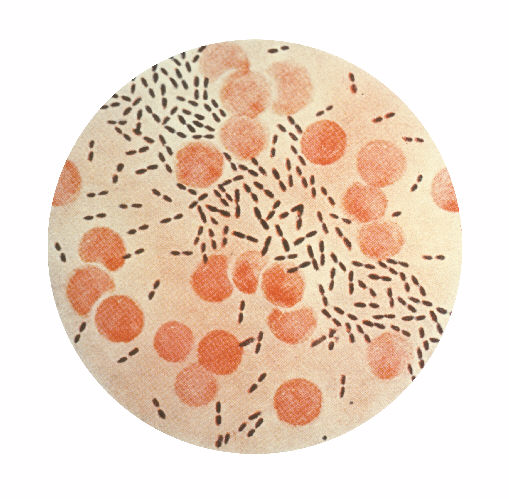
CDC PHIL - Photomicrograph of Streptococcus (Diplococcus) pneumoniae bacteria


# 5856


While the vast majority of people who contracted the H1N1 pandemic flu of 2009 recovered without incident, a very small minority saw severe – sometimes fatal – illness. 


Often during 2009 we saw reports of severe lung damage. Damage that in some cases was compared to what has been seen in H5N1 bird flu and during the great pandemic of pandemic of 1918.


A few of the stories from back then include:


In early September of 2009, in Pathology Of Fatal H1N1 Lung Infections, we looked at a report by Helen Branswell that looked early autopsy results.


Lung damage in fatal swine flu cases more bird flu than seasonal flu: expert

By Helen Branswell Medical Reporter (CP) 

TORONTO — The lungs of people who have died from swine flu look more like those of the victims of H5N1 avian influenza than those of people who succumb to regular flu, the chief of infectious diseases pathology at the U.S. Centers for Disease Control says.


Study of about 70 fatal H1N1 cases so far also reveals there may be more incidences of co-infections with bacteria than was earlier thought, Dr. Sherif Zaki told The Canadian Press in an interview.


A couple of weeks later in More On The Pathology Of Novel H1N1, we saw a report by Maggie Fox, then Health and Science Editor for Reuters, who brought us more details of this  story, including comments by Dr. Sherif Zaki of the U.S. CDC who  stated that "This is almost exactly what we see with avian flu. This looks like avian flu on steroids."


That same month, I wrote about the use of ECMO (Extracorporeal Membrane Oxygenation) in the treatment of severe lung injury in H1N1 victims in The ECMO Option.


In early December (see NIH: Post Mortem Studies Of H1N1) the NIH announced the results of a series of autopsies conducted on H1N1 victims in New York City over the summer, which are chronicled in the Archives of Pathology & Laboratory Medicine.


The NIH put together a press release, which provided highlights of the study.


FOR IMMEDIATE RELEASE
Monday, Dec. 7, 2009

Media Contact: Anne A. Oplinger
(301) 402-1663
niaidnews@niaid.nih.gov

New York Autopsies Show 2009 H1N1 Influenza Virus Damages Entire Airway

In fatal cases of 2009 H1N1 influenza, the virus can damage cells throughout the respiratory airway, much like the viruses that caused the 1918 and 1957 influenza pandemics, report researchers from the National Institutes of Health (NIH) and the New York City Office of Chief Medical Examiner. The scientists reviewed autopsy reports, hospital records and other clinical data from 34 people who died of 2009 H1N1 influenza infection between May 15 and July 9, 2009. All but two of the deaths occurred in New York City. A microscopic examination of tissues throughout the airways revealed that the virus caused damage primarily to the upper airway—the trachea and bronchial tubes—but tissue damage in the lower airway, including deep in the lungs, was present as well. Evidence of secondary bacterial infection was seen in more than half of the victims.


The team was led by James R. Gill, M.D., of the New York City Office of Chief Medical Examiner and New York University School of Medicine, and Jeffery K. Taubenberger, M.D., Ph.D., of the National Institute of Allergy and Infectious Diseases (NIAID) at NIH. The findings are reported in the Archives of Pathology & Laboratory Medicine, now available online and scheduled to appear in the February 2010 print issue.

<SNIP>

“This pattern of pathology in the airway tissues is similar to that reported in autopsy findings of victims of both the 1918 and 1957 influenza pandemics,” notes Dr. Taubenberger.


While many people continued to insist that swine flu was no worse than seasonal flu, obviously something was different in the way it produced severe lung damage.  


A year into the pandemic, I summarized many of the ways that the 2009 H1N1 virus differed from seasonal flu in There’s No Flu Like A New Flu.


While the overall incidence of these complications was relatively low, those who suffered from them often experienced extremely severe illness.


All of which serves as prelude to an open access study, published today in mBio, called:


Lethal Synergism of 2009 Pandemic H1N1 Influenza Virus and Streptococcus pneumoniae Coinfection Is Associated with Loss of Murine Lung Repair Responses

John C. Kasha, Kathie-Anne Waltersb, A. Sally Davisa, Aline Sandouka, Louis M. Schwartzmana, Brett W. Jaggera, Daniel S. Chertowa, Qi Lia, Rolf E. Kuestnerb, Adrian Ozinskyb, and Jeffery K. Taubenbergera


The entire study is available, and is well worth reading, but briefly:


Scientists at NIAID and the Institute for Systems Biology (ISB) infected experimental mice with both seasonal flu and the 2009 H1N1 pandemic flu, and after 48 hours exposed some of them to Streptococcus pneumoniae, one of the main causes of pneumonia.


Mice that were exposed only to the two flu strains showed expected flu symptoms, but all survived.


Mice that were exposed to seasonal flu and S. pneumoniae experienced minor lung damage, but once again, all survived.


But all of the mice infected with the pandemic H1N1 virus, and S. pneumoniae showed severe weight loss, lung damage, and 100% mortality


Excerpts from the press release below explain what else they found:


American Society for Microbiology


2009 H1N1 pandemic flu more damaging to lungs, opens opportunities for bacterial infection

(EXCERPT)

The lung tissues of the dead mice revealed that the alveoli were severely inflamed and the surfaces of the bronchioles were wiped clean of the protective layer of cells called the epithelium. There was also increased bacterial replication in the lungs of the co-infected mice, a sign that the bacteria were thriving there.


Looking at the mouse genes that were expressed during infection revealed more details about how the pandemic influenza virus sets the stage for lethal bacterial infections. Mice infected with the pandemic flu virus and S. pneumoniae had a similar inflammatory response as the other mice, but they lack responses that would repair and regenerate their damaged epithelial cells, those protective tissues that would otherwise keep bacteria from penetrating to deeper layers of tissue.


All these factors add up to big problems in the lung: as compared with seasonal flu, infection with the pandemic strain of flu was associated with more extensive damage to the epithelium that requires more extensive tissue repair. This opens the body up to attack from bacterial invaders, including Streptococcus pneumoniae.

(Continue . . . )


So not only did this duel infection lead to greater lung damage, and increased bacterial replication, it also disabled the lung’s ability to repair itself.


Since it can take 6 months or longer to develop a vaccine for a novel influenza virus, these results may suggest a bigger role for the 23-valent Pneumonia vaccine (PPVSV) during a future pandemic. 


More than a year after the end of the 2009 pandemic, scientists are still uncovering basic information about how pandemic flu differs from seasonal flu. 


With luck, work like this will provide better ways for us to deal with an outbreak, when the next one arrives.

»» Read More

Morens and Taubenberger: A New Look At The Panzootic Of 1872


# 4995


One of the most fascinating events in relatively modern infectious disease history occurred in the fall of 1872, when a massive wave of (presumably) equine influenza swept across North American, infecting much of the horse population from Canada to Mexico – and killing up to 10%.


You’ll find an excellent history of this outbreak from Horsetalk.co.nz.


How equine flu brought the US to a standstill


A Boston fire wagon without its horses.

September 26, 2007


Australia's equine flu outbreak may have crippled the racing industry, but an 1872 outbreak in North America brought the entire US economy to a virtual standstill.

(Continue . . .)


This was at a time in history when horses were the primary means of transportation, and the economic effects of this months long epizootic were substantial, and some have suggested it contributed to the economic Panic of 1873 the following year.


Ian York author of the Mystery Rays blog wrote about this incident back in December of 2009 in a blog called Influenza before 1918, part II: 1872.  A brief excerpt:


Without horses, business slammed to a halt; the mail didn’t run, groceries didn’t reach the cities, crops weren’t harvested or transported.  After a few weeks, most of the horses recovered and business followed, but the epizootic swept across the country (intensely tracked by the newspapers of the day, warning each city in turn that it was going to be attacked), finally fizzling out the following summer in British Columbia.


Little remembered today, this was a huge story in 1972.  The assumption has been that this was sparked by some drift or shift in an already existing equine influenza.


But David Morens and Jeffrey K. Taubenberger of the NIH bring us tantalizing details of a concurrent outbreak of poultry deaths across the country, and that raises some interesting questions.


Without the ability to analyze and identify pathogens from that era, researchers are understandably hampered in their understanding of what exactly what transpired 140 years ago.  


But Taubenberger and Morens discuss a plausible scenario where a highly pathogenic avian virus may have jumped species and infected horses, pigs, deer, and in some cases, even humans.


My thanks to mixin on FluTrackers for posting this link.


Morens and Taubenberger (2010) An avian outbreak associated with panzootic equine influenza in 1872: an early example of highly pathogenic avian influenza? Influenza and Other Respiratory Viruses 4(6), 373–377.

Abstract

Background An explosive fatal epizootic in poultry, prairie chickens, turkeys, ducks and geese, occurred over much of the populated United States between 15 November and 15 December 1872. To our knowledge the scientific literature contains no mention of the nationwide 1872 poultry outbreak.

Objective To understand avian influenza in a historical context.

Results The epizootic progressed in temporal-geographic association with a well-reported panzootic of equine influenza that had begun in Canada during the last few days of September 1872. The 1872 avian epizootic was universally attributed at the time to equine influenza, a disease then of unknown etiology but widely believed to be caused by the same transmissible respiratory agent that caused human influenza.

Conclusions Another microbial agent could have caused the avian outbreak; however, its strong temporal and geographic association with the equine panzootic, and its clinical and epidemiologic features, are most consistent with highly pathogenic avian influenza. The avian epizootic could thus have been an early instance of highly pathogenic avian influenza.


Jeffrey  K. Taubenberger and David Morens are, of course,  familiar names to followers of influenza and virology.


Both are researchers at NIAID. Taubenberger, quite famously, was the first to sequence the the genome of the 1918 Spanish Flu virus while David Morens is a prominent medical historian and professor.


Both are extensively published, and have collaborated often in the past.


As this report is too good to try to summarize, I’ll simply suggest you follow this link and read it in its entirety.

»» Read More

Morens, Taubenberger & Fauci: What’s Next For H1N1


# 4946


In an open access perspective article appearing in the journal mBio, well known NIH scientists and researchers David M. Morens, Jeffery K. Taubenberger, and Anthony S. Fauci give their take on the future of the novel 2009 H1N1 virus.


The 2009 H1N1 Pandemic Influenza Virus: What Next?

  1. David M. Morens, Jeffery K. Taubenberger, and Anthony S. Fauci

ABSTRACT

History suggests that the 2009 pandemic H1N1 influenza virus faces extinction unless it mutates to avoid already high global population immunity. The immune escape mechanisms potentially at its disposal include antigenic drift, antigenic shift via genetic reassortment, and intrasubtypic reassortment.


Going back to the late 19th century, the evolutionary histories of past pandemic viruses are examined in an effort to better understand the nature and extent of the immune pressures faced by the 2009 pandemic virus in the immediate future.


While human influenza viruses have often surprised us, available evidence leads to the hope that the current pandemic virus will continue to cause low or moderate mortality rates if it does not become extinct.


The FULL TEXT is available here.


For those who prefer the Press Release condensed version, we have that as well:


NIH scientists consider fate of pandemic H1N1 flu virus

Whither pandemic H1N1 virus? In a new commentary, scientists from the National Institute of Allergy and Infectious Diseases (NIAID), part of the National Institutes of Health, review the fates of previous pandemic influenza viruses in the years following a pandemic and speculate on possible future courses for the 2009 pandemic H1N1 (pH1N1) virus during the upcoming flu season and beyond.


The authors estimate that at least 183 million Americans (about 59 percent of the total U.S. population) have some immunity to pH1N1 because they were exposed to related viruses or vaccines prior to 2009, were immunized against pH1N1 or developed immunity following infection with the pandemic virus.


To stay in circulation in the face of such high levels of population immunity, the pH1N1 virus must adapt either through abrupt or gradual changes. The authors briefly examine a number of earlier pandemics and trace paths taken by the causative viruses. Some—for reasons not well understood—died out, while others, like those of 1889 and 1918, returned in an explosive fashion. Such an explosive return of pH1N1 virus is unlikely, note the authors, because global levels of immunity are already high and will increase further through immunization with 2010-2011 seasonal influenza vaccines, which contain the pH1N1 strain.


In light of what is known about pH1N1, the NIAID authors express a cautious optimism that unless it disappears entirely the virus will follow a route like that of 1968 pandemic virus, that is, it will persist in a form that causes relatively few deaths.


Nevertheless, the authors caution against complacency. As they acknowledge, many gaps remain in understanding how a given pandemic influenza virus adapts to increased immunity in humans. For that reason, influenza vaccination for everyone older than six months is a wise public health measure to maintain high levels of population-wide immunity. Immunization with 2010-2011 seasonal flu vaccine is particularly urged for babies older than six months, children, teens and young adults as the best way to protect individuals in those potentially more susceptible age groups from illness.

»» Read More