Showing posts with label Emerging Infectious Dieases. Show all posts

Novel Coronavirus: More Questions Than Answers


image

Coronavirus – Credit CDC PHIL


# 6736


While we wait for more information on the novel coronavirus that continues to pop up in the Middle East (see WHO Announces Additional Coronavirus Cases), it isn’t lost on most infectious disease geeks that this month (November) marks the 10th anniversary of the initial outbreak of SARS in Guangdong Province, China. 


Over the next eight months SARS (Severe Acute Respiratory Syndrome) infected more than 8,000 people, killing roughly 10%.  China, Hong Kong, and Taiwan were the hardest hit, but a handful of cases made it into Canada, the United States, and across Europe.


image

Source World Health Organization


By mid-April of 2003 we learned the illness was due to a novel coronavirus (SARS-CoV). A bit of a surprise really, since human coronaviruses had previously only been linked to mild respiratory illnesses.


Although eventually contained, SARS was the first genuine pandemic threat of the 21st century. It also served to remind us that influenza isn’t the only virus with pandemic potential.


One of the most authoritative accounts of the SARS outbreak, and how it appears to have been linked to the practice of consuming bushmeat in China, comes from Karl Taro Greenfeld’s book The China Syndrome: The True Story of the 21st Century's First Great Epidemic.


While civet cats, which were served in `wild flavor’ restaurants in China, were first implicated in this outbreak (see A Civets Lesson), bats have also been shown to carry this Coronavirus, and may be the primary host.


The jury is out on whether the virus was transmitted directly to man from bats, or perhaps from bats to civits to humans.


Now the world is watching another coronavirus – definitely not SARS – but of the same general family, and capable of producing serious, even fatal illness in humans.


And like SARS, this new virus may be of bat-origin.


What we don’t know (yet) is the source of this virus, how it has managed to jump to at least 6 people in two countries, and whether – once contracted – it can be passed on to other humans.


Up until this week, the reassuring mantra has been that the virus does not transmit from human-to-human (H2H). The reason for that assumption has been the lack of nosocomial infection in hospitals where the first couple of cases were treated.


But this week we’ve learned of two family members in Saudi Arabia who tested positive for the virus, and that there were two other family members with similar symptoms, one of whom died.   


One of the two additional family members tested negative, but we’ve little actual experience with the recently developed tests for this virus, and so its sensitivity isn’t well established. Tests are pending on the fourth family member who died.


Although a common environmental exposure is always possible, these latest revelations put H2H transmission back on the table.


The lack of human-to-human transmission in the earlier cases doesn’t rule out H2H transmission now, or in the future. When a virus jumps to a new species, it isn’t necessarily completely optimized for its new environment.


So one of the things we watch for are signs of further adaptation as the virus `figures out’ its new host. 


Influenza viruses are the absolute master at this type of evolutionary adaptation, but are by no means the only virus with this ability.


One of the ways researchers test viruses is via a serial passage experiment.  It is essentially how Ron Fouchier created a `mammalian-adapted’ H5N1 virus in the laboratory last year, and it mimics what viruses do in the wild.


Last year, in H5N1: A Rite Of Passage, I described how serial passage studies are conducted, but briefly, an experimental animal is infected with a virus, and that virus is then collected and used to inoculate another lab animal. 


image

Simplified Illustration of a Serial Passage Experiment. 


The process is repeated, and after 10 or so iterations, the virus is then examined for `adaptive changes’. Sometimes, after multiple passes through a series of hosts, the virus picks up mutations that favor its survival in the new species.


This process happens outside of the laboratory as well, which is why – when a virus jumps to a new species – we watch it carefully to see if it develops `legs’; the ability to spread efficiently.


Over the summer we watched as swine-variant H3N2v viruses tried – and for the time being, failed – to make a sustained jump to humans (see MMWR: H3N2v Related Hospitalizations In Ohio – Summer 2012). But past performance is no guarantee of future results.


There’s always next year.


And so it is with this new coronavirus. It could recede back into the woodwork, or it could sputter ineffectually for years, threatening occasionally - but never quite succeeding -  as a major public health threat.


Or it could develop `legs’ and become the next big global health threat.  At this point, no one knows.


For those looking for comfort, pandemics are a fairly rare occurrence. Many viruses emerge and threaten, but few are truly ready for prime time.


Like with H5N1, H3N2v, Nipah, and a handful of other emerging viruses that continue to make the occasional foray into the human population, we remain in a watchful waiting mode with this new coronavirus. 


For more coverage of this developing story, I’d recommend Maryn McKenna’s blog from last night:


WHO Announces Family Cluster of Cases of New Coronavirus


Any article or report from Helen Branswell is worth reading, but specifically this one from yesterday, and this one from today.


And finally, Crofsblog for the best news round up on the coronavirus, and many other EIDs.


»» Read More

Study: Intra-Continental Spread of Invasive Non-Typhoidal Salmonella

image 

 Salmonella typhimurium bacteria – Credit CDC PHIL


# 6599


You might not think there’d be much of a connection between an emergent serotype of Salmonella and the HIV epidemic in Sub-Saharan Africa - but if researchers from the Wellcome Trust Sanger Institute have it right - this highly pathogenic bacterial strain may have had a powerful viral ally.


There are more than 2500 serovars of Non-Typhoidal Salmonella (NTS) that can produce gastroenteritis or other infections in humans. Taken together, these Gram negative, anaerobic bacteria are believed to be the second most common source of food poisoning in the United States.


Those infected often develop diarrhea, fever, vomiting, and abdominal cramps that may persist for several days.


In the western world most recover without treatment, although the CDC estimates that nearly 400 people infected die each year in the United States (Cite  CDC Food borne Illness Estimates).


In developing countries, Non-typhoidal Salmonella can (and does) exact a much higher toll, particularly among those who may be malnourished or suffer from chronic ailments such as malaria and HIV.


In recent years researchers have also noted a much more virulent form of NTS, spreading across sub-Saharan Africa, that they’ve dubbed  Invasive Non-Typhoidal Salmonella (iNTS). 


Not only is it a multi-drug resistant strain, it is fatal in about 25% of those who contract it.


Today, we’ve a study that appears in Nature Genetics that links the Intracontinental spread and evolution of this invasive and severe form of Salmonella to the emergence and spread of HIV.


Intracontinental spread of human invasive Salmonella Typhimurium pathovariants in sub-Saharan Africa

Chinyere K Okoro,Robert A Kingsley,Thomas R Connor,Simon R Harris,Christopher M Parry,Manar N Al-Mashhadani,Samuel Kariuki,Chisomo L Msefula,Melita A Gordon,Elizabeth de Pinna,John Wain,Robert S Heyderman,Stephen Obaro,Pedro L Alonso,Inacio Mandomando,Calman A MacLennan, Milagritos D Tapia,Myron M Levine,Sharon M Tennant,Julian Parkhill & Gordon Dougan

Published online 30 September 2012


While the bulk of the study is behind a pay wall, the Abstract is available, as is this press release from the Wellcome Trust Sanger Institute.


New pathogen epidemic identified in sub-Saharan Africa

image

Researchers track the spread of human invasive non-Typhoidal Salmonella in sub-Saharan Africa

A new study out today (Sunday 30 September) reveals that the emergence and spread of a rapidly evolving invasive intestinal disease, that has a significant mortality rate (up to 45%) in infected people in sub-Saharan Africa, seems to have been potentiated by the HIV epidemic in Africa.


The team found that invasive non-Typhoidal Salmonella (iNTS) disease is caused by a new form of the bacteria Salmonella Typhimurium that has spread from two different focal hubs in Southern and Central Africa beginning 52 and 35 years ago, respectively. They also found that one of the major contributing factors for the successful spread of iNTS was the acquisition of genes that afford resistance to several front line drugs used to treat blood-borne infection such as iNTS.


iNTS is a blood-borne infection that kills approximately one of four people in sub-Saharan Africa who catch it. Yet, in the rest of the world, NTS is a leading cause of acute inflammatory diarrhoea that is self-limiting and tends to be fatal in less than 1 per cent of people infected. The disease is more severe in sub-Saharan Africa than the rest of the world because of factors such as malnutrition, co-infection with malaria or HIV and potentially the novel genotype of the Salmonella bacteria.


"The immune system susceptibility provided by HIV, malaria and malnutrition at a young age, may provide a population in sub-Saharan Africa that is large enough for this detrimental pathogen to enter, adapt, circulate and thrive," says Chinyere Okoro, joint first author from the Wellcome Trust Sanger Institute. "We used whole genome sequencing to define a novel lineage of Salmonella Typhimurium that is causing a previously unrecognised epidemic across the region. Its genetic makeup is evolving into a more typhoid like bacteria, able to efficiently spread around the human body"


<SNIP>


"There has been some evidence that this disease can be passed from human to human. Now the race is on to discover how NTS is actually transmitted in sub-Saharan Africa so that effective intervention strategies can be implemented."


(Continue . . . )


And for more on all of this, here’s Debra McKenzie’s article for New Scientist.


HIV could be turning salmonella nastier


18:00 30 September 2012 by Debora MacKenzie


A nastier kind of salmonella infection has emerged alongside the HIV epidemic in Africa. The finding is the first evidence that HIV might be allowing new human pathogens to evolve in immunosuppressed people.


(Continue . . . )


»» Read More

WHO: Coronavirus Not SARS


image

Coronavirus – Credit CDC PHIL


image


# 6578


We are just three days into the emerging coronavirus story (see here, here, and here) , and the short message above, tweeted this morning by the World Health Organization, deserves repeating.


Despite coming from the same family of viruses as SARS (as do many other, far less pathogenic viruses), this new coronavirus is not SARS - and until more testing can be completed - we don’t know how much of a danger it actually presents.


The WHO continued to tweet:


image

image

image


Kidney failure, while not unheard of in SARS, was not a common presenting symptom back in 2002-2003.  And SARS transmitted readily from human to human. Thus far, we haven’t seen signs of that sort of transmission with this new virus.


None of which is to say this virus couldn’t prove to be a bigger public health threat down the road, only that it is premature to think of this virus as the next global health crisis.


The media has been quick to refer to this virus as SARS-like, but it remains to be seen just how much the two viruses really have in common.


The discovery of new - even deadly - viruses that can afflict humans or other mammals is not uncommon. And most of the time, after an initial flurry of breathless news reports, the threat is found to be less than of pandemic proportion.


To provide a little perspective, a few viral discoveries in recent years that sparked initial hyperbolic headlines, but have (so far, anyway) failed to present a major public health threat:


  • We’ve watched a number of triple-reassortant swine flu (Variant) viruses (H1N1v, H1N2v, H3N2v) make tentative jumps into human hosts (see An Increasingly Complex Flu Field), and so far they’ve failed to spread efficiently, or to produce substantial levels of morbidity.
  • In August of this year (see New Phlebovirus Discovered In Missouri) the CDC announced the detection of a novel tick-borne virus in America’s heartland.  Despite being detected in 2009, only two cases have been reported.
  • In March of this year, we learned of a new H17 flu subtype, carried by bats in an unusual host: bats (see A New Flu Comes Up To Bat).
  • In November of 2011 we saw a major die-off of seals in New England, that was eventually traced to a new mammalian adapted influenza virus mBio: A Mammalian Adapted H3N8 In Seals.  
  • In October of 2008  doctors in Zambia and South Africa ran across a mysterious, previously unclassified virus that caused hemorrhagic symptoms in its victims similar to Ebola (see Lujo Virus: Newly Identified Arenavirus) While highly contagious, and fatal in 4 of the 5 identified victims, it has not reappeared since 2008.


And if you want to go back a few more years, you can add Nipah, Hendra, H5N1, Ebola, Marburg . . . .


The truth is, scientists – with better tools available today – are indentifying `new’ viruses all of the time. A few well distributed viruses that until recently, were unknown, include:


  • The human metapneumovirus (HMPV) was identified in Dutch children with bronchiolitis about a decade ago.  Since then, it has been found to be ubiquitous around the world, and responsible for a significant percentage of childhood respiratory infections . . . yet until 2001, no one knew it existed.
  • Human Bocavirus-infection (HBoV) wasn’t identified until 2005, when it was detected in 48 (9.1%) of 527 children with gastroenteritis in Spain (cite).  It has since been found around the globe using PCR testing.


And the list grows longer every year.


While most will prove to be less than devastating in impact, we need only look at HIV, the 1918 H1N1 pandemic, and the pandemic viruses of 1957 and 1968 to realize that novel viruses can sometimes emerge and cause incredible morbidity and death.


According to well respected anthropologist and researcher George Armelagos of Emory University, we are entering the Third Epidemiological Transition.

This third transition began in the late 1970s or early 1980s, and is hallmarked by newly emerging infectious diseases, re-emerging diseases carried over from the 2nd transition (which began with the industrial revolution, and added chronic, non-infectious, degenerative diseases), and a rise in antimicrobial resistant pathogens.


When you combine those factors with an increasingly mobile global population of about 7 billion people, and huge increases in the number of animals being raised for food consumption (often in environments conducive to the spread of diseases), and you have a recipe for explosive growth in diseases.


Hence the need for continual surveillance, which will help us spot – and if we are lucky, even contain – the next pandemic before it can spread widely.

»» Read More

Novel Viruses & Chekhov’s Gun


# 6475


Although the attribution is suspect, there is an old adage in literary circles – credited most often to Russian playwright Anton Chekhov – that if you show a gun hanging on the wall in the first act, it absolutely must go off by the third.


It is such a well used device, that I suspect it leads many people to believe we are on the brink of a pandemic every time a novel influenza virus is reported in humans.


Fortunately, emerging infectious diseases are not compelled to follow the dictums of modern literary convention. New flu viruses are constantly cropping up in humans, but only rarely do they portend a pandemic.

With headlines last month on a novel H3N8 `Seal flu’ with supposed pandemic potential, and several small clusters of H3N2v swine flu infections in the Midwest over the past few weeks, today seemed like a good day take a historical look at a few viral contenders that tried, and failed, to spark a pandemic.

Novel flu viruses are most likely to be zoonotic; jumping from another animal species to man, either directly, or through an intermediary host, or via reassortment. 

image

Over the past 100 years, we’ve seen four of these viral jumps spark a pandemic. The H1N1 pandemic of 1918, the H2N2 pandemic of 1957, H3N2 in 1968, and novel H1N1 in 2009.

Flu Timeline 2010

But interspersed among these global pandemics have been numerous novel viruses that have infected humans and yet ultimately failed to produce a pandemic.


The most obvious example is the H5N1 virus, which first appeared 15 years ago in Hong Kong - and after a 5 year hiatus - returned in 2003.


Since that time has infected more than 600 people.


Yet despite morphing into more than 20 distinct clades, and spreading from Asia to Europe and the Middle East, this virus remains poorly adapted to human physiology and has (thus far) proved incapable of sparking a pandemic.


The caveat being, that this could change.


H5N1, like all flu viruses, is constantly evolving.  As long as it is out there, it poses a potential pandemic threat.


Similarly, we’ve seen scattered human infections by the H9N2 avian virus, and sporadic attempts by various strains of the H7 avian virus to jump to man.


  • In 2003 an outbreak of H7N7 at a poultry farm in the Netherlands went on to infect at least 89 people. Most of the victims were only mildly affected, but one person died.
  • In 2004 two people in British Columbia tested positive for H7N3 (see Health Canada Report) during an outbreak that resulted in the culling of 19 million birds.
  • In 2006 and 2007 there were a small number of human infections in Great Britain caused by H7N3 (n=1)  and H7N2 (n=4), again producing mild symptoms.


But beyond these avian strains, we’ve seen human adapted flu viruses that have threatened – but ultimately failed – to spark a pandemic.


The first example comes from shortly after the end of WWII with what would become known as the `pseudo-pandemic’ or vaccine failure of 1947.


Fearing that crowded ships and barracks could give rise to a reprise of the 1918 pandemic, the United States Military  commissioned Dr. Thomas Francis of the University of Michigan and his protégé Jonas Salk to come up with a viable influenza vaccine in 1943.


Within a year a vaccine based on the 1934 and 1943 flu strains was in wide use in the military, and for several years the Francis/Salk vaccine worked well.


But in 1947, a new variant of the H1N1 virus appeared on military bases in Japan,and quickly spread from there infecting hundreds of millions around the globe (see 2002 PNAS article).


While it produced a generally mild illness, and few excess deaths, this new strain apparently had drifted enough antigenically to evade both the vaccine and community immunity acquired from earlier strains.


Had it been more virulent, the 1947 flu virus might well have been considered a pandemic.  Today it is barely remembered, except by virologists.


Four years later, a far more ominous flu strain made a brief appearance during the 1950-51 flu season.


For about six weeks, a highly virulent influenza erupted in Liverpool, England and then spread across the UK and to Eastern Canada.


For a time, it was as deadly as the 1918 pandemic.

image

This startling graphic comes from the March 16th, 1951 Proceedings of The Royal Society of Medicine – page 19 – and shows in detail the tremendous spike in influenza deaths in early 1951 over the (admittedly, unusually mild) 1948 flu season. 


The CDC's EID Journal  has a stellar account of this 1951 event, and is very much worth reading.


Viboud C, Tam T, Fleming D, Miller MA, Simonsen L. 1951 influenza epidemic, England and Wales, Canada, and the United States. Emerg Infect Dis [serial on the Internet]. 2006 Apr [date cited].


Despite its virulence, and obvious ability to spread efficiently from human-to-human, this virus died out as suddenly and mysteriously as it appeared.  


It remains a medical mystery.


Fast forward to  February 1976, and a young recruit at Ft. Dix, New Jersey fell ill and died from a virus that was later isolated and dubbed A/New Jersey/76 (Hsw1N1).


This swine-flu virus went on to infect more than 200 soldiers on the base, and caused severe respiratory disease in 13 of them. How and why it appeared in New Jersey remains unknown.


While the death rate was very low, this virus appeared to easily transmissible among humans. This led to the swine flu pandemic scare of 1976, which I chronicled several years ago in Deja Flu, All Over Again. 


The feared swine flu pandemic never materialized, and for reasons we cannot explain, the virus simply disappeared.


In the `close but no cigar’ category,  a year later we did see an epidemic - at least among children - with the return of the H1N1 virus after a 20 year absence. It was dubbed the `Russian Flu’, as it was believed to have escaped from a Russian research laboratory.


Given the limits of testing and surveillance, there have most certainly been other failed viruses – of which we are unaware – that simply `flu beneath our radar’. 


In recent years we’ve also seen a number of  non-flu viruses, such as the 2003 SARS outbreak, Clusters Of HEV68 Respiratory Infections, and various adenovirus outbreaks, that have produced illness and concerns, but no pandemic.


None of this tells us what will become of the H3N2v swine flu virus, or any of the other novel strains that are currently out there. Another pandemic will occur.  We just don’t know when, or from what source.


But it does provide some perspective.


While all pandemics are caused by novel viruses, not all novel viruses produce pandemics.


Emerging viruses deserve our attention and respect, and H3N2v is certainly no exception. In time, this variant virus may prove to be a significant public health threat.


But as we watch these myriad novel viruses crop up around the globe, it should provide some solace to remember: history shows us that in the world of emerging infectious diseases . . .


. . .  by the time act III comes along – we often find that Chekhov’s gun is loaded with blanks.

»» Read More

HFMD: An Old Illness With A New Cause


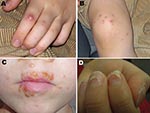
 Thumbnail of Vesicular eruptions in A) hand, B) foot, and C) mouth of a 6.5-year-old boy from Turku, Finland, with coxsackievirus (CV) A6 infection. Several of his fingernails shed 2 months after the pictures were taken. D) Onychomadesis in a 10-year-old boy from Seinäjoki, Finland, 2 months after hand, foot and mouth disease with CVA6 infection. Photographs courtesy of H. Kujari (A–C) and M. Linna (D).

Vesicular eruptions in A) hand, B) foot, and C) mouth of a 6.5-year-old boy from Turku, Finland, with coxsackievirus (CV) A6 infection.  Credit - CDC EID Journal 


# 6138


Since late in January the newshounds on FluTrackers  have been following a story out of Alabama, where public health authorities have been dealing with an offseason outbreak of Hand Foot and Mouth Disease (HFMD).


Hand Foot and Mouth Disease is often confused by the public with Foot and Mouth Disease (FMD) seen in cattle, swine, and sheep.  Despite the similar name, the diseases are in no way related.


HFMD is a very common viral infection, usually peaking late summer or early fall, and mainly seen among children under the age of 10 (although adults may be vulnerable as well).


It is caused by several of the non-polio enteroviruses.


While this virus classification may be unfamiliar to a lot of people, the 60+ viruses that fall into this category are among the most prevalent viral infections in the world, probably only second to the myriad and ubiquitous variants of Rhinovirus (`common cold’) that circulate every year.


The two most common causes of HFMD have been the Coxsackie A16 virus, and the Enterovirus-71 (EV-71), and rarely, the Coxsackie A10 virus.


The disease in the United States is commonly caused by the Coxsackie A16 virus and is generally mild. Outbreaks are not uncommon in schools and childcare facilities.


Over the past decade we've seen outbreaks - particularly in the Far East  - caused by the more pathogenic EV-71 virus, and this version of the HFMD can occasionally be quite serious.


Last year, Vietnam reported more than 90,000 cases of HFMD and reported more than 150 deaths, mostly among young children.


And two years ago , the Virology Journal, published an analysis of an EV-71 HFMD virus that caused a major disease outbreak in Fuyang City, China in 2008 that showed it was due to an emerging recombinant virus (see China: A Recombinant EV-71).


In 2008, the CDC’s EID Journal carried a dispatch describing an outbreak of HFMD in Finland due to an unusual, and apparently emerging, viral cause; the Coxsackie A6 virus.


Dispatch

Coxsackievirus A6 and Hand, Foot, and Mouth Disease, Finland

Riikka Österback, Tytti Vuorinen, Mervi Linna, Petri Susi, Timo Hyypiä, and Matti Waris
Abstract

During fall 2008, an outbreak of hand, foot, and mouth disease (HFMD) with onychomadesis (nail shedding) as a common feature occurred in Finland. We identified an unusual enterovirus type, coxsackievirus A6 (CVA6), as the causative agent. CVA6 infections may be emerging as a new and major cause of epidemic HFMD.


This dispatch describe a prolonged nationwide outbreak of HFMD starting in 2008, in Finland:


During fall 2008, a nationwide outbreak of HFMD occurred in daycare centers and schools in Finland, starting in August and continuing at least until the end of the year and possibly into the following year. From vesicle fluid specimens of hospitalized children, we identified the etiologic agent as coxsackievirus A6.


Since then, we’ve seen a growing number of reports of HFMD outbreaks around the world due to this particular coxsackievirus, including:


An outbreak of coxsackievirus A6 hand, foot, and mouth disease associated with onychomadesis in Taiwan, 2010

Sung-Hsi Wei, Yuan-Pin Huang, Ming-Chih Liu, Tsung-Pei Tsou, Hui-Chen Lin, Tsuey-Li Lin, Chen-Yen Tsai, Yen-Nan Chao, Luan-Yin Chang and Chun-Ming Hsu

BMC Infectious Diseases 2011, 11:346 doi:10.1186/1471-2334-11-346

Published: 14 December 2011

Hand, Foot, and Mouth Disease Caused by Coxsackievirus A6, Japan, 2011

Fujimoto T, Iizuka S, Enomoto M, Abe K, Yamashita K, Hanaoka N, et al.

Emerg Infect Dis [serial on the Internet]. 2012 Feb


Until now, this A6 virus has not been associated with HFMD outbreaks in the United States. This from the Alabama Health Department’s website:


Alabama Department of Public Health monitors new cases of hand, foot and mouth disease


FOR IMMEDIATE RELEASE 
CONTACT:  Mary McIntyre, M.D.
(334) 206-5325


The Alabama Department of Public Health asks the public to be aware that cases of the contagious viral illness called hand, foot and mouth disease are more numerous and severe than normal in Alabama this winter. No known deaths have resulted from the virus, although there have been hospitalizations and there can be some rare, severe complications.


As of Feb. 10, the ADPH has interviewed patients and collected and submitted specimens to the Centers for Disease Control and Prevention for individuals with febrile illnesses and rash. Based on the results of testing done by the CDC, the Coxsackie A6 virus has been identified.


This  specific type of virus has been identified in other countries but has not previously been
associated with an outbreak in the U.S. There is no specific treatment for hand, foot and mouth
disease.


“As this is a new virus for our population, we can expect more cases and are monitoring for any change in the clinical presentation,” Dr. Donald Williamson, state health officer, said. “We will continue statewide surveillance on severe cases of this emerging disease and ask physicians and infection control specialists to make notifications to us.”

The public should not be unduly alarmed at this time; however, individuals diagnosed with hand, foot and mouth disease need to follow the recommendations of their health care provider to remain at home until they have no fever, all lesions have scabbed over, and no lesions have appeared for two days.  


The viral disease affects the hands, feet and mouth and usually infects infants and children younger than 5 years old in summer and early autumn. There is no vaccine to protect against it, but learning about the disease and following these recommendations can reduce the risk of illness.


Hand, foot and mouth disease spreads: 

  • Person-to-person: Direct contact with saliva, sputum or nasal mucus from the infected person’s nose and throat or with fluid in blisters, or with stool.
  • Surface-to-person: Touching objects and surfaces touched by infected persons.
  • Infected persons are most contagious during the first week of the illness, but can still pass the virus for weeks after symptoms have gone away.

These are the symptoms:


  • Fever, rash, sores, poor appetite, a vague feeling of illness and sore throat.
  • Painful sores in the mouth may blister and become ulcers.
  • Skin rash, flat or raised red spots, develops over 1 to 2 days.
  • Rash usually on the palms of the hands and soles of the feet and may appear on the knees, elbows, bottom or genital area.
  • Dehydration may occur because of painful mouth sores.


Recommendations to protect yourself and prevent its spread:

  • Wash hands with soap and water carefully and frequently, especially after going to the bathroom, after changing diapers, and before preparing foods or beverages.
  • Disinfect surfaces and items, including toys. First wash the items with soap and water; then disinfect them with a solution of 1 tablespoon of bleach and 4 cups of water.
  • Avoid close contact such as kissing, hugging or sharing eating utensils or cups with infected people.


Health care providers are being asked to notify the Alabama Department of Public Health if higher than normal numbers of cases are being hospitalized with hand, foot and mouth disease symptoms. Please call (800) 338-8374 immediately for hospitalized cases.


     -30-

2/10/12


While apparently a bit more serious than the garden variety of HFMD we are used to seeing in the United States, this A6 virus doesn’t appear to be as pathogenic as the EV-71 virus seen in Asia.


But its arrival in the United States serves as a reminder that well adapted emerging viruses are very good at spreading, and that with today’s highly mobile society, oceans and borders provide little in the way of protection.

»» Read More

EID Video Roundup


# 5901


Yesterday I wrote about what we might look for in the flu season ahead, but as the movie `Contagion’ showed us, influenza isn’t the only emerging disease threat we have to concern ourselves with.


According to well respected anthropologist and researcher George Armelagos of Emory University we are in a time of emerging (often zoonotic) infectious diseases.


I wrote at some length about this last February in The Third Epidemiological Transition, but briefly:


Mankind’s first disease era, dubbed the Paleolithic Baseline, describes the first few million years of human existence, up to about 10,000 years ago.


During this time mankind existed in small, isolated groups as hunter-gatherers where population size and density remained low. Their sparse interaction with humans and other animals, along with limited range of travel, tended to minimize the effect of infectious diseases.


While diseases diseases and parasites plagued humans, those that required a constant supply of susceptible hosts, tended to die out quickly. 


The first epidemiological transition began about 10,000 years ago, when man began to domesticate animals. Q Fever, anthrax, influenza, measles, and tuberculosis all originated in non-human hosts, and jumped to mankind only after animals were brought into the barnyard.


The second epidemiological transition began about 200 years ago, with the industrial revolution. While many of the existing diseases brought forth during the first transition certainly did not go away, new – chronic, non-infectious, degenerative diseases – were added to the mix.


With advances in medicine, sanitation, and technology the average lifespan markedly increased. With that came diseases of age that simply hadn’t been all that common when 40 years was considered a long life (e.g. heart problems, osteoarthritis, cancer). 


The Third Epidemiological Transition began in the late 1970s or early 1980s, and is hallmarked by newly emerging infectious diseases, re-emerging diseases carried over from the 2nd transition, and a rise in antimicrobial resistant pathogens.


So on this quiet Sunday morning, a trio of videos on this new age of emerging infectious diseases. 


First stop, a 2008 presentation to the Vegetarian Society of Hawaii by Dr. Michael Greger, author of Bird Flu: A Virus of Our Own Hatching, on the bird flu threat and the rise of emerging infectious diseases.


Next up a lecture by Stanford Professor Lucy Shapiro on Emerging Infectious Diseases and Global Health which covers not only emerging infectious diseases but also the rise of antibiotic resistant organisms as well.


This video is part of the UC Berkeley Graduate Council Lectures, and is from 2009. 


Both videos above run approximately 60 minutes.


And for a last stop, a relatively short (6 minute) video produced by the CDC on how their global disease detectives are working to discover, and stop, the next emerging disease threat.


While influenza is the most likely source of the next pandemic, these videos illustrate that it isn’t the only threat out there.


For more on non-influenza pandemic and epidemic possibilities, you may wish to explore:


The Scientific Plausibility of `Contagion’ 
Bushmeat,`Wild Flavor’ & EIDs
The Pathogen That Lies Ahead
It Isn’t Just Swine Flu
Nathan Wolfe And The Doomsday Strain
»» Read More

WSJ: Nathan Wolfe & Viral Chatter


# 5886


A decade ago `wild flavor’ restaurants were the rage in mainland China, most particularly in Guangzhou Province. Diners there could indulge in exotic dishes – often slaughtered and cooked tableside - including dog, cat, civit, muskrat, ferret, monkey, along with a variety of snakes, reptiles, and birds.


What are commonly referred to as `bushmeat’.


It was from this practice that the SARS is believed to have emerged, when kitchen workers apparently became infected while preparing wild animals for consumption.


Before SARS burned out, more than 8,000 people were infected around the globe and at least 800 died.


In the aftermath of the SARS epidemic – at least for a time – Chinese authorities cracked down on many of these `wild flavor’ establishments, although some reportedly still flourish in parts of China.


In Africa consumption of bushmeat is common, and often ends up illegally imported into the United States, Canada, and the European Union.


In recent years we’ve seen an increase in the number of outbreaks of Monkeypox in central and western Africa, and even a rare outbreak in the United States in 2003 when an animal distributor imported hundreds of small animals from Ghana, which in turn infected prairie dogs that were subsequently sold to the public (see MMWR Update On Monkeypox 2003)


image

(Photo Credit CDC PHIL)


While dubbed `monkeypox’, this less lethal cousin to smallpox is probably more commonly found in rodents than in monkeys.  Both of which are often targets of bushmeat hunters.


No vaccine is available for monkeypox, but the smallpox vaccination is said to reduce the risk of infection.


Earlier this year the British papers were filled with reports of `bushmeat’ being sold in the UK. A couple of links to articles include:


Meat from chimpanzees 'is on sale in Britain' in lucrative black market

Chimp meat discovered on menu in Midlands restaurants


The slaughtering of these intelligent (and often endangered) primates for food (but mostly profit) is horrific its own right, but it also has the very real potential of introducing zoonotic pathogens to humans.


To give some perspective on the size of the problem, in 2010 a study published in the journal Conservation Letters  looked at the amount of smuggled bushmeat that was coming into Paris's Charles de Gaulle airport over a 17 day period on flights from west and central Africa.


An Associated Press article provides the details (link & excerpt below):


Tons of Bushmeat Smuggled Into Paris, Study Finds

By MARIA CHENG and CHRISTINA OKELLO Associated Press Writers

PARIS June 17, 2010 (AP)

(EXCERPT)

Experts found 11 types of bushmeat including monkeys, large rats, crocodiles, small antelopes and pangolins, or anteaters. Almost 40 percent were listed on the Convention on International Trade in Endangered Species.


In 2005, the CDC’s EID Journal carried a perspective article on the dangers of bushmeat hunting by Nathan D. Wolfe, Peter Daszak, A. Marm Kilpatrick, and Donald S. Burke . 


It describes how it may take multiple introductions of a zoonotic pathogen to man – over a period of years or decades – before it adapts well enough to human physiology to support human-to-human transmission.


Bushmeat Hunting, Deforestation, and Prediction of Zoonotic Disease


Beyond SARS and monkeypox, a few other viruses of concern include Hendra, Nipah, Ebola, avian influenzas, hemorrhagic fevers, many variations of SIV (Simian immunodeficiency virus), and of course . . .  Virus X.


The one we don’t know about.  Yet.


On the frontlines attempting to interdict the next emerging pathogen is Dr. Nathan Wolfe, whom I’ve written about several times before, including:


Nathan Wolfe And The Doomsday Strain
Nathan Wolfe: Virus Hunter


You can also view an absolutely fascinating TED Talk by Dr. Wolfe.

image
Video Link


Dr. Wolf has an essay in today’s WSJ that is adapted from his new book ("The Viral Storm: The Dawn of a New Pandemic Age."), that looks at ways that monitoring `viral chatter’ could tip us off to the next emerging pandemic.


Where Will The Next Pandemic Come From?

To intercept killer viruses, we need to monitor 'viral chatter' in the wilds of Central Africa and Southeast Asia


His vision of a `viral war room’, one that would monitor viral chatter and electronic medical records around the globe, does not exist yet.  But there are some volunteer organizations out there working on a much smaller scale -such as ProMed Mail, FluTrackers, the Flu Wiki, and the rest of flublogia  – that are attempting to find early indicators of viral trouble from press reports around the world. 


For more on how the dedicated volunteer newshounds of the Internet work to track down these stories, I would invite you to read:


Newshounds: They Cover The Pandemic Front.

»» Read More

NRDC Report: Climate Change and Health Threats


# 5735


The NRDC (Natural Resources Defense Council) is a non-profit, tax exempt, environmental action group that was founded more than 40 years ago, with a staff of over 300 scientists and lawyers and more than 1 million members.


Using data gleaned from the CDC and the National Climatic Data Center, the NRDC has put together a detailed series of reports on the impact of climate change on the health of those living within the United States.


This report is divided into 6 main sections.


Climate Change and Health Threats


Each section contains an interactive map showing the potential climatological impact on the health of Americans.


The one below shows that 28 states now host mosquitoes capable of carrying and transmitting tropical diseases like Dengue, but the report tells us only 3 (Florida, Virginia, and Maryland) have plans in place to deal with this contingency.

image


Other infectious diseases that are likely to be exacerbated by climate change include other mosquito vectored diseases like the West Nile Virus, and tickborne diseases such as Lyme.


Extreme heat related illnesses, drought, flooding, and air pollution are all climate related health threats as well.


You’ll find numerous links to background reports and data on each of these topics, along with links to a number of state plans to deal with them.


There is a lot to read in these reports, including advice on how to deal with these dangers.


The NRDC published a lengthy press release yesterday regarding these reports and their interactive web tools.


In Your Backyard: Climate Change Will Worsen Extreme Heat, Flood and Drought Frequency, Air Pollution and Infectious Disease Threats

State-by-state analysis unveiled in new NRDC web tool

WASHINGTON (August. 3, 2011) -- Climate change is expected to lead to worsening drought conditions and greater heat extremes, increased threats of Dengue Fever, drought, floods, air pollution and myriad health problems, according to the Natural Resources Defense Council.


A new web tool unveiled by NRDC lets users read how their state might be impacted by climate change. On the site, www.nrdc.org/climatemaps, users can see local data and maps detailing extreme weather patterns throughout the country, see local climate change vulnerabilities and learn about health problems in their own communities that are connected to climate change.


Based on an analysis of data gathered from the Environmental Protection Agency, the U.S. Department of Agriculture, Centers for Disease Control and Prevention and other resources, NRDC’s new “Climate Change Threatens Health” webpage lets users see the effects of climate change at a regional and state level.


(Continue . . . )


Since the first step in making any preparedness plan is identifying potential threats, these reports provide valuable information for individuals, businesses, and local governments.


They are well worth taking the time to consider.

»» Read More

A Few Recent Reports From CIDRAP


# 5431


While I’ve been otherwise occupied during the past week blogging on Japan and preparedness issues, Lisa Schnirring and Robert Roos of  CIDRAP have been doing their usual terrific job reporting on flu and infectious disease-related stories.


A few recent highlights very much worth exploring include:


Preliminary studies show lower flu-shot effectiveness in Europe

Robert Roos * News Editor

Mar 21, 2011 (CIDRAP News) – Preliminary studies suggest that this year's trivalent seasonal flu vaccine used in Europe was less effective against the 2009 H1N1 virus than last year's monovalent H1N1 vaccine was, possibly because of some degree of mutation in the virus, according to recent reports in Eurosurveillance.

(Continue . . . )

US flu activity drops for second week

Lisa Schnirring * Staff Writer

Mar 21, 2011 (CIDRAP News) – For the second week in a row, most indicators of flu activity declined, except for deaths in children and overall deaths related to pneumonia and flu, the US Centers for Disease Control and Prevention (CDC) said in its most recent update.


(Continue . . . )

Chinese researchers link febrile disease to new virus

Lisa Schnirring * Staff Writer

Mar 16, 2011 (CIDRAP News) – Chinese researchers who have been investigating puzzling outbreaks of a febrile illness in rural areas that they thought might be anaplasmosis reported today that they identified a new bunyavirus, one that may be transmitted by ticks.

(Continue . . .)


The world of emerging infectious diseases, public health, and personal and community preparedness is simply too large and complex for any one blogger or website to do it justice.


Which is why I maintain an extensive blog roll and links on my sidebar to the best sources for these types of information that I’m aware of. 


While it may not be possible for you to visit all of these sites each and every day,  CIDRAP certainly deserves to be on you short list of daily must-visits.

»» Read More

The Third Epidemiological Transition


# 5309


While those who embrace new age philosophy will likely insist that this is the dawning of the Age of Aquarius, according to well respected anthropologist and researcher George Armelagos of Emory University, we are actually entering the Third Epidemiological Transition.


I first became aware of Armelagos’ concept from reading Dr. Michael Greger’s terrific book Bird Flu: A Virus of Our Own Hatching. Dr. Greger’s book is freely available at the above link, and absolutely worth your time to read. 


Later, following the footnotes from Greger’s book, I found and read:


Armelagos GJ, Barnes KC, and Lin J. 1996. Disease in human evolution: the re-emergence of infectious disease in the third epidemiological transition. National Museum of Natural History Bulletin for Teachers 18(3)


This paper, along with Dr. Greger’s book, made a big impression on me, and has influenced the direction of AFD over the years.  Instead of remaining avian-flu centric, I’ve endeavored to expand the scope of this blog to include many other emerging disease threats.


In a nutshell, Armelagos et al. proposed that the history of human disease could be divided into 4 broad eras marked by three major transitions.


(Note: The evolution of humanity isn’t monolithic or even linear in nature. There remain societies today that still live a nearly Paleolithic existence, and others that remain in largely a pre-industrial revolution age.)


The first era, dubbed the Paleolithic Baseline, depicts  the first few million years of human existence, up to about 10,000 years ago. 


Mankind existed in small, isolated groups as hunter-gatherers where population size and density remained low.  Their sparse interaction with humans and other animals, along with limited range of travel, tended to minimize the effect of infectious diseases.


While diseases diseases and parasites plagued humans, those that required a constant supply of susceptible hosts, tended to die out quickly. 


The First Epidemiological Transition occurred when man moved towards a more agricultural society, about 100 centuries ago.  While increasing food security and nutrition, this transition also introduced several significant disease factors.


In order to improve the land and make it fertile, mankind became less nomadic, and settled into larger population clusters.  Villages grew into towns, towns grew into cities.


Pathogens that once might have died out after infecting a single extended family unit, now had ample opportunities to spread.


And by eschewing the nomadic lifestyle, people stayed in one place and increased their contact with human (and animal) waste, and often contaminated their water supplies.


The domestication of animals brought other disease vectors in close contact with humans.  Q Fever, Anthrax, and tuberculosis all gained access to human hosts.


And even the cultivation of soil, and the clearing of land, exposed people to insect bites, bacteria, and parasites.


As cities grew, and exploration of the surrounding world increased, man spread deadly diseases in ever-greater numbers.   Cholera, plague, influenza, and typhus all became major scourges for humanity.


The Second Epidemiological Transition began roughly 200 years ago, with the Industrial revolution.  


While many of the existing diseases brought forth during the first transition certainly did not go away, new – chronic, non-infectious, degenerative diseases – were added to the mix.


With advances in medicine, sanitation, and technology the average lifespan markedly increased. With that came diseases of age that simply hadn’t been all that common when 40 years was considered a long life (e.g. heart problems, osteoarthritis, cancer). 


Technology also brought with it smokestack industries, chemical toxins, working indoors as opposed to out, increased stress, and greater access to less `healthful’ food. 


And with this second transition we’ve seen rises in allergies, asthma, autoimmune disorders, and sexually transmitted diseases as well.


The Third Epidemiological Transition began in the late 1970s or early 1980s, and is hallmarked by newly emerging infectious diseases, re-emerging diseases carried over from the 2nd transition, and a rise in antimicrobial resistant pathogens.


When you combine those factors with an increasingly mobile global population of about 7 billion people, and huge increases in the number of animals being raised for food consumption (often in environments conducive to the spread of diseases), and you have a recipe for explosive growth in diseases.


In a 2010 paper, Armelagos along with Kristin Harper, updated his original paper.  Both papers are well worth reading.


Int J Environ Res Public Health. 2010 February; 7(2): 675–697.

Published online 2010 February 24. doi: 10.3390/ijerph7020675.

The Changing Disease-Scape in the Third Epidemiological Transition

Kristin Harper and George Armelagos


We are, quite simply, living in an age of emerging infectious diseases.  Over the past three decades, dozens of new – mostly zoonotic – diseases have been identified.  


Some have already had a major impact on humans (e.g. HIV, Lyme, XDR-TB), while others remain marginal threats, but may have tremendous potential for greater damage in the future. 


EIDs (Emerging Infectious Diseases) are such a growing concern that in 1995 the CDC began publishing the EID Journal, a highly respected peer-reviewed journal on emerging pathogenic threats.


Yesterday the news wires were filled with stories based on a report issued by the International Livestock Research Institute, that warned of the threat of farm animals spawning new epidemics. 


Excerpts from their press release follow:


Livestock boom risks aggravating animal 'plagues,' poses threat to food security and world's poor

Research released at conference calls for thinking through the health impacts of agricultural intensification to control epidemics that are decimating herds and endangering humans

NEW DELHI (11 February 2011) – Increasing numbers of domestic livestock and more resource-intensive production methods are encouraging animal epidemics around the world, a problem that is particularly acute in developing countries, where livestock diseases present a growing threat to the food security of already vulnerable populations, according to new assessments reported today at the International Conference on Leveraging Agriculture for Improving Nutrition & Health.

(Continue . . . )


These issues aren’t new, of course.  In fact, they have been a major component of flublogia since the beginning.


Maryn McKenna addresses them regularly in her blog, particularly in regards to antibiotic abuse and growing antimicrobial resistance on the farm.


Helen Branswell of the Canadian Press wrote an impressive piece last December for Scientific American on pig farms as Flu Factories, and is interviewed in a 15 minute podcast (How You Gonna Keep Flu Down on the Farm?: Pig Farms and Public Health).


Michael Greger has a Humane Society DVD, also called Flu Factories, which you can view online.

image


Diseases that might never have evolved fifty or 100 years ago - when Old McDonald had a half dozen sows on his farm -  have a much better opportunity to spread and mutate when introduced into CAFOs (Concentrated Animal Feeding Operations) with thousands of pigs or hundreds of thousands of chickens.


cafo1

Photo Credit (Wikipedia)


We live in an amazingly complex and interconnected world, where what happens on a chicken farm in China, a pig operation in Belarus, or even at a cockfight in Indonesia can ultimately impact the health of people around the world.


Oceans and long distances are no longer barriers to the spread of diseases. A new virus strain can literally hop a plane in Beijing, and be in Montreal in less than 24 hours.


And that is exactly what happened in 2003 with SARS.


We can no longer afford to think of cholera in Haiti, or dengue in Brazil, or even an outbreak of some new cattle disease in Myanmar as being someone else’s problem.


In this Third Epidemiological Transition, ailments from even the most remote corners of the globe are fully capable of reaching our shores.


Today, our best protection is an early warning system that can tell us when a new disease threat has emerged, or that an old one is gaining momentum. Only then can we possibly hope to muster resources early enough to mitigate the threat.


Which is why much more attention must be paid to global surveillance, international cooperation, and the immediate reporting of human and zoonotic disease outbreaks. 


The spread of infectious diseases can no longer be constrained by oceans or artificial geopolitical borders.


And neither should be our willingness to tackle them.

»» Read More

A Holiday Offering For Infectious Disease Geeks


# 5156


Forty years ago (1969), Surgeon General of the United States William H. Stewart, famously (and prematurely) declared,  "The war against diseases has been won."


Since then we’ve seen an influenza pandemic and the emergence of new viral threats like HIV and AIDS,  SARS, Nipah, Hanta and Hendra (among others).


We’ve watched the global spread of MRSA, the recent arrival of of NDM-1 and other Carbapenemases that threaten the viability of our antibiotic arsenal.


And we’ve seen an explosion in dengue and chikungunya cases, the global persistence of malaria and tuberculosis, along with outbreaks of Ebola, CCHF, and other exotic diseases.


And even old scourges, once thought on the way out, are showing new signs of life . . . like Pertussis, measles, and polio.


On average –  researchers have discovered one new zoonotic threat a year over the past three decades.


All of which makes the world of emerging (and re-emerging) infectious diseases – despite Stewart’s optimism – a growth industry.


To help prepare the next generation to meet this challenge, the HHMI (Howard Hughes Medical Institute) conducts a Holiday Lecture series on Science each year, geared for and delivered to high school science students in the studio audience.


Which means that . . .  while informative . . .  you don’t have to be a full fledged microbiologist or virologist in order to follow along. 


Over the years these lectures have focused on a variety of topics, including: Cancer, Genomics, Biodiversity, Immunology, Neuroscience, and Infectious Diseases.


This year, the focus is on Infectious Diseases, and there are four 1-hour lectures available for you to stream to your desktop and watch.


Lecture 1: Dengue Fever: Breaking Epidemic Cycles by Eva Harris

Lecture 2: The Virus Hunter's Toolkit by Joe DeRisi

Lecture 3: Fighting Viruses in the Lab and Beyond by Eva Harris

Lecture 4: Solving SARS and Other Viral Mysteries by Joe DeRisi


From the HHMI Lecture Series webpage:


image

In this year's lectures, "Viral Outbreak : The Science of Emerging Disease," watch two leading virus researchers explain how they use both simple and sophisticated technologies to detect and fight infectious agents.


Infectious diseases are a serious threat to world health. They are particularly devastating in tropical countries where infectious agents thrive and where healthcare resources are stretched thin. The warming trend in the global climate, coupled with increased international travel, has resulted in infectious outbreaks that spread more rapidly and that now affect regions with more temperate climates, including the United States. Many diseases that had been contained, such as dengue fever, have re-emerged as global health threats. How can scientific research help us detect and fight potential epidemics? Join two leading virus researchers, Joe DeRisi and Eva Harris, as they discuss their strategies for combating today’s epidemics, while preparing for those of tomorrow.


You’ll also find previous year’s videos, and transcripts, available for download as well.


This is a veritable treasure trove for science geeks everywhere, and I’m looking forward to sampling many of these lectures over the holidays.

»» Read More