Showing posts with label Dengue. Show all posts

Fresh Reports Of Cholera In Cuba

image

Photo Credit  Wikipedia


# 6769


In the beginning of July (see Media: Reports Of Cholera In Cuba) we began to get multiple reports of cholera in Cuba, reports that were at first denied - and then later confirmed - but played down by local and national officials.


While the source of that outbreak was not given, there was media speculation that it may have been imported by returning medical and humanitarian relief personnel who served in Haiti during their recent (and ongoing) cholera epidemic.


The CDC posted the following in their Travels’ notices, in August.


Outbreak Notice Cholera in Cuba

Updated: August 22, 2012

What Is the Current Situation?

The Cuban Ministry of Health has confirmed the first cholera outbreak in Cuba in more than a century. As of July 31, 2012, 236 confirmed cases and 3 deaths have been reported in the cities of Manzanillo, Bayamo, Yara, and Campechuela Niquero in Granma Province. Currently, cases are limited to Granma Province, mostly in Manzanillo. According to the Cuban Ministry of Public Health, control measures have been implemented, including public awareness campaigns and efforts to ensure safe drinking water and to improve environmental sanitation.

The Pan American Health Organization (PAHO) (PDF) is also closely monitoring this situation.


By the end of August, the Cuban government declared the outbreak over (see Global Post story).  A month later (see Havanna Times’ More Cholera in Eastern Cuba) Cuban officials once again acknowledged a small outbreak in the eastern province of Granma, where nine cases had been confirmed.


In November, after the passage of Hurricane Sandy, reports of fresh outbreaks of cholera began to emerge, such as this report in the Havana Times on November 22nd.


More Cholera Cases Reported in Eastern Cuba

November 22, 2012

HAVANA TIMES — The cholera epidemic has spread to the eastern provinces of Santiago de Cuba, Guantanamo and Holguin, with dozens of people hospitalized and some municipalities facing critical conditions, reports Hablemos Press.


Sources in the public health-care industry and residents in the east of the country have confirmed off-the-record the proliferation of the epidemic that has plagued Cuba since last June. They noted that the province of Guantanamo could be declared in quarantine.

(Continue . . . )


Officially, the Cuban government has remained silent regarding fresh cholera cases, and has said little about outbreaks of Dengue fever as well.  


Yesterday, the Miami Herald/El Nuevo Herald carried a long, eye-opening report, challenging the official Cuban silence on these issues.


Cuba stays silent about deadly cholera outbreak

It’s the disease that the government doesn’t acknowledge, because it might deter tourists from coming to the island.

Posted on Saturday, 12.08.12
Life on the island

(Excerpt)

Cuba, especially the eastern third of the island, is suffering through an alarming outbreak of cholera — as well as the mosquito-borne dengue fever — brewed in its decrepit water and sewer systems and fueled by Hurricane Sandy’s floods, according to residents.


More than a dozen deaths have been reliably reported. Hospitals and prisons have been quarantined at times. Schools have been shut down, and so have restaurants and street kiosks selling juices and other products made with water.

(Continue . . .)


Although the Cuban medical system is often highly praised, the island’s infrastructure – particularly potable water delivery and sewage treatment – are insufficient for their population, and are often reported to be in disrepair. 


Two factors that could help Cholera to remain an ongoing threat on the island for some time to come.

»» Read More

ECDC Risk Assessment: Dengue In Madeira


image

Credit Wikipedia


# 6729


As we’ve seen often over the past few decades, Dengue fever continues its geographic expansion, spurred on both by climate change and the ease of human travel around the globe.


All it takes is for a traveler to be bitten by an infected mosquito in one region, and then travel to another region while viremic where suitable mosquito hosts can be encountered, to import the virus into a new place.


The explosive growth of Dengue around the world is well illustrated by the following graph from the World Health Organization.  In just over 20 years (1980-2000) the number of countries reporting Dengue Fever cases doubled.


Average annual number of dengue cases reported to the World Health Organization - has steadily increased since the 1950s, with 908 cases average reported between 1950 and 1959 and 968,564 cases average reported annually between 2000 and 2007.

What this graph doesn’t indicate is another doubling of dengue cases over the past 5 years.  


In 2009, it was Key West in South Florida that saw the introduction, likely through tourism, of the virus (see MMWR: Dengue Fever In Key West).


For the first time in their history – and In just over 6 weeks time - more than 1,357 cases of Dengue Fever have been reported in the Autonomous region of Madeira, an island with just over a quarter of a million residents, located 1000 km west of Portugal.


With more than a million visitors a year, Madeira is a popular vacation spot, and that adds greatly to the local economy.  But that also increases the risk of importing the virus via an infected traveler.


The ECDC has updated their earlier Risk Assessment (issued October 10th) today. While they acknowledge that dengue transmission is likely to continue at least through the end of the year, they do not recommend trade or travel restriction beyond the disinfestations currently being implemented. 


image

Update: risk assessment on dengue cases in Madeira

20 Nov 2012

The Autonomous Region of Madeira constituted the first known occurrence of locally transmitted dengue infection on the island on 3 October 2012 when the Public Health Authority of Portugal reported two cases of dengue infection in residents. These infections in patients residing in Madeira mark the first sustained transmission of dengue in the European Union since the 1920s.


Local transmission of dengue infection has been now established for several weeks on Madeira and as of 11 November 2012, the Portuguese Ministry of Health reported 1 357 cases of dengue infection from the public health sector in Madeira. 669 of these cases were laboratory confirmed, 688 probable cases. Since the beginning of the outbreak, 89 patients were hospitalised and five currently remain in hospital. So far, 25 patients have been diagnosed with dengue after returning from the island: cases were reported from mainland Portugal (nine), the UK (six), Germany (seven), Sweden (one) and France (two).


In the meantime, Portuguese and regional health authorities have been implementing control measures to limit extension of the outbreak to reduce the risk of sustained transmission locally and that of exportation of infected vectors from the island. In addition, ECDC provided technical assistance to the health authorities in Madeira in their efforts to control the outbreak by deploying an expert mission from 22 October until 16 November. Following this visit, ECDC updated its initial rapid risk assessment on the situation. The updated assessment reconfirms that the current epidemiological situation does not imply any trade or travel restriction beyond the disinfestations implemented on the island at present.


However, residents as well as tourists are strongly advised to take individual protective measures – like using repellents – to avoid mosquito bites. Dengue is transmitted by a daytime mosquito (Aedes aegypti) and thus protective measures should be applied throughout the whole day.


The latest data indicate that the outbreak is still on-going and its exact development cannot be anticipated at this point of time. With tourists visiting Madeira, continued import of dengue cases from the island to other EU countries is to be expected until the mosquito population is decreased and transmission interrupted.


Anyone who develops a fever or flu-like symptoms (with severe headache, retro-orbital pain, myalgia, arthralgia and maculo-papular rash) within two weeks of returning from a trip to Madeira should seek medical advice.

Read the full update of the ECDC rapid risk assessment

»» Read More

Dengue Update: Puerto Rico, Florida & The Americas


# 6702


While not reaching the levels we saw during their 2010 Dengue epidemic, Puerto Rico is once again seeing epidemic levels of the mosquito-borne virus, as evidenced by this latest chart from the CDC.  


image

As indicated by the red line, the number of cases over the past couple of weeks has been climbing like a homesick angel. 


Health Secretary Lorenzo Gonzalez of the Puerto Rico Health Department declared a Dengue epidemic on the island (PDF Link – in Spanish) in early October after six people died or the disease, two of them children.


This week, Florida also reported its third locally acquired Dengue case (see Another Central Florida dengue case confirmed) of 2012. This latest case was identified in Osceola County, and a fourth suspected case is being investigated.


While once a serious problem in Florida, through aggressive mosquito control efforts during the 1940s Dengue and Malaria were both eliminated from the Sunshine State – and remained so for nearly a half century.


In 2009 – for the first time in more than 50 years – we started to see a small number of locally acquired Dengue cases showing up in Key West (see MMWR: Dengue Fever In Key West), and in 2010 they totaled 65 cases in Key West and 1 each in Broward and Miami-Dade County.


The number of cases dropped in 2011, and have been low once again in 2012.


The concern is - with millions of visitors arriving each year, many from regions where these diseases are endemic – there are plenty of opportunities to re-introduce the virus.


The CDC’s MMWR in a report in May of 2010 on Locally Acquired Dengue in Key West, had this to say:


Cases of dengue in returning U.S. travelers have increased steadily during the past 20 years (8). Dengue is now the leading cause of acute febrile illness in U.S. travelers returning from the Caribbean, South America, and Asia (9).


Many of these travelers are still viremic upon return to the United States and potentially capable of introducing dengue virus into a community with competent mosquito vectors.


In truth, it may take many such introductions of Dengue or Malaria to an area before the right combination of weather, insect vectors, and ongoing transmission occur to enable it to get a foothold in a community.


But Florida’s latest Arbovirus Surveillance report lists more than 90 cases of Imported Dengue this year:


Ninety-four cases of dengue with onset in 2012 have been reported in individuals with travel history to a dengue endemic country in the two weeks prior to onset. Countries of origin were Brazil, Colombia, Cuba (21), Dominican Republic (9), Ecuador (4), El Salvador (2), Ghana, Guyana (2), Haiti (14), Honduras, India, Jamaica (17), Mexico (2), Nicaragua, Panama, Philippines, Puerto Rico (6), South Africa, Sri Lanka, St. Vincent, Suriname, Trinidad (4), and Turks & Caicos.

Counties reporting cases were Brevard (3), Broward (17), Collier, Duval (2), Hillsborough (4), Lee (2), Marion, Miami-Dade (36), Orange (12), Palm Beach (6), Pinellas (2), Polk, Sarasota (2), Seminole (3), and Volusia (2). Nine of the cases were reported in non-Florida residents.


The state has also reported more than 50 cases of Imported Malaria, although no locally acquired cases have been reported.


Fifty-three imported cases of malaria with onset in 2012 have been reported.  Countries of origin were: Afghanistan (2), Cameroon, Central African Republic, Colombia, Costa Rica, Ethiopia, Ghana (5), Guyana (2), Haiti (9), Honduras (3), India, Ivory Coast (3), Kenya, Liberia (2), Nigeria (8), Pakistan, Peru, Sierra Leone (2), South Africa, Sub Saharan Africa, Sudan, Togo, Uganda, Zambia, and multiple African countries (2).

Counties reporting cases were: Alachua, Brevard, Broward (8), Charlotte, Duval (6), Hillsborough (6), Lake (2), Leon, Manatee, Marion, Martin, Miami-Dade (7), Orange (5), Osceola (2), Palm Beach (4), Pinellas (3), Polk, Seminole, and Volusia. Five of the cases were reported in non-Florida residents.


A broader perspective comes from PAHO, who's Oct 31st update shows nearly 1 million cases of Dengue in the Americas this year.

image


An interactive map view of Dengue activity in the Americas, and around the world, can be seen via the CDC-Healthmap collaborative DengueMap.


image


Although the overall risk of contracting a mosquito-borne illness in Florida or Puerto Rico remains very small, reports of Dengue (along with West Nile, EEE, SLEV, and other rare arboviral threats) are reason enough that health departments continue to urge people to remember to follow the `5 D’s’:


image

»» Read More

Central Florida Man Diagnosed With Dengue

image


# 6680


A Seminole county man, aged 19, has been diagnosed with what is believed to be locally acquired Dengue, according to a press release today from the Orange County Health Department.


HEALTH HEALTH ADVISORY – DEPARTMENTS  INVESTIGATING LOCALLY ACQUIRED DENGUE FEVER CASE


Tuesday, October 30, 2012 -

ORLANDO – The Seminole and Orange County Health Departments are investigating a locally acquired case of dengue fever near the Seminole and Orange County line by the University of Central Florida. The 19 year old Seminole County man was diagnosed with dengue fever based on symptoms and confirmed by laboratory tests. The individual is recovering from this illness.


Dengue fever is a viral disease transmitted by a type of mosquito common to the southeastern United States and the tropics. It is not spread from person to person. Mosquitoes usually bite at dusk and dawn, but the mosquitoes that carry dengue bite during the day as well – especially indoors, in shady areas, or when the weather is cloudy.


Though some people may experience little to no symptoms; the most commons symptoms of dengue include high fever (over 101 degrees Fahrenheit), severe headache, severe pain behind the eyes, muscle, joint and bone pain, rash, loss of appetite, nausea and vomiting. There is no specific medication or vaccine for dengue fever. If you are experiencing symptoms consistent with dengue fever, please call your healthcare provider to see if you need to be seen.


The health departments encourage all residents and visitors to help lower mosquito populations by taking appropriate measures to guard against these diseases by practicing Drain and Cover. 

This includes:

DRAIN standing water:
• Drain water from garbage cans, buckets, pool covers, coolers, toys, flowerpots or any other containers where sprinkler or rainwater has collected.
• Discard old tires, drums, bottles, cans, pots and pans, broken appliances and
other items that aren't being used.
• Empty and clean birdbaths and pets' water bowls at least once or twice a week.
• Protect boats and vehicles from rain with tarps that don't accumulate water.
• Maintain swimming pools in good condition and appropriately chlorinated. Empty plastic swimming pools when not in use.


The most recent Florida Arbovirus Surveillance Report (Oct 27th) only lists one other locally acquired case of Dengue in Florida in 2012 (see Miami Reports Locally Acquired Dengue Case).


This compared to 28 cases reported in 2009, and then 63 locally-acquired cases in Key West, one in Broward County, and one in Miami-Dade County for 2010.


The following year, 2011, saw a significant reduction in cases with just three locally acquired in Miami-Dade County, two in Palm Beach County, and one each in Martin and Hillsborough counties.


Although cooler weather has finally arrived in the Sunshine state, we’ve yet to see a freeze, and so mosquitoes are still active.  For this reason, the Florida DOH recommends.

image

»» Read More

Puerto Rico Declares Dengue Epidemic


# 6622


Dengue fever is endemic in Puerto Rico, but most years the number of cases remains relatively low.  Every few years, however, dengue resurges and an epidemic occurs.


Last year (2011) was an average or below average year for Dengue in Puerto Rico, but the year before – 2010 – saw the worst epidemic in modern memory (see MMWR: Dengue Epidemic In Puerto Rico) with nearly 21,000 cases and 31 fatalities.


This year, the level of Dengue fever infection has been flirting with the epidemic threshold off and on (see Dengue Above Epidemic Threshold In Puerto Rico), but in recent weeks has begun to climb higher.


The most recent surveillance report – current through the middle of September – shows this upward trend.

image


Yesterday Health Secretary Lorenzo Gonzalez of the Puerto Rico Health Department declared a Dengue epidemic on the island (PDF Link – in Spanish) and stated that at least six people have died, two of them being children.


The World Health Organization’s Dengue and Severe Dengue Fact Sheet highlights the following points about the disease.

Key facts
  • Dengue is a mosquito-borne viral infection.
  • The infection causes flu-like illness, and occasionally develops into a potentially lethal complication called severe dengue.
  • The global incidence of dengue has grown dramatically in recent decades.
  • About half of the world's population is now at risk.
  • Dengue is found in tropical and sub-tropical climates worldwide, mostly in urban and semi-urban areas.
  • Severe dengue is a leading cause of serious illness and death among children in some Asian and Latin American countries.
  • There is no specific treatment for dengue/ severe dengue, but early detection and access to proper medical care lowers fatality rates below 1%.
  • Dengue prevention and control solely depends on effective vector control measures.


The explosive growth of Dengue around the world is well illustrated by the following graph, again from the World Health Organization.


Dengue Trends


There are 4 different serotypes of the Dengue Fever virus (Puerto Rico is reporting types DENV1 & DENV4), so a person can become infected several times over their lifetime. Usually, the first infection with a dengue virus results in the milder form of the illness, while more serious illness can occur with subsequent infections.


With roughly 4 million residents and another 4 million annual visitors to Puerto Rico – 4,8165 infections is a miniscule fraction of the exposed population.


The odds of contracting the virus are actually pretty low.  


But they are not zero.


So it makes sense to take reasonable precautions whenever you are around mosquitoes (and not just in Puerto Rico). Those who travel to, or live in areas where mosquitoes are present are reminded that to  follow the `5 D’s’:

image


You can find out more about dengue around the world by visiting the CDC’s Traveler’s Health page on the disease: Update: Dengue in Tropical and Subtropical Regions

»» Read More

Miami Reports Locally Acquired Dengue Case


# 4584

image


# 6591


News this afternoon from the Miami-Dade Health Department on the detection of 2012’s first locally acquired case of Dengue fever in the state of Florida.


First some excerpts from the press release, and then I’ll return with more.


September 27, 2012

First Locally Acquired Case of Dengue Fever in Miami-Dade County

(Miami, FL – September 27, 2012) – Miami-Dade County Health Department officials received confirmation of the first locally acquired case of Dengue Fever in Miami-Dade County.


The individual was diagnosed with Dengue Fever based on symptoms and confirmed by laboratory tests. The individual fully recovered from this illness.


Dengue Fever is a viral disease transmitted by a type of mosquito common to the southeastern United States and the tropics. It is not spread from person to person. The symptoms of Dengue Fever include, fever (over 101 degrees Fahrenheit), severe headache, severe pain behind the eyes, muscle, joint and bone pain, rash, loss of appetite, nausea and vomiting. There is no specific medication or vaccine for Dengue Fever. If you are experiencing symptoms consistent with Dengue Fever, please call your healthcare provider to see if you need to be seen.

(Continue . . . )


When Dengue fever returned to the state of Florida in 2009 - after an absence of 70 years - (see Dengue Resurfaces In Key West), it wasn’t an entirely unexpected event.


The virus was likely reintroduced to the area by an infected traveler or visitor who was bitten by a local mosquito, and that mosquito went on to bite others.


Like many viral infections (influenza, West Nile, etc), not everyone who is infected experiences symptoms. And with Dengue, it is often the second or third infection (there are 4 sub-types) that proves the most serious.


The 2010 MMWR report  Locally Acquired Dengue --- Key West, Florida, 2009—2010 described South Florida’s vulnerability this way:


The environmental and social conditions for dengue transmission have long been present in south Florida: the potential for introduction of virus from returning travelers and visitors, the abundant presence of a competent mosquito vector, a largely nonimmune population, and sufficient opportunity for mosquitoes to bite humans.


There were 28 cases reported in 2009, and the state of Florida’s Weekly Data for Arbovirus Surveillance lists 63 locally-acquired cases in Key West, one in Broward County, and one in Miami-Dade County for 2010.


The following year, 2011, saw a significant reduction in cases with just three locally acquired in Miami-Dade County, two in Palm Beach County, and one each in Martin and Hillsborough counties.


While the most recent state surveillance report shows 67 cases of imported dengue in individuals with recent travel history to dengue endemic regions, today’s announcement is the first locally acquired case of the year.


In order to spread, Dengue requires the right mosquito vector.  And the two species best suited to transmit the virus are the Aedes aegypti and Aedes albopictus mosquitoes, which also can spread such diseases as West Nile, Malaria, Yellow Fever, and Chikungunya.


image

Map showing the distribution of dengue fever (red) and the distribution of the Aedes aegypti mosquito (cyan)  in the world, as of 2006. – Credit Agricultural Research Service of the US Department of Agriculture.


image

Map showing the native habitat (blue) and recent spread (green) of the Aedes albopictus mosquito. --Credit Wikipedia


According to a 2009 report, as many as 28 states in the US have at least one of the these mosquito vectors, a factoid that has some epidemiologists worried that Dengue, Chikungunya, and Malaria could one day become threats in the United States.


With only one locally-acquired dengue case in Florida this year, it’s pretty obvious the virus has not managed to get a solid foothold in the state. Each year, however - more travelers arrive carrying the virus - and that gives the virus another opportunity to take up residence.


Right now, Dengue is a minor threat in Florida, but when you add Dengue to the other mosquito-borne illnesses (EEE, WNV, SLEV) it just makes sense to do whatever you can to limit your exposure.


Which is why the State Health Department urges residents and visitors to follow the `5 D’s’:


image


For an extensive list of my blogs on Dengue and Mosquito Borne Diseases you can select the DENGUE Quick Search here,  or on my sidebar.

»» Read More

ECDC: Climatic Suitability For Dengue Transmission in Europe


image

Credit ECDC


# 6452 


In 2007 Chikungunya made headlines as it spread rapidly across the Indian Ocean, hitting Reunion Island particularly hard.  A tropical disease - Chikungunya is spread by the bite of Aedes mosquitoes  - and until recently was found only in Africa and parts of the Indian Ocean.


So the unexpected outbreak of Chikungunya in September of 2007 in Northern Italy took many by surprise. 


I told the story in It's A Smaller World After All, but briefly: a traveler returning from India brought the virus back to the northeast Italian province of Ravenna, and before the outbreak had run its course, more than 290 people were infected.


This importation and subsequent spread of a rare tropical disease was a bit of a wake up call for Europe, and since then we’ve seen a good deal of study and concerns on the future of vector-borne diseases across Europe.


In 2010 the journal Eurosurveillance devoted an entire issue to The Threat Of Vector Borne Diseases, with perhaps the biggest threat outlined in Yellow fever and dengue: a threat to Europe? by P Reiter (excerpt below).


The history of dengue and yellow fever in Europe is evidence that conditions are already suitable for transmission. The establishment of Ae. albopictus has made this possible, and the possibility will increase as the species expands northwards, or if Ae. aegypti is re-established.


Last year in ECDC: Local Malaria Acquisition In Greece we saw more reasons for concern in the return of a scourge that had – due to diligent mosquito control measures over the past 50 years – been all but eliminated across Europe.


As global climate change occurs, and as mosquito species are spread inadvertently through the movement of trade goods, ships, and airplanes, the potential of new – potentially invasive – mosquito species setting up shop in Europe increases.


Which was the subject of an ECDC Review of status and public health importance of invasive mosquitoes in Europe last April.


While Malaria and Yellow Fever are of concern, the big worry has been the rapid global spread of Dengue fever over the past couple of decades might soon reach into Europe.


This explosive growth of Dengue around the world is well illustrated by the following graph from the World Health Organization.


Average annual number of dengue cases reported to the World Health Organization - has steadily increased since the 1950s, with 908 cases average reported between 1950 and 1959 and 968,564 cases average reported annually between 2000 and 2007.

What this graph doesn’t indicate is another doubling of dengue cases has taken place over the past 5 years.


All of which serves as prelude to  a 27-page technical report published by the ECDC today on the potential of Dengue Fever getting a foothold in continental Europe.


Below you’ll find the summary, and a link to the report.


ECDC report: Low risk of dengue transmission in Europe, while some areas climatically suitable

26 Jul 2012

ECDC

Europe appears to be at little risk from dengue transmission in comparison with other global locations, even though climatic conditions exist in some parts, new ECDC report concludes.


The report, entitled‘Climatic suitability for dengue transmission in continental Europe‘, summarises the key findings of a project, which developed a series of risk maps demonstrating the current and potential distribution of dengue in continental Europe.


The maps explore the geographical distribution and the climate suitability of dengue and the dengue mosquito vectors - Aedes aegyptiand Aedes albopictus - in Europe to assess which areas could be most suitable for dengue transmission.


The current risk to Europe appears to be minimal, yet some areas are more climatically suitable than others. However, the report provides a relative but not absolute calculation of the risk of dengue transmission.


Much of central and Mediterranean Europe is climatically suitable for Aedes albopictus, states the report; the VBORNET maps on current known distribution of Aedes albopictus show that this mosquito species is already present in many places in Mediterranean Europe. In addition, some areas could potentially be a suitable habitat for Aedes aegypti (the Mediterranean areas of Spain, France and Italy, south-eastern Europe).


The climatic suitability maps can be used as a tool for public health planning. A sensible strategy is to continue to monitor the spread of dengue mosquito vectors in Europeand expand vector surveillance in areas climatically suitable for these vectors.

In 2012 ECDC will produce guidelines to assist the Member States to implement invasive mosquito vector surveillance and improve coverage and harmonisation of data collection within the EU.


Technical report ‘Climatic suitability for dengue transmission in continental Europe‘


While the current risk of Dengue spread in Europe is considered minimal, the executive summary’s conclusion cautions that:


Suitability maps can be a useful tool for public health planning, but there are many potential sources of error that need to be properly understood.


The current risk to Europe from the transmission of dengue appears to be minimal, yet some areas of Europe are more suitable for transmission than others.


A sensible strategy is to continue to monitor the spread of Ae. albopictus across Europe, to maintain vigilance for Ae. aegypti, and to consider expanding vector surveillance in areas particularly suitable for these vectors.


Additional research is needed to better understand the ecology of dengue in a European context, and to assess the possible impacts of climate change and other important drivers of dengue on the risk of dengue in Europe.


For additional background on a variety of vector-borne diseases in Europe, and around the world, you may wish to revisit these earlier blogs.


A Pathogen That Still Plagues Mankind

ECDC: Mapping Disease Vectors

tick . . . tick . . . tick . . .

Tracking West Nile Virus In Europe

Borne In The USA

EID Journal:Vector-Borne Infections

»» Read More

Dengue Above Epidemic Threshold In Puerto Rico


# 6435


In 2010 Puerto Rico suffered from the worst dengue outbreak in two decades, which infected more than 20,000 people and killed at least 31.


The graph below, taken from week 46 of 2010, shows the level of Dengue activity declining rapidly by year’s end.


image

During that time, I wrote extensively about the outbreak (see here, and here) including this report from the CDC’s  MMWR: Dengue Epidemic In Puerto Rico.


Thankfully, 2011 saw levels of dengue in Puerto Rico drop below the epidemic threshold, and hover right about at historical averages. 

image  2011 Dengue Activity Puerto Rico – Source CDC


The Bahamas, on the other hand, saw a very active dengue season  (see Updating The Bahamas & Florida Dengue Cases), illustrating how variable dengue outbreaks can be from one year to the next.


While a far cry from the epidemic of 2010, the number of dengue case in Puerto Rico are once again on the rise, with the rate running above the epidemic threshold for the past 5 weeks.


image

image


With roughly 4 million residents and another 4 million annual visitors to Puerto Rico – 2,263 infections is a miniscule fraction of the exposed population.


The odds of contracting the virus are actually pretty low.  


But they are not zero.


So it makes sense to take reasonable precautions whenever you are around mosquitoes (and not just in Puerto Rico). Those who travel to, or live in areas where mosquitoes are present are reminded that to  follow the `5 D’s’:

image


The CDC offers the following advice on their Update: Dengue in Tropical and Subtropical Regions


What is Dengue?

Dengue fever is the most common cause of fever in travelers returning from the Caribbean, Central America, and South Central Asia. This disease is spread through the bites of infected mosquitoes and cannot be spread person to person.

Severe dengue can be fatal, but with good treatment, less than 1% of patients die from dengue.

Symptoms of dengue include:

  • fever
  • headache
  • pain behind the eyes
  • joint and muscle pain
  • rash
  • nausea/vomiting
  • mild bleeding, such as nose or gum bleeding or easy bruising

People who have had dengue before may get severe dengue if they are infected again. Anyone with dengue who experiences the following warning signs should go to a doctor or emergency room immediately:

  • Severe abdominal pain or persistent vomiting
  • Red spots or patches on the skin
  • Bleeding from nose or gums
  • Vomiting blood
  • Black, tarry stools (feces, excrement)
  • Drowsiness or irritability
  • Pale, cold, or clammy skin
  • Difficulty breathing

How Can Travelers Protect Themselves?

Travelers can reduce their risk of dengue infection by protecting themselves from mosquito bites:

  • Stay in hotels that are well screened or air conditioned.
  • Use insect repellent on uncovered skin.
    • Look for a repellent that contains one of the following active ingredients: DEET, picaridin (KBR 3023), Oil of Lemon Eucalyptus/PMD, or IR3535.
    • Always follow the instructions on the label when you use the repellent.
    • If sunscreen is needed, apply before applying insect repellent.
    • For more information on the use of insect repellents, see the information on the Mosquito and Tick Protection webpage.
  • Wear loose, long-sleeved shirts and long pants when outdoors.
    • For more protection, clothing may be sprayed with a repellent containing permethrin. (Don't use permethrin on skin.)

If you return from a trip abroad and get sick with a fever, seek medical care right away. Tell the doctor about your recent travel.


Despite the sobering tone of the advice above, the odds of contracting Dengue Fever while visiting Puerto Rico are actually quite low.


None of this should dissuade you from making that long anticipated trip to the Caribbean. But it does pay to be aware of the risks, and to take prudent steps to reduce them.

»» Read More

Key West: Public Debate Over GM Mosquitoes


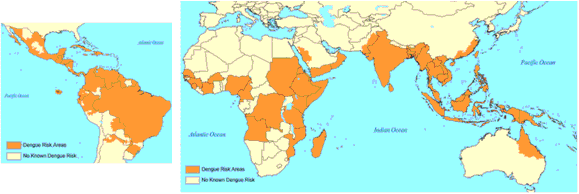
Image: Dengue in the world

Global Spread of Dengue

# 6224


Tonight in Key West Florida the Florida Keys Mosquito Control District will host a special town meeting to discuss their plans to release genetically modified (GM) mosquitoes created by UK’s Oxitec Company, to control dengue.


Here is the notice that appears on their webpage.


SPECIAL NOTICE: Town Hall Meeting about Genetically-Modified Mosquito on March 15th, at the Harvey Government Center, in Key West, from 5:30-7pm

The Florida Keys Mosquito Control District is pursuing trials for the release of genetically modified males in the control of Aedes aegypti, the mosquito responsible for the spread of dengue fever.  Due to the difficulty in controlling these mosquitoes, this technology could potentially assist in the reduction of both the mosquitoes and disease in Key West.  The District is still undergoing review from both Federal and State agencies for permitting. Please click here for more information on this technology.


As I wrote last October in Brave New Mosquito, Dengue is a rapidly expanding mosquito-borne virus that is estimated to infect around 50 million people every year. Tens of thousands die annually, and as yet, there is no effective vaccine.


After a 60 year absence, Dengue fever returned to southern Florida in 2009. 


More than a year ago I wrote about the controversial release of genetically modified mosquitoes (see The Cayman Island Mosquito Trials) by the Oxitec company in a bid to learn how to reduce these Dengue vectors.


Oxitec’s genetically altered terminator mosquitoes have been bio-engineered to carry a lethal gene that the males can pass on to their progeny that causes them to die in the larval stage.


And the early results were very promising.


An 80% reduction of mosquitoes in a 25 acre test area after 19,000 males mosquitoes were released over a 4-week period in 2010.


Since this  research was conducted quietly, with little advance publicity, these experimental releases have become somewhat controversial.


The plan in Key West is to release between 5,000 and 10,000 modified mosquitoes into an undisclosed 36 acre block near the Key West Cemetery. These male mosquitoes would be dusted with a florescent powder to enable tracking.


While still awaiting federal and state approval, already the battle lines are being drawn between those in favor of trying these novel control methods, and those opposed.


This report from The Key West Citizen last December.


Group wary of new insects

BY TIMOTHY O'HARA Citizen Staff
tohara@keysnews.com

An environmental group is questioning the Florida Keys Mosquito Control District's plan to introduce sterile mosquitoes into the Keys to battle the spread of dengue fever.

(Continue . . .)


Environmental groups, like the Friends of the Earth, are vehemently opposed to this project, claiming that this planned release of GMO mosquitoes could have unintended consequences on the local ecosystem.


The FOE Blog on December 21st warned:


Floridians face genetically engineered mosquito threat


The Florida Keys Mosquito Control District counters these concerns with a FAQ of their own on the dangers of Dengue, and the planned sterile male release project.


Dengue Fever FAQs

Frequently Asked Questions


Oxitec also has a short  FAQ page on their technology, which you can access here.


All of which promises to produce a lively town hall debate tonight in Key West. 


==============================================


Note: Due to a flare up of my Carpel tunnel syndrome, my blogging over the next couple of days may be lighter than normal.

»» Read More

Proposed GMO Mosquito Trials In Key West


# 6035


When it comes to deadly creatures on this planet, few can compare with the lowly mosquito.


Malaria is believed to sicken 200 million people every year, and claim nearly a million lives (cite). Dengue fever has seen an explosive spread over the past 50 years, and infects tens of millions of people every year.


Add EEE (Eastern Equine Encephalitis), West Nile Virus, Chikungunya, and a handful of other arboviral encephalopathies into the mix, and you have in mosquitoes a very efficient vector of death and disease.


Image: Dengue in the world

Global Spread of Dengue

The burden of disease carried by mosquitoes is truly staggering, and many places once thought safe from these mosquito borne scourges are now threatened.


In 2009, after an absence of nearly 6 decades, Dengue fever was once again reported in Florida.  While the number of cases was small (just over 60 cases in 2010), the concern is that this once-eradicated disease will re-establish itself in the sunshine state.


In order to spread, Dengue requires the right mosquito vector.  And the two species best suited to transmit the virus are the Aedes aegypti and Aedes albopictus mosquitoes, which also can spread such diseases as West Nile, Malaria, Yellow Fever, and Chikungunya.


image

Map showing the distribution of dengue fever (red) and the distribution of the Aedes aegypti mosquito (cyan)  in the world, as of 2006. Agricultural Research Service of the US Department of Agriculture.


image

Map showing the native habitat (blue) and recent spread (green) of the Aedes albopictus mosquito.


Complicating matters, as these species continue to encroach on new populations, many are developing signs of resistance to insecticides and insect repellants (see Declan Butler On Growing Mosquito Insecticide Resistance & From the `Nature Bats Last’ Dept). 


Which has led many scientists to look for novel ways to control mosquitoes without the use of potentially dangerous chemicals.


Over a year ago I wrote about the controversial release of genetically modified mosquitoes (see The Cayman Island Mosquito Trials) by the Oxitec company in a bid to learn how to reduce these Dengue vectors.


Oxitec’s genetically altered terminator mosquitoes have been bio-engineered to carry a lethal gene that the males can pass on to their progeny that causes them to die in the larval stage.


And the early results were very promising.


An 80% reduction of mosquitoes in a 25 acre test area after 19,000 males mosquitoes were released over a 4-week period in 2010.


Now, according to a report yesterday in The Key West Citizen, there are plans to conduct a similar test in the city sometime in 2012.


While still awaiting federal and state approval, already the battle lines are being drawn between those in favor of trying these novel control methods, and those opposed.


Group wary of new insects

BY TIMOTHY O'HARA Citizen Staff
tohara@keysnews.com

An environmental group is questioning the Florida Keys Mosquito Control District's plan to introduce sterile mosquitoes into the Keys to battle the spread of dengue fever.

(Continue . . .)


The plan is to release between 5,000 and 10,000 modified mosquitoes into an undisclosed 36 acre block near the Key West Cemetery. These male mosquitoes would be dusted with a florescent powder to enable tracking.


But some environmental groups, like Friends of the Earth, are vehemently opposed, claiming that this planned release of GMO mosquitoes could have unintended consequences on the local ecosystem.


The FOE Blog on December 21st warned:


Floridians face genetically engineered mosquito threat


The Florida Keys Mosquito Control District counters these concerns with a FAQ of their own on the dangers of Dengue, and the planned sterile male release project.


I’ve a few excerpts posted below.


Dengue Fever FAQs

Frequently Asked Questions


What are the likely impacts on the environment and on humans?

The main impact on human health will be to reduce the number of Aedes aegypti mosquitoes that can spread dengue.


There is no permanent change to the wild mosquito population and therefore unlikely to have any impact on the environment compared to the currently used alternatives.


Aedes aegypti is not originally native to Key West, though it has been present on and off in the last few decades.  It is not a keystone species, there are no birds, fish or other insects that feed exclusively on it and therefore reducing the number of Aedes aegypti is most unlikely to have any impact on the environment. Additionally, the released mosquitoes will die in the environment and their progeny will die so this is a 'self limiting' approach. i.e. there is no permanent change to the wild mosquito population.


Oxitec has a short  FAQ page on their technology, which you can access here. Oxitec’s GM process isn’t the only bid to modify mosquitoes to reduce disease transmission. 


Earlier this year in A Mosquito STD To Fight Dengue I wrote about a project to infect mosquitoes with Wolbachia, a bacteria commonly found in fruit flies that – for reasons that aren’t entirely clear - inhibits a mosquito’s ability to transmit Dengue Fever.


Nearly a year ago in Queensland, Australia researchers began releasing thousands of Wolbachia infected mosquitoes each week into the remote communities of Gordonvale and Yorkeys Knob.


Within a matter of a few months the Wolbachia infected mosquitoes overran the uninfected mosquito population in these two test environments.


Although extremely encouraging, more tests are needed, including confirmation that this process works against all dengue serotypes. The Gates Foundation is providing further funding to support the release of Wolbachia mosquitoes in Australia, Vietnam and Thailand.


While it has required impressive skill and technology to bring these `Brave New Mosquitoes’ to the point of being ready for field tests, the bigger challenge may well lie in getting an increasingly wary and skeptical public to accept their release.

»» Read More

Brave New Mosquito


# 5932


Image: Dengue in the world

Global Spread of Dengue


Dengue is a rapidly expanding mosquito-borne virus that is estimated to infect around 50 million people every year. Tens of thousands die annually, and as yet, there is no effective vaccine.


The explosive growth of Dengue around the world is well illustrated by the following graph from the World Health Organization.


Average annual number of dengue cases reported to the World Health Organization - has steadily increased since the 1950s, with 908 cases average reported between 1950 and 1959 and 968,564 cases average reported annually between 2000 and 2007.

What this graph doesn’t indicate is another doubling of dengue cases has taken place over the past 5 years


Nearly a year ago I wrote about the controversial release of genetically modified mosquitoes (see The Cayman Island Mosquito Trials) by the Oxitec company in a bid to learn how to reduce these Dengue vectors.


Oxitec’s genetically altered terminator mosquitoes have been bio-engineered to carry a lethal gene that the males can pass on to their progeny that causes them to die in the larval stage.


And the early results were very promising.


An 80% reduction of mosquitoes in a 25 acre test area after 19,000 males mosquitoes were released over a 4-week period in 2010.


Since this  research was conducted quietly, with little publicity, some public concern has since risen. The Cayman Island government produced this short video explaining the process in an attempt to allay any fears.


Oxitec has a short  FAQ page on their technology, which you can access here.


This research was published yesterday in the Nature Biotechnology journal.


Field performance of engineered male mosquitoes

Angela F Harris, Derric Nimmo, Andrew R McKemey,Nick Kelly, Sarah Scaife, Christl A Donnelly, Camilla Beech, William D Petrie & Luke Alphey


Yesterday the New York Times and The BBC both carried extensive stories on this research. Of the two, the NYT’s article adopted a bit more of a cautionary tone. 


Concerns Are Raised About Genetically Engineered Mosquitoes

By ANDREW POLLACK
Published: October 30, 2011


While the BBC article simply states that the World Health Organization is `cognizant that genetic engineering is a technology that carries the potential for risks as well as benefits’, and is working on guidelines.


GM mosquitoes show fever promise

By Richard Black  30 October 2011


Both articles provide useful background.


Oxitec’s GM process isn’t the only bid to modify mosquitoes to reduce disease transmission. 


Earlier this year in A Mosquito STD To Fight Dengue I wrote about a project to infect mosquitoes with Wolbachia, a bacteria commonly found in fruit flies that – for reasons that aren’t entirely clear - inhibits a mosquito’s ability to transmit Dengue Fever.


Around the beginning of the year scientists in Queensland, Australia began releasing thousands of Wolbachia infected mosquitoes each week into the remote communities of Gordonvale and Yorkeys Knob.


The hope being that infected mosquitoes would eventually supplant the uninfected native mosquito population.  Helping this project along is the way that Wolbachia is transmitted among mosquitoes. 


You see . . .  among mosquitoes, Wolbachia is essentially an STD, a sexually transmitted disease.


The bottom line:  Within a matter of a few months the Wolbachia infected mosquitoes overran the uninfected mosquito population in these two test environments.


While extremely encouraging, more tests are needed, including confirmation that this process works against all dengue serotypes. The Gates Foundation is providing further funding to support the release of Wolbachia mosquitoes in Australia, Vietnam and Thailand.


While there are safety issues that must be addressed - and getting the public to accept genetically modified  mozzies may be an issue - the creation of a Brave New Mosquito may someday contribute to the reduction of Dengue, Malaria, and other mosquito-borne diseases around the world.


At least, that’s the hope.

»» Read More

Florida Reports 5th Locally Acquired Dengue Case


# 5899


Compared to last year, when more than 60 cases of locally acquired dengue fever were reported in Florida, 2011 has been pretty quiet.  As of October 8th, only 4 cases had been reported this year; 2 in Miami-Dade county, 1 in Martin County, and 1 in Hillsborough county.


Key West, which saw the most cases in 2010, remarkably has yet to report a case this year.


While there may be many factors at work in this reduction in cases, an aggressive mosquito awareness campaign has no doubt played a role.


image


Yesterday, a 5th case of Dengue was reported in Palm Beach County, which prompted the following advisory from the local health department.


DENGUE FEVER IN PALM BEACH COUNTY PROMPTS ADVISORY


OCTOBER 13th, 2011
FOR IMMEDIATE RELEASE


CONTACT: Public Information
561-671-4014 or press50@doh.state.fl.us

PALM BEACH COUNTY, FL—A mosquito borne disease advisory was issued today by the Palm Beach County Health Department following confirmation of a locally acquired case of Dengue Fever.

“We have been closely monitoring the county for the possibility of Dengue being reintroduced in our area since we have seen it in counties north and south of us,” said Health Director Alina Alonso, MD. “With today’s confirmation I am issuing a Mosquito Borne Illness Advisory.”

In 2009 locally acquired cases of Dengue were diagnosed in Key West and since then, others have been found in South Florida. This is the first locally acquired case in Palm Beach County although eight others have been reported this year and acquired out of the country.


(Continue . . . )


As of the latest Florida Arbovirus Surveillance Report, 20 cases of West Nile Virus have been reported this year as well.  Unlike last year which saw 4 EEE (Eastern Equine Encephalitis) fatalities, no human cases have been reported in 2011.


While the risk of contracting Dengue (or West Nile, EEE, or any other mosquito borne illness) in Florida is quite small, it isn’t zero.


Although Florida is justifiably famous for its indigenous mosquito population, it isn’t the only state where mosquito borne illnesses may be contracted.


As you can see by the CDC map below, West Nile Virus activity has been reported in nearly every state this year (see Borne In The USA).


image


The Florida Department of Health would like to remind you to practice the 5 D’s of mosquito safety.


5 Ds


Any container of water . . .  even as small as a bottle cap . . . can breed mosquitoes.  Containers with houseplants appear to be particularly good homes for these pests.


For more details visit the Florida DOH Mosquito-borne Disease Prevention webpage.

»» Read More

A Mosquito STD To Fight Dengue


Image: Dengue in the world

Global Spread of Dengue


# 5782


Last March in A Sexually Transmitted Disease Cure I wrote about attempts in Australia to infect mosquitoes with Wolbachia, a bacteria commonly found in fruit flies that – for reasons that aren’t entirely clear - inhibits a mosquito’s ability to transmit Dengue Fever.


It is thought that Wolbachia infection may up-regulate the mosquito’s immune system and interfere with viral replication, or perhaps it competes with the virus for vital nutrients in the host. 


Or perhaps some other mechanism is at work . . .


But what is known is that carrying the Wolbachia bacteria greatly inhibits the ability of some species of mosquitoes to carry and transmit the dengue virus.


Around the beginning of the year scientists in Queensland, Australia began releasing thousands of Wolbachia infected mosquitoes each week into the remote communities of Gordonvale and Yorkeys Knob.


The hope being that infected mosquitoes would eventually supplant the uninfected native mosquito population.  Helping this project along is the way that Wolbachia is transmitted among mosquitoes. 


You see . . .  among mosquitoes, Wolbachia is essentially an STD, a sexually transmitted disease. 


When an infected male mosquito mates with an uninfected female, the resultant fertilized eggs will fail to mature due to an abnormality known as cytoplasmic incompatibility (CI). Only the offspring from the union between already infected parents survive.


Since the Wolbachia infection is passed down from one generation to the next, that is expected to give the Wolbachia infected mosquitoes quite an evolutionary advantage.


Yesterday, in a pair of studies published in the Journal Nature, we learn of the promising early results of this field experiment. 


First, a paper that describes the ability of the wMel Wolbachia strain to infect caged mosquitoes and to block transmission of serotype 2 (DENV-2) Dengue.


The wMel Wolbachia strain blocks dengue and invades caged Aedes aegypti populations

T. Walker,P. H. Johnson,L. A. Moreira,I. Iturbe-Ormaetxe, F. D. Frentiu, C. J. McMeniman, Y. S. Leong, Y. Dong, J. Axford, P. Kriesner, A. L. Lloyd, S. A. Ritchie, S. L. O’Neill & A. A. Hoffmann


Next up, the results of the field release of hundreds of thousands of infected mosquitoes in Australia.


Successful establishment of Wolbachia in Aedes populations to suppress dengue transmission

A. A. Hoffmann, B. L. Montgomery, J. Popovici, I. Iturbe-Ormaetxe, P. H. Johnson, F. Muzzi, M. Greenfield, M. Durkan, Y. S. Leong, Y. Dong, H. Cook, J. Axford, A. G. Callahan, N. Kenny, C. Omodei, E. A. McGraw, P. A. Ryan, S. A. Ritchie, M. Turelli  & S. L. O’Neill


The bottom line:  Within a matter of a few months the Wolbachia infected mosquitoes overran the uninfected mosquito population in these two test environments.


While extremely encouraging, more tests are needed, including confirmation that this process works against all dengue serotypes. The Gates Foundation is providing further funding to support the release of Wolbachia mosquitoes in Australia, Vietnam and Thailand.


Other attempts to defeat Dengue and Malaria include the development of genetically modified Mosquitoes. For more on that field of endeavor, you may wish to revisit:


The Cayman Island Mosquito Trials

The Latest Buzz On GM Mosquitoes 

Malaysia: `Terminator’ Mosquito Field Test On Hold

»» Read More