Showing posts with label HFMD. Show all posts

Nevada: HFMD Coxsackievirus A6 Outbreak


image 

Credit - Washoe County Health Department

# 6498


HFMD (Hand Foot & Mouth Disease) is a very commongenerally mild - viral infection, that usually peaks in late summer or early fall, and is mainly seen among children under the age of 10 (although adults may be vulnerable as well).


HFMD may be caused by a number of the non-polio enteroviruses. 


While this virus classification may be unfamiliar to a lot of people, the 60+ viruses that fall into this category are among the most prevalent viral infections in the world, probably only second to the myriad and ubiquitous variants of Rhinovirus (`common cold’) that circulate every year.


The two most common causes of HFMD have been the Coxsackie A16 virus, and (particularly in AsiaEnterovirus-71 (EV-71), and rarely, the Coxsackie A10 virus.


Late last year, however, coxsackievirus A6 was reported in the United States (Alabama, California, Connecticut & Nevada (see MMWR: Coxsackievirus A6 Notes From The Field). First detected in Finland in 2008, this virus has since been seen popping up around the world, including in Taiwan and Japan.


Unlike Coxsackievirus A16, A6 produces a more robust infection, and and can occasionally lead to serious illness.  According to the MMWR report mentioned above, 20% of the cases in the United States last year required hospitalization. The good news is no deaths were reported.


Barely a week before the start of the fall school session, the Washoe County, Nevada Health Department has issued a warning to parents of an ongoing outbreak of this atypical A6 HFMD strain in their community.


The local school district has asked parents to keep kids home if they are contagious (see media report).


Excerpts from the Health Department Release follow:


image

A rare strain of hand, foot, and mouth disease (HFMD) has made its way to the Truckee Meadows. Over four hundred self-reported cases of HFMD have been received by WCHD in 2012.  Typical HFMD, most commonly caused by either Coxsackievirus A16 (CVA16) or Enterovirus 71 (EV 71) is a common illness of infants and children ≤ 5 yrs. 

What is Atypical HFMD caused by Coxsackie A6 (CVA6)?

This specific virus (CVA6) has been identified as, an
emerging disease (new to the U.S. in 2012), causing
outbreaks of HFMD. The disease presentation associated with CVA6 differs from the more commonly seen forms of HFMD (e.g. CVA16 and EV 71) in that: 

  1. Transmission from children to adults is more common with CVA6, 
  2. The sores associated with CVA6 can be impressive and painful, appearing not only on the hands, feet and mouth but also on the buttocks, groin, face and extremities
  3. Some cases report nail shedding or peeling
    (onychomadesis) weeks after initial onset, and
  4. This strain is not confined to just the summer months as with other viruses causing HFMD

   (Continue . . .)


The local health department is offering the following advice to parents to help control the spread of this virus:


How is HFMD caused by CVA6 prevented and controlled?
Interrupting person-to-person and surface-to-person
transmission controls the spread of HFMD. If people
practice good personal hygiene after going to the
bathroom and before eating it may limit the spread of the disease.  


Protect Yourself and Prevent the Spread of HFMD.
• Wash hands with soap and water carefully and frequently, especially after going to the bathroom, after changing diapers, and before preparing and/or consuming foods or beverages.
• Disinfect surfaces and items, including toys. First wash the items with soap and water; then disinfect them with a solution of 2 tablespoons of bleach to 4 cups of water.
• Avoid close contact such as kissing, hugging, or sharing eating utensils or cups with infected people.
• Remain at home until all three following criteria are met:

  1. fever free for 24 hours without the use of a fever reducer
  2. all lesions have dried or are scabbed over
  3. no new lesions have appeared for two days.


For many years HFMD has been a mild childhood disease in this country, rarely producing serious illness.  For that reason, many parents may not be aware of this more serious, atypical form of the disease.


The CDC maintains a large website on HFMD, where you’ll find audio podcasts by a CDC pediatrician on the illness, and links to other resources.


The good news is that most cases of HFMD in this country are apt to be due to the milder Coxsackie A16 virus, and serious complications are rare.


Like all emerging viruses, we’ll simply have to watch to see how well this upstart coxsackievirus A6 manages to adapt and spread in the human population. 


Stay tuned.

»» Read More

The Emerging Threat Of EV71


Photo Credit University of Iowa


# 6439

Although only recently making headlines in the mainstream media, Enterovirus 71 has been known for decades, and has been responsible for a number of severe disease outbreaks in small children, particularly across southeast Asia.


For some earlier blogs on this virus and some of the outbreaks it has caused, you may wish to revisit:

China: A Recombinant EV-71
China Sounds Alert Over EV-71 Virus
China: EV71 Claims 28th Victim, Authorities Warn of Possible `Mass Outbreak'
HFMD Outbreak In China Spreads To 25,000 Children


But it has been the recent outbreak in Cambodia (see Updating The Cambodian EV71 Story) that has helped to propel this virus into the public’s consciousness, and we are now seeing reports in the media on practically a daily basis.


Today, several reports, including one from the Philippines where Assistant Health Secretary Eric Tayag ominously warns that even as the world seeks to eradicate polio from the last four countries, that the EV71 virus may soon become `the new polio’.


EV-71 is the 'new polio,' health experts warn

by Rappler.com

Updated 07/17/2012 7:33 PM

MANILA, Philippines - Two children in the Philippines have been tested positive for "human enterovirus," but the strain is not similar to the EV-71 that has killed kids in Cambodia, the Department of Health said Tuesday, July 17.

(Continue . . .)


A bit premature perhaps, given that the numbers of severe EV71 infections currently pale in comparison to the horrific spread of Polio during the first half of the 20th century.


But there are some valid comparisons between the two viruses.  Both are highly contagious, and both strike predominantly in young children and can cause serious – even fatal – neurological damage. 


From The Lancet, we’ve this 2008 report that makes a similar comparison.


Enterovirus 71 infection: a new threat to global public health?

The Asia-Pacific region has seen more frequent and widespread outbreaks of enterovirus 71 infections in the past decade. Clinicians and researchers are calling for a better understanding of the evolution of such epidemics and for more proactive international public health polices. Jane Qiu reports.

Enterovirus 71 (EV71), a single-stranded RNA virus that belongs to the same category as poliovirus, has made another comeback in many parts of Asia. The reported frequency of EV71 infections are rising on a weekly basis: in Hong Kong, the number of cases reached 79 by late August, the highest in a decade. In some cases, EV71 infections cause hand—foot—mouth disease (HFMD), a common, contagious disease that usually affects children and that is characterised by flu-like symptoms; rash on hands, feet, and buttocks; mouth ulcers; poor appetite; and vomiting and diarrhoea.


However, HFMD can be life threatening, particularly if the virus causes inflammation of the brain stem, which can progress to heart failure and pulmonary oedema.


(Continue . . .)


With no vaccine, and no specific antiviral treatments available, the focus is on stopping the spread of the virus through good hygiene, and when needed, school closures.


Today, from Thailand’s The Nation, we get this report indicating that a number of schools are being closed due to HFMD.


29 Bangkok schools suspend classes following HFMD outbreak

July 17, 2012 6:46 pm


At least 29 schools in Bangkok have suspended some of their classes or shut down their whole facilities in the wake of the hand, foot, and mouth disease or HFMD outbreak.


"In Bangkok, most patients are young children aged not over four years old," Dr Wongwat Liewlak said Tuesday as the head of Bangkok Metropolitan Administration (BMA) Communicable Diseases Control Division.

According to the Public Health Ministry, 12,581 people have come down with the HMFD in Thailand between January 1 and July 9 this year. There is no report of casualties.


Another report out of Thailand, carried by Xinhua News, indicates:


Top Bangkok primary school closes due to hand, foot and mouth disease

Updated: 2012-07-17 15:46:00
(Xinhua)

BANGKOK, July 17 (Xinhua) -- Bangkok's top-rated Chulalongkorn University Demonstration Elementary School suspended classes from Tuesday through Friday after a number of students were infected with hand, foot and mouth disease, Thai News Agency reported.


Chalermpol Daoruang, the school's deputy director, said that the temporary closure came after an unspecified number of Grade 1 and 2 students were diagnosed with hand, foot and mouth disease ( HFMD).

(Continue . . .)


And yet another report, out of Taiwan today, CDC reports six new enterovirus cases. The good news: all but one of these cases have already been released from the hospital.


Whether EV71 turns out to be 2012’s disease-du-jour, or ends up becoming a pervasive public health problem remains to be seen.


It has the potential, but it may not have the `legs’.


Encouragingly, there does appear to be work going on to create a vaccine against EV71.  In the meantime, like everyone else, we’ll continue to watch the virus for signs of spread, or changes in its behavior.

»» Read More

WHO/Cambodian MOH Announcement On HFMD Outbreak


# 6431


My thanks go to Ronan Kelly on FluTrackers for finding and  posting the joint announcement between the World Health Organization, and the Cambodian Ministry of Health regarding the recent outbreak of severe HFMD in that country.


The announcement is in a PDF FILE, which makes cutting and pasting here problematic.  You can click this link, or the image below, to read the 2 page report.


image


Essentially, this report finds that the EV71 virus was the prime cause of the outbreak; with only a small percentage of cases testing positive for other pathogens (Strep suis, Haemophilus Influenzae type B, etc.). 


The report suggests the use of steroids may have worsened the outcome in some cases.


The Cambodian government, in conjunction with the World Health Organization, will conduct enhanced surveillance for neuro-respiratory syndrome which may accompany severe HFMD due to EV71.


This report appears to assign a minor role, if any, to the other infectious agents which have been widely mentioned in the media.

»» Read More

Updating The Cambodian EV71 Story


# 6430


Over the past several days we’ve seen some confusing (and conflicting) reports on the `mystery illness’ in Cambodia which has claimed the lives of more than 50 children over the past few months (see EV71: Cambodia’s Prime Suspect).


Complicating the investigation, these children were treated by a variety of doctors in different clinics across 14 provinces, and many died and were buried before proper testing could be done.


Overnight  ProMed Mail posted (see Undiagnosed illness, fatal, child - Cambodia (06): pathogen mix) a CNN  report that a combination of pathogens – including enterovirus 71, Streptococcus suis and dengue fever – will be named responsible for these child deaths, and that the inappropriate use of steroids in their treatment exacerbated their illnesses.


An official announcement from the World Health Organization is expected shortly, but as of this writing has not yet been published.


But we do have some tweets this morning from the WHO twitter account that continue to highlight the EV71 virus as the major cause of the outbreak.


image


And this morning Xinhua News is reporting that:


HFMD causes child deaths in Cambodia: WHO

English.news.cn   2012-07-12 19:55:37

The severe form of hand, foot and mouth disease (HFMD) was the cause of illnesses and deaths of 54 Cambodian children since April, concluded the findings of a joint investigation on Thursday.

(Continue . . . )


Whatever other contributing factors might be involved, the EV71 virus is perfectly capable of producing serious – even fatal – illness on its own. 


The classic symptoms of a blistering rash on the hands, feet, and mouth associated with HFMD are not always present. Sometimes the patient only presents with severe neurological symptoms.


Outbreaks of EV71 are neither new, nor rare, although the mortality rate in this Cambodian outbreak does appear unusually high (admittedly difficult to know, since we don’t know how many mild cases went uncounted).


The past decade has seen numerous outbreaks of EV71, resulting in the deaths of hundreds of children across Asia (see China: EV71 Claims 28th Victim, Authorities Warn of Possible `Mass Outbreak', FMD Outbreak In China Spreads To 25,000 Children).


We have also seen signs that the virus continues to evolve (see China: A Recombinant EV-71).


While no new cases have been reported in the past several days, with no vaccine and no effective antiviral treatment available, fears continue to run high in Cambodia. The following report from Bangkok Post indicates that some Cambodians with small children are attempting to enter Thailand to escape the outbreak.


   Cambodians flee to Sa Kaeo

Published: 12/07/2012 at 08:07 AM

The hand, foot and mouth disease (HFMD) scare has resulted in a mass exodus of Cambodian parents with young children into Sa Kaeo province.


The Aranyaprathet immigration checkpoint was yesterday crowded with Cambodian travellers, most of them with young children, eager to enter Thailand.


The Cambodian parents were mainly workers and vendors at the Rong Kleau border market in Thailand.


(Continue . . . )


When we get an official announcement from the WHO, or the CDC, as to the cause of these deaths, I’ll post it.  For now, however, the EV71 virus still appears to be the prime suspect in this outbreak.

»» Read More

EV71: Cambodia’s Prime Suspect


Photo Credit University of Iowa


# 6427


Although normally a mild childhood disease, HFMD (Hand, Foot, & Mouth Disease) has taken center stage in the media these past few days as one of the viruses (EV71) associated with that illness has been tentatively linked to dozens of deaths of Cambodian children over the past three months.


The epidemiological investigation is ongoing, with researchers looking for any possible complicating factors (or changes to the virus) that might explain the unusually high mortality rate being reported with this outbreak. 


We should know more in a few days, but as you’ll see, the EV71 virus doesn’t need any help to be deadly. 


HFMD can be caused by a variety of viruses, and most of the time, it is mild and only rarely requires medical attention.


The most common cause of the illness is the Coxsackie A16 virus, and more rarely the Coxsackie A10 virus. In recent years, we’ve also seen the emergence of the Coxsackie A6 virus which has been linked to somewhat more severe HFMD cases (see MMWR: Coxsackievirus A6 Notes From The Field).


But it is Enterovirus 71 that has been linked to the most severe cases of HFMD – particularly across Asia - with serious outbreaks recorded over the past dozen years in places like China, Taiwan, Malaysia, Hong Kong and most recently, Vietnam.


In addition to the classic HFMD symptoms, this virus has been known to produce serious neurological illness, including life threatening encephalitis. 


You can find more details on HFMD, and EV71, in the World Health Organization’s Hand, Foot and Mouth Disease Information Sheet, from which I’ve excerpted the following:


  • HFMD is usually a mild disease, and nearly all patients recover in 7 to 10 days without medical treatment and complications are uncommon.
    • Dehydration is the most common complication of HFMD infection caused by coxsackieviruses; it can occur if intake of liquids is limited due to painful sores in the mouth.
    • Rarely, patients develop "aseptic" or viral meningitis, in which the person has fever, headache, stiff neck, or back pain, and may need to be hospitalized for a few days.
  • HFMD caused by EV71 has been associated with meningitis and encephalitis, and on occasion can cause severe complications, including neurological, cardiovascular and respiratory problems. Cases of fatal EV71 encephalitis have occurred during outbreaks.


While the recent outbreak in Cambodia has raised alarms around the world, deadly outbreaks of EV71 are nothing new.  Last May, in CDC Issues HFMD Travel Notice For Vietnam, we looked at an outbreak that had claimed more than 20 lives.


In the News
Hand, Foot, and Mouth Disease in Vietnam

Released: May 25, 2012

What Is the Current Situation?

As of April 29, 2012, the Vietnam Ministry of Health has confirmed nearly 40,000 cases of hand, foot, and mouth disease (HFMD) since the beginning of 2012. Cases have occurred in 63 provinces, and 20 deaths (all in children under 5) have occurred in 10 provinces.

(Continue . . .)


The CDC also provides several  multimedia products related to hand, foot, and mouth disease.


Similarly, we’ve seen reports this week indicating that Hand, foot, mouth disease kills 240 in China.


We are seeing reaction to the Cambodian outbreak from several health departments across Asia, including Hong Kong, Thailand, and the Philippines.


First, Hong Kong’s CHP (Centre for Health Protection) which sent out this Update on An Unknown Disease in Cambodia letter to doctors in the region on July 9th, which asks that doctors notify the CHP of any suspected cases with recent travel history to Cambodia.


Possibly related, the CHP is reporting on Two cases of severe paediatric enterovirus infection, although the causative virus is not indentified.


In Thailand, The Nation newspaper is reporting that the MOH has instructed schools to close if an unusual number of HFMD cases are reported.


Disease warning for schools

The Nation July 10, 2012 5:47 pm

The Public Health Ministry on Tuesday instructed schools and nurseries nationwide to close if they find that students in five classes or more have contracted hand, foot and mouth disease.

(Continue . . . )


And perhaps the most proactive of all is the Philippines, where the Department of Health has ordered increased surveillance at airports, and has declared  EV-71 to be a notifiable disease. 


Here is the official press release:


DOH MAKES ENTEROVIRUS-71 INFECTION AS A NOTIFIABLE DISEASE

July 10, 2012

(Press Release – 10 July 2012)

Health Secretary Enrique T. Ona instructed today the Department of Health (DOH) National Epidemiology Center to include Enterovirus-71 (EV-71) infection as a notifiable disease in the country. This will compel all health providers especially physicians to report individual cases or even outbreaks.


“Mandatory notification will improve monitoring of EV-71 infections and ensure that necessary measures are in place to guarantee that the Philippines is free from the highly fatal severe form of EV-71 infections that have claimed the lives of at least 60 children in Cambodia since April this year,” Ona said.


Also, the DOH and the World Health Organization (WHO) clarified today that the Cambodian EV-71 was of the encephalitis type and not hand foot and mouth disease (HFMD) as earlier reported. Affected Cambodian children generally presented with fever followed by rapid respiratory deterioration and impaired consciousness. Death occurred 24 hours from hospital confinement.


EV-71 causes different diseases of varying intensity. These include the often mild hand, foot and mouth disease (HFMD), acute respiratory disease, acute flaccid paralysis (polio-like) and the deadly brainstem encephalitis. HFMD is characterized as a self-limiting illness presenting with fever and accompanied by skin lesions or rashes.


EV-71 infections do occur in the country but are reported with irregularity. Fatal EV-71 infection is still very rare in the Philippines.


Proper disposal of baby diapers or human waste, strict personal hygiene and regular hand washing prevent viral spread. The virus is known to be excreted in the feces since it is found in human intestines.


The DOH urges parents and day-care personnel to clean and disinfect toys and teaching tools that are easily shared with other children. This can prevent EV-71 infections, as there are no known effective drugs or vaccines.


‘There is still no travel restriction to and from Cambodia and incoming passengers will be subjected to thermal screening upon arrival in all international airports as a routine quarantine procedure,” the health chief concluded.


The statement above, that the `(WHO) clarified today that the Cambodian EV-71 was of the encephalitis type and not hand foot and mouth disease (HFMD)’ is something I’ve not been able to locate on the WHO site yet.  


And last, but certainly not least, Lisa Schnirring of CIDRAP NEWS wrote a detailed report last night on the Cambodian outbreak, which you can read at:


Enterovirus 71 cited in puzzling Cambodian infections

Lisa Schnirring * Staff Writer

Jul 9, 2012 (CIDRAP New) – Lab analysis in the mysterious recent illnesses and deaths of dozens of Cambodian children pointed to enterovirus 71 (EV-71), a virus that causes hand, foot, and mouth disease (HFMD) and can lead to severe complications in some patients, the World Health Organization (WHO) announced today.

(Continue . . .)


The peak season for HFMD is summer and fall, which suggests that we will be hearing about outbreaks of EV71, and other HFMD viruses, for months to come.

»» Read More

CDC Issues HFMD Travel Notice For Vietnam


Photo Credit University of Iowa

#6349


In terms of threat levels, the CDC issues several different types of travel notices, with the lowest threat belonging to the category called `In The News’


Essentially, this is an acknowledgement there are reports of sporadic cases of a disease in a specific country or region, but that they pose `No increased risk over baseline for travelers observing standard recommendations’.


On Friday, the CDC issued an `In The News’ travel notice on the ongoing outbreak of HFMD in Vietnam.


HFMD (Hand Foot Mouth Disease) is a relatively common, and usually mild, viral illness seen mainly in children under the age of 10 (although adults are vulnerable as well) and may be caused by several of the non-polio enteroviruses.


The 60+ non-polio enteroviruses identified to date are among the most prevalent viral infections in the world, probably only second to the myriad and ubiquitous variants of Rhinovirus (`common cold’) that circulate every year.


The most common causes of HFMD are the Coxsackie A16 virus, and the Enterovirus-71 (EV-71), and more rarely the Coxsackie A10 virus. In recent years, we’ve also seen the emergence of the Coxsackie A6 virus as a cause, first in Finland, and this past year, even in the United States (see MMWR: Coxsackievirus A6 Notes From The Field).


HFMD in the United States is most often due to the Coxsackie A16 virus, which is generally mild, rarely causes serious illness, and outbreaks of which are not uncommon in childcare facilities.


EV-71 HFMD is most commonly found in the Asia, with serious outbreaks recorded over the past dozen years in places like China, Malaysia, Hong Kong and most recently, Vietnam.


This version of the HFMD can sometimes be quite serious, with viral meningitis - and less commonly, encephalitis – complicating matters.


Two major genotypes of EV-71, EV-71 B and EV-71 C, have been identified as being responsible for a number of severe outbreaks in Australia, Japan, China, Malaysia, and Taiwan since 1997.


A couple of years ago, the Virology Journal, published an analysis of an EV-71 HFMD virus that caused a major disease outbreak in Fuyang City, China in 2008 that showed it was due to an emerging recombinant virus (see China: A Recombinant EV-71).


A reminder that viruses are always changing, evolving, looking for an evolutionary advantage.


Yesterday, the Thanh Nien Daily carried a story indicating that the number of HFMD cases in Vietnam this year is 10 times greater than last year, and that researchers are looking to see if the virus has mutated.


Cases of HFMD in Vietnam increase more than tenfold year on year

Saturday, May 26, 2012 04:20:00

The number of hand, foot and mouth disease (HFMD) cases in Vietnam is 10.2 times higher over the first five months of 2012 than it was for the same period last year.


According to the Ministry of Health’s report on Friday, 46,277 HFMD cases have been recorded across Vietnam since the beginning of this year.


Twenty-seven deaths have also been reported, 1.7 times more than last year, it said.


(Continue . . . )


With that in mind, here are some excerpts from the CDC’s Travel Notice, and some resources on HFMD from the CDC Website.


In the News
Hand, Foot, and Mouth Disease in Vietnam

This information is current as of today, May 27, 2012 at 15:03 EDT

Released: May 25, 2012

What Is the Current Situation?

As of April 29, 2012, the Vietnam Ministry of Health has confirmed nearly 40,000 cases of hand, foot, and mouth disease (HFMD) since the beginning of 2012. Cases have occurred in 63 provinces, and 20 deaths (all in children under 5) have occurred in 10 provinces. Hai Phong in the North has the highest number of cases, followed by Bac Can, Yen Bai, Lao Cai, Hoa Binh, Da Nang, Vinh Phuc, Quang Tri, Dong Thap, and Binh Dinh Provinces in the Center and Southern Regions. The Vietnam Ministry of Health is taking steps to control the outbreak.


Large outbreaks of severe HFMD occur frequently in some countries in Asia. Thousands of people may get infected during these outbreaks. Some people, particularly young children, may have severe disease requiring hospitalization or even causing death. To learn more outbreaks occurring around the world, visit the World Health OrganizationExternal Web Site Icon’s website.

<SNIP>

How Can Travelers Protect Themselves?

There is currently no vaccine or medicine to prevent HFMD. However, you can protect yourself from HFMD by practicing healthy personal hygiene.

  • Wash your hands often with soap and water, especially before eating and after going to the bathroom or changing a diaper. If soap and water are not available, use an alcohol-based hand cleaner with at least 60% alcohol. Consider packing alcohol-based hand cleaner in your carry-on luggage to ensure you have it when needed.
  • Disinfect dirty surfaces and soiled items. If you are able, first wash the items with soap and water; then disinfect them with a solution of chlorine bleach (made by mixing 1 tablespoon of bleach with 4 cups of water) or a cleaning product that contains bleach.
  • Avoid close contact such as kissing, hugging, or sharing eating utensils or cups with people who have HFMD.

There is no specific treatment for HFMD. If you do develop mouth sores:

  • Take over-the-counter medications to relieve pain and fever. (Caution: Aspirin should not be given to children.)
  • Use mouthwashes or sprays that numb mouth pain.
  • Drink plenty of liquids to stay hydrated.

Seek medical care:

  • If you are sick and unsure if you have HFMD.
  • If you cannot swallow liquids to stay hydrated.


You obviously don’t have to travel to Vietnam, or other parts of Asia, to be exposed to HFMD. 


For that reason, everyone should learn about the virus, and how it is spread.  To that end, we’ve a couple of multimedia products related to hand, foot, and mouth disease from the CDC.


»» Read More

MMWR: Coxsackievirus A6 Notes From The Field

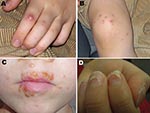
Thumbnail of Vesicular eruptions in A) hand, B) foot, and C) mouth of a 6.5-year-old boy from Turku, Finland, with coxsackievirus (CV) A6 infection. Several of his fingernails shed 2 months after the pictures were taken. D) Onychomadesis in a 10-year-old boy from Seinäjoki, Finland, 2 months after hand, foot and mouth disease with CVA6 infection. Photographs courtesy of H. Kujari (A–C) and M. Linna (D).

Vesicular eruptions in A) hand, B) foot, and C) mouth of a 6.5-year-old boy from Turku, Finland, with coxsackievirus (CV) A6 infection.  Credit - CDC EID Journal


# 6250


As a follow up to a blog I wrote in February (see HFMD: An Old Illness With A New Cause), today we’ve a field report that appears in the current MMWR on an emerging coxsackievirus (CVA6) that has recently been reported in the United States.


HFMD (Hand Foot & Mouth Disease) is a very common viral infection, usually peaking late summer or early fall, and mainly seen among children under the age of 10 (although adults may be vulnerable as well).


It is caused by several of the non-polio enteroviruses.


The two most common causes of HFMD have been the Coxsackie A16 virus, and the Enterovirus-71 (EV-71), and rarely, the Coxsackie A10 virus.


The disease in the United States is commonly caused by the Coxsackie A16 virus and is generally mild. Outbreaks are not uncommon in schools and childcare facilities.


In 2008, the CDC’s EID Journal carried a dispatch describing an outbreak of HFMD in Finland due to an unusual, and apparently emerging, viral cause; the Coxsackie A6 (CVA6) virus.


Since then, we’ve seen a growing number of reports of HFMD outbreaks around the world due to this particular coxsackievirus, but until this winter, never in the United States.


Today’s MMWR brings us details of the spread and severity of these cases.


As they note: The age ranges of patients, severity of illness, seasonality of disease, and identification of CVA6 in these cases were unusual for HFMD in the United States.


The good news is - while more severe than typical HFMD, and resulting in the hospitalization of nearly 20% of the cases - no deaths from the emerging CVA6 strain were reported.


Notes from the Field: Severe Hand, Foot, and Mouth Disease Associated with Coxsackievirus A6 — Alabama, Connecticut, California, and Nevada, November 2011–February 2012

Weekly

March 30, 2012 / 61(12);213-214

Hand, foot, and mouth disease (HFMD) is a common viral illness caused by enteroviruses that predominantly affects children aged <5 years. In the United States, outbreaks of HFMD typically occur during summer and autumn months. The most common cause of HFMD in the United States has been enterovirus serotype coxsackievirus A16. Most infections are asymptomatic; persons with signs and symptoms typically have a mild febrile illness with rash on the palms of the hands and soles of the feet, and sores in the mouth. HFMD also has been associated, often weeks after initial symptom onset, with nail dystrophies (e.g., Beau's lines or nail shedding).


From November 7, 2011, to February 29, 2012, CDC received reports of 63 persons with signs and symptoms of HFMD or with fever and atypical rash in Alabama (38 cases), California (seven), Connecticut (one), and Nevada (17). HFMD is not a reportable disease in the United States; the cases were identified as unusual by health-care providers or by a department of health that contacted CDC for diagnostic assistance. Clinical specimens were collected from patients in 34 of the 63 cases. Coxsackievirus A6 (CVA6) was detected in 25 (74%) of those 34 patients by reverse transcriptase–polymerase chain reaction and partial sequencing of the VP1 gene at CDC or at the California Department of Public Health. No enteroviruses were detected in the other nine patients.


Of the 63 patients, 40 (63%) were aged <2 years, and 15 (24%) were adults aged ≥18 years; 44 (70%) of the patients had exposure to a child care facility or school, and eight (53%) of the 15 adults had contact with children in child care where cases of HFMD were reported, or provided medical care or were related to a child with HFMD. Rash and fever were more severe, and hospitalization was more common than with typical HFMD. Signs of HFMD included fever (48 patients [76%]); rash on the hands or feet, or in the mouth (42 [67%]); and rash on the arms or legs (29 [46%]), face (26 [41%]), buttocks (22 [35%]), and trunk (12 [19%]). Of 46 patients with rash variables reported, the rash typically was maculopapular; vesicles were reported in 32 (70%) patients and scabs in 30 (65%) patients. Shedding of nails occurred after initial infection in two (4%) patients. Of the 63 patients, 51 (81%) sought care from a clinician, and 12 (19%) were hospitalized. Reasons for hospitalization varied and included dehydration and/or severe pain. No deaths were reported.


The age ranges of patients, severity of illness, seasonality of disease, and identification of CVA6 in these cases were unusual for HFMD in the United States. CVA6 has been associated with more severe and extensive rash than HFMD caused by other enteroviruses (1). Since 2008, international outbreaks of CVA6 HFMD in children and adults have been described (1–4), but no outbreaks had been reported in the United States previously. Although all 25 of the CVA6 strains identified in the U.S. cases were genetically closely related (based on partial VP1 gene sequences) to CVA6 strains identified in recent international outbreaks, no epidemiologic evidence (e.g., travel history) has directly linked any of the U.S. cases to importation.


HFMD is spread from person to person by contact with saliva, respiratory secretions, fluid in vesicles, and feces. Transmission of HFMD can be reduced by maintaining good hygiene, including handwashing and disinfection of surfaces in child care settings (5). CDC continues to receive reports of CVA6-associated HFMD. Persons who suspect a severe case of HFMD should contact their health-care provider. Local or state health departments may contact CDC for assistance with enterovirus laboratory diagnosis.


For more on HFMD, including the more severe Enterovirus-71 (EV-71) version found mostly in southeast Asia, you may wish to revisit the following blogs:


Vietnam’s HFMD Outbreak
China: A Recombinant EV-71
HFMD Rising In China
China Sounds Alert Over EV-71 Virus
»» Read More

HFMD: An Old Illness With A New Cause


 Thumbnail of Vesicular eruptions in A) hand, B) foot, and C) mouth of a 6.5-year-old boy from Turku, Finland, with coxsackievirus (CV) A6 infection. Several of his fingernails shed 2 months after the pictures were taken. D) Onychomadesis in a 10-year-old boy from Seinäjoki, Finland, 2 months after hand, foot and mouth disease with CVA6 infection. Photographs courtesy of H. Kujari (A–C) and M. Linna (D).

Vesicular eruptions in A) hand, B) foot, and C) mouth of a 6.5-year-old boy from Turku, Finland, with coxsackievirus (CV) A6 infection.  Credit - CDC EID Journal 


# 6138


Since late in January the newshounds on FluTrackers  have been following a story out of Alabama, where public health authorities have been dealing with an offseason outbreak of Hand Foot and Mouth Disease (HFMD).


Hand Foot and Mouth Disease is often confused by the public with Foot and Mouth Disease (FMD) seen in cattle, swine, and sheep.  Despite the similar name, the diseases are in no way related.


HFMD is a very common viral infection, usually peaking late summer or early fall, and mainly seen among children under the age of 10 (although adults may be vulnerable as well).


It is caused by several of the non-polio enteroviruses.


While this virus classification may be unfamiliar to a lot of people, the 60+ viruses that fall into this category are among the most prevalent viral infections in the world, probably only second to the myriad and ubiquitous variants of Rhinovirus (`common cold’) that circulate every year.


The two most common causes of HFMD have been the Coxsackie A16 virus, and the Enterovirus-71 (EV-71), and rarely, the Coxsackie A10 virus.


The disease in the United States is commonly caused by the Coxsackie A16 virus and is generally mild. Outbreaks are not uncommon in schools and childcare facilities.


Over the past decade we've seen outbreaks - particularly in the Far East  - caused by the more pathogenic EV-71 virus, and this version of the HFMD can occasionally be quite serious.


Last year, Vietnam reported more than 90,000 cases of HFMD and reported more than 150 deaths, mostly among young children.


And two years ago , the Virology Journal, published an analysis of an EV-71 HFMD virus that caused a major disease outbreak in Fuyang City, China in 2008 that showed it was due to an emerging recombinant virus (see China: A Recombinant EV-71).


In 2008, the CDC’s EID Journal carried a dispatch describing an outbreak of HFMD in Finland due to an unusual, and apparently emerging, viral cause; the Coxsackie A6 virus.


Dispatch

Coxsackievirus A6 and Hand, Foot, and Mouth Disease, Finland

Riikka Österback, Tytti Vuorinen, Mervi Linna, Petri Susi, Timo Hyypiä, and Matti Waris
Abstract

During fall 2008, an outbreak of hand, foot, and mouth disease (HFMD) with onychomadesis (nail shedding) as a common feature occurred in Finland. We identified an unusual enterovirus type, coxsackievirus A6 (CVA6), as the causative agent. CVA6 infections may be emerging as a new and major cause of epidemic HFMD.


This dispatch describe a prolonged nationwide outbreak of HFMD starting in 2008, in Finland:


During fall 2008, a nationwide outbreak of HFMD occurred in daycare centers and schools in Finland, starting in August and continuing at least until the end of the year and possibly into the following year. From vesicle fluid specimens of hospitalized children, we identified the etiologic agent as coxsackievirus A6.


Since then, we’ve seen a growing number of reports of HFMD outbreaks around the world due to this particular coxsackievirus, including:


An outbreak of coxsackievirus A6 hand, foot, and mouth disease associated with onychomadesis in Taiwan, 2010

Sung-Hsi Wei, Yuan-Pin Huang, Ming-Chih Liu, Tsung-Pei Tsou, Hui-Chen Lin, Tsuey-Li Lin, Chen-Yen Tsai, Yen-Nan Chao, Luan-Yin Chang and Chun-Ming Hsu

BMC Infectious Diseases 2011, 11:346 doi:10.1186/1471-2334-11-346

Published: 14 December 2011

Hand, Foot, and Mouth Disease Caused by Coxsackievirus A6, Japan, 2011

Fujimoto T, Iizuka S, Enomoto M, Abe K, Yamashita K, Hanaoka N, et al.

Emerg Infect Dis [serial on the Internet]. 2012 Feb


Until now, this A6 virus has not been associated with HFMD outbreaks in the United States. This from the Alabama Health Department’s website:


Alabama Department of Public Health monitors new cases of hand, foot and mouth disease


FOR IMMEDIATE RELEASE 
CONTACT:  Mary McIntyre, M.D.
(334) 206-5325


The Alabama Department of Public Health asks the public to be aware that cases of the contagious viral illness called hand, foot and mouth disease are more numerous and severe than normal in Alabama this winter. No known deaths have resulted from the virus, although there have been hospitalizations and there can be some rare, severe complications.


As of Feb. 10, the ADPH has interviewed patients and collected and submitted specimens to the Centers for Disease Control and Prevention for individuals with febrile illnesses and rash. Based on the results of testing done by the CDC, the Coxsackie A6 virus has been identified.


This  specific type of virus has been identified in other countries but has not previously been
associated with an outbreak in the U.S. There is no specific treatment for hand, foot and mouth
disease.


“As this is a new virus for our population, we can expect more cases and are monitoring for any change in the clinical presentation,” Dr. Donald Williamson, state health officer, said. “We will continue statewide surveillance on severe cases of this emerging disease and ask physicians and infection control specialists to make notifications to us.”

The public should not be unduly alarmed at this time; however, individuals diagnosed with hand, foot and mouth disease need to follow the recommendations of their health care provider to remain at home until they have no fever, all lesions have scabbed over, and no lesions have appeared for two days.  


The viral disease affects the hands, feet and mouth and usually infects infants and children younger than 5 years old in summer and early autumn. There is no vaccine to protect against it, but learning about the disease and following these recommendations can reduce the risk of illness.


Hand, foot and mouth disease spreads: 

  • Person-to-person: Direct contact with saliva, sputum or nasal mucus from the infected person’s nose and throat or with fluid in blisters, or with stool.
  • Surface-to-person: Touching objects and surfaces touched by infected persons.
  • Infected persons are most contagious during the first week of the illness, but can still pass the virus for weeks after symptoms have gone away.

These are the symptoms:


  • Fever, rash, sores, poor appetite, a vague feeling of illness and sore throat.
  • Painful sores in the mouth may blister and become ulcers.
  • Skin rash, flat or raised red spots, develops over 1 to 2 days.
  • Rash usually on the palms of the hands and soles of the feet and may appear on the knees, elbows, bottom or genital area.
  • Dehydration may occur because of painful mouth sores.


Recommendations to protect yourself and prevent its spread:

  • Wash hands with soap and water carefully and frequently, especially after going to the bathroom, after changing diapers, and before preparing foods or beverages.
  • Disinfect surfaces and items, including toys. First wash the items with soap and water; then disinfect them with a solution of 1 tablespoon of bleach and 4 cups of water.
  • Avoid close contact such as kissing, hugging or sharing eating utensils or cups with infected people.


Health care providers are being asked to notify the Alabama Department of Public Health if higher than normal numbers of cases are being hospitalized with hand, foot and mouth disease symptoms. Please call (800) 338-8374 immediately for hospitalized cases.


     -30-

2/10/12


While apparently a bit more serious than the garden variety of HFMD we are used to seeing in the United States, this A6 virus doesn’t appear to be as pathogenic as the EV-71 virus seen in Asia.


But its arrival in the United States serves as a reminder that well adapted emerging viruses are very good at spreading, and that with today’s highly mobile society, oceans and borders provide little in the way of protection.

»» Read More

Vietnam’s HFMD Outbreak


# 5768


Photo Credit University of Iowa

HFMD (Hand Foot Mouth Disease) is a relatively common, and usually mild, viral illness seen mainly in children under the age of 10 (although adults are vulnerable as well) and may be caused by several of the non-polio enteroviruses.


The 60+ non-polio enteroviruses identified to date are among the most prevalent viral infections in the world, probably only second to the myriad and ubiquitous variants of Rhinovirus (`common cold’) that circulate every year.


The two most common causes of HFMD are the Coxsackie A16 virus, and the Enterovirus-71 (EV-71).


The disease caused by the Coxsackie A16 virus is generally the milder of the two, rarely causes serious illness, and outbreaks are not uncommon in childcare facilities. 


EV-71 HFMD is most commonly found in the Asia, with serious outbreaks recorded over the past dozen years in places like China, Malaysia, Hong Kong and most recently, Vietnam.


This version of the HFMD can sometimes be quite serious, with viral meningitis - and less commonly, encephalitis – complicating matters.


This summer Vietnam has seen an explosion of HFMD cases, and has recorded more than 80 deaths. Although the headline in the following story from Than Nien News uses the term `pandemic’, this outbreak would be better described as an `epidemic.


Hand, foot and mouth disease spreads to pandemic levels

Last updated: 8/19/2011

Official re-classifies the outbreak as death toll reaches 81

The Ministry of Health is considering declaring hand, foot and mouth disease (HFMD) a pandemic, as more than 32,000 cases of the illness have killed 81 across the country so far this year.


According to the ministry, the disease has hit 52 of 62 cities and provinces, mostly in the southern and central regions. Some 96 percent of the fatalities have been children under the age of five.

(Continue . . . )


According to a recent VOA Vietnamese news report, about 1/3rd of the cases reported in Vietnam have been due to the more serious virus; EV-71.


For more on HFMD, we turn to the CDC’s webpage, which offers advice on prevention, and treatment, focusing primarily on the mild version more likely to be encountered outside of Asia.


Hand, Foot, and Mouth Disease


Hand, foot, and mouth disease is a contagious viral illness that commonly affects infants and children. While there is no vaccine to prevent the disease, there are simple steps you and your family can take to reduce the risk of getting sick.


Hand, foot, and mouth disease (HFMD) is a contagious viral illness that commonly affects infants and children in the U.S. and abroad. In the U.S. and other countries with temperate climates, HFMD occurs most often in summer and early autumn. While there is no vaccine to prevent the disease, there are simple steps you and your family can take to reduce the risk of getting sick.

HFMD

  • Usually causes fever, sores in the mouth, and a rash with blisters.
  • Is moderately contagious.
  • Mostly affects children younger than 10 years of age, but people of any age can be infected.
  • Has no specific treatment.
  • Infection risk can be reduced by practicing good hygiene, such as washing hands frequently.
  • Is not the same as foot-and-mouth disease.

(Continue . . . )


The CDC also offers a short (4 minute) audio podcast on HFMD, which may be listened to HERE.

image


Two major genotypes of EV-71, EV-71 B and EV-71 C, have been identified as being responsible for a number of severe outbreaks in Australia, Japan, China, Malaysia, and Taiwan since 1997.


Last year, the Virology Journal, published an analysis of an EV-71 HFMD virus that caused a major disease outbreak in Fuyang City, China in 2008 that showed it was due to an emerging recombinant virus (see China: A Recombinant EV-71).


Viruses are always changing.


Normally mild viral diseases like HFMD can sometimes mutate or pick up genetic material from other viruses and become more virulent or more transmissible as a result.


While serious cases are uncommon in Europe or the United States at this time, there is no reason to believe we are immune to an importation of a more severe version of HFMD.


More than enough reason to pay close attention to what is happening in Asia today.

»» Read More

China: A Recombinant EV-71


# 4571


In 2008 we saw reports of an unusually severe outbreak of HFMD (Hand Food & Mouth Disease) among young children in China.  Some of the coverage here from two years ago includes:


China Sounds Alert Over EV-71 Virus
China: EV71 Claims 28th Victim, Authorities Warn of Possible `Mass Outbreak'
HFMD Outbreak In China Spreads To 25,000 Children


After a relatively normal HFMD season last year, China once again is reporting large numbers of infections in 2010 (see HFMD Rising In China)


HFMD is a very common and generally mild viral infection, mainly of children under the age of 10 (adults are vulnerable as well) caused by several of the non-polio enteroviruses.


The 60+ non-polio enteroviruses identified to date are among the most prevalent viral infections in the world, probably only second to the myriad and ubiquitous variants of Rhinovirus (`common cold’) that circulate every year.


The two most common causes of HFMD are the Coxsackie A16 virus, and the Enterovirus-71 (EV-71).  


The disease caused by the Coxsackie A16 virus is generally the milder of the two, rarely cause serious illness, and outbreaks are not uncommon in childcare facilities.  EV-71 HFMD is most commonly found in Asia, with serious outbreaks recorded over the past dozen years in places like China, Malaysia, and Hong Kong.


This week, in the Virology Journal, we get an analysis the virus that caused a major  2008 outbreak of HFMD in Fuyang City, China showing that it was due to an emerging recombinant virus.


The (slightly reformatted) Abstract, along with the link to the provisional PDF file.


An emerging recombinant human enterovirus 71 responsible for the 2008 outbreak of Hand Foot and Mouth Disease in Fuyang city of China


Yan Zhang, Zhen Zhu , Weizhong Yang, Jun Ren, Xiaojuan Tan, Yu Wang , Naiying Mao , Songtao Xu , Shuangli Zhu, Aili Cui, Yong Zhang , Dongmei Yan , Qun Li ,Xiaoping Dong, Jing Zhang , Yueping Zhao , Junfeng Wan , Zijian Feng , Junling Sun , Shiwen Wang, Dexin Li  and Wenbo Xu

Virology Journal 2010, 7:94doi:10.1186/1743-422X-7-94

Published:
12 May 2010

Abstract (provisional)

Hand, foot and mouth disease (HFMD), a common contagious disease that usually affects children, is normally mild but can have life-threatening manifestations. It can be caused by enteroviruses, particularly Coxsackieviruses and human enterovirus 71 (HEV71) with highly variable clinical manifestations.


In the spring of 2008, a large, unprecedented HFMD outbreak in Fuyang city of Anhui province in the central part of southeastern China, resulted in a high aggregation of fatal cases.


In this study, epidemiologic and clinical investigations, laboratory testing, and genetic analyses were performed to identify the causal pathogen of the outbreak. Of the 6,049 cases reported between 1 March and 9 May of 2008, 3023 (50%) were hospitalized, 353 (5.8%) were severe and 22 (0.36%) were fatal. HEV71 was confirmed as the etiological pathogen of the outbreak.


Phylogenetic analyses of entire VP1 capsid protein sequence of 45 Fuyang HEV71 isolates showed that they belong to C4a cluster of the C4 subgenotype. In addition, genetic recombinations were found in the 3D region (RNA-dependent RNA polymerase, a major component of the viral replication complex of the genome) between the Fuyang HEV71 strain and Coxsackievirus A16 (CV-A16), resulting in a recombination virus.


In conclusion, an emerging recombinant HEV71 was responsible for the HFMD outbreak in Fuyang City of China, 2008.


The ongoing evolution of these enteroviruses has led to changes in the dominant HFMD virus circulating in China over the past decade. 


From the provisional PDF.


Based  on  the  phylogenetic  analyses,  Fuyang  isolates  belonged  to  C4a cluster of the subgenotype C4 and showed high homology with the isolates circulating in other provinces of the mainland of China between 2007 and 2008, including those from  the HFMD  outbreak  in  Linyi  city  in  Shandong  province  in  2007[8].


The  C4 subgenotype of HEV71 was  initially  identified  in Guangdong province  in 1998 and has  been  continuously  circulating  for  at  least  10  years[10],  which may  reflect  the pattern of endemic circulation of subgenotype C4 viruses.


Interestingly, C4b viruses were the predominant circulating strain in mainland of China prior to 2004. Since then, however,  C4a  viruses  have  become  the  predominant  strains,  which  have  been continuously circulating and causing epidemic in the mainland of China so far [8].  


Relatively benign diseases - like HFMD - can sometimes mutate or pick up genetic material from other viruses and become more virulent or more transmissible. 


Of course, evolutionary changes to viruses can make them lose virulence, or even disappear, over time.


The only constant here is change. 


Sometimes we even see something new - or at least previously unidentified -  emerge - like SARS, Ebola, HIV, Lyme, Hendra or Nipah.


Nature’s laboratory is open 24/7 - and unlike public health, scientific research, and surveillance programs - operates without budgetary constraints.


Which is why good surveillance and research that help us understand the evolution of viruses are crucial if we hope to deal with the ever growing list of emerging infectious diseases.

»» Read More

HFMD Rising In China


# 4551


Over the last few weeks newshounds on the Flu Forums have been watching an increase in the number of reports in the Chinese media of HFMD (Hand Foot Mouth Disease), particularly in southern China.   


HFMD is often confused by the public with Foot and Mouth Disease (FMD) that affects cattle, swine, and sheep.  Despite the similar name, the diseases are in no way related.


HFMD is a very common viral infection, mainly of children under the age of 10 (adults are vulnerable as well) caused by several of the non-polio enteroviruses.  


While this virus classification may be unfamiliar to a lot of people, the 60+ viruses that fall into this category are among the most prevalent viral infections in the world, probably only second to the myriad and ubiquitous variants of Rhinovirus (`common cold’) that circulate every year.


The two most common causes of HFMD are the Coxsackie A16 virus, and the Enterovirus-71 (EV-71).   The disease caused by the Coxsackie A16 virus is generally the milder of the two, rarely cause serious illness, and outbreaks are not uncommon in childcare facilities.


In most cases, the illness is mild and uncomplicated.


Over the past decade we've seen outbreaks, particularly in the Far East, caused by the more pathogenic EV-71 virus, and this version of the HFMD can occasionally be quite serious.


Viral meningitis, and less commonly, encephalitis may occur, although most of those infected recover without serious incident.


The more serious EV-71 virus remains mostly a problem in the far east, with outbreaks over the years in Malaysia and Singapore, Korea, Taiwan, sporadic cases reported in Hong Kong, and in 2008 large outbreaks were reported in China.


This report (hat tip Shiloh on FluTrackers) , from Bernama – the Official News agency of Malaysia – indicates that the number of cases of HFMD, and related deaths in China – are up sharply this year.


Hand, Foot And Mouth Disease Outbreak Claims 260 Lives In China

By Vincent Low


BEIJING, May 6 (Bernama) -- The hand, foot and mouth disease (HFMD) outbreak in China has claimed the lives of 260 children, between January and Tuesday.


The health ministry disclosed that a total of 427,278 HFMD cases were reported so far, a figure which was 40 per cent higher than that during the same period last year.


Of this, 5,454 have been found to be severe cases.


HFMD is a common viral illness affecting infants and children which is now at its peak in the Guangxi Zhuang Autonomous Region and Guangdong Province in southern China, Henan and Hebei Provinces in central China, and Shandong Province in eastern China.


Last year, the moderately contagious but typically mild disease caused more than 150 deaths in the country.


"The outbreak of HFMD in China became rampant at the end of last month and begining of this month," said Dr Xiao Donglou, Deputy Director of the Department of Disease Control and Prevention.


"Just within a month, the number of reported HFMD cases had doubled that of 190,000 accumulated cases, as of April 11," he said, adding that the HFMD epidemic might be more rampant in the coming month.


He said the spread of HFMD had currently moved southward to the province of Guangdong and the Guangxi Zhuang Autonomous Region from the north eastern province of Shandong and Hebei Province.


-- BERNAMA


Given that the peak of the HFMD season in China isn’t usually reached until July or even August, authorities are justifiably concerned.


We are seeing a few scattered references in local Chinese media, and the dissident press, of unspecified `new features’ in the virus’s presentation this year, and even speculation that some sort of `mutation’ in the virus may have occurred.


FluTrackers has an ongoing thread with some of these reports.


It’s Possible, of course.  And certainly Interesting.


But news reports out of China aren’t necessarily reliable (okay, I’m being charitable), regardless of their source.  With unverified stories such as these, I always recommend an abundance of caution. 


Still, we’ll watch this story with interest.

»» Read More