Showing posts with label Mystery Illness. Show all posts

EV71 Linked To Cambodian `Mystery’ Virus


# 6424


Doctors may be closer today to identifying the `mystery disease’ that has killed – at last report – more than 60 children in Cambodia over the past couple of months (See Updating The Cambodian `Mystery’ Illness).


According to multiple media reports this morning (CNN, Bloomberg, RTHK) the Institut Pasteur in Cambodia has found Enterovirus-71 (EV71) in 15 out of 24 samples taken from victims of this disease.


While more testing is needed, and there may be other factors involved, the signs and symptoms being reported in this outbreak are consistent with severe cases of EV71 infection.


EV71 is one of more than 60 non-polio enteroviruses  that have thus far been identified, and while it is most frequently linked to severe outbreaks of HFMD (Hand, Foot, & Mouth Disease), it is capable of producing other serious neurological illnesses as well.


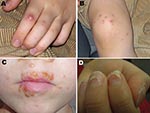
Thumbnail of Vesicular eruptions in A) hand, B) foot, and C) mouth of a 6.5-year-old boy from Turku, Finland, with coxsackievirus (CV) A6 infection. Several of his fingernails shed 2 months after the pictures were taken. D) Onychomadesis in a 10-year-old boy from Seinäjoki, Finland, 2 months after hand, foot and mouth disease with CVA6 infection. Photographs courtesy of H. Kujari (A–C) and M. Linna (D).

Credit - CDC EID Journal

The classic rash & lesions associated with HFMD does not always manifest with EV71 infections, making diagnosis far more difficult.  Additionally, HFMD is normally a mild illness, particularly when caused by the Coxsackie A16 virus.
 

An article that appeared in early 2001 in Clinical Infectious Diseases (cite Neurological Manifestations of Enterovirus 71 Infection in Children during an Outbreak of Hand, Foot, and Mouth Disease in Western Australia Peter McMinn, Ivan Stratov, Lakshmi Nagarajan, and Stephen Davis) describes its impact this way:


Children <4 years of age are particularly susceptible to the most severe forms of EV71-associated neurological disease, including meningitis, brain-stem and/or cerebellar encephalitis, and poliomyelitis-like paralysis.


The neurological complications of EV71 infection may occasionally cause permanent paralysis or death. Several large epidemics of severe EV71 infection in young children, including numerous cases of fatal brain-stem encephalitis, have recently been reported in Southeast Asia [1012].


A 2007 study appearing in the American Journal of Tropical Medicine & Hygiene, looked at mortality rates among severe HFMD involving EV71 infection during an outbreak in Taiwan.  Researchers found a crude mortality rate of roughly 16%, although that number varied considerably over the 8 year study.


And in recent years, we’ve seen increasing evidence of severe EV71 outbreaks - particularly across Asia.  China, and most recently Vietnam, have been hard hit – as evidenced last May when the CDC Issues HFMD Travel Notice For Vietnam.


Two major genotypes of EV-71, EV-71 B and EV-71 C, have been identified as being responsible for a number of severe outbreaks in Australia, Japan, China, Malaysia, and Taiwan since 1997.


A couple of years ago, the Virology Journal, published an analysis of an EV-71 HFMD virus that caused a major disease outbreak in Fuyang City, China in 2008 that showed it was due to an emerging recombinant virus (see China: A Recombinant EV-71).


A reminder that viruses are always evolving, looking for an evolutionary advantage.


Researchers will no doubt be looking for any signs of change to the EV71 virus that has now been isolated from these Cambodian children.


For now there is no vaccine to prevent EV71 infection, although several pharmaceutical companies are working on one. There are no effective antivirals available to treat EV71 at this time, either (cite).


The PHAC (Public Health Agency of Canada) describes enterovirus 71 transmission:


EV 71 is transmitted through direct contact with discharge from the nose and throat, saliva, fluid from blisters or the stools of an infected person. Cases are most infectious during the first week of acute illness but may continue to shed virus in stool for weeks. The incubation period is three to five days. The epidemiological pattern varies by geographical region and climate, but the incidence of infection is higher in the summer and autumn months in temperate climates while remaining prevalent year-round in tropical climates.


There is increasing evidence, however, suggesting respiratory transmission of the virus as well.  This was recently highlighted in a BMC Infectious Diseases article called:


Long persistence of EV71 specific nucleotides in respiratory and feces samples of the patients with Hand-Foot-Mouth Disease after recovery

Jun Han, Xue-Jun Ma, Jun-Feng Wan, Ying-Hui Liu, Yan-Ling Han, Cao Chen, Chan Tian, Chen Gao, Miao Wang and Xiao-Ping Dong

HFMD has been an important public health concern worldwide, especially in the Asia-Pacific region. Up to now, more than 900,000 HFMD cases have been reported in mainland of China. Enteroviruses can be isolated from both the lower and upper alimentary tract and can be transmitted by both fecal-oral and respiratory routes. Fecal-oral transmission may predominate in areas with poor sanitary conditions, whereas respiratory transmission may be important in more developed areas. The relative importance of the different modes of transmission probably varies with the particular EV and environmental setting.


Despite its discovery more than 40 years ago during an outbreak in California, EV71 remains a sometimes elusive diagnosis – particularly when atypical symptoms that are not consistent with HFMD are present.


While we are seeing outbreaks of EV71 primarily in Southeast Asia, an article published in Clinical Infectious Diseases back in 2007 warns that EV71 may be a largely unrecognized and potentially emerging disease here in the United States as well.


Outbreak of Neurologic Enterovirus Type 71 Disease: A Diagnostic Challenge

Carlos M. Pérez-Vélez,Marsha S. Anderson, Christine C. Robinson, Elizabeth J. McFarland, W. Allan Nix, Mark A. Pallansch, M. Steven Oberste, and Mary P. Glodé

An outbreak of neurologic EV71 disease occurred in Denver, Colorado, during 2003 and 2005. Likely, EV71 disease remains unrecognized in other parts of the United States, because EV-PCR of cerebrospinal fluid frequently yields negative results. EV-PCR of specimens from the respiratory and gastrointestinal tracts had higher diagnostic yields than did EV-PCR of cerebrospinal fluid. EV71 infection should be considered in young children presenting with aseptic meningitis, encephalitis, acute flaccid paralysis, or acute cardiopulmonary collapse. EV71 infection may be an underrecognized emerging disease in the United States.


We will have to await further laboratory tests over the coming days to see if any other factors may be involved in this outbreak in Cambodia. 


Of particular interest will any evidence of genetic changes in the EV71 virus that might help explain the unusually high mortality rate that been attributed to this particular outbreak.


Stay tuned.

»» Read More

Updating The Cambodian `Mystery’ Illness


image

See UPDATE EV71 Linked To Cambodian `Mystery’ Virus


# 6423

Since last Tuesday (see Cambodia: WHO Investigating Child Deaths From Unknown Disease) the number of suspected cases of an often-fatal `mystery illness’ in Cambodia has increased from 61 to 74.  All of the  reported victims have been children, with most being under the age of 3.


So far, while some causes have been tentatively eliminated by laboratory testing (including Nipah, H5N1, & SARS) the pathogen responsible for this rapidly fatal respiratory & febrile illness has not been determined.


Updates today from the ECDC, the World Health Organization, and media reports on some of the precautionary measures being taken by other countries in the region.


First stop, the ECDC:


Cambodia: undiagnosed illness affecting children

06 Jul 2012

ECDC

An outbreak of an undiagnosed illness affecting children has been reported by the Ministry of Health of the Kingdom of Cambodia to World Health Organization (WHO). Out of the 62 children, 61 have died. No apparent clustering of cases or signs of transmission have been reported so far.


Between April and June, a total of 58 children below age of 7 years have been admitted to a hospital in Phnom Penh. Further 4 children were admitted to a hospital in Siem Reap, with high fever and encephalitic and/or respiratory symptoms. In total, 62 cases were reported, the majority being on children under 3 years of age.


Fifty-six of 58 patients hospitalized in Phnom Penh and four of four patients hospitalized in Siem Reap have died. Of these cases, 46 died within 24 hours of admission, and the majority of the rest died between 1-3 days after admission. Sixty-one deaths were reported.


The Cambodian Ministry of Health and WHO are conducting an active investigation in order to determine cause and source of the illness. ECDC is closely monitoring the situation.


From the World Health Organization, an update into the investigation posted yesterday (Friday, July 6th).


Undiagnosed illness in Cambodia - update

6 July 2012 - The Ministry of Health of the Kingdom of Cambodia is conducting active investigation into the cause of a recent undiagnosed syndrome that has caused illness and deaths among children in the country.


Preliminary findings of the investigation identified a total of 74 cases who were hospitalised from April to 5 July 2012. Of these, 57 cases (including 56 deaths), presented a common syndrome of fever, respiratory and neurological signs, which is now the focus of the investigation.


The majority of the identified cases to date were under three years old. Most of them were from the southern and central parts of the country and received treatment at Kantha Bopha Children’s hospital, which is a reference paediatric hospital. Despite all efforts, many of the children died within 24 hours of admission.


Available samples have been tested at the Institut Pasteur in Cambodia. Although a causative agent remains to be formally identified, all these samples were found negative for H5N1 and other influenza viruses, SARS, and Nipah.


The Ministry of Health was first alerted to this by Kantha Bopha Children’s hospital in Phnom Penh, where the majority of the cases were hospitalised.


The Ministry of Health notified WHO about this event through the IHR notification mechanism as it met the criteria for notification of any event where the underlying agent or disease or mode of transmission is not formally identified.


WHO and partners are assisting the Ministry of Health with this event which focuses on hospitalised cases, early warning surveillance data, laboratory data and field investigations.


While this event is being actively investigated, the Government is also looking at other diseases occurring in the country, including dengue, hand-foot-mouth and Chikungunya.


Parents have been advised to take their children to hospital if they identify any signs of unusual illness. The Government is also reinforcing awareness of good hygiene practices to the public, which includes frequent washing of hands.


Although these cases have been occurring since last April, and the mode of transmission remains unknown, other countries in the region are watching this outbreak closely and – in some cases – tightening their airport screening.


One such example comes today from Bernama – the official news agency of the government of Malaysia.


Philippines Tightens Airport Screening Following Disease Outbreak In Cambodia

MANILA, July 7 (Bernama) -- The Philippine government has implemented a stricter procedure in screening passengers at the country's international airports following an outbreak of a fatal respiratory syndrome affecting children in Cambodia.


Presidential spokesperson Edwin Lacierda said in an interview with a local radio that the Department of Health is currently monitoring the situation through its National Epidemiology Centre.


"That respiratory disease is now being looked into," Xinhua news agency quoted Lacierda.


Health Secretary Enrique Ona has ordered the Quarantine Bureau to be more vigilant in carrying out routine screening procedures at all international airports.


The Philippines was recently alerted to the unknown disease by the World Health Organisation (WHO) after Cambodia reported at least 60 deaths of children.

-- BERNAMA


`Mystery Illnesses’ are not uncommon around the world, and while a diagnosis may be initially elusive, they often end up due to previously identified diseases that have either evolved or mutated a bit, or have migrated to a new area.


Rarely, something previously unknown does crop up, such as we saw in 2003 with SARS epidemic or more recently with the hemorrhagic fever that emerged in South Africa in 2008 (see Lujo Virus: Newly Identified Arenavirus).


According to well respected anthropologist and researcher George Armelagos of Emory University, we are entering the Third Epidemiological Transition - which began in the late 1970s or early 1980s; an age characterized by an increase in the number of (mostly zoonotic) emerging or re-emerging infectious diseases (see The Third Epidemiological Transition).


While the origin and ultimate public health threat posed by this unknown disease outbreak in Cambodia remains undetermined - given the impact of other emerging infectious diseases (including HIV, SARS, Lyme, XDR-TB) in recent years - it is understandable why reports like these elicit intense media attention and scientific investigation.


I’ll update this story as more information becomes available.

»» Read More

Cambodia: WHO Investigating Child Deaths From Unknown Disease


image


See UPDATE EV71 Linked To Cambodian `Mystery’ Virus


# 6418


Reuters this morning is carrying a story regarding the – as yet – unidentified disease that has claimed the lives of at least 60 children in Cambodia over the past 90 days. 


The victims have been admitted to hospitals in Phnom Penh (pop. 2.2 million) and northern city of Siem Reap (pop. 170K ) with a mixture of high fevers, encephalitis, and respiratory symptoms.


Most reportedly succumbed within 24 hours of admission from what was described as "rapid deterioration of respiratory function".


WHO probing child deaths from unknown disease in Cambodia

Tue, 3 Jul 2012 09:20 GMT


Although viral fevers such as dengue or chikungunya can produce some of the signs and symptoms (ie. fevers and encephalitis) mentioned in the report above, acute respiratory failure (ARF) is not typically one of them.


No nosocomial spread of this illness has been reported in the hospitals.


The Cambodian Ministry of Health website (English version) is slow to load this morning, but I find no mention of this outbreak on their front page or on their News & Events Page.


A quick search of ProMed Mail over the past 3 months turns up a number of reports of mainly vector-borne diseases in Cambodia, including chikungunya, dengue, & malaria , and a couple of cases of H5N1 (details here & here), but no mentions of this outbreak.


  • 26 Jun 2012 Malaria - Cambodia
  • 01 Jun 2012 Influenza (43): Cambodia, H1N1, H3N2, porcine ex human
  • 28 May 2012 Avian influenza, human (51): Cambodia (KS) fatality
  • 19 May 2012 Chikungunya & dengue - Cambodia (02) comment
  • 19 May 2012 Chikungunya, dengue - Cambodia (02) comment
  • 19 May 2012 Chikungunya & dengue - Cambodia
  • 06 Apr 2012 Avian influenza, human (43): Cambodia (KC) WHO
  • 03 Apr 2012 Avian influenza, human (41): Cambodia (KC), Egypt, (DA, GA)


While strides have been made in reducing child mortality in Cambodia, according to the World Health Organization  1 child in 12 does not survive to the age of 5 (cite).


According to the WHO, major causes of child death in Cambodia include premature births, fever, respiratory diseases, complications at delivery and tetanus.


image


For now, the cause of this new and deadly outbreak remains unknown. We’ll watch this story in hopes of learning more in the days and weeks to come.

»» Read More

Calvert County: Update On Fatal Cluster Of Respiratory Illness


# 6201


The Calvert County Health Department (CCHD) has posted a new update as of 8pm EST, March 6th on their website giving us the latest information on the cluster of 3 deaths in one family from a respiratory infection.


While preliminary testing indicates that the son and daughter were infected with an unspecified influenza A virus, a bacterial co-infection is mentioned as a complicating factor (some media outlets are calling it staph).


Update on Calvert County Respiratory Illness Investigation


Preliminary Testing Indicates Influenza

Dori Henry
Director of Communications
Maryland Department of Health and Mental Hygiene

BALTIMORE (March 6, 2012) – The Maryland Department of Health and Mental Hygiene (DHMH) is working in conjunction with the Calvert County Health Department to investigate a cluster of respiratory illnesses in Calvert County. As the Calvert County Health Department has reported, DHMH is aware of four cases in adults from a single family with severe respiratory illness; three have died. At this time, no other similar clusters have been reported from Calvert County or elsewhere in the state.


The cause for these illnesses is under investigation and testing is being conducted by the DHMH Laboratories Administration. Preliminary testing at the DHMH Laboratories Administration indicates that two of the fatal cases had influenza, and these cases may have been complicated by bacterial co-infections. Bacterial co-infection is a known complication of influenza infection. Additional testing is being conducted for all cases.


DHMH recommends all individuals continue to take the following precautions during influenza season: hand washing, staying home if sick, and staying up to date with influenza vaccinations. DHMH also reminds Maryland residents with influenza-like illness (fever and sore throat or cough) to consult their healthcare providers for evaluation. DHMH is not recommending any additional measures at this time. The Department will provide additional updates as more information becomes available.

There have been no new cases reported as of 8:00 p.m.


While three deaths in one family is the sort of thing that is bound to attract a lot of media attention, so far there is nothing here to suggest that anything exotic or particularly alarming is going on.


We will, of course, be watching for more definitive test results over the coming days.


But if nothing else, this is a sober reminder that even during a relatively quiet flu season, that influenza can pose a serious threat.

»» Read More

Calvert County Update

 UPDATED: 1710hrs EST Mar 6th.

According to WTOP news, in Washington D.C., the son  and daughter died from an influenza A infection (strain not disclosed).  A h/t to Crof for the link.


UPDATE: Cluster of respiratory-related deaths under investigation in Md.

Medstar Washington Hospital Center reports the son and daughter who died in the hospital had Influenza A. They also had other medical conditions, officials say.

The 81-year-old mother's cause of death is still under investigation.

The health of the other daughter (and fourth victim) is improving, hospital officials say.


# 6200


Earlier today we learned of a cluster of unusual deaths in a family in Calvert County, Maryland, from some type of unidentified `respiratory infection’ (see Maryland: Conflicting Reports On Cluster of Respiratory Deaths).


The Calvert County Health Department has updated their press release to state that there are no new cases as of 3:15 pm EST today.


The Washington Post has an article by Lena H. Sun that adds a little to the story, including that samples will be sent to the CDC for testing.  It now appears that there are 3 known deaths, and a fourth person appears to be recovering in the hospital.


Three dead from cluster of respiratory illnesses in Calvert County, Md.

 By Lena H. Sun, Tuesday, March 6, 3:32 PM


As far as what the cause of this illness might be, there are a lot of possibilities, and it will probably take several days to sort them out.


Stories like these often take on a life of their own, sometimes with a good deal of embellishment.


In that regard, I’m seeing a number of dubious looking comments left on local news sites, by readers purporting to have some kind of `insider knowledge’ of the situation. 


The old adage that A rumor can make it half way around the world before truth has got its boots on has never been truer since the advent of the internet.


With anonymous comments left on websites,  Caveat Lector should definitely be your guide.

»» Read More

Maryland: Conflicting Reports On Cluster of Respiratory Deaths

Note: There are now several updates to this story (here & here), and future updates can be found by searching HERE.


# 6199


Occasionally we see strange reports of illness that sound ominous or unusual crossing the news wires, but most of the time the causative agent turns out to be something fairly mundane.


`Mystery Fevers’ in Asia usually end up due to some kind of arbovirus, and mass illnesses in schools or cruise ships usually turn out to be norovirus.


But of course, every once in awhile, something unique will turn up, as did the novel H1N1 virus in Mexico three years ago


Today, we’ve multiple (and conflicting) reports coming out of Calvert County Maryland on a family where either 4 or 5 members contracted some sort of respiratory illness, and (depending on the source) subsequently 2, 3, or 4 of them have died.


We’ve a couple of news reports, a brief press release from the Calvert County Health Department, and a brief phone call by Sharon Sanders of FluTrackers to the CCHD trying to get details.


First, the press release, which suggests four illnesses and 2 deaths.


PRESS RELEASE FOR IMMEDIATE RELEASE CALVERT COUNTY HEALTH DEPARTMENT

DAVID L. ROGERS, MD MPH HEALTH OFFICER

CONTACT INFORMATION: 410-535-5400

March 6, 2012

This is a case of an elderly woman living in a rural setting in the Lusby area. She became sick on or about February 23, 2012, with upper respiratory symptoms, at her home. She was cared for at home by three of her children, a son and two daughters. They developed similar upper respiratory symptoms on or about February 28, 2012.


They were all hospitalized and became critically ill and two have subsequently died. One caregiver is currently at the Washington Hospital Center. This appears to be confined to a single family and there is no reason to believe, at this time, that others have been infected with this illness.


Sharon Sanders of FluTrackers placed a call to the CCHD (who are being swamped by inquiries), and talked to someone who stated the index case (the mother) also died, making 3 deaths. You can follow their tracking of this story on this thread.


Two news reports say there were five people stricken by this illness, and four died.  You can view those reports at the following links.


Health Alert: Four Deaths Reported in Calvert County

March 6, 2012

Calvert County Health Department (CCHD) is aware of a cluster of severe respiratory illnesses in five (Lusby area), including four members of a Calvert County family, residing approximately a mile south of the power plant. All five were hospitalized over the last two weeks. Four of the five have died of their illnesses.

(Continue . . .)


The first story we saw (h/t Carol@SC on the Flu Wiki) came from the local NBC TV affiliate. It too cites 5 illnesses and 4 fatalities.


Cluster of Deaths Following Flu-Like Symptoms in Calvert County

Cause of illness not immediately determined

Tuesday, Mar 6, 2012  |  Updated 11:29 AM EST


Multiple deaths in a single household from a respiratory illness are unusual enough to make health officials take notice. These are, however,`early days’, and testing and epidemiological investigations take time. 


If we get some more definitive information on this cluster, I’ll pass it along.


In the meantime, regardless of what this turns out to be, getting a seasonal flu shot and practicing good `flu hygiene’ (covering coughs, washing hands, staying home when sick), are your best protections against winter respiratory illnesses.

»» Read More

Follow Up On Korea’s `Mystery Pneumonia’


# 5801

image


Nearly 4 months ago, in The Korean `Mystery’ Pneumonia, I wrote about confusing, incomplete, and sometimes contradictory reports regarding a number of pregnant women in a Seoul Hospital with a `mystery’ respiratory virus.


At the time, there were 8 pregnant women, and 1 man - who came from different hospitals and  clinics across Korea – suffering from an unusually aggressive (and rapidly fulminating) form of  Idiopathic pulmonary fibrosis (IPF) a scaring and stiffening of lung tissue without a known cause that normally takes months or years to manifest.


For more background on this story, FluTrackers has maintained this extensive thread with more than 120 entries to date.


Although this disease was being referred to as a `mystery virus’ in the media, its exact etiology (viral, bacterial, fungal, or environmental) was unknown.


After some impressive epidemiological detective work, the KCDC (Korea Centers For Disease Control) believes they have found a link between the use of a specific type of sterilizing fluid used in home humidifiers and this illness.


While not yet able to establish a firm cause-and-effect relationship between exposure to fumes from this sterilizer and this respiratory disease, they have found that those who were exposed to it in their home humidifier were 47 times more likely to develop the condition than a control group.


The exact chemical used in this sterilizing solution was not specified by the KCDC. For now they are urging the public not to use chemical disinfectants in their home humidifiers, and to change the water daily and clean them with detergent instead.


The KCDC said that pregnant women were likely more susceptible to this lung damage because they spent more time at home resting, and because they tended to take deeper breaths.


A full report from the KCDC is expected in the coming months.


A couple of news items on this story include:


Mystery malady traced to fluid in humidifiers – Korea JoongAng Daily

Steriliser blamed for mysterious S. Korean deaths – AFP

»» Read More

South Korea: Ministry Probes `Mystery’ Disease


# 5624


A brief update to yesterday’s blog Catching Up With The Korean `Mystery’ Pneumonia which mentioned the first suspected family cluster  (mother/daughter) in the recent spate of Idiopathic pulmonary fibrosis (IPF) cases being treated at a Seoul Hospital.


The Korean Herald (h/t Alert on FluTrackers) is reporting today that a second child in the above mentioned family – a 1 year old – is also suspected of suffering from IPF, although the child is too young for  lung biopsy and so the diagnosis is not certain.


Ministry probes mystery disease

2011-06-13 18:25

The government is keeping a close watch on three members of a family reportedly suffering from idiopathic pulmonary fibrosis.

The disease is thought to be similar to the mysterious virus which recently killed three pregnant women.

(Continue . . . )


As the story tells us, although there are many unanswered questions surrounding these cases, the Korean government continues to offer assurances that whatever the cause – they do not believe it to be an infectious disease.


The story also points out that while these cases are similar, they may not be related to the earlier cases (see The Korean `Mystery’ Pneumonia) reported in April and May.


The Korean language press has been covering this story fairly extensively, and you’ll find an ongoing thread at FluTrackers with many machine translations.


While sometimes useful, these automated translations tend to be difficult to interpret, and so I use them sparingly.


For now, the good news is that whatever the cause (viral, bacterial, fungal, environmental) of these illnesses - the number of cases remains small - and there are no obvious signs of human transmission.


Of course, this story continues to evolve and we’ll keep an eye on it.

»» Read More

The Korean `Mystery’ Pneumonia


image

A formerly unknown virus - SARS-CoV (coronavirus) particles (arrows) – PHIL


# 5548


While it may be of relatively little comfort, there are almost certainly a significant number of – as yet – unidentified respiratory viruses that routinely circulate among humans. 


Most of the time there is little about their clinical signs and symptoms to suggest anything unusual about the infection. The patient quickly recovers, and the illness is assumed to be due to one of the `usual suspects’;  a seasonal influenza, RSV, or one of the myriad rhinoviruses that plague mankind.


In recent years, however, with advances in microbiology and sequence-independent amplification of viral genomes, the ability of scientists to identify new viruses has improved greatly and so we are adding new names to the `suspect list’.  


About a decade ago the human metapneumovirus (HMPV) was identified in Dutch children with bronchiolitis.  Since then, it has been found to be ubiquitous around the world, and responsible for a significant percentage of the world’s respiratory infections . . . yet until 2001, no one knew it existed.


In 2003, a coronavirus called SARS-CoV emerged in China, and infected roughly 8,000 people (killing about 800) before it burned itself out. While coronaviruses were first characterized in the 1960s, and were known to cause many relatively mild upper respiratory infections (common colds) every year, a deadly strain had never been identified before.


Human Bocavirus-infection (HBoV) wasn’t identified until 2005, when it was detected in 48 (9.1%) of 527 children with gastroenteritis in Spain (cite).  


The list grows longer every year. 


But only a small number of virus samples are given this sort of scientific scrutiny, and so it is safe to assume there are still unknown viruses out there, waiting to be discovered.


Of course,  unknown (or unidentified) doesn’t necessarily mean `new’.


Most of the time, these viruses have been around for a long time, and classifying them has very little impact on the public’s health.


On very rare occasions, as in the case of SARS, we get a new player; a virus that we’ve never seen before (that we know of).  


For the past couple of days there have been media reports out of South Korea that suggest they may be seeing an unusually severe and potentially unknown respiratory virus – and efforts are underway to identify it.


Yesterday, Sharon Sanders of FluTrackers  picked on up early reports of a number of pregnant women in a Seoul Hospital with a `mystery’ respiratory virus.  Since then several more articles (some machine translated) have been posted to this ongoing thread.


These media reports are confusing, incomplete, at times contradictory, and just a little hyperbolic.


Whether there is really anything unusual going on here, is way too soon to tell.   The cause of viral pneumonia often goes unidentified.


That said, the following report comes from the Korea Times.


05-10-2011 18:36

Woman dies from unidentified viral pneumonia

By Kim Rahn


A woman died from pneumonia caused by an unidentified virus, according to the health authorities.

Fears are rampant as seven others, mostly pregnant women, are hospitalized with the same illness.


The Korea Centers for Disease Control and Prevention said Tuesday that a 36-year-old woman, who had been in the intensive care unit at a Seoul general hospital, died in the morning from a cerebral hemorrhage related to her condition. The unidentified woman was one of seven hospitalized for an unknown viral pneumonia.

(Continue . . .)


Unusually, the woman who died apparently developed rapidly progressing Idiopathic pulmonary fibrosis – a scaring and stiffening of lung tissue without a known cause that normally takes months or years to manifest.


Sifting through the other reports, it appears that these 9 patients:


  • had no previous contact with each other
  • have been transferred from various clinics around the country
  • have occurred over an period of a month or more
  • and victim’s families and contacts have not developed similar symptoms.


Whatever this might be (and it may be something perfectly ordinary, presenting in an unusual way), it doesn’t appear to be terribly contagious.   


But this is interesting.  


And so we’ll keep an eye on it and see if anything of note follows these reports.  

»» Read More

Ugandan Mystery Disease Identified As Yellow Fever


# 5185


More than two months after it began, we now appear to have an official cause of the mystery disease outbreak in northern Uganda; Yellow Fever. 


My first blog on this outbreak came in mid-November (see Uganda: Unidentified Hemorrhagic Outbreak), and at that time a hemorrhagic fever like Ebola, Marburg, or Lujo virus was considered the likely cause.


Two weeks later, I reported that Health Ministry officials had stated that laboratory tests had come back negative for the usual suspects from that part of the world; Ebola, Marburg, Congo Crimean fever, Rift Valley fever and Typhoid.


On December 7th, it was widely reported that Plague (pneumonic and bubonic) had been identified as the cause of the outbreak, which I covered in Uganda Outbreak Identified As Plague: Officials.  


Within a few days, the plague diagnoses began to look less and less likely, and in recent days Yellow Fever – a disease not seen in Uganda in nearly 40 years – has come to the forefront.


For a detailed history of this outbreak’s progression, FluTrackers has an extensive thread on this story, with more than 150 entries as of this morning.


Treyfish has been a particularly close follower of this story, and has posted many of these reports, although he is by no means alone in this effort.  


Yesterday afternoon Treyfish posted a U.S. Embassy Warden Message that identifies the outbreak as Yellow Fever.


Warden Message

U.S. Embassy Kampala, Uganda
Warden Message - December 28, 2010

Outbreak of Unidentified Illness Now Confirmed as Yellow Fever in Northern Uganda

After discussions with the Ugandan Ministry of Health and WHO, the U.S. Centers for Disease Control and Prevention (CDC) now confirms that the unknown severe illness reported in Mission Kampala’s November 30 Warden Message is an outbreak of Yellow Fever.


Although as many as seven districts are now reporting occurrences - including two possible cases from southern Sudan- almost all of the reported severe cases (characterized by fever, vomiting and bleeding) continue to be concentrated in three districts of Northern Uganda, namely Abim (specifically Morulem sub-county), Agago (Omiya P’Chua, Adilang and Paimoi sub-counties) and Kitgum (Orum, Namokora and Kitgum Town Council).


In light of these findings, the U.S. Mission in Kampala recommends that U.S. citizens residing and traveling in Uganda avoid travel to Northern Uganda unless they have been vaccinated against Yellow Fever within the past 10 years.  If vaccinated recently, do not travel to Northern Uganda for at least 10 days after receiving the vaccination.  (Yellow Fever vaccinations do not take effect for 10 days.)  Only U.S. government officials with Yellow Fever vaccinations are permitted to travel to the affected areas.


(Continue . . . )


Via newshound Alert we get this update from Uganda’s leading independent daily, The Daily Monitor.


National

Yellow fever deaths reach 48

By Flavia Nalubega

Posted Wednesday, December 29 2010 at 00:00

Kampala

The number of people killed by yellow fever in northern Uganda has reached 48 and 187 are hospitalised, an official has confirmed. Dr Isa Makumbi, a commissioner in the health ministry, made the revelations last night.


Earlier, Junior health minister James Kakooza had told Daily Monitor on phone that the viral disease has been confirmed in Abim, Agago, Lamwo, Kitgum, Pader, Gulu, Arua, Kaabong and Lira districts.


“The infection was in place as early as two months ago. Since then, we have been doing investigations to ascertain the disease. It is only two weeks ago that we confirmed the viral infection as yellow fever,” Mr Kakooza said. He said the disease has taken a new string of infection where patients suffer severe vomiting of blood, diarrhoea and swollen eyes.

(Continue . . . )


Yellow fever is a mosquito borne viral illness, that according to the World Health Organization, infects roughly 200,000 people each year and claims 30,000 lives.


Once the scourge of Africa, the Americas and Europe, Yellow fever is now endemic only to the tropical areas of South America and Africa. 


image

(Source link)


In the 18th and 19th century, Yellow fever caused major epidemics in Europe and in the United States, up the Atlantic seaboard and as far north as New England (Boston was hard hit in 1780, and Philadelphia saw several thousand deaths in 1793).


Yellow Fever has been cited as one of the primary reasons why the French abandoned their attempt to build a Panama canal in the late 1800’s, as the combined burden of Yellow Fever and Malaria reportedly claimed the lives of more than 20,000 construction workers.


For more on the history of `Yellow Jack’, I would point you to Ian York’s excellent Mystery Rays blog, where he gives us some terrific background in:


Yellow fever, stasis, and diversification

The deadliest, most awe-inspiring of the plagues

The good old days


You can find more information on yellow fever at these websites:

http://www.cdc.gov/ncidod/dvbid/yellowfever/

http://wwwnc.cdc.gov/travel/yellowbook/2010/chapter-2/yellow-fever.aspx

http://www.who.int/topics/yellow_fever/en/

»» Read More

OCHA: The Ugandan Outbreak By The Numbers


# 5131


Two days ago, the tentative diagnosis for the `mystery’ disease affecting parts of Uganda was announced to be pneumonic plague (see Uganda Outbreak Identified As Plague: Officials).


Today, officials seem to be backing away from that diagnosis, with this story dated yesterday appearing on the New Vision website.


Northern disease still a mystery

Wednesday, 8th December, 2010


By Jimmy Wokorach-Oboi
and Taddeo Bwambale

A new team of health experts from the US Centers for Disease Control (CDC) is expected in Uganda tomorrow to intensify the fight against a mysterious illness that has hit at least six districts in northern and north-eastern Uganda.

The team is to carry out more tests to determine the cause of the outbreak, which has claimed about 38 lives since it was first reported in November.

CDC team leader, Jeffrey Miller yesterday said tests done at the CDC and Uganda Virus Research Institute joint laboratory in Arua district ruled out plague.

(Continue . . . )


While it may not solve the mystery, today we’ve a detailed map showing the locations, numbers of cases, CFR (case fatality rate), and symptomology from 3 separate locations compiled by OCHA and provided via ReliefWeb.


You can download the entire map at the link below.


Uganda: Un-diagnosed Disease Affected Areas & Cases - as of 06 Dec 2010

Map of 'Uganda%3A%20Un-diagnosed%20Disease%20Affected%20Areas%20%26%20Cases%20-%20as%20of%2006%20Dec%202010'

  • Date: 08 Dec 2010
  • Type: Complex Emergency
  • Keyword(s): Epidemic; Health
  • Format:

    map.pdfPDF *, 423 Kb

  • Source(s):
    - United Nations Office for the Coordination of Humanitarian Affairs (OCHA)


Today’s map details 85 cases, and 30 fatalities – from three locations; Abim, Agago, and Kitgum.


Media reports have mentioned 38 fatalities, and more than 90 cases – but it is likely that all of the numbers we’ve seen are either incomplete or several days out of date. 


image


While the symptoms are diverse and confusing, some form of hemorrhage is being reported in the majority of cases to date.


You can also see considerable differences in symptomology between locations.


With no definitive diagnosis or test, it wouldn’t be unreasonable to assume that some of those differences might be attributable to patients with some other illness being lumped into the `mystery disease’ group.


Outbreak reports, particularly from remote areas with limited resources, often contain a good deal of ambiguity.


Uganda symptom


Maps like these give us a unique view of the spread, and impact, of an outbreak.  We shall obviously await the outcome of the CDC’s testing with considerable interest.

»» Read More

Updating Uganda’s Mystery Outbreak


# 5116


image


More than a month after it began, doctors appear no closer to determining the cause of a fatal disease outbreak in northern Uganda, where the death toll reportedly stands at 38.


I last reported on this outbreak three weeks ago in Uganda: Unidentified Hemorrhagic Outbreak.


Health Ministry officials have stated that laboratory tests have come back negative for the usual suspects from that part of the world; Ebola, Marburg, Congo Crimean fever, Rift Valley fever and Typhoid.


Additional testing is ongoing.


There are reportedly more than 90 people currently reporting symptoms of the disease, which includes severe headache, dizziness, and a mild fever to start - followed by abdominal pain with diarrhea  and vomiting.


Some hemorrhagic symptoms have been reported in early media reports as well, although it is unclear whether this is really a hemorrhagic disease.


Chen Qi has a report from the Ugandan Sunday Monitor with more on this story.


Strange disease kills 38

By Evelyn Lirri 


While I won’t speculate on the cause of this particular outbreak, Africa continues to be the place of origin of newly identified – often zoonotic – diseases.


Accordingly, this morning would seem a good time to mention once again the work of Dr. Nathan Wolfe, the world famous virus hunter and founder of the Global Viral Forecasting Initiative (GVFI).  


I wrote about Dr. Wolfe  last year (see Nathan Wolfe: Virus Hunter) in this blog, and also featured a TED Talk by Dr. Wolfe.


TED stands for Technology, Entertainment, Design.  Each year they hold a 4 day long event at Long Beach, California where 50 people are urged to give the 18-minute talk of their lives.


image
About this talk

Virus hunter Nathan Wolfe is outwitting the next pandemic by staying two steps ahead: discovering new, deadly viruses where they first emerge -- passing from animals to humans among poor subsistence hunters in Africa -- before they claim millions of lives

Full bio and more links

image

(Click Image to view video)

»» Read More

India: Deep In The Miasma


# 4934


While it is a bit lacking in scientific specificity, an article appearing this morning in Outlook India does give a pretty good overview of the panoply of medical problems cascading through India right now.


It is called Deep In The Miasma, and appeared on NewsNow overnight, albeit with a bad link.   With a little digging, I was able to find the right url.


This article dangles tantalizing statements, such as:


. . .  almost all diseases are showing changes in aetiology, symptoms and even geography . . .


. . .  a new variant of bird flu is among the many causes for concern . . .


But offers precious little follow through, I suspect primarily because this article appears in the `popular press’ and is filed under Society-Health-Epidemics.


In other words, it is geared for a more general audience.


Disappointingly, the statement about a `new variant’ of bird flu is tossed out, but never clarified, leaving us in the dark as far as to what exactly the authors are referring to.  


But those quibbles aside, this relatively short article does paint a disturbing, yet fascinating picture of the increasing disease burden being reported across the Indian sub-continent.


Including:

  • Dengue
  • Malaria
  • Chikungunya
  • Japanese Encephalitis
  • Typhoid
  • Cholera
  • Gastroenteritis
  • Swine Flu
  • `Mystery’ Fevers
  • Antibiotic Resistance


The article also includes a pretty good graphical look at the problem, as well.

image


Read:


Deep In The Miasma

A monsoon that refuses to go away breeds a panoply of diseases

Amba Batra Bakshi, Snigdha Hasan, Madhavi Tata

»» Read More

Tripura Follow Up


# 4681


We’ve a little more information  this morning about the events in Tripura, India where 20 or more people have recently died from a `mysterious illness’ (see Newshounds Watching Tripura).


According to a news report today, Tripura’s Health Minister Tapan Chakraborty is describing this as an ARI (Acute Respiratory Infection), and giving the number of deaths as approximately 24 (with 17 of them children).


The cause of the respiratory infection isn’t stated, although an investigation is promised. 


For now, the debate seems to have centered around political infighting and affixing blame for the spread of the illness. 


Which leaves us – for the time being - not knowing whether this outbreak is due to a pneumonia, an influenza, or perhaps some other respiratory pathogen (RSV, Parainfluenza, metapneumovirus, etc.).


These reports come via Alert on FluTrackers.


ARI claims 24 lives in Tripura


Agartala | Tuesday, Jun 29 2010 IST

At least 24 people have lost their lives since the past fortnight following sudden spread of acute respiratory infection (ARI) in remote Kangrai hamlet under North Tripura along Tripura-Mizoram border.


Health Minister Tapan Chakraborty said according to hospital records, 24 people had died so far and 50 others were admitted with ARI complications, adding that there was a possibility of few more unrecorded deaths outside the hospital. Unofficial reports said 28 people, including 17 children, had died.


The minister said initial investigation revealed that the deaths occurred due to failure of the health officials to contain the disease in the area and village panchayats were also to be blamed for their careless attitude.


''We are giving our best efforts to control the situation and we have launched investigation into the cause of spread of the disease and all the accused authorities will be dealt with as per law,'' Mr Chakraborty said.


(Continue . . .)


And this from the Tripura Times.


Health Minister holds meeting with officials
Kangrai incident to rock Assembly today
Times News

(EXCERPT)

Mr. Nath has already demanded resignation of Health Minister for his alleged failure to check the outbreak of the mysterious disease.The outbreak of mysterious disease that has so far claimed 26 lives has pushed the government in an awaked situation keeping in view of the Assembly session.


The deaths of mysterious disease have exposed the poor health service in the rural areas like Kangrai. Sources said, the treasury bench has also envisaged strategy on how the tackle the opposition members in the Assembly tomorrow.It has been learnt that Health Minister held a meeting with senior Health department officials where he was briefed about the steps taken by the department to tackle the situation.The steps include setting up of a special sub-centre, engagement of a paediatrician at Kanchanpur hospital and house to house surveillance in the entire subdivision.


The government today formally informed the Ministry of Health and Family Welfare about the outbreak of Respiratory Tract Infection (RTI) at Kangrai in Kanchanpur subdivision. The outbreak of RTI has claimed 14 lives, according to an official of Health department.


Obviously, we’ll watch with interest to see what is determined to be the infectious agent in this case.

»» Read More

Newshounds Watching Tripura


# 4779


Tripura


Three days ago Shiloh on FluTrackers posted an article from The Hindustan Times on a deadly outbreak of a `mystery disease’ in the northeastern Indian state of Tripura that had reportedly claimed the lives of 20 children.


Unknown diseases kill 20 kids in Tripura
Indo-Asian News Service
Agartala, June 25, 2010
 
Last Updated: 16:15 IST(25/6/2010)


At least 20 children have died in the past 10 days following the outbreak of various unknown viral and tropical diseases in a remote tribal-dominated village in Tripura, officials in Agartala said on Friday.


"The children mostly died at their homes in remote Kangrai tribal village along the Tripura-Mizoram border in northern Tripura," doctors and officials who visited the affected areas told reporters at divisional headquarters Kanchanpur.


Many other children and elders also fell ill. Some were admitted to the sub-divisional hospital.

(Continue . . .)


Reports of `mystery fevers’ and illness are common out of India and surrounding countries as many villages are remote, and without adequate medical care.  


Often, assuming we do get a diagnosis, these outbreaks are attributed to Japanese Encephalitis, Malaria or some other vector borne disease that is endemic in the region. Sometimes food poisoning or a tainted water source is blamed.


Occasionally, in this part of the world, outbreaks of something more exotic occur, such as the Nipah virus. And while no human cases have been recorded in India as yet, this is also an area that has seen H5N1 in poultry.


So naturally, the newshounds are paying attention to reports of any `mystery disease’ out of that region.


Over the last 72 hours Alert, Treyfish, Ironorehopper, and RoRo have all added to this ongoing thread on Flutrackers, with more than a dozen additional reports from various news outlets.


The reports are somewhat confused and conflicting, with various estimates of deaths ranging from 24 to nearly 100.  The symptoms described are too vague to allow much speculation as to the cause.


ProMed Mail  was notified, and they’ve printed several of these reports and issued an RFI (Request for Information) as well.   I’ve excerpted their comment below.


UNDIAGNOSED ILLNESS - INDIA: (TRIPURA), REQUEST FOR INFORMATION
***********************************************
A ProMED-mail post
<
http://www.promedmail.org>
ProMED-mail is a program of the
International Society for Infectious Diseases
<
http://www.isid.org>

<SNIP>


The description of the symptoms of the illness is not sufficiently precise to indicate whether this outbreak has been caused by a novel pathogen such as Nipah virus or a more familiar agent such as avian (H5N1) or pandemic (H1N1) influenza virus, Japanese encephalitis virus, or malaria which may be prevalent in the area, or a combination of agents. ProMED-mail would welcome any additional information from the region.


Regardless of what ends up being the cause of this outbreak, this is illustrative of the terrific work being done by the volunteer newshounds on the flu forums.


They spend countless hours searching hundreds of newsfeeds every day, looking for any hint of an unusual outbreak of a disease in humans or animals.  And they do this not only in English, but in dozens of other languages as well. 


I’ve written often of my gratitude to these tireless troops.  I literally couldn’t do half what I do without their efforts.


For more on how they go about their formidable task, you might wish to read Newshounds: They Cover The Pandemic Front.


When we get more information, I’ll try to update it here.  But to follow in real time, you may wish to check on this FluTrackers thread.

»» Read More

You Say You Want A Resolution . . .


# 4585


If you blog about medical stories - particularly disease outbreaks - for very long you discover that quite often stories emerge, hang around for awhile, and then quietly disappear without a resolution.


It’s a big world, with 7 billion inhabitants.  Outbreaks of `mysterious fevers’ and clusters of unexplained deaths are reported somewhere nearly every week.


When it happens in some remote corner of the world, like interior China, northern India, or perhaps Indonesia or Vietnam, you tend to chalk it up to limited surveillance, poor sample collections, or inadequate lab facilities.


And I’m sure that fairly often, that is the answer.


But sometimes even the combined efforts of the Centers for Disease Control here in the United States are unable to immediately pinpoint the cause of a disease outbreak.


This is not a slam against the CDC, it is simply an acknowledgement of the limits to our technology.


We’ve become accustomed to believing – mainly from their portrayal on TV shows like CSI, NCIS, Bones, etc. - that forensic and medical testing laboratories can find just about anything from the smallest tissue or evidence sample.  


It’s a nice fantasy, but it isn’t quite that easy.


Most tests are specific to a type of pathogen.   If you don’t know what you are looking for, it becomes very difficult to test for it.


In recent weeks we’ve seen several (as yet) unresolved outbreak stories; notably one in Canada, one in Louisiana, and now one in Vietnam.


A quick tour, therefore, of these three stories.


Late last April we began to hear of a series of deaths at a long-term care facility in British Columbia ( Investigating A Viral Outbreak In Vancouver).   


Within a couple of weeks, after 10 deaths among an elderly and frail population, and more than 20 infections (including 3 hospital staff members), the outbreak had been declared over.  


But the cause has not been identified.


Tests for Influenza A and B, and legionnaire's disease – considered to be the most likely suspects - were negative.   Other tests have failed to turn up a definitive cause.  


Unless some new breakthrough in this investigation occurs, we may never know the cause of this outbreak.


Here in the states earlier this month there was an outbreak of  suspected `food poisoning’ at a state hospital in Louisiana.  Before it was over 40 people were sickened and 3 people had died.


Initially, speculation centered around the hospital cafeteria, as reported by the AP on May 9th.


Food poisoning suspected in 3 La. hospital deaths

(AP) – May 9, 2010

PINEVILLE, La. — A health official says food poisoning perhaps from an ingredient in chicken salad could be what killed three Louisiana mental health hospital patients and sickened 40 others.


Officials say patients at Pineville's Central State Hospital showed signs of gastrointestinal stress beginning Friday morning. The three deaths — a 43-year-old woman, 41-year-old man and 52-year-old man — happened late Friday night or early Saturday morning.


A day or two later norovirus became the prime suspect, and indeed, some of the victims apparently tested positive for the virus.  But not all of them.   And while norovirus can leave you temporarily wanting to die, it is rarely fatal.


This from Thetowntalk.com, a local media site for the region, this report as of May 18th. 


Federal health officials investigating 3 deaths at hospital in Pineville; new cause suspected

(Excerpt)

CDC inspectors collected samples, re-interviewed patients and staff members, re-examined medical records and re-analyzed epidemiological data, Holcombe said.


"We identified norovirus, the agent that causes nausea, vomiting and diarrhea -- all the symptoms these folks had," he said. "You would expect the vast majority of stool samples would come back positive for the agent. And while we had some that were positive, we felt it was not an adequate explanation for the whole thing."


New samples will be sent off to be tested for even more agents along with samples of all of the food in the kitchen that had been carefully saved and preserved, Holcombe said.


While the investigation continues, and a root cause may yet be identified, this illustrates that even two weeks after an outbreak in a hospital here in the United States, the cause can remain elusive.


Which brings us to a fresh story out of Vietnam of an unidentified pneumonia that has put three pregnant women into acute respiratory distress.    


This first report comes via Sally Furniss of FluTrackers, the entire translation appearing in the FT thread here.   You’ll find more than a half dozen additional media reports, from other newshounds, translated there as well.


Wednesday, 19/05/2010 - 15:01

Pregnant women infected with pneumonia "strange" not to find out the root cause

(AP) - In the past week, three pregnant women have been transferred to hospital from heat illness in severe lung inflammation. Suspected lung damage caused by viruses, doctors conducted tests of influenza A/H5N1 virus, H1N1, H3N2, but the results were negative.


A severe pneumonia patients are being treated in isolation room pressure center, a tropical disease hospital INVESTMENT

Critical illness of unknown cause


Nguyen Thi My Linh patients (22 years old, native of Duc Hoa, Soc Son, Hanoi) is 34 weeks pregnant a sudden high fever suddenly, two days after the fever began breathing difficulties should be taken directly to family illness central institute of tropical diseases.


When hospitalized, the patient was in coma, doctors had to open the windpipe and mechanical ventilation for patients. At the same time, samples of patients Spirit also conducted the test, find the cause but were negative for the virus and the doctor could not find a root cause patients with severe pneumonia.


Once again, these cases are still under investigation, and a cause may yet be determined.   But there are a lot of pathogenic players out there . . .  many that we know about, and some that we don’t.


This may simply turn out to be one of those outbreak blips that shows up briefly, never goes anywhere, then disappears without leaving much of a trace.   That happens fairly often.


But atypical pneumonias . . . particularly when they occur in south east Asia, tend to capture our attention.   It was not so far away, in Guangdong Province of China, that SARS erupted in much the same fashion 8 years ago.


So we will watch this story, and any others like it, to see if they escalate into a wider public health threat. 


Most, admittedly, won’t.  


As we do, we have to accept that some of these medical mysteries will simply never be solved.  Or media interest will fade by the time that a cause is determined and we may simply never hear about it.


While many of these stories sound alarming, most will fade into obscurity. Even if the cause is never identified, they will remain localized tragedies that affect a handful of people.  


Rest assured that there are a great many watchful eyes upon these stories, and if conditions should escalate, we’ll hear about it.

»» Read More