Showing posts with label Cambodia. Show all posts

WHO/Cambodian MOH Announcement On HFMD Outbreak


# 6431


My thanks go to Ronan Kelly on FluTrackers for finding and  posting the joint announcement between the World Health Organization, and the Cambodian Ministry of Health regarding the recent outbreak of severe HFMD in that country.


The announcement is in a PDF FILE, which makes cutting and pasting here problematic.  You can click this link, or the image below, to read the 2 page report.


image


Essentially, this report finds that the EV71 virus was the prime cause of the outbreak; with only a small percentage of cases testing positive for other pathogens (Strep suis, Haemophilus Influenzae type B, etc.). 


The report suggests the use of steroids may have worsened the outcome in some cases.


The Cambodian government, in conjunction with the World Health Organization, will conduct enhanced surveillance for neuro-respiratory syndrome which may accompany severe HFMD due to EV71.


This report appears to assign a minor role, if any, to the other infectious agents which have been widely mentioned in the media.

»» Read More

Updating The Cambodian EV71 Story


# 6430


Over the past several days we’ve seen some confusing (and conflicting) reports on the `mystery illness’ in Cambodia which has claimed the lives of more than 50 children over the past few months (see EV71: Cambodia’s Prime Suspect).


Complicating the investigation, these children were treated by a variety of doctors in different clinics across 14 provinces, and many died and were buried before proper testing could be done.


Overnight  ProMed Mail posted (see Undiagnosed illness, fatal, child - Cambodia (06): pathogen mix) a CNN  report that a combination of pathogens – including enterovirus 71, Streptococcus suis and dengue fever – will be named responsible for these child deaths, and that the inappropriate use of steroids in their treatment exacerbated their illnesses.


An official announcement from the World Health Organization is expected shortly, but as of this writing has not yet been published.


But we do have some tweets this morning from the WHO twitter account that continue to highlight the EV71 virus as the major cause of the outbreak.


image


And this morning Xinhua News is reporting that:


HFMD causes child deaths in Cambodia: WHO

English.news.cn   2012-07-12 19:55:37

The severe form of hand, foot and mouth disease (HFMD) was the cause of illnesses and deaths of 54 Cambodian children since April, concluded the findings of a joint investigation on Thursday.

(Continue . . . )


Whatever other contributing factors might be involved, the EV71 virus is perfectly capable of producing serious – even fatal – illness on its own. 


The classic symptoms of a blistering rash on the hands, feet, and mouth associated with HFMD are not always present. Sometimes the patient only presents with severe neurological symptoms.


Outbreaks of EV71 are neither new, nor rare, although the mortality rate in this Cambodian outbreak does appear unusually high (admittedly difficult to know, since we don’t know how many mild cases went uncounted).


The past decade has seen numerous outbreaks of EV71, resulting in the deaths of hundreds of children across Asia (see China: EV71 Claims 28th Victim, Authorities Warn of Possible `Mass Outbreak', FMD Outbreak In China Spreads To 25,000 Children).


We have also seen signs that the virus continues to evolve (see China: A Recombinant EV-71).


While no new cases have been reported in the past several days, with no vaccine and no effective antiviral treatment available, fears continue to run high in Cambodia. The following report from Bangkok Post indicates that some Cambodians with small children are attempting to enter Thailand to escape the outbreak.


   Cambodians flee to Sa Kaeo

Published: 12/07/2012 at 08:07 AM

The hand, foot and mouth disease (HFMD) scare has resulted in a mass exodus of Cambodian parents with young children into Sa Kaeo province.


The Aranyaprathet immigration checkpoint was yesterday crowded with Cambodian travellers, most of them with young children, eager to enter Thailand.


The Cambodian parents were mainly workers and vendors at the Rong Kleau border market in Thailand.


(Continue . . . )


When we get an official announcement from the WHO, or the CDC, as to the cause of these deaths, I’ll post it.  For now, however, the EV71 virus still appears to be the prime suspect in this outbreak.

»» Read More

EV71: Cambodia’s Prime Suspect


Photo Credit University of Iowa


# 6427


Although normally a mild childhood disease, HFMD (Hand, Foot, & Mouth Disease) has taken center stage in the media these past few days as one of the viruses (EV71) associated with that illness has been tentatively linked to dozens of deaths of Cambodian children over the past three months.


The epidemiological investigation is ongoing, with researchers looking for any possible complicating factors (or changes to the virus) that might explain the unusually high mortality rate being reported with this outbreak. 


We should know more in a few days, but as you’ll see, the EV71 virus doesn’t need any help to be deadly. 


HFMD can be caused by a variety of viruses, and most of the time, it is mild and only rarely requires medical attention.


The most common cause of the illness is the Coxsackie A16 virus, and more rarely the Coxsackie A10 virus. In recent years, we’ve also seen the emergence of the Coxsackie A6 virus which has been linked to somewhat more severe HFMD cases (see MMWR: Coxsackievirus A6 Notes From The Field).


But it is Enterovirus 71 that has been linked to the most severe cases of HFMD – particularly across Asia - with serious outbreaks recorded over the past dozen years in places like China, Taiwan, Malaysia, Hong Kong and most recently, Vietnam.


In addition to the classic HFMD symptoms, this virus has been known to produce serious neurological illness, including life threatening encephalitis. 


You can find more details on HFMD, and EV71, in the World Health Organization’s Hand, Foot and Mouth Disease Information Sheet, from which I’ve excerpted the following:


  • HFMD is usually a mild disease, and nearly all patients recover in 7 to 10 days without medical treatment and complications are uncommon.
    • Dehydration is the most common complication of HFMD infection caused by coxsackieviruses; it can occur if intake of liquids is limited due to painful sores in the mouth.
    • Rarely, patients develop "aseptic" or viral meningitis, in which the person has fever, headache, stiff neck, or back pain, and may need to be hospitalized for a few days.
  • HFMD caused by EV71 has been associated with meningitis and encephalitis, and on occasion can cause severe complications, including neurological, cardiovascular and respiratory problems. Cases of fatal EV71 encephalitis have occurred during outbreaks.


While the recent outbreak in Cambodia has raised alarms around the world, deadly outbreaks of EV71 are nothing new.  Last May, in CDC Issues HFMD Travel Notice For Vietnam, we looked at an outbreak that had claimed more than 20 lives.


In the News
Hand, Foot, and Mouth Disease in Vietnam

Released: May 25, 2012

What Is the Current Situation?

As of April 29, 2012, the Vietnam Ministry of Health has confirmed nearly 40,000 cases of hand, foot, and mouth disease (HFMD) since the beginning of 2012. Cases have occurred in 63 provinces, and 20 deaths (all in children under 5) have occurred in 10 provinces.

(Continue . . .)


The CDC also provides several  multimedia products related to hand, foot, and mouth disease.


Similarly, we’ve seen reports this week indicating that Hand, foot, mouth disease kills 240 in China.


We are seeing reaction to the Cambodian outbreak from several health departments across Asia, including Hong Kong, Thailand, and the Philippines.


First, Hong Kong’s CHP (Centre for Health Protection) which sent out this Update on An Unknown Disease in Cambodia letter to doctors in the region on July 9th, which asks that doctors notify the CHP of any suspected cases with recent travel history to Cambodia.


Possibly related, the CHP is reporting on Two cases of severe paediatric enterovirus infection, although the causative virus is not indentified.


In Thailand, The Nation newspaper is reporting that the MOH has instructed schools to close if an unusual number of HFMD cases are reported.


Disease warning for schools

The Nation July 10, 2012 5:47 pm

The Public Health Ministry on Tuesday instructed schools and nurseries nationwide to close if they find that students in five classes or more have contracted hand, foot and mouth disease.

(Continue . . . )


And perhaps the most proactive of all is the Philippines, where the Department of Health has ordered increased surveillance at airports, and has declared  EV-71 to be a notifiable disease. 


Here is the official press release:


DOH MAKES ENTEROVIRUS-71 INFECTION AS A NOTIFIABLE DISEASE

July 10, 2012

(Press Release – 10 July 2012)

Health Secretary Enrique T. Ona instructed today the Department of Health (DOH) National Epidemiology Center to include Enterovirus-71 (EV-71) infection as a notifiable disease in the country. This will compel all health providers especially physicians to report individual cases or even outbreaks.


“Mandatory notification will improve monitoring of EV-71 infections and ensure that necessary measures are in place to guarantee that the Philippines is free from the highly fatal severe form of EV-71 infections that have claimed the lives of at least 60 children in Cambodia since April this year,” Ona said.


Also, the DOH and the World Health Organization (WHO) clarified today that the Cambodian EV-71 was of the encephalitis type and not hand foot and mouth disease (HFMD) as earlier reported. Affected Cambodian children generally presented with fever followed by rapid respiratory deterioration and impaired consciousness. Death occurred 24 hours from hospital confinement.


EV-71 causes different diseases of varying intensity. These include the often mild hand, foot and mouth disease (HFMD), acute respiratory disease, acute flaccid paralysis (polio-like) and the deadly brainstem encephalitis. HFMD is characterized as a self-limiting illness presenting with fever and accompanied by skin lesions or rashes.


EV-71 infections do occur in the country but are reported with irregularity. Fatal EV-71 infection is still very rare in the Philippines.


Proper disposal of baby diapers or human waste, strict personal hygiene and regular hand washing prevent viral spread. The virus is known to be excreted in the feces since it is found in human intestines.


The DOH urges parents and day-care personnel to clean and disinfect toys and teaching tools that are easily shared with other children. This can prevent EV-71 infections, as there are no known effective drugs or vaccines.


‘There is still no travel restriction to and from Cambodia and incoming passengers will be subjected to thermal screening upon arrival in all international airports as a routine quarantine procedure,” the health chief concluded.


The statement above, that the `(WHO) clarified today that the Cambodian EV-71 was of the encephalitis type and not hand foot and mouth disease (HFMD)’ is something I’ve not been able to locate on the WHO site yet.  


And last, but certainly not least, Lisa Schnirring of CIDRAP NEWS wrote a detailed report last night on the Cambodian outbreak, which you can read at:


Enterovirus 71 cited in puzzling Cambodian infections

Lisa Schnirring * Staff Writer

Jul 9, 2012 (CIDRAP New) – Lab analysis in the mysterious recent illnesses and deaths of dozens of Cambodian children pointed to enterovirus 71 (EV-71), a virus that causes hand, foot, and mouth disease (HFMD) and can lead to severe complications in some patients, the World Health Organization (WHO) announced today.

(Continue . . .)


The peak season for HFMD is summer and fall, which suggests that we will be hearing about outbreaks of EV71, and other HFMD viruses, for months to come.

»» Read More

EV71 Linked To Cambodian `Mystery’ Virus


# 6424


Doctors may be closer today to identifying the `mystery disease’ that has killed – at last report – more than 60 children in Cambodia over the past couple of months (See Updating The Cambodian `Mystery’ Illness).


According to multiple media reports this morning (CNN, Bloomberg, RTHK) the Institut Pasteur in Cambodia has found Enterovirus-71 (EV71) in 15 out of 24 samples taken from victims of this disease.


While more testing is needed, and there may be other factors involved, the signs and symptoms being reported in this outbreak are consistent with severe cases of EV71 infection.


EV71 is one of more than 60 non-polio enteroviruses  that have thus far been identified, and while it is most frequently linked to severe outbreaks of HFMD (Hand, Foot, & Mouth Disease), it is capable of producing other serious neurological illnesses as well.


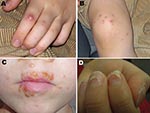
Thumbnail of Vesicular eruptions in A) hand, B) foot, and C) mouth of a 6.5-year-old boy from Turku, Finland, with coxsackievirus (CV) A6 infection. Several of his fingernails shed 2 months after the pictures were taken. D) Onychomadesis in a 10-year-old boy from Seinäjoki, Finland, 2 months after hand, foot and mouth disease with CVA6 infection. Photographs courtesy of H. Kujari (A–C) and M. Linna (D).

Credit - CDC EID Journal

The classic rash & lesions associated with HFMD does not always manifest with EV71 infections, making diagnosis far more difficult.  Additionally, HFMD is normally a mild illness, particularly when caused by the Coxsackie A16 virus.


An article that appeared in early 2001 in Clinical Infectious Diseases (cite Neurological Manifestations of Enterovirus 71 Infection in Children during an Outbreak of Hand, Foot, and Mouth Disease in Western Australia Peter McMinn, Ivan Stratov, Lakshmi Nagarajan, and Stephen Davis) describes its impact this way:


Children <4 years of age are particularly susceptible to the most severe forms of EV71-associated neurological disease, including meningitis, brain-stem and/or cerebellar encephalitis, and poliomyelitis-like paralysis.


The neurological complications of EV71 infection may occasionally cause permanent paralysis or death. Several large epidemics of severe EV71 infection in young children, including numerous cases of fatal brain-stem encephalitis, have recently been reported in Southeast Asia [1012].


A 2007 study appearing in the American Journal of Tropical Medicine & Hygiene, looked at mortality rates among severe HFMD involving EV71 infection during an outbreak in Taiwan.  Researchers found a crude mortality rate of roughly 16%, although that number varied considerably over the 8 year study.


And in recent years, we’ve seen increasing evidence of severe EV71 outbreaks - particularly across Asia.  China, and most recently Vietnam, have been hard hit – as evidenced last May when the CDC Issues HFMD Travel Notice For Vietnam.


Two major genotypes of EV-71, EV-71 B and EV-71 C, have been identified as being responsible for a number of severe outbreaks in Australia, Japan, China, Malaysia, and Taiwan since 1997.


A couple of years ago, the Virology Journal, published an analysis of an EV-71 HFMD virus that caused a major disease outbreak in Fuyang City, China in 2008 that showed it was due to an emerging recombinant virus (see China: A Recombinant EV-71).


A reminder that viruses are always evolving, looking for an evolutionary advantage.


Researchers will no doubt be looking for any signs of change to the EV71 virus that has now been isolated from these Cambodian children.


For now there is no vaccine to prevent EV71 infection, although several pharmaceutical companies are working on one. There are no effective antivirals available to treat EV71 at this time, either (cite).


The PHAC (Public Health Agency of Canada) describes enterovirus 71 transmission:


EV 71 is transmitted through direct contact with discharge from the nose and throat, saliva, fluid from blisters or the stools of an infected person. Cases are most infectious during the first week of acute illness but may continue to shed virus in stool for weeks. The incubation period is three to five days. The epidemiological pattern varies by geographical region and climate, but the incidence of infection is higher in the summer and autumn months in temperate climates while remaining prevalent year-round in tropical climates.


There is increasing evidence, however, suggesting respiratory transmission of the virus as well.  This was recently highlighted in a BMC Infectious Diseases article called:


Long persistence of EV71 specific nucleotides in respiratory and feces samples of the patients with Hand-Foot-Mouth Disease after recovery

Jun Han, Xue-Jun Ma, Jun-Feng Wan, Ying-Hui Liu, Yan-Ling Han, Cao Chen, Chan Tian, Chen Gao, Miao Wang and Xiao-Ping Dong

HFMD has been an important public health concern worldwide, especially in the Asia-Pacific region. Up to now, more than 900,000 HFMD cases have been reported in mainland of China. Enteroviruses can be isolated from both the lower and upper alimentary tract and can be transmitted by both fecal-oral and respiratory routes. Fecal-oral transmission may predominate in areas with poor sanitary conditions, whereas respiratory transmission may be important in more developed areas. The relative importance of the different modes of transmission probably varies with the particular EV and environmental setting.


Despite its discovery more than 40 years ago during an outbreak in California, EV71 remains a sometimes elusive diagnosis – particularly when atypical symptoms that are not consistent with HFMD are present.


While we are seeing outbreaks of EV71 primarily in Southeast Asia, an article published in Clinical Infectious Diseases back in 2007 warns that EV71 may be a largely unrecognized and potentially emerging disease here in the United States as well.


Outbreak of Neurologic Enterovirus Type 71 Disease: A Diagnostic Challenge

Carlos M. Pérez-Vélez,Marsha S. Anderson, Christine C. Robinson, Elizabeth J. McFarland, W. Allan Nix, Mark A. Pallansch, M. Steven Oberste, and Mary P. Glodé

An outbreak of neurologic EV71 disease occurred in Denver, Colorado, during 2003 and 2005. Likely, EV71 disease remains unrecognized in other parts of the United States, because EV-PCR of cerebrospinal fluid frequently yields negative results. EV-PCR of specimens from the respiratory and gastrointestinal tracts had higher diagnostic yields than did EV-PCR of cerebrospinal fluid. EV71 infection should be considered in young children presenting with aseptic meningitis, encephalitis, acute flaccid paralysis, or acute cardiopulmonary collapse. EV71 infection may be an underrecognized emerging disease in the United States.


We will have to await further laboratory tests over the coming days to see if any other factors may be involved in this outbreak in Cambodia. 


Of particular interest will any evidence of genetic changes in the EV71 virus that might help explain the unusually high mortality rate that been attributed to this particular outbreak.


Stay tuned.

»» Read More

Updating The Cambodian `Mystery’ Illness


image

See UPDATE EV71 Linked To Cambodian `Mystery’ Virus


# 6423

Since last Tuesday (see Cambodia: WHO Investigating Child Deaths From Unknown Disease) the number of suspected cases of an often-fatal `mystery illness’ in Cambodia has increased from 61 to 74.  All of the  reported victims have been children, with most being under the age of 3.


So far, while some causes have been tentatively eliminated by laboratory testing (including Nipah, H5N1, & SARS) the pathogen responsible for this rapidly fatal respiratory & febrile illness has not been determined.


Updates today from the ECDC, the World Health Organization, and media reports on some of the precautionary measures being taken by other countries in the region.


First stop, the ECDC:


Cambodia: undiagnosed illness affecting children

06 Jul 2012

ECDC

An outbreak of an undiagnosed illness affecting children has been reported by the Ministry of Health of the Kingdom of Cambodia to World Health Organization (WHO). Out of the 62 children, 61 have died. No apparent clustering of cases or signs of transmission have been reported so far.


Between April and June, a total of 58 children below age of 7 years have been admitted to a hospital in Phnom Penh. Further 4 children were admitted to a hospital in Siem Reap, with high fever and encephalitic and/or respiratory symptoms. In total, 62 cases were reported, the majority being on children under 3 years of age.


Fifty-six of 58 patients hospitalized in Phnom Penh and four of four patients hospitalized in Siem Reap have died. Of these cases, 46 died within 24 hours of admission, and the majority of the rest died between 1-3 days after admission. Sixty-one deaths were reported.


The Cambodian Ministry of Health and WHO are conducting an active investigation in order to determine cause and source of the illness. ECDC is closely monitoring the situation.


From the World Health Organization, an update into the investigation posted yesterday (Friday, July 6th).


Undiagnosed illness in Cambodia - update

6 July 2012 - The Ministry of Health of the Kingdom of Cambodia is conducting active investigation into the cause of a recent undiagnosed syndrome that has caused illness and deaths among children in the country.


Preliminary findings of the investigation identified a total of 74 cases who were hospitalised from April to 5 July 2012. Of these, 57 cases (including 56 deaths), presented a common syndrome of fever, respiratory and neurological signs, which is now the focus of the investigation.


The majority of the identified cases to date were under three years old. Most of them were from the southern and central parts of the country and received treatment at Kantha Bopha Children’s hospital, which is a reference paediatric hospital. Despite all efforts, many of the children died within 24 hours of admission.


Available samples have been tested at the Institut Pasteur in Cambodia. Although a causative agent remains to be formally identified, all these samples were found negative for H5N1 and other influenza viruses, SARS, and Nipah.


The Ministry of Health was first alerted to this by Kantha Bopha Children’s hospital in Phnom Penh, where the majority of the cases were hospitalised.


The Ministry of Health notified WHO about this event through the IHR notification mechanism as it met the criteria for notification of any event where the underlying agent or disease or mode of transmission is not formally identified.


WHO and partners are assisting the Ministry of Health with this event which focuses on hospitalised cases, early warning surveillance data, laboratory data and field investigations.


While this event is being actively investigated, the Government is also looking at other diseases occurring in the country, including dengue, hand-foot-mouth and Chikungunya.


Parents have been advised to take their children to hospital if they identify any signs of unusual illness. The Government is also reinforcing awareness of good hygiene practices to the public, which includes frequent washing of hands.


Although these cases have been occurring since last April, and the mode of transmission remains unknown, other countries in the region are watching this outbreak closely and – in some cases – tightening their airport screening.


One such example comes today from Bernama – the official news agency of the government of Malaysia.


Philippines Tightens Airport Screening Following Disease Outbreak In Cambodia

MANILA, July 7 (Bernama) -- The Philippine government has implemented a stricter procedure in screening passengers at the country's international airports following an outbreak of a fatal respiratory syndrome affecting children in Cambodia.


Presidential spokesperson Edwin Lacierda said in an interview with a local radio that the Department of Health is currently monitoring the situation through its National Epidemiology Centre.


"That respiratory disease is now being looked into," Xinhua news agency quoted Lacierda.


Health Secretary Enrique Ona has ordered the Quarantine Bureau to be more vigilant in carrying out routine screening procedures at all international airports.


The Philippines was recently alerted to the unknown disease by the World Health Organisation (WHO) after Cambodia reported at least 60 deaths of children.

-- BERNAMA


`Mystery Illnesses’ are not uncommon around the world, and while a diagnosis may be initially elusive, they often end up due to previously identified diseases that have either evolved or mutated a bit, or have migrated to a new area.


Rarely, something previously unknown does crop up, such as we saw in 2003 with SARS epidemic or more recently with the hemorrhagic fever that emerged in South Africa in 2008 (see Lujo Virus: Newly Identified Arenavirus).


According to well respected anthropologist and researcher George Armelagos of Emory University, we are entering the Third Epidemiological Transition - which began in the late 1970s or early 1980s; an age characterized by an increase in the number of (mostly zoonotic) emerging or re-emerging infectious diseases (see The Third Epidemiological Transition).


While the origin and ultimate public health threat posed by this unknown disease outbreak in Cambodia remains undetermined - given the impact of other emerging infectious diseases (including HIV, SARS, Lyme, XDR-TB) in recent years - it is understandable why reports like these elicit intense media attention and scientific investigation.


I’ll update this story as more information becomes available.

»» Read More

Cambodia: WHO Investigating Child Deaths From Unknown Disease


image


See UPDATE EV71 Linked To Cambodian `Mystery’ Virus


# 6418


Reuters this morning is carrying a story regarding the – as yet – unidentified disease that has claimed the lives of at least 60 children in Cambodia over the past 90 days. 


The victims have been admitted to hospitals in Phnom Penh (pop. 2.2 million) and northern city of Siem Reap (pop. 170K ) with a mixture of high fevers, encephalitis, and respiratory symptoms.


Most reportedly succumbed within 24 hours of admission from what was described as "rapid deterioration of respiratory function".


WHO probing child deaths from unknown disease in Cambodia

Tue, 3 Jul 2012 09:20 GMT


Although viral fevers such as dengue or chikungunya can produce some of the signs and symptoms (ie. fevers and encephalitis) mentioned in the report above, acute respiratory failure (ARF) is not typically one of them.


No nosocomial spread of this illness has been reported in the hospitals.


The Cambodian Ministry of Health website (English version) is slow to load this morning, but I find no mention of this outbreak on their front page or on their News & Events Page.


A quick search of ProMed Mail over the past 3 months turns up a number of reports of mainly vector-borne diseases in Cambodia, including chikungunya, dengue, & malaria , and a couple of cases of H5N1 (details here & here), but no mentions of this outbreak.


  • 26 Jun 2012 Malaria - Cambodia
  • 01 Jun 2012 Influenza (43): Cambodia, H1N1, H3N2, porcine ex human
  • 28 May 2012 Avian influenza, human (51): Cambodia (KS) fatality
  • 19 May 2012 Chikungunya & dengue - Cambodia (02) comment
  • 19 May 2012 Chikungunya, dengue - Cambodia (02) comment
  • 19 May 2012 Chikungunya & dengue - Cambodia
  • 06 Apr 2012 Avian influenza, human (43): Cambodia (KC) WHO
  • 03 Apr 2012 Avian influenza, human (41): Cambodia (KC), Egypt, (DA, GA)


While strides have been made in reducing child mortality in Cambodia, according to the World Health Organization  1 child in 12 does not survive to the age of 5 (cite).


According to the WHO, major causes of child death in Cambodia include premature births, fever, respiratory diseases, complications at delivery and tetanus.


image


For now, the cause of this new and deadly outbreak remains unknown. We’ll watch this story in hopes of learning more in the days and weeks to come.

»» Read More

WHO: Cambodian H5N1 Update


image


# 6352


Yesterday we learned of a third H5N1 fatality this year in Cambodia, that of a 10 year-old girl from Kampong Speu Province (see Cambodia Announces Bird Flu Fatality).


Today the World Health Organization has posted an update on the case, with details provided by the Cambodian Health Ministry.


Avian Influenza – situation in Cambodia – update

29 May 2012 - The Ministry of Health (MoH) of the Kingdom of Cambodia has announced a confirmed case of human infection with avian influenza A (H5N1) virus.


The case was a 10 years old female from Kampong Speu Province. She developed symptoms on 20 May 2012 and after initial treatment at the village was eventually admitted to the hospital on 25 May with symptoms of fever and shortness of breath. Infection with avian influenza A(H5N1) virus was confirmed by Institute Pasteur du Cambodge on 26 May 2012, however, despite intensive medical care, she died on 27 May 2012.


There are reports of recent deaths among poultry in her village and the patient prepared sick chicken for food prior to becoming sick.


The girl is the twenty-first person in Cambodia to become infected with A(H5N1) virus and 19 have died from the disease.


The National and local Rapid Response Teams (RRT) are conducting outbreak investigation and response following the national protocol. In addition, a public health education campaign is being conducted in the village to inform families on how to protect themselves from contracting avian influenza.


This case makes the 26th H5N1 case - and 17th fatality - reported to the WHO in 2012, bringing the total to just over 600 cases since 2003.


How many human infections (and deaths) have really occurred is a matter of some debate.


While the evidence for there being a lot of mild cases is sparse (see The Great CFR Divide), it does seem likely that we are missing some number of cases.


A couple of weeks ago in WHO: 2012 World Health Statistics Report, we looked at the lack of disease and mortality information available from many low-resource countries.


Among low income countries, only about 1% of deaths (and their causes) are recorded, while just 34 countries – representing 15% of the world’s population – produce high quality cause-of-death documentation.


image


This helps to explain why there is so much ambiguity regarding the true prevalence of most diseases around the world, including H5N1.


While we continue to see isolated human infections around the world, and the virus continues to evolve (see H5N1: An Increasingly Complex Family Tree), for now H5N1 is primarily a threat to poultry.


The concern, of course, is that over time that could change.


And so the world remains at Pre-pandemic Phase III on the H5N1 virus, and we continue to watch for signs that the virus is adapting better to humans.

»» Read More

Cambodia Announces Bird Flu Fatality


image

# 6350


The Straits Times is reporting the third Cambodian H5N1 fatality of 2012, this time the victim is a 10 year-old girl from Kampong Speu province. On March 30th a 6-year-old girl from neighboring Kampong Chhnang province also died from the virus (see LINK). 


After seeing only 4 cases of H5N1 infection in humans between 2007 and 2010, Cambodia suddenly become the focus of renewed attention after 8 fatal cases were reported during 2011, and now 3 have been reported this year.


Here is the link to the story from the Straits Times.


Cambodian girl, 10, dies from bird flu: WHO

Published on May 28, 2012

PHNOM PENH (AFP) - A 10-year-old Cambodian girl has died from bird flu, the World Health Organization said on Monday, the country's third fatality from the virulent disease this year.


The child developed a fever and shortness of breath on May 20 and died on Sunday, the WHO said in a joint statement with the Cambodian health ministry.


(Continue . . . )


Of the 12 cases reported out of Cambodia since 2010, none have survived.  Prior to 2010, 7 of 9 known cases had died.


While it is probable that some number of H5N1 cases go undetected, how many remains a mystery. Evidence for there being a lot of missed cases is scant, but for more on this debate you may wish to revisit The Great CFR Divide.


For now, bird flu remains primarily a threat to poultry. The virus remains poorly adapted to human physiology, and despite ample opportunities to cause illness in humans, the virus only causes rare, sporadic infections.


The concern, of course, is that over time the virus will adapt further and pose a pandemic threat to humans.

»» Read More

Cambodia: Media Reporting H5N1 Fatality


# 6257


The Phnom Phenh Post is reporting today (Apr 2nd) that a 6 year-old girl from Kampong Chhnang province died on Friday from the H5N1 virus.  This is the first known case in that province, and the second reported case from Cambodia in 2012.


image


After seeing only 4 cases of H5N1 infection in humans between 2007 and 2010, Cambodia suddenly become the focus of renewed attention after 8 fatal cases were reported during 2011.


If confirmed by the World Health Organization, today’s announced case will make the 20th for Cambodia, of which 18 have proved fatal.


Here is the story from the Phnom Penh Post (h/t Carol@SC on the Flu Wiki).


Bird flu leaves one child dead

Mom Kunthear
Monday, 02 April 2012

A six-year-old girl from Kampong Chhnang province’s Kampong Tralach district died on Friday in the year’s second H5N1 fatality, Health Ministry and World Health Organisation officials said yesterday.


Morm Malay, deputy director of the provincial health department, said officials from the Health Ministry’s communicable disease control department had confirmed that Noy Makara had died of the virus, otherwise known as bird flu.


Noy Makara had fallen ill after eating the meat of a sick chicken, and her family had attempted to treat her with medicine and injections, he said.


(Continue . . .)


Although the number of reported human infections in Cambodia remains small, over the past year ten cases have been reported across five provinces, suggesting the virus is probably well entrenched in the nation’s livestock.


image


Of the 11 cases reported out of Cambodia since 2010, none have survived.  Prior to 2010, 7 of 9 known cases had died.


What we don’t know is whether there have been milder cases in Cambodia that have not been diagnosed, which would make the CFR (case fatality rate) lower than the 95% that these numbers would otherwise suggest.


While it is probable that some number of H5N1 cases go undetected, how many remains a mystery. Evidence for there being a lot of missed cases is scant, but for more on this debate you may wish to revisit The Great CFR Divide.


For now, bird flu remains primarily a threat to poultry. The virus remains poorly adapted to human physiology, and despite ample opportunities to cause illness in humans, the virus only causes rare, sporadic infections.


The concern, of course, is that over time the virus will adapt further and pose a pandemic threat to humans.

»» Read More

WHO Confirms Bird Flu Case In Cambodia


image


# 6076


Last Friday we learned of Cambodia’s first H5N1 case of 2012 via an article in the China Daily (see Xinhua News: 1st Cambodian H5N1 Case Of 2012). Today, we’ve confirmation from the World Health Organization on their Global Alert & Response page.


Avian influenza – situation in Cambodia

16 January 2012 - The Ministry of Health (MoH) of the Kingdom of Cambodia has announced a confirmed case of human infection with avian influenza A (H5N1) virus.


The case was a 2 year-old male from Banteay Meanchey Province. He developed symptoms on 3 January 2012 and was admitted to hospital on 9 January 2012. He is on Tamiflu and has been ventilated.


There have been reports that boy was exposed to sick poultry in his village. He is the 19th person in Cambodia to become infected with the H5N1 virus; to date, 16 of these cases have died from complications of the disease.


The National and local Rapid Response Teams (RRT) are conducting outbreak investigation and response following the national protocol. Hospital staff who had contact with the case have been offered oseltamivir. To date, none of the human contacts have tested positive for A (H5N1).


Last year saw a major spike in the number of reported H5N1 cases in Cambodia - with 8 total - and all were fatal. Over the previous 4 years Cambodia had recorded only one case each year.


In 2011 the majority of cases were detected in Prey Veng Province (n=4) in the southern region of the country, but individual cases were reported in four other regions, including Banteay Meanchey Province.


With just one exception, all of the Cambodian cases over the past year have involved young children.


In January of 2011 we saw a 19 year old mother, and her child, succumb to the virus ( see WHO Update On Cambodian H5N1 Fatalities).


Although we continue to see isolated human infections around the world, for now H5N1 is primarily a threat to poultry.


The virus remains poorly adapted to human physiology, and despite ample opportunities in places like Egypt and Indonesia, only causes rare, sporadic infections.


The concern, of course, is that over time that could change.


And so the world remains at Pre-pandemic Phase III on the H5N1 virus, and we continue to watch for signs that the virus is adapting better to humans.


image

»» Read More

Xinhua News: 1st Cambodian H5N1 Case Of 2012


# 6071


After seeing only 4 cases of H5N1 infection in humans over between 2007 and 2010, Cambodia suddenly become the focus of renewed attention after 8 fatal cases were reported during 2011.

 image


Today, Xinhua News Service – via the China Daily Newspaper – is reporting the first Cambodian H5N1 infection of the new year.  


A hat tip to Tetano on FluTrackers for picking up this story.


This latest case is reportedly from Banteay Meanchey Province, in the northwestern corner of the country, which is the same region where the 7th fatality of 2011 was reported last July.


Cambodia finds first case of H5N1 infection in human in 2012

Updated: 2012-01-13 22:48:00
(Xinhua)

PHNOM PENH, January 13 (Xinhua) -- A 2-year-old boy from northwestern Cambodian province of Banteay Meanchey was infected with avian influenza H5N1 virus, Cambodia's Ministry of Health and the World Health Organization announced Friday.


The patient is currently in "critical condition" in Angkor Hospital for Children in Siem Reap province.


The boy became sick on January 3 with fever, cough, runny nose and vomiting, the statement said, adding that he was initially treated by local private practitioners, but his conditions worsened and he was admitted to Angkor Hospital for Children on January 9.


"The diagnosis of the clinical samples on January 12 found that the boy had contact with sick or dead poultry prior to becoming sick," it said.


The boy is the nineteenth person in Cambodia to become infected with the fatal H5N1 virus, and the first such victim this year, said the statement. Of all the nineteen cases, 16 died.


"Avian influenza is still a threat to the health of Cambodians. This is the first case of H5N1 infection in human this year, and children appear to be most vulnerable," the Minister of Health Mam Bunheng said in the statement.


Reports on last year’s cases include:


Cambodia: 8th Fatal H5N1 Case Of 2011

Cambodia: 7th Bird Flu Fatality Of 2011

Cambodia: 6th Bird Flu Fatality Of 2011

Cambodia Reports 5th Bird Flu Fatality

IRIN: Cambodia’s Bird Flu Risk "under control" – Experts

Cambodia: 4th Bird Flu Fatality Of 2011

WHO Update On Cambodian H5N1 Fatalities


For now, bird flu remains primarily a threat to poultry. The virus remains poorly adapted to human physiology, and despite ample opportunities to cause illness in humans, the virus only causes rare, sporadic infections.

»» Read More

Cambodia: 8th Fatal H5N1 Case Of 2011


image

# 5766


Via the World Health Organization this afternoon word from the Cambodian Ministry of Health on the 8th fatal H5N1 infection out of Cambodia since the start of the year.


Once again, the case involves a child (age 6) and for the second time this year, this report comes from the province of Kampong Cham.


A hat tip to Giuseppe Michieli on FluTrackers for posting the following WHO announcement.


Avian influenza – situation in Cambodia - update 6

19 August 2011 - The Ministry of Health (MoH) of the Kingdom of Cambodia has announced a confirmed case of human infection with avian influenza A (H5N1) virus.


The case was a 6 year old female from Taing Thleung Village, Mepring Commune, Cheung Prey District, Kampong Cham Province.


She developed symptoms on 7 August, was initially treated by local practitioners with no effect and was later admitted to Kantha Bopha Children Hospital in Phnom Penh on 12 August. She died on 14 August, two days after admission.


There have been reports of poultry die off in her village and the case is reported to have had exposure to sick poultry. The female is the eighteenth person in Cambodia to become infected with the H5N1 virus and the sixteenth to die from complications of the disease. All eight cases of H5N1 infections in humans in Cambodia this year have been fatal.


The National and local Rapid Response Teams (RRT) are conducting outbreak investigation and response following the national protocol. Health education messages are ongoing in the community. To date none of the human contacts have tested positive for A (H5N1).


All but one of these recent cases have involved young children. This latest case marks the 18th known Cambodian H5N1 infection, and the 16th fatality since 2005.


Earlier reports on this year’s cases include:


Cambodia: 7th Bird Flu Fatality Of 2011
Cambodia: 6th Bird Flu Fatality Of 2011
Cambodia Reports 5th Bird Flu Fatality
IRIN: Cambodia’s Bird Flu Risk "under control" – Experts
Cambodia: 4th Bird Flu Fatality Of 2011
WHO Update On Cambodian H5N1 Fatalities


Although we continue to see isolated human infections around the world, for now H5N1 is primarily a threat to poultry.


The virus remains poorly adapted to human physiology, and despite ample opportunities in places like Egypt and Indonesia, only causes rare, sporadic infections.


The concern, of course, is that over time that could change. 


And so the world remains at Pre-pandemic Phase III on the H5N1 virus, and we continue to watch for signs that the virus is adapting better to humans.


image

»» Read More

Cambodia: 7th Bird Flu Fatality Of 2011


image


# 5723


Yesterday Giuseppe Michieli, editor & director of del Forum Italiano on FluTrackers, posted on a new case of H5N1 in Cambodia he found listed in the latest World Health Organization’s FluNet (www.who.int/flunet), Global Influenza Surveillance Network (GISN) report.


At the time, the only information available was a single entry in a table of virus in detections in Cambodia for week 29.


image


Overnight Crof at Crofsblog picked up on a newswire report (Cambodian girl dies from bird flu: WHO) published in the Straits Times on this latest Cambodian case that filled in some of the details.


Unlike the six earlier cases, which were all clustered in the southeastern region of the country, this latest case involved a 4-year-old girl who lived in the northwestern province of Banteay Meanchey. 


After seeing only 4 cases of H5N1 infection in humans over the past 4 years, Cambodia has suddenly become the focus of renewed attention after 7 fatal cases have been reported over the past six months.


All but one of these cases have involved young children. This latest case marks the 17th known Cambodian H5N1 infection, and the 15th fatality.


Earlier reports on these cases include:


Cambodia: 6th Bird Flu Fatality Of 2011
Cambodia Reports 5th Bird Flu Fatality
IRIN: Cambodia’s Bird Flu Risk "under control" – Experts
Cambodia: 4th Bird Flu Fatality Of 2011
WHO Update On Cambodian H5N1 Fatalities


Although we continue to see isolated human infections around the world, H5N1 remains difficult for humans to catch. The virus remains poorly adapted to human physiology, and for now is primarily a threat to poultry.


The concern, of course, is that over time that may change.


And so the world remains at Pre-pandemic Phase III on the H5N1 virus, and we continue to watch for signs that the virus is adapting to humans.

»» Read More

Cambodia: 6th Bird Flu Fatality Of 2011


# 5618


image


Yesterday RoRo on FluTrackers picked up on an FAO Empres report about a human bird flu infection in Cambodia.   Few details were available at that time, but this morning we know more, as evidenced by the following World Health Organization  situation update.


Avian influenza – situation in Cambodia - update 4

10 June 2011 - The Ministry of Health (MoH) of the Kingdom of Cambodia has announced a confirmed case of human infection with avian influenza A (H5N1) virus.


The case was a 7 year old female from Prasat village, Prasat commune, Kampong Trabek district, Prey Veng Province. She developed symptoms on 24 May, was initially treated by local private practitioners with no effect and was later admitted to Kantha Bopha Children Hospital on 31 May. She died on 7 June, seven days after admission.


There have been reports of poultry die off in her village and the case is reported to have had exposure to sick poultry. The female is the sixteenth person in Cambodia to become infected with the H5N1 virus and the fourteenth to die from complications of the disease. All six cases of H5N1 infections in humans in Cambodia this year have been fatal.


The National and local Rapid Response Team (RRT) is conducting outbreak investigation and response following the national protocol.


After seeing only 4 cases of H5N1 infection in humans over the past 4 years, Cambodia in 2011 has suddenly become the focus of renewed attention after 6 fatal cases have been reported over the past four months.


Four of these cases have been detected in Prey Veng Province, and 5 have been young children.


Earlier reports on these cases include:


Cambodia Reports 5th Bird Flu Fatality
IRIN: Cambodia’s Bird Flu Risk "under control" - Experts
Cambodia: 4th Bird Flu Fatality Of 2011
WHO Update On Cambodian H5N1 Fatalities


The clustering of cases in and around Prey Veng Province, and over an extended period of four months, suggests that the virus may be well entrenched in local poultry.


Luckily, H5N1 remains difficult for humans to catch. Although we continue to see isolated human infections around the world, for now H5N1 is primarily a threat to poultry.


The virus remains poorly adapted to human physiology, and despite ample opportunities in places like Egypt and Indonesia, only causes rare, sporadic infections.


The concern, of course, is that over time that may change.


And so the world remains at Pre-pandemic Phase III on the H5N1 virus, and we continue to watch for signs that the virus is adapting to humans.

»» Read More

Cambodia Reports 5th Bird Flu Fatality


UPDATED (See bottom) 13:30 EDT 4/21/11


# 5510


AFP is reporting this morning on Cambodia’s 5th bird flu cae of 2011, once again a child (age 5) , who died on April 16th in Prey Veng province.


Of the 5 cases this year, 4 have been in children. All of the cases this year have been fatal.


Prey Veng Province was the site of the 2nd and 3rd cases, reported back in February.


image


It was just Monday of this week that IRIN carried a report called CAMBODIA: Bird flu risk "under control", say health experts.


While the appearance of a 5th case doesn’t necessarily negate that assessment, after several years of little reported H5N1 activity, in less than 3 months Cambodia has tripled their total number of known bird flu cases.


Making Cambodia well worth keeping an eye on.


UPDATE:   The World Health Organization has posted an update on this latest case, reported earlier today in the media.


Avian influenza – situation in Cambodia - update 3

21 April 2011 - The Ministry of Health (MoH) of the Kingdom of Cambodia has announced a confirmed case of human infection with avian influenza A(H5N1) virus.

The case was a 5 year old girl from Pea Raing district, Prey Veng Province. She developed symptoms on 11 April, was initially treated by local private practitioners with no effect and was later admitted to Kantha Bopha Children Hospital on 13 April. Despite all intensive care, she died on 16 April, four days after admission.

There have been reports of poultry die off in her village. The girl is the fifteenth person in Cambodia to become infected with the H5N1 virus and the thirteenth to die from complications of the disease. All five cases of H5N1 infections in humans in Cambodia this year have been fatal.

Specimens from 53 contacts of the cases were collected and are being tested by the National Institute for Public Health laboratory.


»» Read More

IRIN: Cambodia’s Bird Flu Risk "under control" - Experts


# 5502


From IRIN (Integrated Regional Information Networks), which was founded in 1995 and is part of the UN Office for the Coordination of Humanitarian Affairs, we get a report on Cambodia’s efforts to contain and control their recent outbreaks of H5N1 bird flu.


As of April 16th, Cambodia had reported 4 human infections with the H5N1 virus in 2011, all fatal. 


Prior to that, Cambodia had reported 4 cases (all fatal) in 2005, 2 cases in 2006 (again, all fatal), and in 2007, 2008, 2009, and 2010 they reported 1 case each year, with 3 of those surviving.


image


While four isolated cases does not a crisis make, this sudden uptick after four relatively quiet years has raised concerns that the virus might be on the ascendant again in Southeast Asia.


This update comes via IRIN.


CAMBODIA: Bird flu risk "under control", say health experts

PHNOM PENH, 18 April 2011 (IRIN) - Health officials in Cambodia stress that they have not let down their guard against H5N1, despite four fatal cases of human avian flu this year, and are confident the community-based detection, surveillance and containment model remains robust and effective.


"There is no cause for alarm," Chea Nora, a technical officer within the Emerging Disease Surveillance and Response unit at the World Health Organization (WHO) in Phnom Penh, told IRIN. "Even though Cambodia is the only country [in the Mekong region] that has had cases this year, H5N1 is well under control here."


The four deaths, in February and March, were the first reported cases of H5N1 in Cambodia since April last year and raised the number of cases in the country to 14 since 2005, 12 of which have been fatal, according to the communicable disease department at Cambodia's Ministry of Health.


Nora said it was important to note that the cases occurred in different areas of the country, that laboratory tests indicated the virus was neither mutating nor getting stronger, and that the avian flu season, which corresponds with the dry season in Cambodia, from November to May, is nearing its end.


However, he said interviews with villagers had revealed that some believed H5N1 was no longer a threat because there were no more radio alerts, which had been part of the national awareness campaign funded by USAID and the German government.


(Continue . . . )


The fact that these four cases emanated from three separate provinces is reassuring in that there appears to be no evidence of community spread of the virus among humans.


By the same token, the fact that the virus has been acquired (presumably from infected chickens/ducks) in three provinces this year speaks to how widespread the virus apparently is in poultry. 


While a few limited awareness campaigns continue, the message is often lost on a population to whom hunger, malaria, dengue, and diarrheal diseases take a much greater toll. 


As this article points out, rising food insecurity in Cambodia (and around the world) probably increases the chances that families will consume sick or dying poultry rather than destroy them.


Although we continue to see isolated human infections around the world, for now H5N1 is primarily a threat to poultry.

The virus remains poorly adapted to human physiology, and despite ample opportunities in places like Egypt and Indonesia, only causes rare, sporadic infections.


The concern, of course, is that over time that may change. 


And so the world remains at Pre-pandemic Phase III on the H5N1 virus, and we continue to watch for signs that the virus is adapting to humans.


image

»» Read More

WHO: Three Bird Flu Updates


# 5484


The World Health Organization has released updates on human H5N1 infections from three countries this morning.   Some of these are cases we’ve heard about earlier, but are only now being confirmed.


First stop, Bangladesh which appears to confirm a case I wrote about on March 16th (see Bangladesh: 2nd Bird Flu Case In Two Days).


Avian influenza - situation in Bangladesh - update

11 April 2011 - The Ministry of Health and Family Welfare, Government of the People's Republic of Bangladesh has confirmed a new case of human infection with avian influenza A(H5N1) virus.


The case is a 2 years old male from Kamalapur, Dhaka. He developed symptoms on 1 March. He visited the influenza sentinel surveillance site on 9 March where he was sampled. He completely recovered.


Detailed epidemiological investigation and contact follow up was conducted by a team from the Institute of Epidemiology Disease Control and Research (IEDCR), the International Centre for Diarrhoeal Disease Research, Bangladesh ( ICDDRB) and WHO Bangladesh, and no further cases were identified.


The investigation into the source of infection indicate that the case had exposure to sick poultry. Although the case is from the same locality as the previous case they had no direct contact with each other.


The case was confirmed as being infected with A(H5N1) by the Institute of Epidemiology Disease Control and Research (IEDCR).


Next stop, Cambodia which I reported on April 6th (see Cambodia: 4th Bird Flu Fatality Of 2011).


Avian influenza – situation in Cambodia - update 2

11 April 2011 - The Ministry of Health (MoH) of the Kingdom of Cambodia has announced a confirmed case of human infection with avian influenza A(H5N1) virus.


The case was an 11 year old girl from Steung Trang district, Kampong Cham Province. She developed symptoms on 22 March, was initially treated by local villagers with no effect and was admitted to a local hospital on 29 March. Further treatment at the local hospital was ineffective and she was referred to a regional hospital where she died within four hours of admission on 31 March.


There have been reports of poultry die off in her village. The girl is the fourteenth person in Cambodia to become infected with the H5N1 virus and the twelfth to die from complications of the disease. All four cases of H5N1 infections in humans in Cambodia this year have been fatal.


All contacts of the case have been tested and are negative for A/H5N1 influenza virus.


Last stop is Egypt, which has been very busy this year with human H5N1 cases.   Last week in Egypt: 4 New Bird Flu Cases,  I wrote:


The newshounds on FluTrackers are aware of several  more possible cases listed on the Egyptian Ministry of Health’s web page, although not yet confirmed to the WHO yet.


Today we get confirmation on 4 new cases.


Avian influenza - situation in Egypt - update 50

11 April 2011 - The Ministry of Health of Egypt has announced four new confirmed cases of human infection with avian influenza A(H5N1) virus.


The first case is a 20 years old female from Behaira Governorate. She developed symptoms on 14 March and was hospitalized on 19 March. She was in a critical condition and died on 28 March.


The second case is a two years old female from Menofeya Governorate. She developed symptoms on 26 March and was hospitalized on 27 March. She is still under treatment and in a stable condition.


The third case is a 55 year old female from Behaira Governorate. She developed symptoms on 20 March and was hospitalized on 22 March. She recovered and was discharged on 5 April.


The fourth case is a 1 year old male from Fayoum Governorate He developed symptoms on 20 March and was hospitalized on 28 March. He is still under treatment and in a stable condition.


All the cases received oseltamivir treatment at the time of hospitalization.


Investigations into the source of infection indicate that the cases had exposure to sick and/or dead poultry suspected to have avian influenza.


The cases were confirmed by the Egyptian Central Public Health Laboratories, a National Influenza Center of the WHO Global Influenza Surveillance Network.


Of the 141 cases confirmed to date in Egypt, 46 have been fatal


It should be noted that as of April 8th the Egyptian Ministry of Health (MOH) website lists 142 total cases, and 47 fatalities


So at least one more case appears to be in the pipeline.

»» Read More