Showing posts with label surveillance. Show all posts

HPA: Flu Activity In The UK


# 6820


While the United States and Canada have reported an early start to the flu season this year, influenza has yet to take off in Hong Kong (see latest Flu Express (Week 52, 2012), and in the UK and parts of Europe the flu season is just now starting to pick up. 


image

The RED LINE indicates this year’s activity, compared to previous years.  The Blue Line indicates the unusually severe 1999-2000 flu season.


This latest flu updates from the HPA.


HPA National Influenza Report

Report published 3 January 2013

Figures (including all those found in this report) displaying data from these schemes are available to download as a pdf file:

HPA Weekly National Influenza Graphs (PDF, 713 KB)

PDF versions of previous reports are available on the archive page.

This week's report is available as a pdf:

HPA National Influenza Report - week 1 (2013) (PDF, 665 KB)

A summary report will be published weekly. For further information on the surveillance schemes mentioned in this report, please see the Sources of UK Flu Data page.

Increases continue to be seen for several indicators of influenza activity. A letter has been issued to the NHS that GPs may now prescribe antiviral medicines for the prophylaxis and treatment of influenza in accordance with NICE guidance.


Flu activity update: 3 January 2013

3 January 2013

Latest figures from the Health Protection Agency (HPA) up to 30 December 2012 show that flu activity continues to increase based on a number of indicators, including GP consultation rates in England and the proportion of calls to NHS Direct.


The latest figures show that GP consultation rates have increased slightly from 27.4 per 100,000 in week 51 to 32.7 per 100,000 in week 52 ending on 30 December. Meanwhile, 2.1% of the calls received by NHS Direct concerned influenza compared to 1.6% in week 51.


Professor John Watson, head of the respiratory disease department at the HPA said:


“Over the Christmas period we have seen a slight rise in flu activity across several of our indicators in line with the trend we expect to see at this time of year.


“However, the latest data should be interpreted with caution due to GP practices being closed on the bank holidays which may have impacted on GP consultation rates.

(Continue . . . )


Elsewhere in Europe, the most recent EuroFlu report states:


Influenza activity is increasing slowly in the WHO European Region

Summary, week 51/2012

Influenza activity is slowly increasing with more countries in different parts of the Region reporting sporadic co-circulation of influenza A(H1N1)pdm09, A(H3N2) and type B viruses. This week the reporting of influenza surveillance data is incomplete due to the Christmas holidays. This is reflected in the lower number of testing performed. However the percentage of influenza-positive samples from both sentinel and non-sentinel sources are similar to last week. The number of reported hospitalizations due to severe acute respiratory infection (SARI) remains similar to that seen in the previous several weeks: 1 influenza detection was reported (influenza B).

»» Read More

FluView, FluWatch, And WHO Flu Surveillance Reports

image

Week 50 ILI activity – Source CDC FluView


# 6801


Regardless of your preferred type of celebration (Christmas, Hanukah, Kwanzaa, the Winter Solstice, Festivus . . .) the winter holiday season often finds us gathered together in relatively closed quarters to share presents, good times, and far too often . . . germs.


All of which makes this week’s FluView from the CDC, Canada’s FluWatch, and World Health Organization bi-weekly Influenza Summary of particular interest.


The early start to this year’s flu season continues across much of the United States, with A/H3N2 by far the predominate strain being reported. While it is a bit early to talk about the severity of this year’s flu season, historically H3N2 dominated seasons have typically produced more severe illness.


First stop, the CDC’s FluView Report for week 50.


2012-2013 Influenza Season Week 50 ending December 15, 2012

All data are preliminary and may change as more reports are received.

Synopsis:

During week 50 (December 9-15), influenza activity increased in the U.S.

  • Viral Surveillance: Of 9,562 specimens tested and reported by U.S. World Health Organization (WHO) and National Respiratory and Enteric Virus Surveillance System (NREVSS) collaborating laboratories in week 50, 2,709 (28.3%) were positive for influenza.
  • Pneumonia and Influenza Mortality: The proportion of deaths attributed to pneumonia and influenza (P&I) was below the epidemic threshold.
  • Influenza-Associated Pediatric Deaths: Two influenza-associated pediatric deaths were reported. One was associated with an influenza A (H3) virus and one was associated with an influenza A virus for which the subtype was not determined.
  • Outpatient Illness Surveillance: The proportion of outpatient visits for influenza-like illness (ILI) was 3.2%; above the national baseline of 2.2%. Nine of ten regions reported ILI above region-specific baseline levels. Twelve states experienced high ILI activity, New York City and 5 states experienced moderate ILI activity; 11 states experienced low ILI activity; 22 states experienced minimal ILI activity, and the District of Columbia had insufficient data.
  • Geographic Spread of Influenza: Twenty-nine states reported widespread geographic influenza activity; 12 states reported regional activity; the District of Columbia and 5 states reported local activity; 3 states reported sporadic activity; Guam reported no influenza activity, and Puerto Rico, the U.S. Virgin Islands, and 1 state did not report.

A description of surveillance methods is available at: http://www.cdc.gov/flu/weekly/overview.htm


The following graphic shows just how early detection of influenza has been this year (red line), compared to previous years.

image


Meanwhile, Canada’s FluWatch report indicates that influenza is beginning to ramp up in several provinces as well.


image

Overall Influenza Summary

  • Influenza activity in Canada continued to increase in week 50; four regions reported widespread activity, and the majority of regions reported influenza circulation.
  • A total of 1502 laboratory detections of influenza were reported, of which 96.7% were for influenza A viruses, predominantly A(H3N2).
  • Thirty-one influenza outbreaks were reported: 24 in long-term-care facilities, 4 in hospitals and 3 in other facilities.
  • Thirty-three paediatric influenza-associated hospitalizations were reported through the IMPACT network, all but one with influenza A
  • Seventy-three hospitalizations with three deaths in adults ≥20 years of age were reported through Aggregate surveillance, all with influenza A.
  • The ILI consultation rate increased compared to the previous week and is within the expected range for this time of year.


Virus characterization from Canada shows, like the United States, that A/H3N2 makes up the bulk of identified samples.


image


And globally, influenza rates in the Northern Hemisphere are beginning to rise, although many areas are lagging somewhat behind the numbers seen in North America. 


This from the World Health Organization.


Influenza update

21 December 2012 - Update number 175

Summary

• Many countries in the temperate regions of the northern hemisphere are now reporting elevated detections of influenza, particularly in north America.

 
• Influenza activity was still low in Europe, with co-circulating of both influenza A and B viruses. However increased influenza-like illnesses were reported in more countries than previous weeks.


• There was low, but increasing influenza activity in northern Africa and the Eastern Mediterranean regions, and sporadic detections in eastern Asia.

• Influenza in central America, the Caribbean and tropical south America continued to decline, with low levels of circulation of mainly influenza A(H3N2) and some influenza B viruses, except for Cuba and Peru, where influenza A(H1N1)pdm09 was predominant.

• Influenza activity in Sub-Saharan Africa declined to low levels, with mainly influenza B, except in Ghana, where influenza A(H1N1)pdm09 was reported.

• Influenza in most South East Asian countries was declining, except in Sri Lanka and Viet Nam.
• Influenza activity in the temperate countries of the southern hemisphere continued at inter-seasonal levels.


The CDC recommends a flu shot for just about everyone each year, but regardless of whether you received one, this Holiday season is a good time to hone your basic flu hygiene skills.  


The CDC recommends:


Take everyday preventive actions to stop the spread of germs.

  • Cover your nose and mouth with a tissue when you cough or sneeze. Throw the tissue in the trash after you use it.
  • Wash your hands often with soap and water. If soap and water are not available, use an alcohol-based hand rub.*
  • Avoid touching your eyes, nose and mouth. Germs spread this way.
  • Try to avoid close contact with sick people.
  • If you are sick with flu–like illness, CDC recommends that you stay home for at least 24 hours after your fever is gone except to get medical care or for other necessities. (Your fever should be gone without the use of a fever-reducing medicine.)
  • While sick, limit contact with others as much as possible to keep from infecting them.


As an added bonus, these healthy hygiene habits can also help protect you against the other winter time scourge, Norovirus – which, like influenza, can wreck a family holiday gathering in record time.

»» Read More

Global Flu Surveillance Updates


image


# 6708


After an uncommonly subdued 2011-2012 influenza season (see CDC: The Close Of A Mild Season), and a summer that featured an unprecedented number of variant swine flu infections (see An Increasingly Complex Flu Field) in the United States, no one is quite sure what to expect with the coming flu season.


Invariably, the word most often used by researchers when describing influenza is `unpredictable’.


Nevertheless, in order to come up with a vaccine each year, scientists must decide – 6 months in advance – what flu strains they think will be most active in the season ahead.


After 3 years with essentially no changes, this year’s flu vaccine formulation makes alterations to both the H3N2 and B virus strains.


  • The H1N1 component remains essentially unchanged, with the A/California/7/2009 (H1N1)pdm09-like  still recommended.
  • The old A/Perth/16/2009 (H3N2)-like virus now gives way to the A/Victoria/361/2011 (H3N2)-like virus.
  • And the Victoria lineage B/Brisbane/60/2008-like virus will be replaced by a Yamagata strain; the B/Wisconsin/1/2010-like virus. 


The addition of these two new strains makes getting the vaccine this year all the more important, as community immunity to these recently emerging strains is likely low.


The vaccine die having been cast, each fall we monitor influenza activity around the world via a number of reporting tools, including:


There others, of course.


Hong Kong’s CHP  produces an excellent Weekly Flu Express, and when it’s summer in the Northern Hemisphere we keep a close watch on the Australian  and New Zealand influenza surveillance sites.


Combined, these resources provide us with a pretty good - albeit `backwards looking’ - overview of flu activity. At least in North America, Europe, and parts of the Pacific Rim.


Note: There are plenty of areas around the world where surveillance and reporting are lacking, and so we still run the risk of being blindsided by an emerging influenza strain. 


During flu season I try to provide links, and highlights, to many of these flu surveillance reports each week. For now, flu activity around the world is low, but there are signs it may be increasing. 


From yesterday’s WHO Flu report:


Summary

• Many countries of the Northern Hemisphere temperate region reported increasing detections of influenza viruses, particularly in North America and Western Europe, however none have crossed their seasonal threshold for ILI/ARI consultation rates.
• Several countries in the tropical areas experienced active transmission of influenza virus in recent weeks. In the Americas, Nicaragua and Costa Rica reported mainly influenza B virus detections. In Asia, India, Sri Lanka, Nepal, and Cambodia are all reporting a mixture of all three virus subtypes.
• In Sub-Saharan Africa, Cameroon and Ethiopia have reported an increase in influenza virus detections.
• Influenza activity in the temperate countries of the Southern Hemisphere is at inter-seasonal levels. A review of the 2012 southern hemisphere influenza season was published in the Weekly Epidemiological Record (WER) 2 November 2012, vol. 87, 44 (pp. 421–436)


The ECDC’s latest WISO Report finds very little flu activity across Europe.


Weekly reporting on influenza surveillance for the 2012–13 season started in week 40/2012 in Europe.


•  In week 44/2012, all 26 reporting countries experienced low intensity of clinical influenza activity.
•  Of 279 sentinel specimens tested across 19 countries, only two were positive for influenza virus.
•  No hospitalised laboratory-confirmed influenza cases were reported.


Five weeks into the surveillance season for influenza, there has been no evidence of sustained influenza virus transmission in EU/EEA countries.


The story is pretty much the same in Canada, as we learn from their latest FluWatch Report.


Overall Influenza Summary

  • Influenza activity in Canada increased slightly compared to the previous week; however overall activity still remains fairly low, with most regions of the country reporting no activity.
  • In week 44, a total of 64 laboratory detections of influenza were reported; of which 91% were for influenza A viruses [71% A(H3) and 29% A(un-subtyped)].
  • Six influenza outbreaks in long-term care facilities were reported in week 44.
  • Eleven influenza A-associated hospitalizations were reported in week 44: 8 in adults >20 years of age, and 2 in children.
  • The ILI consultation rate increased in week 44 to 21.9 per 1,000 patient visits but is within the expected level for this time of year. image


In the United States, the CDC’s FluView Reports the beginnings of limited flu activity around the country:

012-2013 Influenza Season Week 44 ending November 3, 2012


image


Synopsis:

During week 44 (October 28-November 3, 2012), influenza activity increased in some areas, but overall was similar to activity last week in the United States.

  • Viral Surveillance: Of 3,277 specimens tested and reported by U.S. World Health Organization (WHO) and National Respiratory and Enteric Virus Surveillance System (NREVSS) collaborating laboratories during week 44, 227 (6.9%) were positive for influenza.
  • Pneumonia and Influenza Mortality: The proportion of deaths attributed to pneumonia and influenza (P&I) was slightly above the epidemic threshold.
  • Influenza-associated Pediatric Deaths: No influenza-associated pediatric deaths were reported.
  • Outpatient Illness Surveillance: The proportion of outpatient visits for influenza-like illness (ILI) was 1.3%, which is below the national baseline of 2.2%. All 10 regions reported ILI below region-specific baseline levels. One state experienced low ILI activity; New York City and 49 states experienced minimal ILI activity, and the District of Columbia had insufficient data.
  • Geographic Spread of Influenza: The geographic spread of influenza in 1 state was reported as regional; 8 states reported local activity; the District of Columbia and 33 states reported sporadic activity; Guam and 8 states reported no influenza activity, and Puerto Rico and the U.S. Virgin Islands did not report.


Many years, influenza doesn’t begin to really spread until December or even January, so the level of activity we are seeing today is probably a poor prognosticator of what we will be seeing two or three months from now.


Influenza, however, is notoriously unpredictable. Which makes each flu season unique, and worthy of our attention.


Stay tuned.

»» Read More

ECDC: Influenza Virus Characterization – Sept 2012


# 6621


The only thing truly constant with influenza viruses is that they are continually changing. As flu viruses leave behind varying levels of immunity in those they infect - were they not to change over time - they would soon die out due to a lack of susceptible hosts.


Influenza viruses evolve via two well established routes; Antigenic drift and Antigenic Shift (reassortment).


Antigenic drift causes small, incremental changes in the virus over time. Drift is the standard evolutionary process of influenza viruses, and often come about due to replication errors that are common with single-strand RNA viruses.


Shift occurs when one virus swap out chunks of their genetic code with gene segments from another virus.  This is known as reassortment. While far less common than drift, shift can produce abrupt, dramatic, and sometimes pandemic inducing changes to the virus.


For shift to happen, a host (human, swine, bird) must be infected by two influenza different viruses at the same time. 

Reassortant pig

Reassortment of two Flu viruses


While successful reassortment is relatively rare, as any virologist will tell you . . . Shift happens.


While we talk about four main strains of influenza that currently circulate in humans (A/H1N1(pdm), A/H3N2, B Victoria, B Yamagata), in reality – within each strain - you will find a good deal of diversity.


New `prototypes’ from  these strains are constantly being generated and are then immediately`field tested’ for biological fitness and transmissibility. 


Most fail miserably.


But occasionally, a new, biologically fit virus will emerge that can outcompete its parental strains, and it begins to spread rapidly.


Since flu vaccine formulations must be decided upon six months before they can be deployed, public health agencies like the CDC, ECDC, Hong Kong’s CHP  (and others) spend considerable resources on influenza surveillance, looking for signs of any up-and-coming viral strains.


Once each month the ECDC issues an influenza characterization report, showing what changes have been detected in the influenza viruses circulating in Europe. 


Below you’ll find a link to their recent report, and a brief summary of the highlights.


Influenza virus characterisation - Summary Europe, September 2012

 Influenza virus characterisation, September 2012


ABSTRACT

Since 01 January 2012, influenza A(H1N1)pdm09, influenza A(H3N2) and influenza B/Victoria and B/Yamagata lineage viruses have been detected in ECDC-affiliated countries.

  • Type A viruses have predominated over type B.
  • A(H3N2) viruses have predominated over A(H1N1)pdm09 viruses.
  • A(H1N1)pdm09 viruses continue to show genetic drift from the vaccine virus, A/California/07/2009, but the vast majority remain antigenically similar to it.
  • During the last nine months, all European A(H3N2) viruses sequenced fell within five genetic clusters. Test viruses isolated in mammalian cells show low titres with post-infection ferret antisera raised against egg-propagated viruses, including the new vaccine virus A/Victoria/361/2011. They react well with post-infection ferret antisera raised against A/Victoria/361/2011 and other current reference viruses propagated exclusively in tissue culture.
  • Recent B/Victoria lineage viruses fell within the B/Brisbane/60/2008 genetic clade and were antigenically similar to reference cell-propagated viruses of the B/Brisbane/60/2008 genetic clade.
  • Recent B/Yamagata-lineage viruses fell into two genetic clades, represented by the recommended vaccine component for the 2012/2013 influenza season, B/Wisconsin/1/2010 (clade 3), or B/Estonia/55669/2012 (clade 2); viruses in these clades are antigenically distinguishable.
  • Antigenic analyses of A(H3N2)v viruses, the cause of zoonotic infections in the USA, indicate that these viruses are antigenically distinct from seasonal A(H3N2) viruses.


The best news in this report is that most of the newest iterations of the (now seasonal) 2009 pandemic H1N1 virus continue to be antigenically similar to the original virus, and this year’s vaccine should be reasonably effective against it.


As for the growing diversity and antigenic drift among the A/H3N2 viruses (now 5 distinct subtypes), we’ll have to wait to see how much of an impact they will have on the overall VE (Vaccine Effectiveness) of this year’s flu vaccine.


We are also seeing signs of divergence in the Yamagata lineage between this year’s vaccine component clade 3 virus (B/Wisconsin/1/2010) virus and a newer clade 2 virus (B/Estonia/55669/2012).


Despite the inevitable diversity being reported in flu viruses across Europe, the World Health Organization recently released their Southern Hemisphere 2013 Flu Vaccine Composition recommendations, which remain unchanged from this fall’s vaccine.


Which is a pretty good indication that their confidence in the makeup of this fall’s flu vaccine remains high.

»» Read More

H3N2v Update: CDC Reports 52 New Cases, Limited H2H Transmission


image

Credit Wikipedia


# 6517


The mantra of the CDC over the past few weeks regarding the H3N2v flu virus is that sustained and efficient transmission between humans has not been detected.  They have allowed the possibility, however, that some limited person-to-person transmission may have occurred.


And today’s numbers, indicating just 52 new cases reported over the past week, continues to support that analysis.


While some cases may be going unrecorded, this total is lower than one would expect to see if the virus were being readily transmitted.


Good news for now, but with the caveats that surveillance by definition is a look backwards in time – not ahead - and this virus is still learning about human physiology.


Given enough opportunities - H3N2v could one day adapt to become a more formidable human pathogen.


Here then are some excerpts from today’s CDC FluView Report and their weekly H3N2v update:


2011-2012 Influenza Season Week 33 ending August 18, 2012

 INFLUENZA Virus Isolated
 

Novel Influenza A Virus:

From July 12 through August 23, 2012, a total of 276 infections with influenza A (H3N2) variant (H3N2v) viruses have been reported in ten states (Hawaii [1], Illinois [4], Indiana [138], Maryland [12], Michigan [5], Minnesota [1], Ohio [98], Pennsylvania [6], West Virginia [3], and Wisconsin [8]). So far during the current outbreaks, 13 confirmed cases have been hospitalized as a result of their illness; no deaths have occurred. The vast majority of cases have been associated with swine exposure though three likely instances of human-to-human transmission have been identified. At this time no ongoing human-to-human transmission has been identified. Public health and agriculture officials are investigating the extent of disease among humans and swine, and additional cases are likely to be identified as the investigation continues. Because of reporting deadlines, the state totals reported by CDC may not always be consistent with those reported by state health departments. If there is a discrepancy between these two counts, data from the state health departments should be used as the most accurate number.


H3N2v Update: New Cases Reported, Limited Person-to-Person Transmission Detected

August 24, 2012 -- Today, 52 additional cases of H3N2v are being reported, bringing the total number of such infections since July 2012 in the United States to 276 across 10 states. Investigations into H3N2v cases indicate that the main risk factor for infection is exposure to pigs, mostly in fair settings; however, CDC also is reporting three instances of likely human-to-human spread of this virus during the current outbreaks. Found in pigs in 2010 and first detected in humans in July 2011, this H3N2 variant virus appears to be more transmissible from pigs to people than other variant viruses. The Centers for Disease Control and Prevention (CDC) is working with states to respond to this evolving situation and continues to monitor the situation closely.


According to CDC’s Dr. Joseph Bresee “limited human-to-human spread of this virus has been seen in the past, but the H3N2v virus has not previously -- and is not now -- spreading easily from person-to-person.” According to Bresee, “Most cases are occurring in children who are exhibiting pigs, or helping to exhibit pigs and have occurred after a lot of very close contact with pigs over a relatively long period of time.” Dr. Bresee is Chief of the Epidemiology and Prevention Branch in CDC’s Influenza Division.


The 52 new cases reported this week are from the states of Illinois (1), Maryland (12), Michigan (4), Minnesota (1), Ohio (26), Pennsylvania (2), and Wisconsin (6). This is the first report of H3N2v with the pandemic M gene from Maryland and Minnesota. The 6 cases in MarylandExternal Web Site Icon are reported to have had contact with pigs prior to their illness. The one case in MinnesotaExternal Web Site Icon was confirmed following a visit to a live animal market where pigs were present. Cumulative totals for 2011 and 2012 by state are available in the H3N2v case count table. The remaining cases being reported this week are associated with exposure to pigs at fairs.


The three instances of likely person-to-person spread of H3N2v were recently identified during investigations of cases and their household contacts and are not epidemiologically linked to one another. In all three cases, transmission is thought to have occurred from one person to another person without further spread to additional people. Each of these three instances of likely person-to-person spread happened between 2 people living in the same household, with the initial infection in each household being associated with pig exposure at an agricultural fair.


“We’re not particularly surprised to see what looks like limited human-to-human transmission,” says Bresee. Limited human-to-human spread has been seen in the past, both with this variant virus as well as other variant viruses. “It’s clear though,” Bresee adds, “that this virus is much better able to spread to people. It’s reassuring that we are seeing most cases in people with prolonged contact with pigs and that we are not seeing any sustained community transmission, but this situation definitely warrants our close attention,” says Bresee.


CDC is monitoring for changes in the virus and potential person-to-person transmission of H3N2v. This week CDC updated its guidance to states for enhanced surveillance for influenza-like-illness (ILI) in all people, including people reporting pig exposure. So far, genetic analysis of the viruses submitted to CDC show that all viruses are nearly identical, and very similar to the H3N2v viruses found in 2011.


Illness associated with this virus so far continues to be mostly mild with symptoms similar to seasonal flu. Like seasonal flu, however, serious illness with H3N2v infection is possible. To date, 13 hospitalizations have occurred, but all patients have recovered. Last week CDC issued information for clinicians on H3N2v; guidance which underscores the importance of rapid antiviral treatment of H3N2v virus infections in high risk patients.


The CDC makes the following recommendations to limit the risks of infection from the H3N2v virus.


Preventive Actions

CDC Recommendations For People At High Risk:

  • If you are at high risk of serious flu complications and are going to a fair where pigs will be present, avoid pigs and swine barns at the fair this year. This includes children younger than 5 years, people 65 years and older, pregnant women, and people with certain long-term health conditions (like asthma, diabetes, heart disease, weakened immune systems, and neurological or neurodevelopmental conditions).

If you are not at high risk, take these precautions:

  • Don’t take food or drink or eat, drink or put anything in your mouth in pig areas.
  • Don’t take toys, pacifiers, cups, baby bottles, strollers, or similar items into pig areas.
  • Wash your hands often with soap and running water before and after exposure to pigs. If soap and water are not available, use an alcohol-based hand rub.
  • Avoid close contact with pigs that look or act ill.
  • Take protective measures if you must come in contact with pigs that are known or suspected to be sick. This includes minimizing contact with pigs and wearing personal protective equipment like protective clothing, gloves and masks that cover your mouth and nose when contact is required.
  • To further reduce the risk of infection, minimize contact with pigs and swine barns.
»» Read More

H3N2v: When Pigs Flu


cafo1

Photo Credit (Wikipedia)


#  6457


This week, with news of another small cluster of H3N2v infections in Indiana (see MMWR On The H3N2v Outbreak In LaPorte, Indiana), our attention has turned once again to the potential for a novel swine-origin influenza virus to spread among humans.


For now, the CDC sees no no signs of sustained and efficient transmission of the H3N3v virus in humans, and the public health threat appears low.


And with luck, this virus will end up being nothing more than an interesting footnote in influenza history. But experience shows that swine flus can jump species, and in rare instances, can even cause a pandemic.


While the world was watching for a bird flu pandemic in 2009, we were blindsided by a descendent of a triple reassorted H1N1 swine flu virus that first appeared in North American pigs in the late 1990s.


It spread through swine herds  – picking up genetic changes as it went - for at least a decade before it evolved to spread efficiently among humans.


Granted, the adaptation of a novel swine flu virus to humans is a rare event, and for every successful virus, there are undoubtedly an untold number of failures. 


We occasionally see limited transmission of SOIV (Swine-Origin Influenza Viruses) to humans, mostly among people in direct contact with infected livestock.


For the most part, these viruses don’t appear to transmit well between people - and so far - only rarely are these infections passed on to others.


Since 2005 the CDC has documented 40 SOIV human cases (excluding the 2009 H1N1 virus) in the U.S., representing three main strains (H3N2v, H1N1v, H1N2v). Since the summer of 2011, it has been the H3N2v (variant) swine virus which has dominated.

image 

These 40 cases certainly don’t represent the full burden of human infection by these variant viruses, but so far none of these swine flu viruses appear ready for primetime.


It is axiomatic however, that influenza viruses are constantly changing; evolving via two well established routes; Antigenic drift and Antigenic Shift (reassortment).


Antigenic drift causes small, incremental changes in the virus over time. Drift is the standard evolutionary process of influenza viruses, and often come about due to replication errors that are common with single-strand RNA viruses.


Shift occurs when one virus swap out chunks of their genetic code with gene segments from another virus.  This is known as reassortment. While far less common than drift, shift can produce abrupt, dramatic, and sometimes pandemic inducing changes to the virus.


For shift to happen, a host (human, swine, bird) must be infected by two influenza different viruses at the same time.  While that is relatively rare, as any virologist will tell you . . . Shift happens.

Reassortant pig

Reassortment of two Flu viruses


Despite constantly changing, the vast majority of these viruses will prove to be evolutionary dead ends; providing no advantage in replication or transmissibility.


So H3N2v may never turn into a serious public health threat.  Only time will tell.


But as pig production expands to feed a growing global population - we add millions more `mixing vessels’ to nature’s laboratory every year – giving novel flu viruses more opportunities to evolve or mutate.


As the chart below shows, the bulk of this growth in hog farming over the next decade is expected in developing countries, where there is little biosecurity, testing or surveillance.


image

Source: FAO


Diseases that might never have taken hold on the family farm  with a dozen hogs or chickens have a far better chance to spread and mutate once introduced into our modern CAFOs (Concentrated Animal Feeding Operations) where thousands of pigs or hundreds of thousands of birds are crowded into close quarters.


Complicating matters – in the interest of economy – livestock are not always raised, fattened, and processed close to home. It is often cheaper to ship a pig to the Midwest – where the feed is – than to ship the feed to where the pig was bred.


And after fattening, hogs may be shipped to yet another state for processing.


The math is simple: a well-traveled pig has more opportunities to pick up, or spread a novel virus than one that never leaves the farm of its birth.


For more perspective on all of this, I heartily recommend Dr. Michael Greger’s free online book  Bird Flu: A Virus Of Our Own Hatching, and Helen Branswell’s terrific piece in SciAm  from late 2010 called Flu Factories.


Flu Factories

The next pandemic virus may be circulating on U.S. pig farms, but health officials are struggling to see past the front gate

By Helen Branswell  | December 27, 2010 |


Vegan dreams aside, the world in not likely to give up the commercials raising of pigs, chickens, and other livestock for meat.


Which makes the prevention, detection,  and containment of zoonotic diseases a priority.


Since county fairs are a nexus where pigs and humans come together, earlier this week the CDC offered Offered Advice To Fair Goers on avoiding infection.


The CDC has also produced guidance to people who raise pigs and for commercial hog farms to help minimize the risks from Swine flu. These stress the importance of workers getting the seasonal flu shot every year (to protect the pigs, as much as the humans), good hand hygiene, and where appropriate, the use of PPEs (Personal Protective Equipment).


Unfortunately, between economic losses suffered during the 2009 `swine flu’ pandemic, and a general feeling that the public health threat from influenza in pigs is overstated, many hog farmers have shown reluctance to allow testing of their herds (see Swine Flu: Don’t Test, Don’t Tell).


And even assuming that American pig producers stringently follow the CDC guidelines (which can only lower the risks), there remain millions of farm operations around the world where no such biosecurity measures are in place.


While the next pandemic could come from a wild bird in Asia, or the bushmeat trade out of Africa (see Bushmeat,`Wild Flavor’ & EIDs), the odds favor it coming from a commercial farm somewhere in the world where large numbers of animals intermingle, swap viruses, and come in daily contact with humans.


Which is why increasing our surveillance of livestock (and humans) for zoonotic diseases must become a global priority.


It may not be possible to prevent next pandemic virus from emerging - but the earlier we spot it - the better shot we will have at limiting its spread and the more time we will have to produce and deploy a vaccine.


For more on swine flus, and viral reassortment, you may wish to revisit some of these earlier blogs:


UK: Flu Prevalence In Pigs
EID Journal: Swine Flu Reassortants In Pigs
You Say You Want An Evolution?
If You’ve Seen One Triple Reassortant Swine Flu Virus . . .
»» Read More

The 2012 Flu Season Down Under

The red band signifies the tropics, which has no distinct flu season.  Viruses circulate there, at a low level, year round. – Credit Wikipedia

# 6441

While most of the Northern Hemisphere is basking in summer warmth and seeing very little flu activity (Hong Kong being an exception), it is winter south of the equator and flu season is well underway in Australia, New Zealand, and parts of South America and Africa.


Watching what happens during the flu season in the opposite hemisphere can sometimes give us clues as to what we might expect in the fall.


Of course, it doesn’t always prove predictive. 


After the mildest flu season in memory in the Northern Hemisphere, it appears that Australia and New Zealand are getting hit harder, and earlier than usual.


First stop, a media report from the West Australian, then we’ll take a look at the latest surveillance data.


Pressure mounts with different flu virus

Peta Rasdien, The West Australian July 19, 2012, 7:39 am

The earliest start to the flu season in 10 years and the rise of a strain known to cause more severe illness is putting pressure on WA's already stretched health resources.

(Continue . . . )


The `different’ flu virus is the seasonal H3N2 virus – which has antigenically drifted slightly away from the vaccine strain currently in use (see WHO: Southern Hemisphere 2012 Flu Vaccine Composition).


The existing vaccine contains the A/Perth/16/2009 (H3N2)-like virus, which is hoped to be at least somewhat effective against the evolving virus.


This fall, a new vaccine will be introduced that contains the updated A/Victoria/361/2011 (H3N2)-like virus (see WHO: Northern Hemisphere 2012-2013 Flu Vaccine Composition).


Historically, years where the H3N2 virus has been the dominant strain tend to produce worse flu seasons.  The virus often hits harder than H1N1, and is more likely to target the elderly.


From New Zealand’s ESR Public Health Surveillance, we get these latest numbers in their Influenza Weekly Report 2012/28.


image

As you can see, the weekly consultations for ILI’s (Influenza-like Illness) are climbing like a homesick angel, and are running well ahead of the reports from the past 2 years. 


While ILI activity in NZ is heavy, it does not reach the epidemic threshold (400 per 100K).


The week 28 report summary reads:


ILI through sentinel surveillance was reported from 19 out of 20 District Health Boards (DHB) with a national consultation rate of 102.8 per 100 000 (399 ILI consultations). A total of 905 swabs were received from sentinel (79) and non-sentinel (826) surveillance.


331 viruses were identified: A(H3N2) (232), A (Not subtyped) (35), A(H1N1)pdm09 (31), B (Lineage not determined) (26), A/Perth/16/2009 (H3N2)-like (5) and B/Wisconsin/1/2010-
like (2)


About 70% of the viruses identified were H3N2, while only 10% were the 2009 H1N1 strain.


The situation in Australia appears similar, although the latest surveillance numbers are not quite as current as what we have from New Zealand.


This from Australia’s Department of Health and Ageing.


Australian influenza report 2012 - Current report: No 2 - 9 June to 22 June 2012

Summary

  • Across all surveillance systems, influenza activity has continued to increase this fortnight.
  • All jurisdictions have reported increases in influenza detections above background levels, with South Australia, Victoria, New South Wales, the Australian Capital Territory and the centre of the Northern Territory reporting significant recent increases in activity.
  • Influenza-like illness (ILI) activity has continued to increase, with the seasonal increase occurring slightly earlier than in previous years (excluding 2009).
  • During this fortnight there were 2,233 laboratory confirmed notifications of influenza, almost double the number of notifications from the previous fortnight. New South Wales, Queensland and South Australia continue to report the highest number of notifications.
  • Nationally, influenza A(H3N2) is the predominant circulating strain with some co-circulation of influenza B. Influenza A(H3N2) is predominant across most states and territories, however influenza B represents around 75% and 40% of all notifications in the Northern Territory and Western Australia, respectively. So far in 2012 there have been very few notifications of pandemic (H1N1) 2009.
  • As at 22 June 2012, there have been 6,027 confirmed cases of influenza reported. Excluding 2009, notifications of influenza in 2012 have started their seasonal increase slightly earlier in comparison with previous years.
  • Influenza associated hospitalisations have continued to increase this fortnight, particularly at the South Australian and Northern Territory sites. Overall, 40% of hospitalisations have been associated with influenza B infections, mostly reported from the Northern Territory. Amongst other jurisdictional sites, influenza A is more common.
  • The WHO has reported that the influenza season has not yet started in the temperate countries of the southern hemisphere, although several countries, including Australia, Chile, Paraguay and South Africa have reported small but sustained increases of influenza virus detections. Influenza A(H3N2) viruses have been the most commonly detected in recent weeks in the southern hemisphere temperate region.
  • image

Based on this chart, this year’s ILI activity is off to the fastest start in Australia since the H1N1 pandemic of 2009.

As far as what the southern hemisphere’s flu season tells us about the fall flu season ahead?


Well, the old adage is that if you’ve seen one flu season, you’ve seen one flu season.


Influenza viruses are notoriously unpredictable, and flu seasons that span the globe, even more so.  We won’t know what kind of flu season we are going to have until we’ve had it.


We will continue to watch the flu season evolve to our south, however, looking for any clues that might arise.


But whatever comes, we do have one advantage over our friends south of the border this year; the new flu shot with antigens expected to be more protective against the drifted H3N2 virus that will be available this fall.


Making getting the seasonal flu shot this fall all the more important this year.


Add in the routine practicing of good `flu hygiene’ (covering coughs, washing hands, staying home when sick), and you can substantially decrease you odds of getting the flu this coming winter.

»» Read More

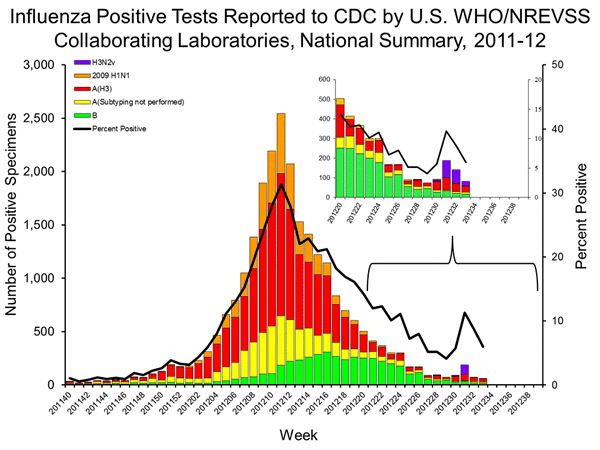
WER: Reviewing The 2011-2012 Northern Hemisphere Flu Season


image

Distribution of 2011-2012  Flu Strains – Source W.E.R.


# 6389


This week the World Health Organization’s Weekly Epidemiological Record (WER) is devoted to a review of the flu season just completed in the Northern Hemisphere. As you’ll see - while it was unusually mild in the United States - the experiences in other regions of the world varied.


I’ve excerpted portions of the report below, but you’ll probably want to read the entire article at this link:


15 June 2012, vol. 87, 24 (pp 233–240)

Contents
232 Review of the 2011–2012 winter influenza season, northern hemisphere

(Excerpts)

Review of the 2011–2012 winter influenza season, northern hemisphere


This report summarizes the chronology, epidemiology and virology of the winter influenza season in the temperate regions of the northern hemisphere. The review covers influenza activity data collected from October 2011 until the end of April 2012. The data presented have been derived primarily from reports published by national ministries of health or other official bodies reporting on their behalf, or reported to WHO through FluNet and FluID.


The report describes the mild flu season in the United States:


Illness and mortality

In the USA, influenza activity was considerably less in tense than in previous years; clinical consultations for ILI, reported hospitalizations, pneumonia and influenza mortality, and reported influenza-associated paediatric deaths were all lower than in recent years. The percentage of outpatient visits to sentinel physicians for ILI reached the national baseline of 2.4% but never exceeded it, a pattern which has not been observed in at least the last 15 years.


Laboratory confirmed influenza associated hospitalizations reported through the Emerging Infections Program, covering 80 counties in 10 of
the 50 states of the USA were lower than the previous year (8.6 per 100 000 population as of 30 April versus 21 per 100 000 population in 2010–2011) and mortality attributed to pneumonia and influenza (P&I) in the 122 Cities Mortality Reporting System slightly exceeded the epidemic threshold (1.645 standard deviations above the weekly mean) only once this season and was below the weekly historical 5-year average for much of the
season.


The flu season in Europe was less consistent, with some countries seeing low activity, while others saw an average flu season.


Overall, influenza severity indicators were not consistent across Europe. In western Europe, numbers of ILI cases seen in primary care settings were more variable than usual with some countries experiencing relatively few cases scarcely reaching the epidemic baseline (e.g. the United Kingdom and Ireland) while others had more typical seasons (e.g. France and Spain).


The number of severe acute respiratory infections reported by 7  participating countries that were positive for influenza was slightly lower than last season (1282 as of 11 May 2012 versus 1548 at the end of the 2010–2011 season). The European Mortality Monitoring Project (EUROMOMO), which pools all-cause mortality data from 15 countries of Europe, reported excess mortality among persons ≥65 years of age in some countries,peaking in February 2012.


This was most notable in countries that experienced more community transmission, around the same time as the peak in influenza transmission. Mortality in the 15 to 64 year old age group was notably lower compared to the 2010–2011 season when A(H1N1)pdm09 was the predominant virus circulating in the area.


Meanwhile, Asia saw a very typical flu season, with the exception of Japan, which reported unusually heavy flu activity.


Illness and mortality


Reporting rates for ILI visits in northern China, Mongolia and Republic of Korea were all similar to those in previous seasons; however, Japan experienced the highest number of influenza-confirmed cases since 2002, except for the 2009 pandemic period. In Mongolia, the proportion of hospitalizations for pneumonia and the reported number of pneumonia deaths were lower
than during the 2010–2011 season.


As is often seen, the influenza strains varied in different regions around the world. While H3N2 virus was the most common strain reported, in Mexico it was the A(H1N1)pdm09 strain that dominated.


The season was predominantly associated with A(H3N2) in Europe and North Africa, though influenza B did increase slightly late in the season. Temperate countries of Asia had both influenza B peaks and A(H3N2) peaks, with influenza B appearing first in China and Mongolia followed by A(H3N2) and the reverse sequence in the Republic of Korea and Japan.


As far as antiviral resistance is concerned, while there were some instances reported, the numbers remain very low.


The great majority of the viruses tested this season were sensitive to oseltamivir. However, the late-season appearance of a number of cases with oseltamivir   resistant A(H1N1)pdm09 viruses in Texas, most of which had no direct or indirect exposure to the drug, raises some concern. A cluster of 29 oseltamivir resistant viruses was reported in New South Wales, Australia in the 2011 southern hemisphere winter season but did not result in onward persistence of the resistant virus.


And finally, as you’ve probably already heard, a new flu vaccine formulation will be introduced this fall that will include two new flu strains (see WHO: Northern Hemisphere 2012-2013 Flu Vaccine Composition).


The rationale for this change (the first in 3 years) is provided in this report:


antigenic testing


The seasonal trivalent vaccine for 2011–2012 contained the same 3 viruses as the 2010–2011 northern hemisphere vaccine: A/California/7/2009 (H1N1)-like virus, A/Perth/16/2009 (H3N2)-like virus and B/Brisbane/60/2008-like virus (B Victoria lineage). Early in the season, nearly all of the influenza A viruses detected globally were antigenically similar to the vaccine viruses.


However, increasing antigenic diversity was noted in A(H3N2) viruses in the latter part of the season. These viruses had reduced titre cross-reactivity with antiserum produced against the/Perth/16/2009 virus but higher titres against A/Victoria/361/2011-like reference viruses. In Europe this was associated with lower vaccine effectiveness than in previous seasons in well controlled field observational studies.


Because of antigenic heterogeneity within influenza A(H3N2) viruses irculating during this influenza season, the updated trivalent influenza vaccine for the northern hemisphere will contain an A/Victoria/361/2011-like virus.


Influenza B viruses of both the B/Victoria and the  B/Yamagata lineages circulated during this influenza
season in nearly equal proportions in some areas. The increasing proportion of viruses of the  /Yamagata  lineage prompted a change in the next season  vaccine composition to include a Yamagata virus  (B/Wisconsin/1/2010-like virus).


Now that the flu season in the Northern Hemisphere is essentially over (there are still a couple areas of activity, including Hong Kong and Bermuda), all eyes turn to the southern hemisphere where their flu season is just about to get started.


This year’s flu shot for the southern hemisphere is the same as was used in Europe and the Americas last fall, and so we shall be interested to see if the trend in lower vaccine effectiveness reported in Europe persists south of the equator.


As far as what this last flu season tells us about the next flu season to come?  Well, the old adage is that if you’ve seen one flu season, you’ve seen one flu season.


Influenza viruses are notoriously unpredictable, and flu seasons that span the globe, even more so.  We won’t know what kind of flu season we are going to have until we’ve had it.


A good enough reason to get that flu shot every year, and to practice good flu hygiene (covering coughs, washing hands, staying home when sick) all year round.

»» Read More

How The ECDC Will Spend Your Summer Vacation


# 6374


This summer there will be three high profile, well-attended public events in Europe; The London Olympics and Para-Olympics Games, and the UEFA EURO 2012 football championship (which is being hosted by Poland and the Ukraine).


Hundreds of thousands of visitors will converge on multiple venues over the summer, coming from all parts of Europe and around the world.  And as with any large gathering of people, there are serious public health concerns.


Over the past few months we’ve seen some hyperbolic media stories suggesting that these games could help launch the next pandemic, but past experience with other big travel events, like the Hajj, the Carnival in rio, The World Cup,  or our own Super Bowl suggests that is unlikely.


It is true that some disease outbreaks have been exacerbated by the gathering of large crowds. 


This past year a number of people were exposed to measles at the Super Bowl in Indianapolis, leading to a limited outbreak of the disease (mostly among the unvaccinated).


Perhaps most famously, the city of Philadelphia went ahead with plans to hold a Liberty Loan parade in September of 1918, which was attended by 200,000 people.


Although the flu pandemic had already begun, the city fathers were apparently heartened by the low number of cases that had been reported in Philadelphia. Other cities, like St. Louis, banned public gatherings, closed movie theatres, and even limited church gatherings.


What happened next is best demonstrated by the following graph, which depicts an explosion of pandemic flu cases beginning just days after the parade.

The chart above, taken from the PNAS journal article entitled Public Health Interventions and Pandemic Intensity During the 1918 Influenza Pandemic , shows the excess mortality in two American cities.


The tall spike represents Philadelphia, while the lower curve represents St. Louis.


Over the next three weeks, at least 6,081 deaths from influenza and 2,651 deaths from pneumonia were registered in Pennsylvania, most occurring in Philadelphia (CDC source).


So the potential is there, assuming that a novel pathogen to which there is limited immunity is introduced to the crowds.


The good news is, that while mass gatherings provide greater opportunities for disease outbreaks, history has shown that serious outbreaks like that which followed the 1918 Philadelphia parade are a rarity.


Still, there is enough concern that a good deal of planning has gone into the surveillance and prevention of disease spread at these summer events. Earlier this year in Lancet: Mass Gatherings And Health, we looked at a 6-part series on public health measures during mass gathering events.


The ECDC has published a report today outlining some of the steps they are taking to try to prevent disease outbreaks during these mass gathering events.


Watching the summer games

08 Jun 2012

Two large mass gathering events involving millions of EU citizens and worldwide visitors are being hosted this summer in the EU: the UEFA EURO 2012 football championship and London 2012 Olympic and Paralympic Games.


ECDC is enhancing its surveillance activities this summer, watching for any infectious disease health events that could present a public health threat during these sport events. As of today, a summary of relevant health events will be included in the weekly Communicable Disease Threat Report (CDTR), published on this website.


ECDC is working with the hosting country competent bodies of Poland, the United Kingdom and the Ukraine to provide international surveillance activities in order to support their public health actions.


Global mass gathering events can present challenges for public health because of their scale and the possible additional demands made of the public health services. To tackle these challenges, surveillance systems can be enhanced to target specific diseases or syndromes and to support timely response actions to reduce their impact and risk of spread.


Based on its founding regulation, one of the core functions of ECDC is undertaking daily 24/7 epidemic intelligence. This term encompasses activities related to early identification of potential health threats, as well as their verification, assessment and investigation, in order to recommend adequate public health control measures. Epidemic intelligence sources of information vary from health data routinely collected through standardised surveillance systems to unstructured official and unofficial reports of any origin.


What will ECDC be doing during these mass gathering events?

During the months of June-September 2012, ECDC is undertaking enhanced event-based surveillance as part of its routine epidemic intelligence activities. It has adapted media screening tools and its procedures to assist detecting timely infectious disease threats which may be relevant for these events, and the hosting and participating countries. The use of social media and blog fora as a mechanism of timely identification of disease threats is being explored in this context.


ECDC is working very closely with the hosting countries and international partners such as the World Health Organisation, including having liaison officers to facilitate daily communication with ECDC. A daily bulletin containing information on events relevant from a public health perspective will be provided to public health authorities of Member States and the event-hosting countries.


A summary of relevant infectious disease threats will be included in the weekly CDTR published on this website.


What kind of infectious diseases is ECDC looking for?

Large gatherings of people may be subject to increased public health risks, including non-communicable diseases. Based on experience from previous such mass gatherings, it is unlikely that infectious diseases will be a major problem at these two events.


The greatest risk for visitors to these mass gatherings is likely to be related to food and waterborne diseases, such as food poisoning due to inappropriately handled food items or inadequate hand hygiene practices. At the same time, in the context of outbreaks of measles and other vaccine preventable diseases in Europe, unvaccinated and non-immune people may be at increased risk of infection.


In addition to food- and water-borne diseases and vaccine preventable diseases, ECDC will be monitoring for a wide range of infectious diseases and syndromes through available data sources and networks, as it does on a daily basis, in order to detect unusual events or outbreaks.


The organisers of these mass gatherings have published public messages about how to stay healthy in order to best enjoy these events. Preventative measures that people can take themselves and can contribute to keeping others healthy include things such as: washing hands regularly, ensure relevant vaccinations are up to date, practice safe sex, stay out of the sun, and stay at home if you feel unwell. For those seeking travel or health advice, specific information for EURO 2012 and London 2012 can be found below.

ECDC Rapid risk assessment on measles

WHO European Region on health planning for large events


Assuming that no large outbreaks of illness or disease occurs, it will be due primarily to the advance work done by local and regional public health officials in planning for these events.


The old saying is true, `When public health works, nothing happens’.

»» Read More

Hong Kong: Flu Activity Continues To Rise


# 6354


Normally by the end of May influenza activity in the Northern Hemisphere has returned to summer background levels, and our focus turns to the Southern Hemisphere’s flu season. 


Last week the May 24th edition of Hong Kong’s Flu Express indicated that influenza activity continues at unusually high levels for this time of year.


image


According to a Hong Kong Centre For Health Protection press release today, influenza activity continues to rise in their city, and a general caution has been issued.


29 May 2012

Influenza activity reaches highest level this year 

The Centre for Health Protection (CHP) of the Department of Health today (May 29) called on the public to maintain vigilance against seasonal influenza as the latest surveillance data shows that local influenza activity is at its highest level this year.


The Public Health Laboratory Centre (PHLC) of the CHP has detected a further increase in the number of influenza detections. The weekly number of influenza detections at the PHLC increased from 329 in the week ending May 5 to 1,113 in the week ending May 26, the highest number recorded so far this year. The number of institutional influenza-like illness (ILI) outbreaks increased from 16 to 64 during the same period. The current circulating influenza virus strain is influenza A(H3N2) virus, accounting for more than 95 per cent of all the influenza detections in the past four weeks.


From January 13 to noon on May 28, there were 214 cases (including 128 deaths), with ICU admissions or deaths with laboratory-confirmed influenza recorded by the enhanced surveillance system set up by CHP with the Hospital Authority and private hospitals to monitor the severity of influenza activity during influenza peak seasons. Fourteen paediatric cases (including two deaths) with severe influenza-associated complications or deaths have been recorded this year (as of May 28).  Compared with the winter flu season in the first quarter of 2011, the 2012 flu season has caused a higher proportion of serious/fatal cases among elderly people aged 65 years or above, and a lower proportion of serious/fatal cases among children aged below 5 years.

A spokesperson for the CHP said, "Influenza activity is expected to stay high for some weeks to come, and we will continue to see some serious/fatal cases among all age groups, especially the elderly."

(Continue . . . )


According to last week’s Flu Express, the predominant flu strain (by far) was H3:


In week 20,  the number of influenza viruses
detected in the Public Health Laboratory Centre was 852, including 827 influenza A (H3) viruses, 22
influenza B viruses, 2 influenza A(H1N1)2009
viruses and 1 influenza A virus (Figure 3).


Although the flu season across Europe and the Americas was late in starting, and short in duration, there were signs that the seasonal H3N2 virus circulating had drifted antigenically – prompting a change in the formulation of this fall’s flu vaccine.


It will be interesting to see if further analysis reveals any antigenic changes in the H3 virus circulating in Hong Kong, and how closely they match with the new vaccine strain (A/Victoria/361/2011 (H3N2)-like virus).

»» Read More