Showing posts with label Eurosurveillance Journal. Show all posts

Eurosurveillance: Hajj Health Hazards & Recommendations


 image

Credit Wikipedia


# 6627


While no new cases of the novel coronavirus have been detected beyond the first two from Saudi Arabia & Qatar, Singapore had a brief scare yesterday when a woman - recently arrived from Kuwait - was hospitalized with a respiratory infection (see Woman tests negative for SARS-related bug).


This comes on the heels of a similar case last week in Hong Kong (also negative), and 5 people isolated in Denmark (again, negative) two weeks earlier.


Although there are no signs that this coronavirus is being spread from person-to-person, memories of the SARS epidemic of 2003 have prompted enhanced surveillance for anyone traveling from the Middle East showing respiratory symptoms. 


Out of an abundance of caution, these cases are quickly isolated and tested - even though health officials know most will turn out to have something far less exotic than this new coronavirus. 


With the Hajj only 10 days away - and influenza and other viruses in circulation – we shouldn’t be surprised to see this drill repeated around the world as pilgrims return home from Mecca at the end of the month.


Which brings us to this Rapid Communications from the ECDC journal Eurosurveillance, posted yesterday.  I’ve only included excerpts, follow the link to read it in its entirety.


ECDC logo

Eurosurveillance, Volume 17, Issue 41, 11 October 2012

Rapid communications

The Hajj: updated health hazards and current recommendations for 2012

J A Al-Tawfiq1, Z A Memish


This year the Hajj will take place during 24–29 October. Recent outbreaks of Ebola haemorrhagic fever in Uganda and the Democratic Republic of the Congo, cholera in Sierra Leone, and infections associated with a novel coronavirus in Saudi Arabia and Qatar required review of the health recommendations of the 2012 Hajj. Current guidelines foresee mandatory vaccination with quadrivalent meningococcal vaccine for all pilgrims, and yellow fever and poliomyelitis vaccine for pilgrims from high-risk countries. Influenza vaccine is strongly recommended.


The annual Hajj is one of the greatest assemblies of humankind on earth. Each year, three million Muslims attend the Hajj in Mecca, Saudi Arabia. Of these, 1.8 million non-Saudi Arabians usually come from overseas countries and 89% (1.6 millions) of them arrive by air [1]. Pilgrims come from more than 180 countries worldwide and about 45,000 pilgrims each year arrive to Saudi Arabia from the European Union [2].

<SNIP>

Pre- and post-Hajj travel advice

The Hajj is a unique event with possible impact on international public health. Healthcare practitioners around the world must be attentive to the potential risks of disease transmission during the Hajj. They must recommend appropriate strategies for the prevention and control of communicable diseases before, during and after the completion of the Hajj. The current international collaboration in planning vaccination campaigns, developing visa quotas, arranging rapid repatriation, and managing health hazards at the Hajj are crucial steps in this process. The Saudi Arabian Ministry of Health publishes the Hajj requirements for each Hajj season. This year’s Hajj recommendations have recently been published [3].

Recent outbreaks of Ebola haemorrhagic fever in Uganda and the Democratic Republic of the Congo (DRC), cholera in Sierra Leone, and infections associated with a novel coronavirus in Saudi Arabia and Qatar required review of the health recommendations of the 2012 Hajj. We present here the changes and additions made in the recommendations for these diseases. For completeness, we also summarise the existing recommendations [3,4].

(Continue . . . )


Whenever there is a mass gathering (or migration) of people, public health officials must plan on how to deal with, and hopefully contain, any disease outbreaks.


Earlier this year the ECDC, along with local public health officials, geared up for three very high profile and well attended public events; The London Olympics and Para-Olympics Games, and the UEFA EURO 2012 football championship.


You can see their preparations in How The ECDC Will Spend Your Summer Vacation.


Similarly, as this report details, Saudi Arabia is taking serious steps to prevent disease outbreaks. 


Every year there are multiple mass gatherings which could conceivably facilitate disease transmission; including the Super bowl, Mardi Gras, and Carnival in Rio, and the Hajj.

And the granddaddy of all human migrations takes place every winter across Asia, with the celebration of the Lunar New Year. More than 2 billion passenger journeys – mostly by crowded train – are made in China alone over a six week period.


The good news is, that while mass gatherings and migrations provide greater opportunities for disease outbreaks, history has shown that serious outbreaks rarely occur.


Still, public health authorities must anticipate and prepare for the worst, even though it probably won’t happen. This is hardly wasted energy.


After all, we’ll never know the number of outbreaks that have been prevented by proactive measures over the years.


The old saying is true, `When public health works, nothing happens’.


For more on health planning for mass gatherings, you may wish to revisit:


Lancet: Mass Gatherings And Health
The Impact Of Mass Gatherings & Travel On Flu Epidemics
The Lunar New Year And Flu
»» Read More

Eurosurveillance: Cross Reactive Antibodies to H3N2v In Norway

image


# 6321


A newly published seroprevalence study out of Norway that looks for cross reactive antibodies (suggestive of potential immunity) against the H3N2v swine flu strain has produced some surprising results.


The H3N2v (variant) strain began showing up in the United States in the middle of 2011, and since that time has been isolated in 13 people across 5 states.


Some, but not all, of the victims had exposure to swine, leading investigators to suspect limited person-to-person transmission might be occurring.


It is too soon to know if this strain has `legs’, and will continue to circulate in humans and perhaps eventually pose a more serious public health threat.


For more background on this emergent flu strain you may wish to revisit (H3N2v: Three’s A Crowd).


Given the possibility that this new strain could gain a foothold in the human population, the CDC has been working on a seed vaccine strain, and investigators around the world have been testing to see what age groups might be most susceptible to this virus.


Early indications have been that those under the age of 12 are at greatest risk, as 12 of the 13 known cases have involved young children.


Antigenically similar H3 viruses circulated through the mid 1990s, which might have left behind some degree of immunity to those exposed. Those born after 1999 would not be expected to carry those antibodies.


In April of 2012 we saw a study (see MMWR: Antibodies Cross-Reactive to Influenza A (H3N2) Variant Virus) that found that children under the age of 10 had few or no cross-reactive antibodies to the H3N2v strain, suggesting they would be the most vulnerable age group to the virus.


Based on the small sampling of tests conducted, approximately 1/3rd of those aged 10–49 years displayed cross-reactive antibodies that might provide some protection against infection from the H3N2v virus.


Seroprevalence testing on those aged 50 to 65 was not included in this particular study. Another study, published in January, found a similar lack of cross-reactive antibodies among children.


All of which serves as prelude to today’s study that appears in this week’s Eurosurveillance Journal.


Eurosurveillance, Volume 17, Issue 19, 10 May 2012

Rapid communications

Age-dependent prevalence of antibodies cross-reactive to the influenza A(H3N2) variant virus in sera collected in Norway in 2011

K Waalen , A Kilander, S G Dudman, R Ramos-Ocao, O Hungnes


Antibody cross-reactivity to the influenza A(H3N2) variant virus recently reported in the United States, was investigated in Norwegian sera. Seroprevalence was 40% overall, and 71% in people born between 1977 and 1993.


The most susceptible age groups were children and people aged around 50 years. The high immunity in young adults is likely to be due to strong priming infection with similar viruses in the 1990s. More research is needed to explain the poor immunity in 45–54 year-olds.


While their data is in pretty good agreement with the two other studies mentioned above, quite unexpectedly they found that levels of seroprotective antibodies to the H3N2v virus were substantially lower among those aged 45 to 54 years than in other adult age brackets. 


The authors have no straightforward explanation for this `gap’ in immunity among those born between the late 1950s and early 1960s, and call for more research into this surprising finding.


As for the pandemic potential of this virus, they offer this hopeful assessment in their conclusion:


The considerable prevalence of cross-reactive antibodies suggests that there may be a limit to the epidemic potential of these viruses in their current form.


Of course, the standard caveats apply.


Cross reactive antibodies are suggestive of possible immunity, but don’t always correlate to actual protection against infection or illness.  And the H3N2v virus – like all flu viruses – is constantly changing and evolving.


For more background on variant flu viruses, you may wish to visit the following CDC webpage:


Key Facts about Human Infections with Variant Viruses (Swine Origin Influenza Viruses in Humans)

Questions & Answers

On this Page
»» Read More

Eurosurveillance: Older People May Be Susceptible To The H3N2v Virus


H1N1v virus

# 6104


The detection of a new swine H3N2v virus among a handful of people across five states in recent months has sparked concerns that a new influenza virus might be trying to establish a foothold in the human population.


Since the infections reported in the 2nd half of 2011 were predominantly among young children, there has been some speculation that those over the age of 20 might have some limited immunity to this strain.


The CDC, in their January 6th MMWR Update: Influenza A (H3N2)v Transmission and Guidelines — Five States, 2011, writes:


Limited serologic studies conducted to date indicate that young children have little preexisting immunity to influenza A (H3N2)v viruses. Because the hemagglutinin genes of these viruses are related to human influenza A (H3N2) viruses that circulated in the 1990s, older children and adults might have limited immunity against these viruses


Yesterday the Journal Eurosurveillance printed an article called:


Cross-reactive antibody to swine influenza A(H3N2) subtype virus in children and adults before and after immunisation with 2010/11 trivalent inactivated influenza vaccine in Canada, August to November 2010


by DM Skowronski, G De Serres, NZ Janjua, JL Gardy, V Gilca, M Dionne, ME Hamelin, C Rhéaume, G Boivin


As the title might suggest, this isn’t exactly `light’ reading. 


Luckily we’ve the talented Helen Branswell to lead us through this medical morass, in her report for the Canadian Press. As with any Branswell article, you would be well served to follow the link and read the whole thing. 


Older adults may also be vulnerable to new swine influenza virus, study suggests

By: Helen Branswell, The Canadian Press


Briefly, the Eurosurveillance study finds indications that acquired immunity carried by adults from exposure to similar viruses that were circulating prior to 1990 may wear off as adults age.


Since years when the H3N2 seasonal flu dominates often result in a more severe flu season, any decline in immunity among the elderly elicits concern.


Right now, the H3N2v virus hasn’t shown the ability to spread efficiently in the human population, although some human-to-human transmission has occurred. 


But over time, it may acquire that ability.


Which is why the CDC is working on a vaccine (see H3N2v Vaccine Trials) for this new strain should the need arise.


Meanwhile, with the exception of reports out of Mexico where they are seeing a large number of H1N1 cases, influenza reports in North America and Europe remain well below average for this time of year.

»» Read More

Two New Swine trH3N2 Studies To Ponder


# 6015


We’ve two studies to look at today focusing on the trH3N2 swine flu viruses that have been making headlines for several months; one appearing in the Journal of Virology and the other in the journal Eurosurveillance


First a recap of recent events.


Feel free to skip ahead if you are already up to speed on the history of this virus.


Excluding the 2009 `swine flu pandemic virus’, there have been 31 `novel’ swine flu infections detected in humans the United States since 2005.


Most appear to have been dead-end transmissions, and have come about from direct contact with pigs. The CDC believes only a few may have involved limited human-to-human transmission.


Up until last year, the most common strain of S-OIV (Swine-origin influenza virus) found in humans was a trH1N1 strain, but in 2010 we began to see a shift towards trH3N2 viruses.


This year, a new reassortant of trH3N2 has appeared on the scene that has picked up a the Matrix (M) gene segment from the 2009 H1N1 virus.


Reassorted viruses can result when two different flu strains inhabit the same host (human or otherwise) at the same time. Under the right conditions, they can swap one or more gene segments and produce a hybrid virus.


reshuffle


Unlike most of the earlier novel swine flu infections, this strain has shown increased signs of low level human-to-human transmission. You’ll find some recent coverage of this emerging swine flu variant in the following blogs:


Branswell On The New trH3N2 Flu Virus 

CIDRAP: New Details In The trH3N2 Story 

CDC Update On Iowa trH3N2 Cases


While only a small number of these reassorted trH3N2 viruses have been detected, the concern is, that over time it could get better at infecting humans and present a public health threat down the road.


All of which serves as prelude to today’s studies. 


First stop, a brief news summary by CIDRAP of a Journal of Virology article on recent H3N2 detections in Chinese pigs.


Novel reassortant H3N2 flu found in Chinese pigs


Chinese researchers have isolated three novel H3N2 reassortant viruses from pigs in southern China that contain genetic material from a pH1N1 strain, similar to those associated with 11 recent infections in US patients, according to a report yesterday in the Journal of Virology.


<SNIP>


In spite of their separation geographically and chronologically, they are genetically very closely related, the authors write. "This provides direct evidence that the pdm/09-like internal gene complex has been successfully incorporated into a swine H3N2 virus, and been prevalent in the pig population for a period of time," they add.


Dec 14 J Virol abstract


Most notable in this summary is that detections of novel trH3N2 viruses in Chinese pigs with the M gene from the pdmH1N1 strain go back well over a year.


Next stop, a report in Eurosurveillance that takes a detailed look at the genetic sequences, and evolution of this emerging trH3N2 virus.


S-OtrH3N2 viruses: use of sequence data for description of the molecular characteristics of the viruses and their relatedness to previously circulating H3N2 human viruses

Eurosurveillance, Volume 16, Issue 50, 15 December 2011

by B Lina, M Bouscambert, V Enouf, D Rousset, M Valette, S van der Werf


The authors conducted an analysis of hemagglutinin sequences (HA) from both human and swine-origin influenza A(H3N2) isolates and concluded that this new trH3N2 virus is most closely related (5.5% divergence) to the A/Wuhan/359/95 H3N2 strain that circulated in humans until the mid-1990s.


This strain was also incorporated into the seasonal flu shot as late as the 1997-98 northern hemisphere flu season.


Based on this study, they suggest that some degree of cross-protection is likely, particularly to those born before 1995.


They warn, however:


. . . it is impossible to predict if pre-existing immunity will be efficient against this virus, even if it seems likely that some cross-protection will exist; seroepidemiological surveys should be carried out to support or disprove this hypothesis.


The authors also express concerns over our current lab test’s ability to detect and identify these novel strains, stating that:


. . .  specific RT-PCR methods should be developed, or alternatively, predefined algorithms with already existing discriminating molecular tools need to be implemented.


Whether any of these novel swine viruses manages to adapt well enough to humans to pose a significant public health threat is something we will have to wait to see.


But even if these novel viruses fail to thrive - and end up as little more than a footnote in the history of influenza - they provide a stark reminder that influenza viruses are constantly evolving and mutating, looking for an evolutionary advantage.


We watch these novel viruses closely because history has shown that . . .  given enough time. 


They tend to find it.


»» Read More

Eurosurveillance: New Research On Pandemic Influenza


# 5945


Yesterday, the ECDC’s journal Eurosurveillance  published a review of pandemic influenza-related studies presented at the 2011 World Congress of Epidemiology, held in Edinburgh, United Kingdom last August.


image 


First a link to the meeting report, then a brief listing of some of the highlights mentioned.  Follow the link to read the entire report.


Eurosurveillance, Volume 16, Issue 45, 10 November 2011

New research on pandemic influenza at the World Congress of Epidemiology, Edinburgh, 7-11 August 2011

J A Summers, N Wilson, M G Baker


Among the studies mentioned:


  • A number of studies looked at differences in age and ethnicity and how they related to influenza mortality in 2009, and during earlier pandemics.

  • In contrast to other studies which have found a substantial link between 2009 H1N1 infection, pregnancy, and poor outcomes a small study in Scotland found no such relationship.

  • A study out of Australia showed a relationship between weather patterns and the spread of influenza. Colder or wetter weather was linked to higher rates of infection.

  • A study of influenza transmission in confined spaces reaffirmed suspicions that restrictions on mass gatherings might help curb influenza transmission, but more research is needed as the association is not consistent.

  • Another study indicated that close proximity to symptomatic cases on long haul airline flights resulted in a small, but measurable, increased risk of infection.

  • Yet another airport study found that due to the low sensitivity of screening methods, attempts to identify and isolate infected travelers at ports of entry is unlikely to be an effective containment method.

  • Three studies out of Japan found a beneficial effect during the 2009 pandemic by using antiviral drugs and/or school closure (of varying length and timing) to interrupt its transmission.

  • Conversely, a fourth study suggested that early school closures could have adversely affected herd immunity in the school environment, with lower cumulative infection rates in schools that delayed closure.

  • Additional studies looked at several influenza surveillance methods used in South America during the 2009 H1N1 pandemic. One study found that the private healthcare sector in Buenos Aires was better able to provide timely information than was the public sector.


To wrap up their summation, the authors wrote:


Conclusion

Influenza pandemics tend to occur several times per century and can cause extreme mortality (notably the 1918/19 pandemic). Seasonal influenza also accounts for a substantial burden of illness worldwide. Therefore, new research in the wake of the 2009 influenza pandemic is commendable and should continue to be promoted by health research funders and health service providers themselves.

In particular, such research may help countries reflect on the 2009 pandemic experience [4], and then revise their national pandemic plans and upgrade their influenza-related surveillance systems. The high costs associated with developing pandemic vaccines and storing antiviral drugs also highlights the need for new research on the optimal use of these pharmaceuticals – especially given the financial constraints on public health systems around the world.

»» Read More

Eurosurveillance: Avian Flu In Humans -Insights From A Line List


# 5750


In epidemiology, a Line Listing is one the most basic methods used to collect, display, and analyze outbreak information.


It is essentially a table that displays individual cases in rows, and their characteristics in columns. If you’ve ever prepared a spreadsheet, you know the format.


A simple example might look something like this:

image

Photo Credit – CDC Excite Epidemiology in the Classroom


Today, in what may be the most comprehensive line listing of human H5N1 avian flu cases published to date, researchers from the Robert Koch Institute have released data describing nearly 300 H5N1 infections from around the globe.


Their research appears in today’s edition of the Eurosurveillance journal. With the release of this data the authors call for the creation and maintenance of a publicly accessible line list of anonymized human AI cases by an internationally renowned organization such as the World Health Organization.


A motion I would enthusiastically second.


The Eurosurveillance article is available at the link below.


Avian influenza A(H5N1) in humans: new insights from a line list of World Health Organization confirmed cases, September 2006 to August 2010

L Fiebig , J Soyka, S Buda, U Buchholz, M Dehnert, W Haas  Euro Surveill. 2011;16(32):pii=19941.


You can download this spreadsheet/database in MS-EXCEL (xls) format from the RKI website. 


Avian influenza A(H5N1) in humans

New insights from a line list of WHO confirmed cases, September 2006 to August 2010

The Robert Koch Institute (RKI) had established a routine monitoring instrument condensing information on all human avian influenza cases worldwide reported from the following sources into a line list.

A scientific article evaluating confirmed avian influenza cases in humans captured from September 2006 to August 2010 September 2006 to August 2010, as well as the established line list and the description of variables are available online:


The Eurosurveillance article is long, detailed, and would be impossible to summarize here and do it justice. It really deserves reading in its entirety.


But a few choice excerpts from the abstract (below) provide a glimpse of some of the data gleaned from this line list.


The 235 confirmed AI cases captured from September 2006 to August 2010 had a case fatality rate of 56% (132/235), ranging from 28% (27/98) in Egypt to 87% (71/82) in Indonesia.


In a multivariable analysis, odds of dying increased by 33% with each day that passed from symptom onset until hospitalisation (OR: 1.33, p=0.002).


In relation to children of 0–9 years, odds of fatal outcome were more than six times higher in 10–19 year-olds and 20–29 year-olds (OR: 6.06, 95% CI: 1.89–19.48, p=0.002 and OR: 6.16, 95% CI: 2.05–18.53, p=0.001, respectively), and nearly five times higher in patients of 30 years and older (OR: 4.71, 95% CI: 1.56–14.27, p=0.006) irrespective of the country, which had notified WHO of the cases.


The situation in Egypt was special in that case number and incidence in children were more than twice as high as in any other age group or country. With this study, we show that data from the public domain yield important epidemiological information on the global AI situation.


I expect that this release of data will be welcomed by many interested observers in Flublogia, and around the world.

»» Read More

Measles: Forgotten, But Not Gone


# 5530


Measles, which was once almost a youth’s `rite of passage’ in the United States, has been all but eliminated in recent years after the introduction of the first measles vaccine in 1963.


The chart below (source: CDC) shows the remarkable effectiveness of the vaccination campaign.


image


While many parents today think of measles as a relatively benign childhood illness, it actually produced significant morbidity and mortality with respiratory, ocular, and neurological complications - sometimes resulting in death.


During the 1950s – before the introduction of the measles vaccine – in the United States the disease infected roughly 4 million, hospitalized nearly 50,000,  and contributed to the deaths of several hundred every year.  


Admittedly, a vast improvement over the mortality rates from earlier in the century, when the disease was far deadlier (for reasons that quite frankly, remain hard to explain – Ian York explored this fascinating mystery in Measles week, part I: Introduction ).


But in recent years lower uptake of the vaccine – its reputation tainted by (disproven) claims of a possible link to autism (popularized by Dr. Andrew Wakefield and promoted by various anti-vaccination groups) – and the continual importation of the disease from countries where it remains endemic - have allowed the virus to keep a toehold in developed nations.


In developing countries, the incidence – and mortality rate – of measles remains high.   These statistics from the World Health Organization:


Measles

Fact sheet N°286

Key facts
  • Measles is one of the leading causes of death among young children even though a safe and cost-effective vaccine is available.
  • In 2008, there were 164 000 measles deaths globally – nearly 450 deaths every day or 18 deaths every hour.
  • More than 95% of measles deaths occur in low-income countries with weak health infrastructures.
  • Measles vaccination resulted in a 78% drop in measles deaths between 2000 and 2008 worldwide.
  • In 2008, about 83% of the world's children received one dose of measles vaccine by their first birthday through routine health services – up from 72% in 2000.


Today news on measles from several fronts. 


First, the WHO’s  WER (Weekly Epidemiological Record) brings us details on an ongoing measles outbreak in Europe, that has infected more than 6,500 people in 33 nations.


Measles outbreaks in Europe

As of 18 April 2011, 33 countries in Europe had reported  6500 measles cases. Epidemiological investigations and genotyping have confirmed transmission of measles virus among several countries in the Region and in the Americas.

<SNIP>

In all these outbreaks, except for the second out-
break in Spain and the outbreak in Turkey, the
D4
genotype
of measles virus has been confirmed.
The B3 genotype of measles virus was isolated
from cases in the second measles outbreak in
Spain, while the D9 genotype, originating from
and common in south-east Asia (e.g. Malaysia and
Indonesia) was confirmed to have caused the out-
break in Istanbul (Turkey) in January 2011.

(Continue . . . )


As you can see, there are a number of different strains or genotypes of measles.  New ones emerge, or are detected, every so often.  As of mid-2010, the World Health Organization (WHO) maintained reference strains representing 23 recognized genotypes.


From Eurosurveillance this week, a report on a novel strain of (an existing genotype:G3) of measles which has spread across Europe over a 2 month period.


Eurosurveillance, Volume 16, Issue 17, 28 April 2011

Rapid communications

Appearance of a novel measles G3 strain in multiple European countries within a two month period, 2010

K E Brown, M N Mulders, F Freymuth, S Santibanez, M M Mosquera, S Cordey, J Beirnes, S Shulga, R Myers, D Featherstone

During late 2010, a previously unrecognised strain of measles genotype G3 virus was identified in five different European countries by the World Health Organization Measles and Rubella Laboratory Network. Apart from one, none had a travel history to south-east Asia, the usual source of G3 viruses, although epidemiological links could be established between some of the cases. This case series illustrates the value of genotyping and sequencing in tracking measles infections, and identifying otherwise unrecognised chains of transmission.

(Continue . . . )


And next, from the Journal of Infectious Diseases a report on the impact of an outbreak of measles in Tucson, Arizona in 2008 that affected two healthcare facilities. 


Health Care–Associated Measles Outbreak in the United States After an Importation: Challenges and Economic Impact


J Infect Dis. (2011) jir115 first published online April 28, 2011 doi:10.1093/infdis/jir115

Sanny Y. Chen,

Shoana Anderson, Preeta K. Kutty, Francelli Lugo, Michelle McDonald, Paul A. Rota, Ismael R. Ortega-Sanchez, Ken Komatsu, Gregory L. Armstrong, Rebecca Sunenshine, and Jane F. Seward


You can follow the above link to read the entire article, or for the short version, you can read the press release from the IDSA.


Infectious Diseases Society of America

Measles outbreak underscores need for continued vigilance in health care settings

[EMBARGOED FOR APRIL 29, 2011] The U.S. measles vaccination program has been successful in eliminating endemic measles in the United States; yet this success has provided challenges that require ongoing vigilance for the rapid identification and response to measles cases in health care settings. In 2008, the largest reported health care-associated measles outbreak in the United States since 1989 occurred in Tucson, Arizona, costing approximately $800,000 in response and containment efforts. In a report published in The Journal of Infectious Diseases and available online, researchers identify preventive measures hospitals and health care facilities can implement to reduce the likelihood and decrease the economic impact of a future measles outbreak in these settings.


Due to a highly effective vaccine and high vaccine coverage, measles was declared eliminated in the United States in 2000; however, the potential for measles infection still exists in this country. Non-adherence to U.S. vaccination recommendations and infection among unvaccinated travelers coming into the United States continue to pose potential threats to the public and to health care personnel. In the 2008 Tucson outbreak, an unvaccinated, infected Swiss traveler visited a hospital emergency department on February 12. The traveler was admitted to the hospital the next day, but a measles diagnosis was not confirmed until February 20. This ignited an intense and lengthy public health investigation and response to persons with suspected and confirmed measles as well as contacts of those persons.

(Continue . . . )


And again from the Journal of Infectious diseases, an editorial comment on the above study by Stephen M. Ostroff.  

The full text of both articles is freely available.


EDITORIAL COMMENTARY:

Stephen M. Ostroff

Measles: Going, Going, But Not Gone

J Infect Dis. (2011) jir125 first published online April 28, 2011 doi:10.1093/infdis/jir125


While not the scourge of the early 20th century in the United States, measles remains a serious public health threat in much of the world, and is only held at bay in developed countries by relatively high vaccination rates.


There is a lot more to the measles story, and I highly recommend reading the entire Mystery Rays blog series on the disease by Ian York from 2010.


Measles week, part I: Introduction

Measles week, part II: Emerging disease

Measles week, Part III: Not the answers

Measles week, part IV: Some of the answers

Measles week, Part V: What about the vaccine?


            »» Read More

            Eurosurveillance: Debating The D222G/N Mutation In H1N1


            # 5263


            For well over a year there has been considerable debate among virologists, and other researchers, over the impact of an amino acid substitution seen in a small percentage of 2009 H1N1 samples.


            The `Norway’ or D222G/N (D225G/N in influenza H3 Numbering) mutation was first linked to more severe disease by Norwegian Scientists in November 2009, although patients carrying these strains can have mild illness as well. 


            While we’ve covered this territory a number of times over the past year, a brief (and hopefully simple) review is in order. If you are up to speed on receptor binding, and the history of the D222G/N variant, feel free to skip the next section.


            This mutation involves a single amino acid change in the HA1 gene at position 222 from aspartic acid (D) to glycine (G) (or asparagine (N)).


            The pdmH1N1 virus carrying this mutation appears to bind more readily to receptor cells (α2-3) found deeper in the lungs, whereas unmutated seasonal flu strains bind preferentially to the (α2-6) receptor cells found in the upper airway.


            A virus’s ability to bind to specific cells is controlled by its RBD or Receptor Binding Domain; an area of its genetic code that allows it to attach to, and infect, specific types of host cells.

            image

            (A Very Simplified Illustration of RBDs)

            Like a key into a padlock, the RBD must `fit’ in order to open the cell to infection.


            The evidence for the D222G/N  amino acid substitution driving increased virulence has been mixed, with the World Health Organization, the CDC, and the HPA continuing to investigate. 


            During the first week of January, Eurosurveillance  printed a study looking at fatal and non-fatal cases of influenza in the UK (see Eurosurveillance: Analysis Of Fatal H1N1 Cases In The UK).


            Ellis et al. reported that almost all of the virus samples tested in fatal and non-fatal cases during the early wave of the 2010/11 influenza season showed aspartic acid (D) at position 222.


            In other words, no `Norway’ mutation.

            Today, Eurosurveillance published a letter from an Italian researcher who has found a high percentage of D222G/N mutations in severely ill patients (43%)  – particularly when taking virus samples from the lower respiratory tract (lungs).


            You can read the entire letter at the link below.


            Eurosurveillance, Volume 16, Issue 4, 27 January 2011

            Letters

            Letter to the editor. Virological analysis of fatal influenza cases in the United Kingdom during the early wave of influenza in winter 2010/11

            F Baldanti


            The point being, that if the UK researchers were only taking nasal (or upper respiratory) swabs, they might be missing some D222G/N mutations.


            In a reply, the authors of the original study concede that in many cases, only upper respiratory swabs were available for this analysis, and that when possible, samples from the lower respiratory system would be useful.


            Eurosurveillance, Volume 16, Issue 4, 27 January 2011

            Letters

            Authors’ reply. Virological analysis of fatal influenza cases in the United Kingdom during the early wave of influenza in winter 2010/11

            J Ellis , M Galiano, R Pebody, A Lackenby, CI Thompson, A Bermingham, E McLean, H Zhao, S Bolotin, O Dar, J M Watson, M Zambon


            This scholarly debate isn’t over, of course. As Ellis et al. state in their reply:


            The selection and emergence of the D222G mutation as a cause or consequence of more severe lower respiratory tract infection is still to be resolved.


            Emergence of this mutant is likely to exacerbate severity of disease, but by itself, may be neither necessary nor sufficient to account for a severe disease outcome, which is invariably a balance between virus virulence factors and host immune response capability.


            It will take more samples, more research, and more time to determine the truth in the matter. 


            And even if this mutation should eventually be linked to higher virulence, its ultimate impact on public health will ride on how just prevalent this D222G/N is among the H1N1 viruses in circulation.


            Stay tuned.   There’s a lot left for us to discover.

            »» Read More

            Eurosurveillance: Another Pandemic Vaccine Effectiveness Study


            # 5230


            Three days ago (see PLoS Medicine: Effectiveness Of The 2009 Pandemic Vaccine) we saw a study that strongly indicated that the 2009 pandemic H1N1 vaccine was highly effective in preventing infection by that virus.


            Today, another study, this time conducted in the UK and appearing in the Eurosurveillance Journal, that comes up with nearly identical results;  an adjusted vaccine effectiveness for adults under 65 of about 72%.


            The short version of what this new study found was:


            Out of 5,985 individuals whose samples were collected and PCR tested during the surveillance period, two samples were positive for influenza B and one sample was positive for influenza A(H3): these three cases were excluded from the study.


            Of the remaining 5982 samples, 1,746 (29.2%) tested positive for pandemic A(H1N1) virus, while the remainder either tested positive for another respiratory virus, or their infections went unidentified.


            Among those who had received the pandemic vaccine, only four of 85 (4.7%) were positive for the H1n1 virus 14 or more days after immunization, while 870 (28.4%) of 3,067 unvaccinated individuals had contracted the virus.


            The authors list a number of potential limitations to their study, including a lack of data on the medical history of each case sampled, the fact that one manufacturer’s vaccine (GSK) dominated in this study, the use of convenience samples rather than random sampling from patients, and the low number of pediatric cases who had accepted the vaccine.


            Still, the authors conclude:


            . . .  this study provides evidence that the pandemic influenza A(H1N1)2009 vaccine provided good protection against infection with pandemic influenza A(H1N1)2009 seven days or more after vaccination during the pandemic period.


            Further work is required to ascertain the effectiveness of the pandemic vaccine in children, in specific clinical risk groups and by individual vaccine brand.


            You can read the entire research in the latest edition of Eurosurveillance.  I’ve reproduced the link and abstract below.


            Hardelid P, Fleming DM, McMenamin J, Andrews N, Robertson C, SebastianPillai P, Ellis J, Carman W, Wreghitt T, Watson JM, Pebody RG.

            Effectiveness of pandemic and seasonal influenza vaccine in preventing pandemic influenza A(H1N1)2009 infection in England and Scotland 2009-2010.

            Euro Surveill. 2011;16(2):pii=19763. Avail.online: http://www.eurosurveillance.org/ViewArticle.aspx?ArticleId=19763 

            Following the global spread of pandemic influenza A(H1N1)2009, several pandemic vaccines have been rapidly developed. The United Kingdom and many other countries in the northern hemisphere implemented seasonal and pandemic influenza vaccine programmes in October 2009. We present the results of a case–control study to estimate effectiveness of such vaccines in preventing confirmed pandemic influenza infection.

            Some 5,982 individuals with influenza-like illness seen in general practices between November 2009 and January 2010 were enrolled. Those testing positive on PCR for pandemic influenza were assigned as cases and those testing negative as controls. Vaccine effectiveness was estimated as the relative reduction in odds of confirmed infection between vaccinated and unvaccinated individuals. Fourteen or more days after immunisation with the pandemic vaccine, adjusted vaccine effectiveness (VE) was 72% (95% confidence interval (CI): 21% to 90%).

            If protection was assumed to start after seven or more days, the adjusted VE was 71% (95% CI: 37% to 87%). Pandemic influenza vaccine was highly effective in preventing confirmed infection with pandemic influenza A(H1N1)2009 from one week after vaccination. No evidence of effectiveness against pandemic influenza A(H1N1)2009 was found for the 2009/10 trivalent seasonal influenza vaccine (adjusted VE of -30% (95% CI: -89% to 11%)).


            The perennial rap against flu vaccines by their critics is A) they don’t work   and B) they are unsafe. 


            Study after study have shown that these two allegations are false.  


            Surveillance and reporting systems have not found any unusual pattern of deaths in the United States attributable to the pandemic vaccine, and the oft predicted spike in Guillain-Barré syndrome (GBS) never occurred (see CIDRAP VAERS study finds H1N1 vaccine safety similar to seasonal vaccines'). 


            Flu vaccines in general, and the pandemic vaccine in particular, have a track record of being both very safe and effective.


            Granted, NOT 100% safe, and NOT 100% effective.


            Because nothing ever is.


            But given the morbidity and mortality attached to the flu, I’ll take the shot over that any year.

            »» Read More

            Eurosurveillance: Analysis Of Fatal H1N1 Cases In The UK


            Note:  I’m still away from home, connecting to the Internet via my netbook, and so my blogs will be considerably less verbose until I return on Sunday.


            # 5211


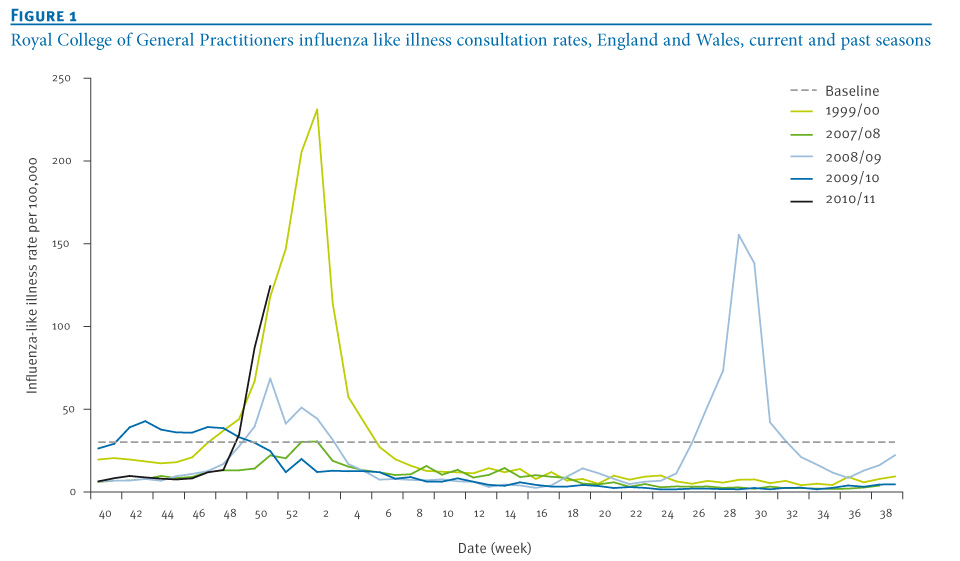
            A long, but informative piece on the virological and epidemiological findings of this winter’s outbreak of severe H1N1 in the UK appears in this week’s edition of Eurosurveillance.


            image

            ILI consultation rates for England and Wales comparing recent flu seasons.


            The `money’ quote in this report deals with concerns over possible antigenic changes or mutations to the H1N1 virus.


            Preliminary analyses from a limited number of whole genome sequences including some from fatal cases,  indicate that these are consistent with observations from seasonal influenza and from the first and second waves of the recent pandemic: so far no unique mutations have been associated with severe or fatal cases of influenza A(H1N1)2009, but further comprehensive analysis is required.


            The entire report is worth reading, and you’ll find it at the link below.


            Eurosurveillance, Volume 16, Issue 1, 06 January 2011

            Rapid communications

            Virological analysis of fatal influenza cases in the United Kingdom during the early wave of influenza in winter 2010/11

            J Ellis, M Galiano, R Pebody, A Lackenby, CI Thompson, A Bermingham, E McLean, H Zhao, S Bolotin, O Dar, J M Watson, M Zambon


            The 2010/11 winter influenza season is underway in the United Kingdom, with co-circulation of influenza A(H1N1)2009 (antigenically similar to the current 2010/11 vaccine strain), influenza B (mainly B/Victoria/2/87 lineage, similar to the 2010/11 vaccine strain) and a few sporadic influenza A(H3N2) viruses.


            Clinical influenza activity has been increasing. Severe illness, resulting in hospitalisation and deaths, has occurred in children and young adults and has predominantly been associated with influenza A(H1N1)2009, but also influenza B viruses.

            »» Read More

            Eurosurveillance: The Temporary Immunity Hypothesis


            # 5092


            In September of 2009, news of an (at that time) unpublished Canadian study began to surface that suggested that those who had received a seasonal flu shot the previous year were more susceptible to the new pandemic virus than those who hadn’t.


            Helen Branswell, science and medical reporter for the Canadian Press, was among the first to report on it (see Branswell On The Canadian Flu Shot Controversy).


            This bombshell – which began to be known as `the Canadian problem’, sent shockwaves through public health circles.  Many agencies were just days away from starting up their seasonal flu vaccination campaigns as they waited for the arrival of the H1N1 pandemic vaccine expected later in the fall.


            Suddenly, there was genuine concern that maybe  . . .  just maybe  . . .  with a pandemic virus on the way, that rolling out the seasonal vaccine was the wrong thing to do. 


            The CDC and the World Health Organization both scrambled to look at their available data, and stated that they could find no correlation between the seasonal vax and susceptibility to the pandemic flu . . . but that they would continue to look.


            Meanwhile, with concerns rising, a number of Canadian Provinces halted or announced delays in rolling out the seasonal flu shot, even though the study had yet to be published (see Ontario Adjusts Vaccination Plan).


            October saw a number of new reports and studies that failed to corroborate the (still unpublished) findings, including a study published in the BMJ (British Medical Journal) that suggested exactly the opposite - that getting the seasonal flu vaccination may be slightly protective against the swine flu  (see When Studies Collide).


            Which, admittedly, ran contrary to what we’d heard previously from the CDC, who maintained that the seasonal vaccine was not expected to offer any protection against the novel H1N1 swine flu virus.


            By November, with no compelling corroboration of the `Canadian Problem’, Canada’s National Advisory Committee on Immunization (NACI) came out in favor of resuming seasonal flu jabs (see NACI: Canada Should Resume Seasonal Flu Vaccinations).


            The controversy wasn’t over, however.


            In April of this year these Canadian studies were finally published by PLoS Medicine. Writing for CIDRAP, Maryn McKenna   detailed their findings.

             
            New Canadian studies suggest seasonal flu shot increased H1N1 risk

            Maryn McKenna * Contributing Writer

            Apr 6, 2010 (CIDRAP News) – Despite a rapidly launched range of studies, investigators in Canada are still unable to say—or to rule out—whether receiving a seasonal flu vaccination in the 2008-09 season made it more likely that Canadians would become ill from 2009 pandemic H1N1 flu.

            (Continue . . .)


            Other studies continued to fail to show any correlation, leaving us with a bit of a mystery on our hands. 


            Why were these Canadian findings so different than all the others?


            Which bring us to today’s story regarding a hypothesis that appeared in yesterday’s Eurosurveillance journal, suggesting a mechanism that might explain the `Canadian Problem’.

            Eurosurveillance, Volume 15, Issue 47, 25 November 2010

            Perspectives

            Seasonal influenza vaccination and the risk of infection with pandemic influenza: a possible illustration of non-specific temporary immunity following infection

            H Kelly , S Barry, K Laurie, G Mercer


            You’ll probably want to read the entire paper, but for those not inclined to wade through the whole article, I’ll attempt to summarize their hypothesis.


            Unlike the Canadian researchers, Australian scientists could find no increased susceptibility to the pandemic H1N1 virus among those who had been vaccinated the previous year against seasonal flu.


            The difference between the two findings, they suggest, comes from three separate factors:

            • A theory regarding temporary immunity following any influenza infection
            • The timing of the arrival of the pandemic virus in Canada
            • And the protective effects of seasonal flu vaccination against seasonal - but not pandemic - flu.


            We’ll take these one at a time.


            It has been theorized that infection by any influenza (or perhaps, any respiratory) virus ramps up the body’s immune system for weeks or even months after the illness has passed, making that person temporarily less susceptible to infection by another virus.


            Researchers, looking back at the infection patterns from the 1918 and 1957 pandemics, have used this theory to explain why pandemics come in waves.


            And given that each year we usually see two A strains of influenza, a B strain, and a veritable rogues gallery non-influenza respiratory viruses circulating, this may also help explain why we all don’t endure non-stop ILI’s every winter.


            Which bring us to the timing element.


            In Canada, the first wave of the virus arrived on the heels of the 2008-2009 seasonal flu epidemic, which had peaked only 3 months earlier.


            Australia, however, was nearing the end of their summer, and the peak of their flu season had occurred a full 9 months before.


            If the temporary immunity theory is correct (`if’ being the operative word), Canadians who had contracted seasonal flu earlier in the year, may still have carried some generic immunity against infection.


            Australians, on the other hand, saw the pandemic virus arrive long after any such temporary protective benefits would have decayed.


            The third element is the protective benefits of the seasonal flu vaccine. 


            The 2008-2009 vaccine was reasonably protective against seasonal flu, but offered little or no protection against the novel H1N1 virus.


            Since those that eschewed the seasonal vaccine were more likely to catch the flu, it increased their opportunity to develop the (hypothesized) temporary generic immunity discussed above. 


            The authors suggest that those who took the vaccine, lacking the `temporary protection’ from a recent bout with the flu, may have appeared to be more susceptible to the pandemic virus.


            It’s an attractive solution, and many of the elements do seem to fit. 


            But to make it work, you have to accept the temporary immunity hypothesis as being valid - and while gaining acceptance – it hasn’t been fully proven.


            And if this explanation is correct, you would also expect to find a similar pattern in other vaccinated regions of the northern hemisphere where novel H1N1 arrived shortly after the peak of their flu season. 


            So far, that hasn’t been demonstrated.


            But good science takes time, which means that more research will be needed on several fronts before this theory can be accepted as a resolution to the `Canadian Problem’.

            »» Read More

            Eurosurveillance On Antimicrobial Resistance


            # 5070


            As antibiotic awareness week continues here in the US (see CDC: Get Smart About Antibiotics Week), and across Europe (European Antibiotic Awareness Day), public health agencies are working to focus public and professional attention on the growing problem of antimicrobial resistance.


            This week I’ve paid extra attention to this issue in this blog with several extended reports, including:


            ECDC/EMEA: Joint Report On Resistant Bacteria
            Carbapenemases Rising


            And of course, every week is antibiotic awareness week on Maryn McKenna’s Superbug blog


            Carbapenemases are a diverse (and growing) group of bacteria that have developed an enzyme that disrupt the antimicrobial actions of the  Carbapenem class of antibiotics – often drugs of last resort when dealing with serious bacterial infections.


            This week’s edition of Eurosurveillance is focused almost entirely on the issue of antibiotic resistance, and while some of these articles are of interest primarily to clinicians and researchers, I wanted to pass the links on to my readers.


            If you read nothing else, the editorial - Antimicrobial resistance 2010: global attention on carbapenemase-producing bacteria provides an excellent overview of the problem, and is well worth reading. 


            Eurosurveillance, Volume 15, Issue 46, 18 November 2010

            Table of Contents


            Editorials


            Antimicrobial resistance 2010: global attention on carbapenemase-producing bacteria

            by ECDC Antimicrobial Resistance and Healthcare-Associated Infections Programme

            Rapid communications


            Possible importation and subsequent cross-transmission of OXA-48-producing Klebsiella pneumoniae, France, 2010

            by D Decre, G Birgand, D Geneste, E Maury, JC Petit, F Barbut, G Arlet

            Research articles


            New Delhi metallo-beta-lactamase 1–producing Enterobacteriaceae: emergence and response in Europe

            by MJ Struelens, DL Monnet, AP Magiorakos, F Santos O’Connor, J Giesecke, the European NDM-1 Survey Participants

            Prevalence of meticillin-resistant Staphylococcus aureus amongst professional meat handlers in the Netherlands, March–July 2008

            by R de Jonge, JE Verdier, AH Havelaar

            Euroroundups


            Carbapenem-non-susceptible Enterobacteriaceae in Europe: conclusions from a meeting of national experts

            by H Grundmann, DM Livermore, CG Giske, R Canton, GM Rossolini, J Campos, A Vatopoulos, M Gniadkowski, A Toth, Y Pfeifer, V Jarlier, Y Carmeli, the CNSE Working Group

            Surveillance and outbreak reports


            Extended measures for controlling an outbreak of VIM-1 producing imipenem-resistant Klebsiella pneumoniae in a liver transplant centre in France, 2003–2004

            by N Kassis-Chikhani, F Saliba, A Carbonne, S Neuville, D Decre, C Sengelin, C Guerin, N Gastiaburu, A Lavigne-Kriaa, C Boutelier, G Arlet, D Samuel, D Castaing, E Dussaix, V Jarlier

            Appropriateness of antimicrobial therapy: a multicentre prevalence survey in the Netherlands, 2008–2009

            by I Willemsen, T van der Kooij, B van Benthem, J Wille, J Kluytmans

            »» Read More

            Eurosurveillance: More On H1N1 Mutations


            # 5018


            From Eurosurveillance yesterday, another report on mutations in the novel H1N1 virus that may be associated with increased virulence.


            The operative word here being `may’.


            The main thrust of this report is on the rare, so-called `Norway’ mutation  (D222G), but it also looks at a more common mutation; (D222E).


            The D222G mutation involves a single amino acid change in the HA1 gene at position 222 from aspartic acid (D) to glycine (G).


            The D222E mutation is the switching to glutamic acid (E) from aspartic acid (D) in the same location.


            First the link, then some excerpts and discussion.  The entire report is worth reading.


            Molecular surveillance of pandemic influenza A(H1N1) viruses circulating in Italy from May 2009 to February 2010: association between haemagglutinin mutations and clinical outcome

            Puzelli S, Facchini M, De Marco MA, Palmieri A, Spagnolo D, Boros S, Corcioli F, Trotta D, Bagnarelli P, Azzi A, Cassone A, Rezza G, Pompa MG, Oleari F, Donatelli I, the Influnet Surveillance Group for Pandemic A(H1N1) 2009 Influenza Virus in Italy.

            Euro Surveill. 2010;15(43):pii=19696.


            A daunting title to be sure, but once you get past that, it gets a bit easier.  Here then is the Abstract:


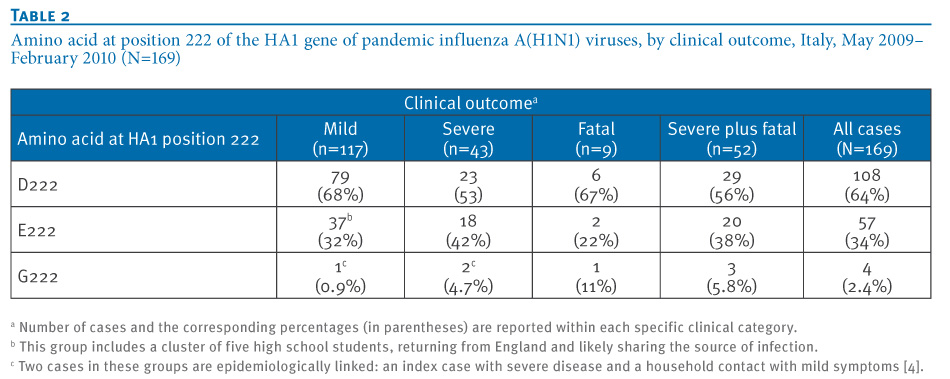
            Haemagglutinin sequences of pandemic influenza A(H1N1) viruses circulating in Italy were examined, focusing on amino acid changes at position 222 because of its suggested  pathogenic relevance.


            Among 169 patients, the D222G substitution was detected in three of 52 (5.8%) severe cases and in one of 117 (0.9%) mild cases, whereas the D222E mutation was more frequent and evenly distributed in mild (31.6%) and severe cases (38.4%).


            A cluster of D222E viruses among school children confirms reported human-to-human transmission of viruses mutated at amino acid position 222.


            Influenza viruses are inherently unstable, and are  therefore prone to replication errors.


            Amino acids can get substituted somewhere in the virus’s protein, and that can affect virulence, receptor binding, sensitivity to antivirals, and transmission.


            Most mutations go nowhere.


            They do nothing to enhance the virus, and may actually decrease its ability to replicate, transmit, or compete with other strains.


            Quite frankly, mutations happen all the time and are often of little consequence.


            Most are evolutionary dead-ends.


            But with millions of infected hosts sporting trillions and trillions of (sometimes badly) replicated viruses, this genetic roulette wheel has ample opportunities to test out new and potentially viable amino acid combinations.


            Mutations can happen spontaneously in an infected host, and only affect that individual.  Or . . .  if the mutated virus is `biological fit’ and easily transmitted – it may move onto other hosts as well. 


            Complicating matters - viruses can have multiple amino acid changes – and the combination of these changes can unpredictably (at least for now) alter the virus’s behavior. 


            Thus far, the D222G mutation has only shown up rarely (less than 2% of samples), and serious questions over its ability to transmit easily from human-to-human remain.


            Recent studies have suggested that it may be linked to more severe pulmonary infections (see D222G And Deep Lung Infections), and that it may have a binding affinity for α2-3 receptor cells found in the lower respiratory system.


            In this most recent study of 169 patients from Italy, the D222G substitution was found  in 3 of 52 (5.8%) of severe cases and in only  1 of 117 (0.9%) of mild cases.


            image


            While suspiciously more common in severely ill patients, the authors state that these results (and the limited dataset) are too small to conclude that they are statistically significant.


            It should be noted that the one mild case with this mutation also had a concurrent G155E mutation.  Whether this was a contributing factor to D222G appearing in a mildly ill patient is unknown.


            The D222E mutation was far more common, and fairly evenly divided between severe cases (38.5%) and mild cases (31.6%).   All of which means that the clinical impact (if any) of this mutation remains unknown.


            This increased prevalence, along with the detection of a cluster of D222E mutations in a group of mildly ill high school students (described in this paper) suggests some degree of inter-human transmission.


            The authors wrap up their report with this:


            Finally, our data suggest that the D222G substitution is overall rather infrequent, even among severe cases. However, we confirm that it occurs with a higher frequency in severe cases.


            Whether this association is indicative of higher virulence or is the consequence of receptor-specific adaptive mutation needs to be further investigated.


            All of which means that while we continue to get more and very useful data - we don’t have a lot of answers yet.


            Stay tuned. 


            For more on pdmH1N1 mutations, you may wish to revisit:


            Eurosurveillance On Recently Isolated H1N1 Mutations
            Study: Receptor Binding Changes With H1N1 D222G Mutation
            WER Review: D222G Mutation In H1N1
            »» Read More