Showing posts with label rodents. Show all posts

`Outlier’ Hantavirus Case Reported At Yosemite


 image

Yosemite High Sierra Campsite – Credit Yosemite National Park


# 6540


Although you are twice as likely to be killed by an errant bolt of lightning in the United States (average 54 deaths/year) than from infection with Hantavirus (roughly 20 deaths/year), the recent high profile outbreak at the campsites in Yosemite National Park has captured the public’s attention here, and around the world.


Hantavirus is an extremely rare rodent-carried virus that is transmitted to humans via their urine and feces. It causes a severe form of pneumonia called HPS (Hantavirus Pulmonary Syndrome) which is fatal in about 30% of the cases, but it is not transmissible from person to person.


Yesterday we learned that the number of cases in that cluster has increased to 8, with 3 fatalities. The latest death coming from a Charleston W.V. man who visited the park earlier this summer (see KCHD Investigating Hantavirus case).


The National Park Service has released a statement indicating that the 8th reported case is an `outlier’, as he did not stay in any of the 91 "signature tent cabins" in Curry Village where the other 7 cases were presumably exposed. 


Instead he backpacked and camped along park’s high country called the High Sierra Loop, which provides pre-setup tent camps along the route.

image


Hantavirus in Yosemite

Information current as of September 7, 2012

(EXCERPTS)

The National Park Service has received confirmations from national and state public health agencies of HPS cases linked to eight individuals who stayed one night or more in Yosemite since June of this year. Three cases have resulted in fatality; the five remaining individuals are either improving or recovering. The confirmed cases include six individuals from California, one from Pennsylvania, and one from West Virginia. The types of hantavirus that cause HPS in the United States cannot be transmitted from one person to another.


Seven of the eight cases of HPS have been linked to the "Signature Tent Cabins" in Curry Village in Yosemite Valley. Those cabins have been closed and parties who stayed overnight since June 10 have been reached out to by the park or the operator of Curry Village, DNC Parks & Resorts at Yosemite, Inc.


The California Department of Public Health (CDPH) has advised the National Park Service that one of the eight confirmed cases of HPS stayed in multiple High Sierra Camps in Yosemite (a different area of the park than Curry Village) in July, and that the stay in the High Sierra Camps is the most likely source of that person's infection. This individual exhibited mild symptoms and is recovering.


You don’t, however, have to trek the high country of Yosemite National Park, or stay at Curry Village, to risk exposure to the Hantavirus.  As the chart below shows, while rare, this rodent borne disease has a wide range in the United States.


image


Although Colorado, New Mexico, and Arizona are the nation’s hot spots for the virus, a few cases have been reported as far east as Florida the Eastern Seaboard.


The range of susceptible rodents (predominantly the deer mouse, but also the white footed mouse in the Northeast, and the cotton rat in the south) is such that some risk of exposure is possible practically anywhere in the country.


image

Mash-up of CDC Data


Nonetheless, infection with HPS is rare in the United States. Still it makes sense to avoid exposure to the virus whenever possible, and so the CDC offers this advice:


Preventing Hantavirus Pulmonary Syndrome (HPS)

Eliminate or minimize contact with rodents in your home, workplace, or campsite. If rodents don't find that where you are is a good place for them to be, then you're less likely to come into contact with them. Seal up holes and gaps in your home or garage. Place traps in and around your home to decrease rodent infestation. Clean up any easy-to-get food.


Recent research results show that many people who became ill with HPS developed the disease after having been in frequent contact with rodents and/or their droppings around a home or a workplace. On the other hand, many people who became ill reported that they had not seen rodents or rodent droppings at all. Therefore, if you live in an area where the carrier rodents are known to live, try to keep your home, vacation place, workplace, or campsite clean.


For more information on how you can prevent rodent infestations, the following information is available on the CDC Rodents site:

Got Mice?

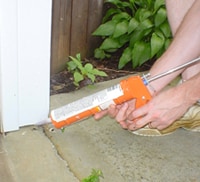
Person using caulk gun to seal holes on exterior of house

Seal Up!

Seal up holes inside and outside the home to keep rodents out.

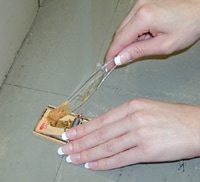
person baiting a snap trap with peanut butter

Trap Up!

Trap rodents around the home to help reduce the population.

various food containers with properly sealed lids

Clean Up!

Avoid illness: Take precautions before and while cleaning rodent-infested areas.


And for more information, the CDC offers a   16 page PDF  on Hantavirus, which is available on their Hantavirus Main page.


image

»» Read More

Hantaviruses Revisited

image

Credit CDC


# 6522


While rare in the United States (see Hantavirus: An Emerging Infectious Disease), Hantavirus infections are back in the news today with the announcement of the second death this summer of a camper who had recently stayed at Yosemite National Park.


Hantavirus Kills Second Yosemite National Park Camper


In addition to these two fatal cases, two other non-fatal cases have been reported out of Yosemite Park this summer. The national park service issued the following press release yesterday:


Hantavirus Pulmonary Syndrome Response Continues at Yosemite National Park


Date: August 27, 2012

Park Takes Additional Steps to Protect Public Health

YOSEMITE NATIONAL PARK - The recent diagnosis of hantavirus pulmonary syndrome (HPS) in two Californians, one of whom died, has prompted Yosemite National Park to scale up its public health response and outreach. The National Park Service Office of Public Health learned over the weekend of a confirmed third case, which resulted in a fatality, and probable fourth case, of hantavirus in individuals who visited Yosemite National Park in June of this year.


An outreach effort is currently underway by the park concessioner to contact visitors who stayed in "Signature Tent Cabins" at Curry Village from mid-June through the end of August. These individuals are being informed of the recent cases and are being advised to seek immediate medical attention if they exhibit any symptoms of hantavirus.

(Continue . . . )


Until the early 1990s, few Americans had ever heard of Hantaviruses, even though the clinical symptoms of the infection were recognized by western medicine during the Korean war.


Roughly 3,000 UN troops stationed in Korea during the the early 1950s were infected with a mysterious viral illness. The mortality rate was 10%-15%, with patients experiencing fever, hypotension, renal failure, and internal bleeding called DIC (disseminated intravascular coagulation).


Originally dubbed Korean Hemorrhagic Fever, this condition is now known as Hemorrhagic Fever with Renal Syndrome (HFRS). Although it was suspected that rodents were the main epidemiological vector, the pathogen responsible wasn’t isolated until the 1970s.


Since then, scientists have identified dozens of viruses within the genus Hantavirus (named after the Hantaan River of Korea) from all around the world. 


In 1993, a major public health investigation was launched after a young Navajo man died suddenly from respiratory failure at a local hospital in New Mexico. It was subsequently discovered that his wife had passed away a few days earlier with the same symptoms.


After several months of investigation, additional cases were identified in the Four Corners region of the American southwest, and the `Sin Nombre’ (Spanish for `No Name’) Hantavirus was finally identified as the cause.


Investigators found it to be widely prevalent in its natural host, the deer mouse. For a detailed history of this epidemiological investigation you may wish to visit:


Tracking a Mystery Disease: The Detailed Story of Hantavirus Pulmonary Syndrome (HPS)


`Hantavirus is a collective term for a group of viruses carried by various types of  rodents - that vary in distribution, symptomology, and severity around the world. 


Like the majority of emerging infectious diseases, Hantavirus is a zoonotic disease; one that can be transmitted between (or are shared by) animals and humans.  


In Europe and Asia the hantavirus commonly presents as HFRS, and the mortality rate varies from 1% to 15% depending upon the specific hantavirus involved.  China reports the highest incidence of HFRS with between 20,000 – 100,000 cases each year.


Germany has recently experienced major epidemic outbreaks (2000+ cases/year) of the Puumala virus, which is carried by the bank vole (Myodes glareolus), which is widely distributed in Germany and across northern Europe.  


Fortunately, Puumala virus infection is rarely fatal (<1%) in humans (cite). The current edition of the CDC’s EID Journal  carries a report on this activity:


Multiple Synchronous Outbreaks of Puumala Virus, Germany, 2010


In the Americas, while infection is far less common, Hantavirus usually presents as Hantavirus Cardio-Pulmonary Syndrome (HCPS or sometimes just HPS), a more severe disease with a fatality rate of between 30% and 50%.


HCPS is marked by respiratory distress (ARDS) and cardiovascular collapse.


In the United States, fewer than 600 cases of HCPS have been identified over the past 19 years, most of which have occurred in the Southwest. Exposure to mice or rodents, and their droppings, has been established as the primary vector for this virus. 


While the odds of contracting Hantavirus are slim -given the high mortality rate - it is worth heeding the following advice from the CDC.


Preventing Hantavirus Pulmonary Syndrome (HPS)

Eliminate or minimize contact with rodents in your home, workplace, or campsite. If rodents don't find that where you are is a good place for them to be, then you're less likely to come into contact with them. Seal up holes and gaps in your home or garage. Place traps in and around your home to decrease rodent infestation. Clean up any easy-to-get food.


Recent research results show that many people who became ill with HPS developed the disease after having been in frequent contact with rodents and/or their droppings around a home or a workplace. On the other hand, many people who became ill reported that they had not seen rodents or rodent droppings at all. Therefore, if you live in an area where the carrier rodents are known to live, try to keep your home, vacation place, workplace, or campsite clean.


For more on all of this, the CDC has a number of resources, including podcasts and brochures,  available on Hantaviruses.


Podcasts

English

emerging infectious disease journal cover page

 Hantavirus Pulmonary Syndrome (July 2011)

speakerListen to this podcast (3:50)

Dr. Adam MacNeil, epidemiologist with Viral Special Pathogens Branch at CDC, discusses hantavirus pulmonary syndrome. Created: 7/14/2011 by National Center for Emerging Zoonotic and Infectious Diseases (NCEZID). Date Released: 7/18/2011.

A Cup of Health with CDC logo Of Mice and Man (January 2010)

speakerListen to this podcast: Long version (4:38) or Short version (0:59)

Hantavirus Pulmonary Syndrome, or HPS, is a disease that is caused by people coming in contact with rodents. HPS is caught when dirt or dust containing rodent excretion or other bodily fluids is stirred up and breathed in or absorbed through broken skin. The result is a serious condition in which one of three reported cases has been fatal. In this podcast, Dr. Barbara Knust discusses HPS. Created: 1/14/2010 by MMWR. Date Released: 1/14/2010.

Spanish

A Cup of Health with CDC logo Cuando entran los ratones

speakerListen to this podcast (1:21)

El síndrome pulmonar por hantavirus o SPH es causado por virus presentes en las excreciones u otros líquidos corporales de los roedores que pueden introducirse al cuerpo humano por la respiración o a través de la piel abierta. El resultado es una enfermedad grave en la cual uno de tres casos reportados suele ser mortal. Este podcast indica los signos y síntomas iniciales del síndrome pulmonar por hantavirus y da consejos sobre qué hacer para evitar la exposición. Created: 1/14/2010 by MMWR. Date Released: 3/15/2011.

»» Read More