Showing posts with label Yosemite. Show all posts

MMWR: Yosemite Hantavirus

image

Credit CDC


# 6731


Late last August reports emerged of a handful of Hantavirus infections among recent visitors to the Yosemite National Park campgrounds (see Hantaviruses Revisited) in California.


Hantaviruses’ are a collective term for a group of viruses carried by various types of  rodents - that vary in distribution, symptomology, and severity around the world.


In the United States the most common form is the `Sin Nombre’ (nameless) virus, which can cause a severe form of pneumonia called HPS (Hantavirus Pulmonary Syndrome) and is fatal in about 30% of the cases.


Hantaviruses are not transmissible from person to person.


By the end of August we saw Yosemite Hantavirus Cases Increase To Six, and tens of thousands of summer visitors to the park were urged to seek medical care if they developed signs of respiratory illness.


While most of those infected had stayed at one of the 91 "signature tent cabins" in Curry Village, by mid September we learned of at least 1 `outlier’ who had backpacked and camped along park’s high country called the High Sierra Loop, which provides pre-setup tent camps along the route.


image


This week the CDC’s MMWR carries a `Notes from the Field’ report on the Hantavirus outbreak at Yosemite, which as of October 10th, encompassed 10 cases and 3 fatalities.


Notes from the Field: Hantavirus Pulmonary Syndrome in Visitors to a National Park — Yosemite Valley, California, 2012

Weekly

November 23, 2012 / 61(46);952-952

On August 16, 2012, the California Department of Public Health announced two confirmed cases of hantavirus pulmonary syndrome (HPS) in California residents who had stayed overnight in Yosemite National Park, launching an investigation by the National Park Service, California Department of Public Health, and CDC. On August 27, Yosemite National Park announced two additional cases, and by October 30, 10 cases had been confirmed.


For this outbreak, a confirmed case was defined as detection of 1) a febrile illness and hantavirus (Sin Nombre virus) specific antibodies in serum, or 2) virus antigen in postmortem tissue using immunohistochemistry, in a person who had stayed overnight in Yosemite National Park during June 1–August 28, 2012. CDC notified public health officials and clinical providers in the United States and internationally. The National Park Service notified by e-mail, telephone, or mail all registered overnight Yosemite National Park visitors (approximately 260,000 guests) who had stayed at the park during June 1–September 17, 2012.


The 10 confirmed patients came from three states: California (eight), West Virginia (one), and Pennsylvania (one). Ages ranged from 12 years to 56 years; four were female. Nine patients had typical symptoms of HPS, and one lacked respiratory symptoms; three died.


Nine patients stayed in Curry Village "signature" cabins, which have insulation between the canvas exterior and interior hard walls. Rodent infestations were detected in the insulation, and all 91 signature cabins were closed indefinitely on August 28. In addition, educational interventions were enhanced for staff members and visitors parkwide, and multifaceted rodent control measures, including trapping throughout Curry Village, were implemented.


HPS is a nationally notifiable disease caused in the United States most commonly by Sin Nombre virus. The deer mouse (Peromyscus maniculatus) is the reservoir. Infected mice shed virus in urine, feces, and saliva. Humans become infected through inhalation of aerosolized virus from rodent excreta and via direct contact from rodent bites. The incubation period ranges from 1 to 6 weeks. Early symptoms include fever, chills, myalgia, headache, and gastrointestinal symptoms for 1–7 days, progressing rapidly to respiratory distress and shock (1). Most patients require hospitalization, supplemental oxygen, and intubation. The case-fatality rate is approximately 36% (2). There is no specific treatment for HPS, but early supportive care can reduce mortality (2). Before this outbreak, 58 cases of HPS had been reported among California residents since 1994; two had been visitors to Yosemite National Park before 2012 (California Department of Public Health, unpublished data, 2012).


Clinicians are reminded to consider the diagnosis of hantavirus infection in all persons with febrile illness and sudden onset of respiratory symptoms with a history of rodent exposure. Because HPS is a reportable disease in the United States, clinicians suspecting HPS should notify and consult their state health department about confirmatory testing. More information is available from CDC regarding hantavirus clinical assessment, treatment and diagnostics (3). Park visitors and the public are advised to avoid contact with rodents and their urine, droppings, and nesting materials.


You don’t have to trek the high country of Yosemite National Park, or stay at Curry Village, to risk exposure to the Hantavirus.  As the chart below shows, while rare, this rodent borne disease has a wide range in the United States.


image

Although Colorado, New Mexico, and Arizona are the nation’s hot spots for the virus, a few cases have been reported as far east as Florida and the Eastern Seaboard.


In the United States, fewer than 600 cases of HCPS have been identified over the past 19 years, most of which have occurred in the Southwest. Exposure to mice or rodents, and their droppings, has been established as the primary vector for this virus.


The range of susceptible rodents (predominantly the deer mouse, but also the white footed mouse in the Northeast, and the cotton rat in the south) is such that some risk of exposure is possible practically anywhere in the United States.


While the odds of contracting Hantavirus are slim -given the high mortality rate - it is worth heeding the following advice from the CDC.


Preventing Hantavirus Pulmonary Syndrome (HPS)

Eliminate or minimize contact with rodents in your home, workplace, or campsite. If rodents don't find that where you are is a good place for them to be, then you're less likely to come into contact with them. Seal up holes and gaps in your home or garage. Place traps in and around your home to decrease rodent infestation. Clean up any easy-to-get food.


For more information on how you can prevent rodent infestations, the following information is available on the CDC Rodents site:

Got Mice?

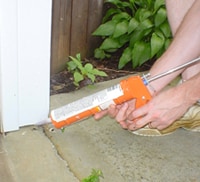
Person using caulk gun to seal holes on exterior of house

Seal Up!

Seal up holes inside and outside the home to keep rodents out.

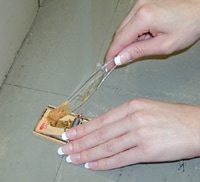
person baiting a snap trap with peanut butter

Trap Up!

Trap rodents around the home to help reduce the population.

various food containers with properly sealed lids

Clean Up!

Avoid illness: Take precautions before and while cleaning rodent-infested areas.
 

And for more information, the CDC offers a  16 page PDF  on Hantavirus, which is available on their Hantavirus Main page.


image

»» Read More

`Outlier’ Hantavirus Case Reported At Yosemite


 image

Yosemite High Sierra Campsite – Credit Yosemite National Park


# 6540


Although you are twice as likely to be killed by an errant bolt of lightning in the United States (average 54 deaths/year) than from infection with Hantavirus (roughly 20 deaths/year), the recent high profile outbreak at the campsites in Yosemite National Park has captured the public’s attention here, and around the world.


Hantavirus is an extremely rare rodent-carried virus that is transmitted to humans via their urine and feces. It causes a severe form of pneumonia called HPS (Hantavirus Pulmonary Syndrome) which is fatal in about 30% of the cases, but it is not transmissible from person to person.


Yesterday we learned that the number of cases in that cluster has increased to 8, with 3 fatalities. The latest death coming from a Charleston W.V. man who visited the park earlier this summer (see KCHD Investigating Hantavirus case).


The National Park Service has released a statement indicating that the 8th reported case is an `outlier’, as he did not stay in any of the 91 "signature tent cabins" in Curry Village where the other 7 cases were presumably exposed. 


Instead he backpacked and camped along park’s high country called the High Sierra Loop, which provides pre-setup tent camps along the route.

image


Hantavirus in Yosemite

Information current as of September 7, 2012

(EXCERPTS)

The National Park Service has received confirmations from national and state public health agencies of HPS cases linked to eight individuals who stayed one night or more in Yosemite since June of this year. Three cases have resulted in fatality; the five remaining individuals are either improving or recovering. The confirmed cases include six individuals from California, one from Pennsylvania, and one from West Virginia. The types of hantavirus that cause HPS in the United States cannot be transmitted from one person to another.


Seven of the eight cases of HPS have been linked to the "Signature Tent Cabins" in Curry Village in Yosemite Valley. Those cabins have been closed and parties who stayed overnight since June 10 have been reached out to by the park or the operator of Curry Village, DNC Parks & Resorts at Yosemite, Inc.


The California Department of Public Health (CDPH) has advised the National Park Service that one of the eight confirmed cases of HPS stayed in multiple High Sierra Camps in Yosemite (a different area of the park than Curry Village) in July, and that the stay in the High Sierra Camps is the most likely source of that person's infection. This individual exhibited mild symptoms and is recovering.


You don’t, however, have to trek the high country of Yosemite National Park, or stay at Curry Village, to risk exposure to the Hantavirus.  As the chart below shows, while rare, this rodent borne disease has a wide range in the United States.


image


Although Colorado, New Mexico, and Arizona are the nation’s hot spots for the virus, a few cases have been reported as far east as Florida the Eastern Seaboard.


The range of susceptible rodents (predominantly the deer mouse, but also the white footed mouse in the Northeast, and the cotton rat in the south) is such that some risk of exposure is possible practically anywhere in the country.


image

Mash-up of CDC Data


Nonetheless, infection with HPS is rare in the United States. Still it makes sense to avoid exposure to the virus whenever possible, and so the CDC offers this advice:


Preventing Hantavirus Pulmonary Syndrome (HPS)

Eliminate or minimize contact with rodents in your home, workplace, or campsite. If rodents don't find that where you are is a good place for them to be, then you're less likely to come into contact with them. Seal up holes and gaps in your home or garage. Place traps in and around your home to decrease rodent infestation. Clean up any easy-to-get food.


Recent research results show that many people who became ill with HPS developed the disease after having been in frequent contact with rodents and/or their droppings around a home or a workplace. On the other hand, many people who became ill reported that they had not seen rodents or rodent droppings at all. Therefore, if you live in an area where the carrier rodents are known to live, try to keep your home, vacation place, workplace, or campsite clean.


For more information on how you can prevent rodent infestations, the following information is available on the CDC Rodents site:

Got Mice?

Person using caulk gun to seal holes on exterior of house

Seal Up!

Seal up holes inside and outside the home to keep rodents out.

person baiting a snap trap with peanut butter

Trap Up!

Trap rodents around the home to help reduce the population.

various food containers with properly sealed lids

Clean Up!

Avoid illness: Take precautions before and while cleaning rodent-infested areas.


And for more information, the CDC offers a   16 page PDF  on Hantavirus, which is available on their Hantavirus Main page.


image

»» Read More

Yosemite Hantavirus Cases Increase To Six

Yosemite valley from tunnel view, Yosemite National Park, California, USA

Yosemite National Park, California, USA Credit CDC


# 6526


Overnight we’ve news that two more cases of Hantavirus infection have been detected among recent visitors to Yosemite National Park in California, bringing the total now to six, with two fatalities.


The following press release, from the California Department of Public Health, mentions four new cases, but two of those were previously announced (see Hantaviruses Revisited for earlier reports and background on the virus).


Hantavirus Found in Four More Visitors to Yosemite National Park

Date: 8/30/2012

Number: 12-049

Contact: Anita Gore or Heather Bourbeau - (916) 440-7259

SACRAMENTO

The California Department of Public Health (CDPH) today reported four additional cases of Hantavirus Pulmonary Syndrome (HPS), bringing the total number of people infected with the hantavirus who visited Yosemite National Park to six.


“CDPH is working closely with the National Park Service and the Centers for Disease Control and Prevention to further investigate the cluster of Hantavirus Pulmonary Syndrome cases in Yosemite and reduce the risk of other visitors becoming ill from this virus,” said CDPH Director, Dr. Ron Chapman. “CDPH is continuing to monitor cases of Hantavirus Pulmonary Syndrome in persons who visited Yosemite National Park.”


To date, HPS has been confirmed in six persons who visited the park between early June and mid July 2012. Five are California residents and one is a resident of Pennsylvania. The PA patient and one CA patient have died, three have recovered and one is currently hospitalized but improving. Four, including both fatalities, lodged in the “signature cabins” of the Boystown area of Curry Village, one lodged in an unspecified area of Curry Village, and one is still under investigation.


The six individuals infected are residents from the Sacramento region, San Francisco Bay area, Southern California and one from Pennsylvania.


On August 28, per recommendations from CDPH, Yosemite National Park closed all tent cabins in the Boystown area indefinitely. The National Park Service has issued communications to guests who had stayed in the Boystown area between June 10 and August 24, alerting them to the HPS concerns and recommending that they seek medical attention if ill.

(Continue . . .)

As the epidemiological investigation and search for additional cases continues, a number of local media outlets are reporting that warnings from the state urging that park officials educate campers about the risks from the Hantavirus were not acted upon.


State had warned Yosemite about hantavirus

Christina Jewett, California Watch
Updated 11:07 p.m., Thursday, August 30, 2012

State public health scientists have recommended twice in the past five years that Yosemite National Park authorities educate visitors about hantavirus, a rare disease linked to the deaths of two park visitors this summer - but park officials did not warn tourists until after the disease showed up in recent weeks.

(Continue . . . )


An AP report by Joseph Dearen (see 2 more Yosemite visitors have mouse-borne virus) outlines steps taken by the park service last spring to reduce the threat from Hantavirus after 18% of mice trapped and tested around the park tested positive for the virus.


According to a number of sources, roughly 20% of deer mice routinely carry the virus, making the survey numbers at Yosemite about average.


The State of California maintains a FAQ on Hantaviruses, from which the following is excerpted:


How are hantaviruses maintained in nature?


Hantaviruses are maintained in nature in wild rodents. In California, only deer mice carry and shed SNV. Other rodents such as squirrels, chipmunks, and house mice are rarely, if ever, infected and do not pose a risk of HCPS to humans.

How do you get HCPS?


Infected rodents shed hantavirus in their urine, droppings, and saliva. Most HCPS patients become infected by breathing air contaminated with rodent urine or droppings, such as when cleaning out a rodent-infested space. This most commonly occurs in small, confined spaces where there is little air circulation. Rarely, individuals can also be infected by:

1) consuming food contaminated with rodent urine or droppings;

2) touching surfaces where rodents have been, and then putting their hand in their mouth;

3) being bitten by an infected rodent.


Meanwhile the CDC has updated their Hantavirus web pages in response to this outbreak:


Signs & Symptoms for Hantavirus Pulmonary Syndrome (HPS)

Due to the small number of HPS cases, the "incubation time" is not positively known. However, on the basis of limited information, it appears that symptoms may develop between 1 and 5 weeks after exposure to fresh urine, droppings, or saliva of infected rodents.

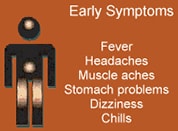
Early Symptoms

Early symptoms: fever, headaches, muscle aches, stomach problems, dizziness, chills

Early symptoms include fatigue, fever and muscle aches, especially in the large muscle groups—thighs, hips, back, and sometimes shoulders. These symptoms are universal.


There may also be headaches, dizziness, chills, and abdominal problems, such as nausea, vomiting, diarrhea, and abdominal pain. About half of all HPS patients experience these symptoms.

Late Symptoms

Late symptoms: lungs fill with fluid, shortness of breath

Four to 10 days after the initial phase of illness, the late symptoms of HPS appear. These include coughing and shortness of breath, with the sensation of, as one survivor put it, a "...tight band around my chest and a pillow over my face" as the lungs fill with fluid.

Is the Disease Fatal?

Yes. HPS can be fatal. It has a mortality rate of 38%.


And answers to two very common questions about this disease can be found on the CDC’s Hantavirus Transmission page (emphasis mine).


The types of hantavirus that cause HPS in the United States cannot be transmitted from one person to another. For example, you cannot get the virus from touching or kissing a person who has HPS or from a health care worker who has treated someone with the disease. You also cannot get the virus from a blood transfusion in which the blood came from a person who became ill with HPS and survived.

Can pets transmit HPS to humans?

The hantaviruses that cause HPS in the United States are not known to be transmitted by any types of animals other than certain species of rodents. Dogs and cats are not known to carry hantavirus; however, they may bring infected rodents into contact with people if they catch such animals and carry them home. Guinea pigs, hamsters, gerbils, and rodents from pet stores are not known to carry hantavirus.


You’ll find details on investigation into the Yosemite outbreak at:


August 2012 - Yosemite National Park Outbreak Notice

Updated: August 29, 2012


On August 27, 2012, The National Park Service (NPS) announced that there were 3 confirmed cases and 1 probable case of Hantavirus Pulmonary Syndrome (HPS) in visitors who stayed at Curry Village in Yosemite National Park since June of this year. Public health officials believe that these visitors may have been exposed to Hantavirus while staying at the Signature Tent Cabins in Curry Village. Two people have died. CDC and the California Department of Public Health (CDPH) are working with the National Park Service in responding to the situation.


The park is contacting visitors who stayed in the Signature Tent Cabins from mid-June through the end of August, advising them to seek immediate medical attention if they exhibit symptoms of HPS. Hantavirus is a rare but serious disease and confirmed cases should be reported to CDC via state health departments

(Continue . . .)


And a final note, while hantavirus outbreaks garner a lot of headlines, human infection with this virus is exceedingly rare in the United States. 


Fewer than 600 cases have been registered since the early 1990s.


With roughly 4 million visitors to Yosemite National Park each year, and only six cases so far, the absolute risk of contracting this virus while camping there is extremely low.

»» Read More