Showing posts with label poll. Show all posts

Poll: Despite FDA Warning Parents Use OTC Cold Remedies For Kids Under 2


# 5319


In January of 2008 the FDA issued a warning to parents that OTC (over-the-counter) cough and cold remedies were no longer considered to be safe or effective for children  under the age of 2.


Public Health Advisory: FDA Recommends that Over-the-Counter (OTC) Cough and Cold Products not be used for Infants and Children under 2 Years of Age

FDA has completed its review of information about the safety of over-the-counter (OTC) cough and cold medicines in infants and children under 2 years of age.  FDA is recommending that these drugs not be used to treat infants and children under 2 years of age because serious and potentially life-threatening side effects can occur.

(Continue . . . )


Despite these recommendations, and the publicity they generated, old habits apparently die hard.


Three years later the C.S. Mott Children’s Hospital National Poll on Children’s Health indicates that for a majority of parents, those warnings are going unheeded.


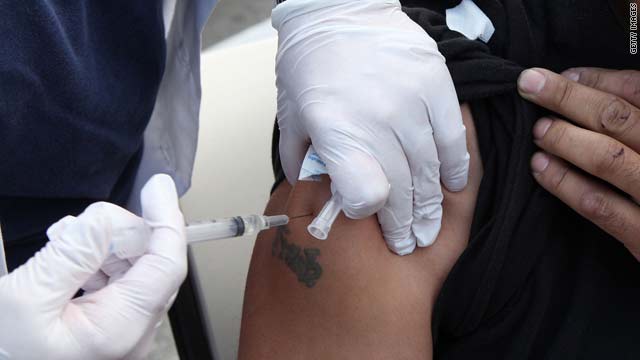
 image


The following excerpts are from the University of Michigan Health System’s press release:


February 14, 2011

ANN ARBOR ,Mich.

Parents continue to give cough and cold meds to young kids, despite FDA warnings

Research has linked over-the-counter cough and cold products to poisoning or death in hundreds of children, ages 2 and younger. Studies have also shown that these medicines do little to control symptoms. As a result, in 2008, the United States Food and Drug Administration formally recommended that OTC cough and cold products not be given to children under age 2.


A poll released today by the C.S. Mott Children’s Hospital National Poll on Children’s Health shows that 61-percent of parents of children, ages 2 and younger, gave their children OTC cough and cold medicine within the last 12 months. The poll also shows that more than half of parents report that their child’s doctor says OTC cough and cold medications are safe for children under 2; half of their physicians said they are effective.


(Continue . . . )


Particularly concerning is the assertion by roughly half of the parents that their healthcare providers continue to recommend these products for their children under the age of 2.


The safety and effectiveness of OTC cold remedies for children between the ages of 2 and 6 is still under review by the FDA.  


Complicating matters, in December we saw a study (see JAMA: Inconsistent Dosing Instructions For OTC Meds) demonstrating the ambiguous labeling of measuring devices, and inconsistent instructions, on many cough and cold medicines.


And in August 2010 (see Inappropriate Use Of OTC Medicines In Children) a study was presented at the International Pharmaceutical Federation’s (FIP) conference in Lisbon, Portugal (Aug 28th-Sept 2nd), on the widespread parental misuse of over-the-counter (OTC) medicines for children.


For parents, watching their child suffer from a cold or flu can be very difficult, and so the impulse is to `do something’ to alleviate their misery is strong.   


But all medicines . . . even those available over-the-counter – have risks.  And for very small children, the FDA believes those risks outweigh any benefit they might derive from these types of products.

»» Read More

NFID Influenza Poll


# 5257


For a society that has just only recently emerged from a year-long influenza pandemic – one that consumed cable, broadcast, and print news coverage for months – our level of influenza awareness remains dismally low.


At least, if we are to go by the results of a recent poll conducted on behalf of the NFID (National Foundation for Infectious Diseases).


According to this national poll conducted in November of last year, nearly seven out of 10 Americans (68%) did not realize that flu viruses can travel five to six feet from a sneeze or a cough.


My first response was, `You have to be kidding. Right?”


But apparently, they aren’t kidding. 


Worse, two-thirds (66%) admitted to going to work, school, or pursuing their regular daily activities even when they have flu symptoms.


If influenza were just a temporary inconvenience, a benign misery from which everyone recovers, then this would simply be inexcusably bad manners.  


But influenza – even in a `normal’ flu season -  kills thousands of people each year.


Yet somehow, we take it lightly.  We treat covering our coughs and sneezes in public, or staying home when we are likely contagious, as optional.


In the fall of 2009 (see Take the Pledge), during the peak of the pandemic, west coast preparedness advocate @CarolDn tweeted:


If you get sick, pledge to yourself: "This germ stops with me" Don't pass it forward.


I liked the sentiment so much, I featured it repeatedly over that winter.   Carol had the right idea then, and it remains the right idea every flu season.


In their ongoing attempt to try to convince Americans to take influenza seriously, the NFID has launched a new winter influenza awareness campaign.


You can read more about this survey, and the campaign, in this press release.


ARE YOU READY TO FACE “THAT GUY” THIS FLU SEASON?

National Foundation for Infectious Diseases launches Are You That Guy? campaign to urge Americans to see a doctor and limit contact with others when flu symptoms strike

BETHESDA, MD, January 25, 2011 /PRNewswire/ — Have you ever ventured out of the house, gone to a business meeting or traveled by air when you thought you might have the flu? If you answered yes, you are among a majority of Americans who fessed up in a recent survey to being “that guy” who goes about his or her day despite experiencing the sudden onset of fever, aches and chills – commonly recognized symptoms of the flu.


As the U.S. flu season peaks, the National Foundation for Infectious Diseases (NFID) has launched Are You That Guy?, a national influenza educational campaign that encourages personal and social responsibility by raising awareness of how easily the flu virus spreads.


According to a recent national poll, almost seven out of 10 Americans (68%) did not realize that flu viruses can travel five to six feet from a sneeze or a cough, and two-thirds (66%) admitted to going about their daily activities despite experiencing flu symptoms.


“It’s easy to downplay the signs of influenza, particularly when daily obligations call,” said Dr. Susan J. Rehm, NFID medical director and vice chairman of the Department of Infectious Diseases at the Cleveland Clinic. “While many of us feel we can power through the flu without getting others sick by avoiding shared objects or shaking hands, it’s important to remember that the influenza virus is commonly spread through the air and can travel up to six feet away when someone coughs, sneezes or even speaks.”


“Influenza is serious and highly-contagious,” added Dr. Rehm. “Vaccination and good hygiene habits are important steps to avoid getting the flu. If you have flu symptoms, it’s important to act quickly, see a doctor and follow your doctor’s advice. No one wants to be ‘that guy’ who puts others at risk for flu.”

(Continue . . . )

»» Read More

Consumer Reports Flu Vaccine Poll


# 4982


We’ve a new poll out today by Consumer Reports on the intent (or lack thereof) of Americans to get the seasonal flu vaccine this year.


Despite ample evidence of the safety and efficacy of the seasonal (and pandemic) flu shot, only 40% of those in the "work risk" category— health care workers (HCWs) and those caring for young children — said they would definitely get the vaccine this year.


Roughly 28% said they would `definitely not’ get the flu vaccine this year.


Among those who are considered `at health risk’ due to medical conditions like heart or lung disease, neurological disorders, or immune problems only 45% said they planned to take the vaccine.


And just over half (51%) of those over 65 said they planned to take the vaccine.


Disappointing numbers, obviously. 


Reasons cited for not taking the vaccine included:


  • Belief the 2009 Pandemic was overblown (45%)
  • Concern over side effects (44%)
  • Concern over vaccine safety (41%)
  • Belief the Vaccine doesn’t work (28%)


You’ll find the press release for this poll at:


Consumer Reports Flu Poll: Approximately Three Out of 10 Health Care Workers 'Living in a Bubble,' Not Getting Flu Vaccine


And the Consumer reports online article at:


Fears about the flu shot linger, our poll finds


Since surveillance and science has shown repeatedly that the flu shot is very safe, and most years about 70% effective in healthy adults under 65 (less so in the elderly),  I can only surmise that the constant drumbeat of anti-vaccine propaganda on the Internet is taking its toll.


The unconscionable `scare stories’ that play up rare (but not unexpected) vaccine side effects - and completely ignore the thousands of preventable  influenza deaths each year – have for many, instilled doubts over the wisdom of taking the flu shot.


Add to that a growing anti-government sentiment and a general distrust of the pharmaceutical industry, and even Health Care Workers who should know better, are avoiding the vaccine.


No vaccine is 100% safe.  But flu vaccines have a very good safety profile, and the benefits far outweigh the minute risks.


Last year, more than 12,000 Americans died from the Swine flu.   A disproportionate number of those (90%) were under the age of 65.


No deaths were attributed to the Swine flu vaccine (see CIDRAP VAERS study finds H1N1 vaccine safety similar to seasonal vaccines'), despite the hysterical and much-repeated warnings last year that the `vaccine was deadlier than the virus’.


Even during the greatly maligned 1976 Swine Flu vaccination campaign, only 25 deaths were linked to the vaccine (out of 40 million shots given).  Had the pandemic struck as expected (it didn’t), that would have been considered a reasonable trade off.


Since the virus failed to return that fall (see Deja Flu, All Over Again for my minor role in that story), the vaccine was considered a fiasco.


Sensational, and often false or misleading reporting - combined with pre-existing fears and beliefs of the public – are difficult obstacles for science and statistics to overcome.


Finding better, more convincing ways to reach the public on the importance of vaccination – in the face of a well entrenched Internet anti-vaccine movement – continues to be a major public health challenge.

»» Read More

Referral: In Science We Trust


# 4925


Scientific American, in partnership with Nature, have conducted a fascinating poll of their (largely science literate) readers on how much they trust what scientists say about different topics.


Given the readership of these two publications, it isn’t terribly surprising that most tend to find modern science reasonably trustworthy . . .  the surprises come when you drill down into the data and see how different regions view scientific opinions on different topics.


Topics like the safety of nuclear energy, GM (genetically modified) crops, nanotechnology, and yes . . . even pandemics.


Luckily, this data isn’t presented in dull, hard-to-decipher table form.  The authors have put together numerous graphic representations of the results.


I’ll not give any of this away and spoil it. Instead, I’ll simply give you the link to follow and read it yourself.


In Science We Trust: Poll Results on How You Feel about Science

Our Web survey of readers suggests that the scientifically literate public still trusts its experts—with some important caveats


Given the level of anti-science hysteria on the Internet, I’ve little doubt that a poll of the general public would produce somewhat less reassuring data for the world’s scientists.


Nevertheless, I  found this to be an extremely interesting survey.


Highly recommended.

»» Read More

Study: Willingness Of HCWs To Work In A Pandemic


# 4760


We’ve a new study appearing in the BMC Journal that pretty much confirms the polling we’ve seen over the past couple of years on the willingness of  HCWs (Health Care Workers) to work during a severe pandemic.


In a severe pandemic – unlike novel H1N1 – the mortality rate would likely approach or perhaps even exceed that seen during the 1918 Spanish Flu.


All along, government planners have assumed that up to 40% of HCWs might be absent due to illness or staying home to care for ill family members.


There is another category of absenteeism which is less commonly discussed; the unwillingness of some HCWs to report for work in a pandemic.


First a look at the abstract to today’s study (slightly reformatted for readability-emphasis mine), which was conducted before the outbreak of novel H1N1, then I’ll return with some additional comments.


Characterizing hospital workers' willingness to report to duty in an influenza pandemic through threat- and efficacy-based assessment


Ran D Balicer , Daniel J Barnett , Carol B. Thompson , Edbert B. Hsu , Christina L. Catlett , Christopher M. Watson , Natalie L. Semon , Howard S Gwon  and Jonathan M. Links

BMC Public Health 2010, 10:436doi:10.1186/1471-2458-10-436

Published: 26 July 2010

Abstract (provisional)
Background

Hospital-based providers' willingness to report to work during an influenza pandemic is a critical yet under-studied phenomenon. Witte's Extended Parallel Process Model (EPPM) has been shown to be useful for understanding adaptive behavior of public health workers to an unknown risk, and thus offers a framework for examining scenario-specific willingness to respond among hospital staff.

Methods

We administered an anonymous online EPPM-based survey about attitudes/beliefs toward emergency response, to all 18,612 employees of the Johns Hopkins Hospital from January to March 2009. Responses were received from 3426 employees (18.4%), approximately one third of whom were health professionals.

Results

Demographic and professional distribution of respondents was similar to all hospital staff. Overall, more than one-in-four (28%) hospital workers indicated they were not willing to respond to an influenza pandemic scenario if asked but not required to do so. Only an additional 10% were willing if required. One-third (32%) of participants reported they would be unwilling to respond in the event of a more severe pandemic influenza scenario.


These response rates were consistent across different departments, and were one-third lower among nurses as compared with physicians. Respondents who were hesitant to agree to work additional hours when required were 17 times more likely to be unwilling to respond during a pandemic if asked. Sixty percent of the workers perceived their peers as likely to report to work in such an emergency, and were ten times more likely than others to do so themselves. Hospital employees with a perception of high efficacy had 5.8 times higher declared rates of willingness to respond to an influenza pandemic.

Conclusions

Significant gaps exist in hospital workers' willingness to respond, and the EPPM is a useful framework to assess these gaps. Several attitudinal indicators can help to identify hospital employees unlikely to respond.


The findings point to certain hospital-based communication and training strategies to boost employees' response willingness, including promoting pre-event plans for home-based dependents; ensuring adequate supplies of personal protective equipment, vaccines and antiviral drugs for all hospital employees; and establishing a subjective norm of awareness and preparedness.

The complete article is available as a provisional PDF. The fully formatted PDF and HTML versions are in production.


According to this study, 1/3rd of HCWs would be unwilling to work during a severe pandemic, which corresponds pretty closely to other studies we’ve seen.


Lest anyone think working at a hospital or clinic during a severe pandemic would be an easy decision, the hospital worker would be not only repeatedly exposing themselves to the virus, many would also be exposing their families by proxy.


Vaccines, antivirals, and even PPEs (Personal Protective Equipment) may be in short supply (or non-existent), and there may be hospital security issues as well.  Some HCWs fear being `locked down’ or quarantined at their facility and unable to go home and care for their own families.


And given the expected absenteeism levels and the high rate of admissions, the burden on the remaining staff would be enormous.  


And it isn’t just doctors, nurses, and techs. 


Non-medical employees such as housekeeping, food service, laundry, security, lab, and even clerical workers are vitally important, and few facilities could operate for very long without them.


You’ll find results from similar surveys taken in 2008 and 2009 in the following blogs entries.


And The New Survey Says . . .
Will GP's Work In A Pandemic?

Australia: Will Doctors Work In A Pandemic?

Pandemic Issues For Home Health Providers - Pt 3

Catching Up With The Nurses Poll 


Since April of 2008 the Allnurses.com forum has been conducting an online poll - asking if nurses would work without full protective PPE's (Personal Protective Equipment - masks, gowns, gloves, etc.) during a `bird flu’ pandemic.


There are now more than 600 comments, and over 8700 respondents to the poll.  


Prior to the outbreak of novel H1N1, the percentage of respondents saying they would not report for work was roughly 30%, with another 20% undecided.


image


In the wake of our current (relatively mild) pandemic, the percentage of those unwilling to work has dropped to just under 22%, with nearly 15% undecided.


The vigorous debate in the comments thread  should be required reading for every hospital pandemic coordinator.


As this latest study and many of the comments on the allnurses.com thread point out, addressing employee concerns over the availability of antivirals, PPEs,  and vaccines - along with visibly planning for the safety of employees and their families – are critical steps necessary if hospitals hope to retain much of their staff during a severe pandemic.


Steps that few hospitals, right now, appear to be taking.

»» Read More

If You’ve Seen One Pandemic . . .


# 4583


Yesterday the NEJM published a review of 20 public opinion polls taken during the pandemic outbreak of 2009.   


PERSPECTIVE


The Public’s Response to the 2009 H1N1 Influenza Pandemic
G.K. SteelFisher and Others


While I was otherwise occupied, John Solomon wrote about it in New Report Says Most Americans Approve Of Govt. Flu Pandemic Handling, But Many Say They (& Their Kids) Might Not Get H1N1 Vaccine In Future   and Crof covered it in US: The public's response to H1N1.


Robert Roos, News Editor for CIDRAP, has a comprehensive review of the findings in:

Polls traced declining interest in H1N1 vaccine

Robert Roos * News Editor

May 19, 2010 (CIDRAP News) – If the trajectory of public opinion during the H1N1 influenza pandemic is any guide, safety worries and doubts about the severity of the disease threat may cause a good share of the public to shun vaccination the next time a pandemic emerges, according to a review of 10 months' worth of polls.


Surveys taken before the H1N1 vaccine became available showed that about half of the population planned to be vaccinated, but that fraction shrank considerably by the time the vaccine became readily available in December, says the report published online today by the New England Journal of Medicine. The main reasons for not wanting the vaccine were safety worries and a belief that it wasn't needed.


(Continue . . . )


Given that excellent coverage of this story has already appeared, I’ll spare you a lengthy rehash.  


Suffice to say that by the end of the fall wave of H1N1, interest in the pandemic vaccine (and it's uptake) had fallen, with many people either unconvinced of its necessity or still concerned over its safety.


The concern here is that the impressions left by the experience of 2009 may mean that a lot of people may not be quick to accept a pandemic vaccine in the future.


It is the same sort of reaction we see in Florida, and along the Gulf and Atlantic Coastline, after every hurricane season.


People who emerged unscathed, or who may have ridden out a weaker storm, come away believing that they’ve seen a hurricane . . . and they weren’t particularly impressed.


People who evacuated upon the order (or advice) of local officials, only to return and find their house intact, are less likely to evacuate in the future. 


But of course, all hurricanes aren’t created equal.   And basing your future expectations on the last storm can be a fatal error.


The same holds true for pandemics.   


As epidemiologists like to say, “If you’ve seen one pandemic . . . you’ve seen one pandemic.”


Although there were some missteps along the way (particularly in the overpromising of vaccine supplies in October and November) the HHS and the vaccine manufacturers pulled off a considerable coup by delivering a safe and effective vaccine a month sooner than originally anticipated.

Despite the ominous warnings of the anti-vaccine contingent, we have not seen any spike in Guillain-Barre syndrome, or any other serious vaccine related side effects.


The pandemic shot has proven to have roughly the same safety profile as the seasonal flu shot, which is excellent.


Unfortunately, the unfounded message that the `vaccine is deadlier than the virus’ continues to persist – particularly online – and that raises doubts in many people’s minds.  


While everyone is happy that the pandemic of 2009 proved less deadly than first feared, the public complacency that this has engendered may prove to be a substantial obstacle the next time we face an emerging public health threat.

»» Read More

CNN Poll: Americans Losing Confidence In Flu Fight


# 3986


Even though we actually ended up seeing some vaccine a month sooner than most experts would have predicted back in April, frustrations over the limited availability of vaccine are beginning to show.


The problem, of course, was over promising last summer; relying on overly optimistic projections from the vaccine producers.


Instead of having 120 million doses by mid-October as projected in July, we saw fewer than 20 million doses of vaccine actually shipped to the states by the end of October.


Today CNN released a poll showing some erosion in public confidence in the government’s ability to `prevent an epidemic’.


A nonsensical question, I suppose, considering that we see an influenza `epidemic’ nearly every year, and are clearly seeing one now.


But I don’t write the polls . . . I just report on them.


Poll: Americans losing confidence in H1N1 battle

November 10, 2009 8:41 a.m. EST

t1larg.jpg

STORY HIGHLIGHTS

  • 51 percent confident in government's ability to prevent H1N1 epidemic
  • Number of Americans who are confident is down 8 percentage points from August
  • Mothers most likely to think that there will not be enough vaccine to go around
  • 4 of 10 people in poll say the disapprove of how President Obama is handling H1N1

Washington (CNN) -- Americans are starting to lose confidence in the government's ability to prevent a nationwide epidemic of the H1N1 flu, according to a new national poll.


But the CNN/Opinion Research Corporation survey, released Tuesday morning, indicates a small majority continue to say that the government and private industry eventually will produce enough of the vaccine for the virus, also known as swine flu, to inoculate everyone who wants it.


According to the poll, 51 percent of those questioned are confident in the government's ability to prevent an H1N1 epidemic, with 49 percent not confident. The number of Americans who are confident is down 8 percentage points from August, while the number of those not confident is up 9 percentage points.


(Continue . . . )


image

»» Read More

Public Support For Mandatory HCW Vaccination


# 3794


Yes . . .  I know. 


I might as well paint a bull's-eye on my back, since this post is going to enrage a fair number of HCWs (Health Care Workers).


But I didn’t conduct the poll, nor did I respond to it.


I’m only reporting the results (but see my comments below).  


At hat tip to @Allnurses on Twitter for the link.


image

Data Source 


This report presents findings from a nationally representative household survey conducted exclusively by Knowledge Networks, Inc, for C.S. Mott Children’s Hospital via a method used in many published studies. The survey was administered in August 2009 to a randomly selected, stratified group of adults aged 18 and older (n=2,365) from the Knowledge Networks standing panel that closely resembles the U.S. population (health care workers n=246).


The sample was subsequently weighted to reflect population figures from the Census Bureau. The survey completion rate was 68% among panel members contacted to participate. The margin of error is plus or minus 1 to 3 percentage points. For results based on  health care workers, the margin of error is higher


This poll comes from C.S. Mott Children’s Hospital National Poll on Children’s Health Volume 8, Issue 2  (October 1st, 2009).


Here are excerpts from the press release.  Follow the link to read it in its entirety.


Public tells health care workers: Get your H1N1 flu vaccine!

C.S. Mott Children’s Hospital National Poll on Children’s Health finds nearly 90% of  public supports required H1N1 vaccination for health care workers in case of outbreak

ANN ARBOR, Mich.—As H1N1 influenza vaccine begins to be shipped across the country, the Centers for Disease Control and Prevention emphasize getting the first doses to high-priority groups. One such group is health care workers. A report released today by the C.S. Mott Children’s Hospital National Poll on Children’s Health shows 87 percent of the public believes health care workers should be required to be vaccinated against H1N1 flu in case of an outbreak, while only 38 percent of health care workers intend to get the H1N1 flu vaccine.

 
We have heard from public health experts and health care workers—and now we see how strongly the public feels about their health care workers getting vaccinated against H1N1 flu,” says Matthew Davis, M.D., M.A.P.P., director of the poll and associate professor of pediatrics and internal medicine in the Child Health Evaluation and Research Unit at the
U-M Medical School. “The public clearly expects health care workers to lead by example.”


DOWNLOADS:

FULL REPORT: www.med.umich.edu/mott/npch/pdf/100109report.pdf

FIGURES: www.med.umich.edu/mott/npch/pdf/100109figures.pdf

POLL QUESTIONS: www.med.umich.edu/mott/npch/pdf/100109questions.pdf


Since I’m one of the `misguided’ ones who thinks that the flu vaccine is generally very safe, and a very good idea for just about everyone - but particularly for HCWs - I’ll admit that I don’t share the outrage that many  health care workers feel when it comes to talk of requiring the vaccine. 


I would far prefer that any doctor, nurse, or hospital employee that I’m exposed to have their yearly flu jab.   I believe that not getting vaccinated endangers patient’s lives, and violates the first rule of medicine: Primum non nocere  - "First, do no harm”


Although I consider the uptake rate of flu vaccines among HCWs in this country to be disgraceful, I fall just short of wanting to see the flu vaccine mandatory for all HCWs.


At least for now. 


Instead I would hope that all health care facilities would to do all they can to encourage, and make easy, getting vaccinated. Flu shots should be free, and available on site, to all employees. Concerted employee education should be undertaken.


Employees who wish to `opt-out’ of getting the vaccine could be accommodated by requiring them to wear surgical masks while on duty when flu is circulating in their community (and facilities should send anyone home – vaccinated or not - if they are symptomatic!).


I know it’s a hassle, but the point is to protect patients, families, and co-workers.  It’s not a perfect solution (neither are vaccines, btw), but compromises rarely are. 


Perhaps, if we get through this flu season and the dire predictions of the anti-vaccine contingent don’t come to pass, some of the angst and mistrust over flu vaccines will begin to dissolve and we can have a less strident discussion. 


Over the next few years, I expect to see mandatory HCW flu vaccinations required in more places.  The writing is on the wall. The public, and growing liability concerns, are going to demand it.  


While I understand some HCWs may not like that idea, they may very well find they have to accept it.

»» Read More

Americans Slow On The Uptake


# 3771


During my recent visit to Washington D.C., one of the main topics of conversation was the likely uptake of pandemic vaccine by the American public. 


Some of the numbers I heard struck me as a bit optimistic. 


A poll had recently come out (Poll: Most Americans `Not Worried’ Over Swine Flu) which indicated: 55 percent of Americans say they are apt to get the vaccine for themselves or someone in their household. Stipulating a doctor's recommendation, that percentage jumps to 65 percent.


I heard the 65% uptake number mentioned more than once.


For public health officials, the idea of getting the vaccine no doubt seems a bit of a no-brainer.  They, of course, are probably among the 40% of Americans who normally get a seasonal flu shot, and so to them, the pandemic jab makes perfect sense.


They accept that the odds of an adverse reaction – while not zero – are pretty darn low.  Far lower than the chances of suffering a serious complication from the flu.


The risk-reward analysis, in their minds, puts taking the vaccine way ahead.


But of course, not everyone measures risk the same way.


The constant characterization of the swine flu as being `mild’, sometimes even `milder than seasonal flu’ has no doubt dampened some of the public’s desire for pandemic jab. 


We may find that we’ve inadvertently `reassured’ the public into complacency.


And anyone who has had any type of flu-like illness over the summer is likely to believe they are already immune, and in no need of the shot.


The anti-vaccine activists are out in full force, and their voices are louder (and often more organized) than the CDC’s.   Public Health officials, I suspect, either don’t visit these sites or if they do, fail to understand their influence and appeal.


And while it is true that the flu vaccine won’t prevent miscarriages or heart attacks, when these things happen to people who have recently received the vaccine (and they will), the tabloid press and much of the public are going to immediately assume they are linked.


I fully expect to see a picture of a grieving mom on some scandal sheet, with the headline “THE GOVT VAX KILLED MY BABY’ sometime during this flu season.  


True or not, that will sell a lot of papers.


I’m not sure that public health officials appreciate just how vociferous the anti-vaccine sentiment is in this country.  While some of their arguments may seem over-the-top to scientists . . . they resonate deeply with millions of Americans.


Even among HCW’s  (Health Care Workers), the uptake of the seasonal flu vaccine is only about 40%. 


Recent polling suggests that HCWs are no more likely to take the pandemic jab (see  HCWs: Refusing To Bare Arms).


Now we’ve got fresh polling from the University of Michigan Health System which indicates that less than half of parents are inclined to get their kids vaccinated against the H1N1 pandemic virus this fall.


H1N1 flu: Are parents underestimating risk to kids?

C.S. Mott Children's Hospital National Poll on Children's Health finds less than half of parents plan to have their children vaccinated against H1N1 flu, despite higher disease risk; Hispanic parents more likely to vaccinate

image

ANN ARBOR, Mich.—With schools back in session, H1N1 flu has become more active across the United States—especially among children. A new vaccine against H1N1 flu—strongly recommended for kids—has been tested and is expected to be available in October. But will parents get their children vaccinated?


The latest C.S. Mott Children’s Hospital National Poll on Children’s Health finds only 40 percent of parents indicate they will get their children vaccinated against H1N1 flu—while 54 percent of parents indicate they will get their children vaccinated against seasonal flu. Among parents who do not plan to get their children vaccinated against H1N1 flu, 46 percent indicate they are not worried about their children getting H1N1 flu, while 20 percent believe H1N1 flu is not serious.


“This information about parents’ plans to vaccinate their kids against H1N1 flu suggests that parents are much less concerned about H1N1 flu than seasonal flu for their kids. That perception may not match the actual risks,” says Matthew Davis, M.D., director of the poll and associate professor of pediatrics and internal medicine in the Child Health Evaluation and Research Unit at the University of Michigan Medical School.


The poll also shows vaccination plans for H1N1 flu differs by racial/ethnic groups. More than half of Hispanic parents plan to have their children vaccinated against H1N1 flu, compared to only 38 percent of white parents and 30 percent of black parents.

(Continue . . . )


Disappointing numbers.   But of course, subject to change.


We’ve yet to see the CDC roll out their PSA campaign (waiting, no doubt, for the vaccine to actually become available), and an uptick in media reports about dead or dying kids would probably also change the dynamic, as well.


But I see a bumpy road ahead for America’s vaccination program.


The good news, I suppose, is that even if a lot of Americans decide not to avail themselves of the pandemic vaccine, there are plenty of people in developing countries around the world who would be grateful to receive whatever we don’t end up using.


The only real sin would be for it not to be used at all.

»» Read More