Showing posts with label Treatment. Show all posts

What is Metoclopramide - Side Effects


Before I start to write about what is Metoclopramide, what are its side effects, and other important information about this medicine, I would like to write a short intro of this post. Please read it!

Metoclopramide Stomach Flu
Always Consult Your Doctor before using Metoclopramide
Stomach flu treatment with medications is not possible, however, there are some medications that can help with reducing the symptoms and by that help with your condition. Metoclopramide is one of those medications. In previous post you could read about Compazine, that's another one.

All medications are meant to help people with various illnesses, but all of them have their right dosage and frequency in taking, as well as side effects. All of them MUST BE prescribed by your doctor, or otherwise, if you use it on your own hand, if you are recommended by friend or in pharmacy, you are taking a huge risk to permanently damage your health! No medicine is a toy, and non of them should be taken without professional medical advice of your health care provider, which in addition should follow your medical condition during the usage of any medication!

Part of the information, that I am writing in this post, is taken from another authority sites, which are considered to be good source for all information about this topic. All information taken form those sites are quoted, just like in my previous post.

I have my personal opinion on treating every illness, which is not connected to usage of medication, but I must write about it, since people are using those medicines without to much knowledge about them. So these posts are more likely to be taken as warnings, and should not be taken as advises at all ! ! !


So, What is Metoclopramide and How to Use it?


If you experience stomach flu symptoms, it doesn't necessarily mean that you have stomach flu! These would, further on, means that stomach flu symptoms such are nausea, vomiting, headache could happen to each of us because of many other causes, and not only stomach flu causes. However, Metoclopramide is considered to be very good in dealing with some of those symptoms!
Nausea and vomiting as a result of the use of anti-cancer drugs, post-surgery and the result of other medical illnesses will be reduced by increasing the contractions of the upper portion of the digestive tract. It improves gastric emptying time which helps reduce the incidence of heartburn, nausea and vomiting.
Metoclopramide also helps patients with diabetic gastroparesis in diabetic patients since it increases gastric emptying. There are more uses of metoclopramide and your doctor will advise you the ideal dosage and frequency of this medication after careful assessment of your symptoms.
Your doctor is the only authoritative person who can prescribe you Metoclopramide. Before taking it, you must have a good consultation with him/her about:

  • medications you already use, especially if you are suffering from some chronic disease,
  • all possible health disorders you might have,
  • ingredients you are allergic to,
  • do you use any supplements, vitamins and natural treatments,
  • if you are pregnant or planning to become pregnant
  • if you are breastfeeding or planning to breastfeed

Take metoclopramide 30 minutes before meals and before going to bed at night. This helps reduce the heartburn that is common after a heavy meal.
If you missed a dose, take it as soon as you remember. Never double your dose. Space the remaining dose evenly. Remember to take your medications on time so you will be able to benefit from the therapeutic action of metoclopramide.
If you are using ODT or metoclopramide orally disintegrating tablet, remove the medication from the casing just before taking them. Place the tablet on your tongue and never swallow it, allow it to melt completely. You don’t need to follow up with water just allow the ODT to melt on its own.
If you are taking oral syrup form, use a measuring cup to take precise doses of the medication; never use a spoon or a tablespoon.
Do not overdose; high doses of metoclopramide will cause uncontrollable muscle movements of the face, eyes, lips and extremities. Never stop abruptly, allow your doctor to schedule a weaning dose for you to prevent serious side effects.
Avoid drinking alcohol when taking metoclopramide. This medication will cause dizziness and sleepiness so do not operate machinery or drive.
If you are prescribed the Metoclopramide you must storage it properly. The storage of Metoclopramide depends on the type you are using, syrup and tablets should be stored on a place with temperature between 15 and 30 degrees C. If you are using injectable Metoclopramide store it at the regular room temperature! Do not remove medication from original package, nor throw away literature, you must have it case you experience side effects! Also, do not throw away your prescription, since you need it for your prescribed dose. Do not use Metoclopramide in higher doses than it is recommended for you, since this way you can experience side effects, over dosage or damage your health permanently; also, do not use this medication for a longer than 3 months!


READ CAREFULLY! Metoclopramide Side Effects

..and think twice before you use it!

For me the most important information in this post would be the Metoclopramide side effects, which should aware you and maybe discourage you from usage of this medicine! It is maybe good to treat vomiting and nausea, but its side effects can have biggest impact on your long term health!

Like almost every other medicine, Metoclopramide too has side effects! Metoclopramide side effects are more likely to happen to people with diabetes, older people and in women, but it may happen to everyone using it. Read this carefully, and even search for more information on Metoclopramide side effects!

  • Stiffening of the muscles of the face causing a mask-like appearance.
  • Anxiety, hallucinations, inability to sit or stay still and restlessness.
  • Inability to control balance while walking, tremors and seizures.
  • Worsening of diarrhea - this medicine may help with some stomach flu symptoms, but possibly increase some other gastrointestinal disorders!
  • In women, flow of menses and changes in menstrual pattern, swelling of the breasts and breast tenderness.
  • Headache and sleeping disorders!
  • Dizziness and tiredness, together with drowsiness ans restlessness.

Some of Metoclopramide side effects are severe and you must contact your doctor right away to prevent worsening of your health condition! You must take care about every possible changes you might experience during usage of Metoclopramide and if you become concerned about any of those changes, immediately visit your health care provider! Read more about Metoclopramide side effects here and do not hesitate to ask your doctor any question might have on your mind, it is your health question and you must take good care of it!
»» Read More

Combat the Stomach Flu Symptoms with Prochlorperazine

In our previous posts we were talking about symptoms of stomach flu and how to treat is with natural herbs. You could find what to eat during the illness and what you should avoid to eat!

Prochlorperazine Stomach Flu
Always Consult Your Doctor before using Prochlorperazine
While there is no vaccine that can prevent the stomach flu, nor there is medicine which can cure you from stomach virus, there are some medicines which can help with reducing the symptoms of stomach flu.

Like every other medicines, these medicines should be prescribed by your doctor, and not some random page on google which talks about treatment of stomach flu with medications. I am personally, trying to avoid usage of any kind of drugs for each illness, and always give the first shoot to natural or home remedies. However, sometimes, it is almost impossible to treat illness without medicines.

So for all those who suffer from stomach flu symptoms and hardly stand them, there are some medications which can help with reducing and lowering the symptoms occurrence. These medicines are: Prochlorperazine, Metoclopramide and Loperamide. I am hardly write these lines, since I don't usually like to talk about drugs, but this information may be helpful and this is the reason I am writing it. However this post is not meant to be used as prescription for Prochlorperazine, it is written only in informative purpose, to inform you on what is Prochlorperazine, how to use it, and what are its side effects! Inform yourself about this medicine even if it is prescribed to you by your doctor, because you might experience Prochlorperazine side effects.

Combat the Stomach Flu Symptoms with Prochlorperazine


Main purpose of Prochlorperazine is to combat with severe and frequent vomiting and nausea! 
Oral prochlorperazine is a medication that is used for treatment of severe nausea and vomiting as a result of various medical conditions and during the treatment of anti-cancer drugs, medication for migraine and post-operative conditions. Prochlorperazine works by directly affecting the area of the brain that is responsible for keeping the balance of natural chemicals or neurotransmitters resulting to a decreased urge to vomit. Prochlorperazine may also be used to treat several disorders of the neurologic system like schizophrenia and may also be effective in the treatment of chronic stress and anxiety.
Prochlorperazine is a generic name and one of the brand names of prochlorperazine is Compazine. Compazine is available in oral, intravenous form, intramuscular and rectal (suppository) form.
Treatment of stomach flu symptoms with Prochlorperazine is only feasible under the constant surveillance of your doctor who prescribed this kind of treatment; you should constantly inform your doctor about your condition! It is very important to keep in touch with your doctor and inform him / her if you notice any Prochlorperazine side effects, allergic reaction or even if your symptoms get worst!

Before Taking Prochlorperazine!

You need to have a thorough discussion with your doctor about what you are allergic to, to determine whether these compounds have in Prochlorperazine; do you use any other medication for other chronic illnesses; do you use any supplements, vitamins and natural treatments which can be bad in combination with Prochlorperazine or affect its effects. If you are breast-feeding or pregnant you should not use this medicine!


How to Use Prochlorperazine?

Your doctor should give you some inputs on how to use this medicine, listen very carefully and even note if you can't remember everything he say! Take notice and stick to them!
Take the pills with or without food. There are no special diets while you are taking the medication.
Take your medication on time. If you missed a dose, take the dose as soon as you remember. Never double your dose to make up for the missed one. If it is near the time for your next dose, skip the missed one and maintain your schedule. Remember to avoid missing your dose since you will reduce the effect.
Avoid drinking alcoholic beverages; prochlorperazine will make you dizzy and taking alcohol will only make your dizziness and the feeling of light-headedness worse.
Avoid direct sun exposure; wear sunscreen with the highest SPF level and use long-sleeved shirts and hats to protect yourself.
Avoid dehydration by taking more fluids that usual. Limit strenuous activity and always have someone with you to help you when you feel dizzy.
Stopping the medication abruptly can cause nausea, vomiting, dizziness and jittery feeling. Your doctor will advise you how to wean yourself from Compazine to reduce these unusual side effects.

If you are prescribed the Prochlorperazine you must storage it properly. The proper way is to place it in an room with temperature between 59 to 86 F degrees. Do not leave it in room or place where is high moisture, and do not expose it to the sunlight or leave it on a place where sunlight can reach! 

Prochlorperazine Side Effects!

For me the most important information in this post would be the Prochlorperazine side effects, which should aware you and maybe discourage you from usage of this medicine! It is maybe good to treat vomiting and nausea, but its side effects can have biggest impact on your long term health! 

On a long term, in men it can cause decreased libido and importance, in women breast swelling and weight gain. All together it can cause sleeping problems, headache, blurred vision, dizziness, confusion, anxiety! In some cases an urge medical intervention is required!

Also you must take care not to take more of this medicine than it is prescribed by doctor, if you take more than it is prescribed to you, immediate contact your local poison control center or your health care provider!

Talk to your doctor and keep him informed on your condition. Be aware of Prochlorperazine Side Effects, watch how your body react on it! Never use this medicine without your doctors prescription!!!

»» Read More

Stomach Flu - What to Eat!?


Today I got my self almost recoverd at all, symptoms are almost gone, and I can now function pretty normally. I would like to write a brief note about food consuming during stomach flu. 

Well, when you are experiencing nausea or vomiting, and you have fever, food is the last thing you are thinking about, and even thinking about it can make you feel more worst, but you have to eat anyway. One thing is for sure, you can't eat correctly, rather you have to take care on what you are taking in. Your stomach now need special treatment and you have to take care about food you are eating, in order to help your stomach get better and heal. Light food is a must and hard food is necessary to avoid at all. Here are some advice based on my experience.

Stomach Flu - What to eat
Stomach Flu - Bananas and dry toast are good combination.
Firstly I would like to point on food and drinks you must avoid if you want to get any better. Fatty and spicy food, should be forgotten for even a few days after you relief from stomach flu symptoms and not to mention during symptoms. Milk and cheese, in fact, all diary products can make your symptoms go wild, especially diarrhea. Sweets and super-sweet foods, forget them for a several days. Do not drink coffee or soda, or consume alcohol. This is an excellent opportunity to quit smoking, since you must quit it for several days, you can use the chance to relief from this bad habit..

In the first 24 hours, you must put your self on a diet with clear liquids! You are allowed to eat gelatin without sugar, and to take water. Water should not been taken in big doses, rather you should take it in small doses and more often. Apple juice mixed with water together with teas are recommended. After first 24 hours you can start with bland foods.

When you survive first 24 hours you can add bland foods to your meals. This food should be soft and easy for your digestion. Fruits should be avoided, but bananas are recommended, especially in combination with dry toast. I have tried with chicken meat, but other types of meat are forbidden for consume. Rice, pasta, apple sauce, crackers are also good for your belly in this condition. Stick with bland diet and in several days you'll get much better! Once your stomach get better, slowly add other types of food in your nutrition.

Give your stomach a special treatment, from one to five days period of time that well treated stomach flu should least, and you'll get better soon. If you don't treat it the way it should be treated, you'll suffer from symptoms much longer.
»» Read More

Stomach Flu - Treatment With Ginger


 Treating Stomach Flu Symptoms With Ginger
Treating Stomach Flu Symptoms With Ginger
I did some research on how to treat stomach flu with home remedies, and I found that many people talk about healing effects of ginger, so I decided to collect some tips in this post.

Today I feel much better and stomach flu symptoms are repeating rarer and rarer. However, I still suffer from frequent diarrhea and for me it looks like it's an never-ending nightmare.

Many people on the web talks about miraculous effects of ginger in treating stomach flu symptoms and here are several tips I had collected with different approaches in using it.


  1. You can clean the ginger and suck the juice from it and then swallow, after that take very few small bites of meat. These may have a disgusting taste and can be very hard to swallow, but according to people who did it and their mitigation of symptoms, you should try it.
  2. If you think that previous method is to disgusting, you have my vote. you can go to local pharmacy shop, buy some empty capsules fill them with grated ginger and make your own ginger pills which are much easier to be swallowed since they doesn't leave any awful taste in your mouth.
  3. Make a ginger bug: this is one more way but it looks to ambitious from my point of view and I think need much more effort to get done, but can help a lot since this is even more probiotics. Easily find this method by searching for it on google. 


If try any of these methods, please leave your feedback in comment section. I will try with ginger pills and will post back my experience.
»» Read More

What is Stomach Flu? - Basic Information


What is stomach flu?


With no particular virus that affects digestive system, stomach flu got its name to describe a state of digestive system under attack of any viral illness, and not to be classified as influenza. Now, you can make conclusion that this is, actually, an stomach infection caused by a virus; an inflammation of the gastro intestinal tract due to a viruses or in some cases bacteria or parasites.

What this virus do is, not just affecting the stomach, than it attacks the small intestine too and makes a person affected with the virus suffer from many well known symptoms.

As any other illness, stomach flu also has many names; so you can hear different phrases such are:
-stomach virus,
-gastroenteritis or a
-gastric flu,
but don't get confused with these, they all refer to the same sickness.


What are potential carriers?


We already mention that stomach flu is in most cases caused viral and bacterial, but the question is how this get in your body and organs!? 


Well the answer is really simple, those viruses, bacteria, parasites and toxins are usually brought by contaminated food or water. In some other cases, which are not rare at all, especially nowadays, diets, food allergies and medications can lead to gastroenteritis.

I would especially like to highlight several other ways of getting stomach flu, and would like you to consider it with special attention. Beside those factors above, you should be especially aware that gastroenteritis may be brought to your body from such a bizarre situations as is shaking hands with infected person and consuming food without previous washing hands; kisses with infected persons are even more dangerous since your respiratory organs are the front doors for viruses, not to mention exchange of fluids; and on the and I think you already get it yourself, but let's mention it too, sharing food and utensils with infected person, is potentially more dangerous than anything above.
Be aware that if your family members are sick, you should not get to close to them as you can get sick too.


What causes stomach flu?


There are many viruses and bacteria's which cause gastric flu. At this moment we will just count them, because we will take a special attention on all of them one by one in future posts.

Viral enemies are named:
  • Adenoviru, 
  • Astroviruss, 
  • Norovirus, 
  • Rotavirus and
  • Sapovirus.

Bacterial enemies are named:

  • Aeromonas,
  • Bbacillus,
  • Listeria,
  • Plesiomonas,
  • Salmonella, 
  • Shigella,
  • Staphylococcus,
  • Vibrio and
  • Yersinia.

Parasitic enemies are named:

  • Cryptosporidium,
  • Entamoeba and
  • Giardia. 

In some other cases food allergies, antibiotics, medication and  toxins, can cause gastroenteritis and we will mention them in future posts as well.

The time of incubation of virus, bacteria or parasite can take much longer before any gastroenteritis symptoms occur. The person become a patient once he or she get transferred infections from infected person our other source. Depending on the immune system, the infection will spread and soon the symptoms will appear. That  is the point when all trouble begins.


What are stomach flu symptoms?


When symptoms of stomach flu suddenly appear, this means that causer has done the job, and person begin to suffer from various symptoms. Well, these symptoms are so strong that they are considered as illness itself. Since all symptoms are classified as specific disease, we will pay more attention on each one of them and write more about them in future posts. Here we will just count them as well and letter on we will decompose each problem individually.

So the most common stomach flu symptoms are:

  • appetite loss
  • diarrhea,
  • fatigue
  • mild fever,
  • muscle aches
  • nausea,
  • stomach cramps and chills,
  • vomiting.

As you can see, more or less, all these symptoms are illnesses itself. Considered like that, they all can be triggered because of some other reasons.
Having this in mind, infected person and his or hers doctor must go through the series of laboratory tests to confirm if stomach flu is in case before proceeding to treatment.


Stomach flu treatment


Even if we all would be the most happiest with prescribed medication, in most cases medications are out of use. The most important factor in fight with stomach flu is immune system. While body can dehydrate because of vomiting, it is important to take water, but only in small doses. No solid food should not be used while the symptoms are in the worst phases. When patients symptoms improve, the patient can eat soft bland food. More about diet I will write in future articles.


As you can see, this is an very serious illness and you should never treat it yourself. Respect your doctors profession, they has the best words to prescribe us in such a bed health condition.

»» Read More

Study: MRSA In Waste Water Treatment Plants


image

Photo Credit USGS – Wastewater: The Primary Treatment Process

1. Screening 2. Pumping 3. Aerating 4. Removing sludge 5. Removing Scum 6. killing bacteria


# 6699


While it may not seem (or even be) glamorous, there are scientists who spend considerable time examining the input and output of wastewater (sewage) treatment plants. Given the potential environmental impact of the discharges from these facilities, it is important work.


The subject of wastewater treatment plants - and the substances that their processes can fail to remove during treatment - has come up before in this blog.


In 2007, with governments around the world stockpiling large quantities of Tamiflu (Oseltamivir) in anticipation of a pandemic, concerns turned to what would happen if millions of doses were dispensed, consumed, and excrete by humans into the waste water system in a short period of time.


In The Law of Unintended Consequences we looked at a report in Environmental Health Perspectives (EHP) called Potential Risks Associated with the Proposed Widespread Use of Tamiflu that found enough of excreted oseltamivir carboxylate (OC) would survive treatment, and be ejected into the environment, to raise concerns.


In October of 2009 and we saw another report (see Everything Old Is News Again), based on studies done the previous year in Kyoto, Japan – that showed elevated levels of the OC Metabolite in wastewater discharge. 


In 2011, in Pandemics & The Law Of Unintended Consequences we saw yet another study that looked at potential problems inherent in the massive distribution and consumption of antibiotics and antivirals during a pandemic.


WWTPs (Wastewater Treatment Plants) depend upon microbial activity in order to breakdown or `digest’ sewage.


Antibiotics in the sewage – at elevated levels such as might be seen during a pandemic – could inhibit microbial activity, resulting in the failure of WWTPs and the discharge of under-treated wastewater into the environment.


Today, a new study, this time on MRSA (methicillin-resistant Staphylococcus aureus) and how it fares in the wastewater treatment process. As many WWTPs provide reclaimed water for irrigation use, the concern is that MRSA shed in feces might make it through the plant and into the environment.


The University of Maryland-led study study appears as an open access article that appears in Environmental Health Perspectives. 

Methicillin-Resistant Staphylococcus aureus (MRSA) Detected at Four U.S. Wastewater Treatment Plants

November 1, 2012 Research 

Rachel E. Rosenberg Goldstein, Shirley A. Micallef, Shawn G. Gibbs, Johnnie A. Davis, Xin He, Ashish George, Lara M. Kleinfelter, Nicole A. Schreiber, Sampa Mukherjee, Amir Sapkota, Sam W. Joseph, and Amy R. Sapkota

Abstract

Background: The incidence of community-acquired methicillin-resistant Staphylococcus aureus (CA-MRSA) infections is increasing in the United States, and it is possible that municipal waste­water could be a reservoir of this micro­organism. To date, no U.S. studies have evaluated the occurrence of MRSA in waste­water.


Objective: We examined the occurrence of MRSA and methicillin-susceptible S. aureus (MSSA) at U.S. waste­water treatment plants.


Methods: We collected waste­water samples from two Mid-Atlantic and two Midwest waste­water treatment plants between October 2009 and October 2010. Samples were analyzed for MRSA and MSSA using membrane filtration. Isolates were confirmed using biochemical tests and PCR (polymerase chain reaction). Antimicrobial susceptibility testing was performed by Sensititre® micro­broth dilution. Staphylococcal cassette chromosome mec (SCCmec) typing, Panton-Valentine leucocidin (PVL) screening, and pulsed field gel electrophoresis (PFGE) were performed to further characterize the strains. Data were analyzed by two-sample proportion tests and analysis of variance.


Results: We detected MRSA (n = 240) and MSSA (n = 119) in 22 of 44 (50%) and 24 of 44 (55%) waste­water samples, respectively. The odds of samples being MRSA-positive decreased as treatment progressed: 10 of 12 (83%) influent samples were MRSA-positive, while only one of 12 (8%) effluent samples was MRSA-positive. Ninety-three percent and 29% of unique MRSA and MSSA isolates, respectively, were multi­drug resistant. SCCmec types II and IV, the pvl gene, and USA types 100, 300, and 700 (PFGE strain types commonly found in the United States) were identified among the MRSA isolates.


Conclusions: Our findings raise potential public health concerns for waste­water treatment plant workers and individuals exposed to reclaimed waste­water. Because of increasing use of reclaimed waste­water, further study is needed to evaluate the risk of exposure to antibiotic-resistant bacteria in treated waste­water.


Environ Health Perspect 120:1551–1558 (2012). http://dx.doi.org/10.1289/ehp.1205436 [Online 6 September 2012]

Full PDF FILE


The full report runs 8 pages, and can be download here.


A summation of this research is available from the University of Maryland’s School of Public Health. I’ve cut to the chase with the excerpts  posted below, so follow the link to read the full story.


The School of Public Health News

November 5, 2012
NEWS RELEASE
Contact: Kelly Blake,
kellyb@umd.edu, 301-405-9418

Superbug MRSA Identified in U.S. Wastewater Treatment Plants

University of Maryland-led study is first to document environmental source of the antibiotic-resistant bacteria in the United States

<SNIP>

They found that MRSA, as well as a related pathogen, methicillin-susceptible Staphylococcus aureus (MSSA),were present at all four WWTPs, with MRSA in half of all samples and MSSA in 55 percent.MRSA was present in 83 percent of the influent-- the raw sewage--at all plants, butthe percentage of MRSA- and MSSA-positive samples decreased as treatment progressed. Only one WWTP had the bacteria in the treated water leaving the plant, and this was at a plant that does not regularly use chlorination, a tertiary step in wastewater treatment.


Ninety-three percent of the MRSA strains that were isolated from the wastewater and 29 percent of MSSA strains were resistant to two or more classes of antibiotics, including several that the U.S. Food and Drug Administration has specifically approved for treating MRSA infections. At two WWTPs, MRSA strains showed resistance to more antibiotics and greater prevalence of a gene associated with virulence at subsequent treatment stages, until tertiary chlorination treatment appeared to eliminate all MRSA. This suggests that while WWTPs effectively reduce MRSA and MSSA from influent to effluent, they may select for increased antibiotic resistance and virulence, particularly at those facilities that do not employ tertiary treatment (via chlorination).


“Our findings raise potential public health concerns for wastewater treatment plant workers and individuals exposed to reclaimed wastewater,” says Rachel Rosenberg Goldstein, environmental health doctoral student in the School of Public Health and the study’s first author. “Because of increasing use of reclaimed wastewater, further research is needed to evaluate the risk of exposure to antibiotic-resistant bacteria in treated wastewater.”

(Continue . . . )


Most WWTPs are designed to efficiently remove solids and to disinfect discharge water, but do less well when it comes to removing chemicals.


Although only four plants were studied in this project, the results suggest that plants that fail to chlorinate routinely may be at greater risk of letting antibiotic resistant bacteria back into the environment. 


Whether it is antiviral or antibiotic metabolites, remnants from  illicit drug use, or resistant organisms themselves, what comes out of these treatment plants can affect our environment, and our population.


On a planet with 7 billion people, figuring out how to safely dispose of, recycle, or treat human waste has become a major challenge.


Shortcomings in WWTP systems – even seemingly small ones - can pose serious public health risks, including potentially creating and spreading resistant bacterial organisms.


As the authors of this study concluded, more research is now needed to evaluate and quantify the risk.

»» Read More

IgG2 and Flu


# 4318


IgG2 or immunoglobulin G subclass 2 are a type of antibody that our immune system produces to fight off invading pathogens.  There are 4 type of IgG antibodies, and together they form the bulwark of our defense against bacterial and viral infection.


Last September Australian researchers discovered what they believed was a link between low levels of IgG2 and the severity of H1N1 infection.


In this report from last summer, Jason Gale of Bloomberg News brings us an early glimpse at this research.


Swine Flu Pregnancy Danger Tied to Cell Virus-Fighter (Update1)

By Jason Gale

Sept. 15 (Bloomberg) -- Pregnant women may be more vulnerable to swine flu because an infection-fighting blood cell fails to do its job within this group, Australian doctors said.


The finding emerged after doctors in Melbourne analyzed blood tests to determine why pregnant women made up a majority of their critically ill H1N1 patients. The results, reported at a medical meeting in San Francisco, showed six of seven of the women lacked a cell protein known as immunoglobulin G subclass 2, or IgG2. The antibody deficiency also was noted in seriously ill nonpregnant patients.

(Continue . . . )


Today, in a follow up to that discovery, researchers are coming forth with a study that they say provides some insight into why novel H1N1 can be so severe in a small percentage of cases, and a possible course of treatment.


Researchers pinpoint swine flu death risk

AAP

Last updated 00:00 04/02/2010

Australian researchers have found a way to predict whether a person's dose of swine flu is likely to turn life threatening, in a globally significant development.


Melbourne-based Professor Lindsay Grayson said it offered doctors a means to flag those patients who were most likely to experience the worst complications from a swine flu infection.


The discovery also pointed to a potential new treatment and an explanation for the most puzzling aspect of the global A(H1N1) pandemic.


That was, Prof Grayson said, the virus's ability to be a "pretty mild disease" for the majority while also striking young and apparently healthy people.


"The unusual thing about swine flu is that, if you compare it to seasonal influenza, it mainly affects people aged 15 to 35," said Prof Grayson, who is director of infectious diseases at Austin Health.


"It's very unusual for us to see a 22-year-old about to die with (ordinary seasonal) influenza.


"Our thought is there is something special about swine flu and its interaction with immunoglobulin."


Prof Grayson found those swine flu patients who become the sickest were likely to have a pre-existing deficiency of a specific blood protein (immunoglobulin G2 or IgG2) that is crucial to the proper functioning of the immune system.

(Continue . . .)


The study, which is to be published in the journal Clinical Infectious Diseases, does not appear to be available online yet.

»» Read More

Shanghai: Serum Treatment For H1N1


# 4112


Shanghai health authorities are asking those who have been vaccinated against the H1N1 virus to donate blood so they can create a serum to treat seriously ill patients.


If all of this sounds vaguely familiar to you, it may be because we’ve discussed this process in the past.   Two years ago, in fact, in a blog entitled Human Serum For Bird Flu? 


Since that time, we’ve heard of several attempts in China to treat seriously ill bird flu patients with convalescent serum.   While some successes have been reported, not all have had positive outcomes.


First today’s article from the Shanghai Daily, then we’ll revisit the subject.


City calls for blood in swine-flu war

By Cai Wenjun  |   2009-12-3  | 


SHANGHAI health authorities yesterday launched their latest drive in the fight against swine flu, calling on people who have been vaccinated against the virus to donate blood for emergency-treatment storage.


First in the queue will be 34 inoculated medical staff at the Shanghai Public Health Clinical Center, who are expected to donate blood today.


City blood-collection authorities said that general donations were also welcome as supplies were low, particularly of types A and O.


According to experts, a person starts to produce antibodies three weeks after catching swine flu or two weeks after vaccination.


Blood from these people can then be used to treat patients seriously affected by the H1N1 virus.


"Using serum from vaccinated staff to treat serious cases is mentioned in a treatment guide issued by the Ministry of Health," said Dr Lu Hongzhou, a member of city's expert panel on swine-flu treatment - and one of the 34 expected donors.


"The technology is safe and we have used it on our patients with good results," Lu said.

(Continue . . . )


Harvesting serum antibodies from someone who has been vaccinated, or who has contracted a disease and recovered, is not a new idea. In fact the first controlled clinical trial, Fibiger’s trial of serum treatment of Diptheria, dates back to 1898.


During the great pandemic of 1918, serum treatments were tried, but the results were often disappointing.


In recent years Chinese scientists have suggested infecting horses with an attenuated (weakened) H5N1 and producing a serum.


The process is relatively simple. Once someone (or an animal) is able to produce antibodies, a quantity of blood can be removed and through a process called plasmapheresis, the blood cells are removed from the blood plasma.


This is done by passing the blood through a special filter, or by using a centrifuge. The blood plasma will contain antibodies that could then be injected into people.


A serum could, theoretically, be used as either a treatment for someone already infected, or as a prophylactic, to prevent infection.


There are problems involved, however.


It takes a large amount of blood product to produce a small amount of serum. Human donors would have to be screened for AIDS and Hepatitis, among other blood borne diseases.


Horse serum is still used today, although sparingly, because of `serum sickness’, a reaction to the serum that can be fatal.


And lastly, a serum is not a vaccine. It confers a temporary immunity, not a permanent one. 


A PLoS One study from August of 2008 followed the treatment, and course of illness, of 26 Chinese H5N1 patients.  Convalescent plasma – or serum – was tried with success on a couple of them.


Clinical Characteristics of 26 Human Cases of Highly Pathogenic Avian Influenza A (H5N1) Virus Infection in China


Out of 26 patients in this study, 17 (65%) died.


While antiviral therapy was the primary treatment,  Two patients also received experimental blood plasma from previously infected survivors of the H5N1 virus.   

From the PLoS Study.


Experimental Treatment

Two critically ill adult H5N1 cases (31-year-old male, 44-year-old female) with ARDS were treated with convalescent plasma obtained from one of two fully recovered H5N1 adult donor cases.


Plasma was obtained 129 days after illness onset from an adult female case and 81 days after illness onset from an adult male case. Both donors' convalescent plasma tested negative for hepatitis B, hepatitis C, and HIV, and were separated and heat-inactivated at 56°C for 10 h before transfusion.


The male ARDS case received three units (200 mL/unit) of transfused convalescent plasma from the female donor for 2 days, beginning on illness day 13. His H5N1 viral titre in bronchial-alveolar lavage fluid declined substantially and was undetectable for the next 3 consecutive days after receipt of the third convalescent plasma dose.


The female ARDS case, who had a history of bronchiectasis, received one unit (200 mL) of transfused convalescent plasma from the male donor once daily for 3 days, starting on illness day 13. Further virological testing has not been done for this case. Both cases also received oseltamivir (75 mg po BID) on illness days 10–14 and days 8–12, respectively.


Both cases recovered fully and were discharged home.


Fascinating stuff, and hopefully we’ll get some good data out these trials in China.

»» Read More

The Rehydration Solution


# 4019


Yes, this is a reprint of one of my older blogs.  But it's an important one. Perhaps even lifesaving.


While it was written with a severe influenza pandemic in mind, even a mild influenza can inflict serious illness on some of the population.


Staying hydrated is important, even with seasonal flu.


With pandemic flu surging in the northern hemisphere, today is a good day to repost it.


Dehydration, and severe diarrheal disease, particularly among children in the third world, is a massive killer. Recognizing this threat, more than 25 years ago the WHO (World Health Organization) came up with what is now called ORS, or an Oral Rehydration Solution.


Hundreds of millions of sachets, or packets of this powder, are shipped each year to various third world countries, and there is no doubt that their use has greatly decreased the loss of life due to cholera, dysentery, and other diseases.


In a Flu Pandemic, the need for ORS will be great throughout the world. In western societies, where modern medical care is common, IV’s are generally used instead of ORS. There are economic and psychological reasons for this, although many doctors argue that ORS would be just as effective for the majority of patients.


Dehydration, from a prolonged bout of flu; with it’s fever, vomiting, and diarrhea, can easily kill patients that might have otherwise survived the virus. As IV’s may well be in short supply, or simply unavailable during a pandemic, the use of ORS may well be the most beneficial treatment that most patients can receive. Certainly, with home care being the most likely venue for most patients, ORS will play a large role in the treatment of pandemic flu.


There are, however, conflicting opinions as to what constitutes the proper formula for making your own ORS. All formulas use a base of sugar and salt, in an appropriate ratio. Some formulas, however, add potassium and Sodium Bicarbonate.


A little Biochemistry

When the human body becomes dehydrated, it loses both water and essential electrolytes, particularly sodium. This condition can quickly become life threatening.

In the human body, fluids tend to move from a less salty environment to the saltier one. As an example, if someone drowns in fresh water, the water in the lungs is less salty than the blood, and so this water is quickly absorbed from the lungs into the surrounding tissues.


If a person drowns in salt water, the water in the lungs is saltier than the blood, and so additional fluid is pulled into the lungs to `dilute’ the salt water. In other words, the body tries to balance both sides of the equation.


This is an important concept when dealing with rehydration therapy.


Ingesting plain water does not help restore the salt content of the body. But ingesting water with too much salt will draw fluids from the body, and make the dehydration worse.


While many believe the exact ratios of sugar and salt to be writ in stone, the truth is, if you have to err, err on the side of less salt.


Sugar is added to the ORS solution for two reasons. First, it was discovered in the early 1960’s that sugar helped with the transport of fluids across the cellular membranes in the bowel. In 1977, the British Medical Journal Lancet called this `possibly the most important medical discovery of the 20th century’.


Sugar also provides needed calories, and as a carbohydrate, can help prevent ketoacidosis from occurring.


But, as with salt, too much sugar can be detrimental, it can promote diarrhea, and make the loss of fluids worse.


This is one concern regarding the use of sports drinks, such as gatoraid, for rehydration therapy. Many of these commercially available mixtures simply have too much sugar.


Making your own ORS


The bottom line, of course, is how to make a cheap, safe, and effective ORS powder yourself.

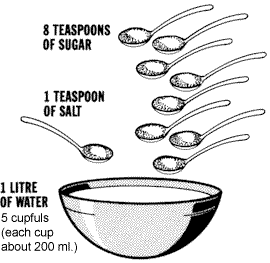
The simplest formula is 3 Tablespoons of sugar, and 1 teaspoon of salt, dissolved in 1 quart of potable water.


An alternative simple formula is 8 teaspoons of sugar, and 1 teaspoon of salt, dissolved in 1 quart of potable water.


This basic formula has been used effectively for more than 30 years by WHO, UNICEF, and other relief agencies and has saved millions of lives.


Over the past year, there has been some debate over the amount of salt and sugar in this formula. The old formula certainly works, and is safe. But some doctors have argued that a lower salt and sugar level might reduce fluid loss by curbing diarrhea.


I’ve elected to create single-serve packets of ORS powder, with each packet designed to be added to 1 liter of water. Two packets would be used for a 2-liter bottle.


I’ve located small, reclosable baggies, called bagettes sold at Michaels Art Supplies. You will find them in the bead section. Snack sized baggies, though lighter gauge plastic, would work as well. The small 2”x3” bagettes are just a little too small for the amount of powder required. You will need to go to the next size up, which are 3”x5”.


Along with these baggies, you will need table salt and sugar. I am electing to use non-iodized salt, although I am not aware of any reason why iodized salt would present a problem. The only other things you will need are measuring spoons and a felt tipped marker.


Into each baggie I am placing 3 TABLESPOONS of Sugar, and 1 TEASPOON of salt. These do not need to be mixed. I am writing on each Baggie “ORS POWDER- ADD TO 1 LITER OF WATER”.


This is the basic formula recommended by Dr. Grattan Woodson in his GOOD HOME TREATMENT OF INFLUENZA guide.

Home Treatment of Influenza booklet

In his home medical guide, Dr. Woodson writes:


"Preventing or treating dehydration in people with flu will save more lives than any other intervention during the influenza pandemic."

Identification of dehydration

When patients have a fever, vomiting, and/or diarrhea, they lose much more water from the body than is commonly appreciated. Symptoms of dehydration include weakness, dizziness, headache, confusion, and fainting. Signs of dehydration include dryness of the mouth, decreased saliva, lack of or very small urine volume that is dark and highly concentrated, sunken eyes, loss of skin elasticity, low blood pressure, especially upon sitting up or rising from the sitting to the standing position, and fast pulse rate, especially when moving from the lying to sitting or standing positions


Since I make it a practice not to offer medical advice, I would refer you to to Dr. Woodson’s excellent guide for further guidance on the administration (when, how much, etc)  of rehydration fluids.


While you are at it, take a look at the rest of the good doctor’s website for more home care information.


You may elect to add a flavoring to this mixture. Unsweetened Koolaid would add flavor and color, and make the drink more palatable to some. It might, however, prove to be an intestinal irritant to some people. I intend to leave mine unflavored, and will add koolaid to individual liters of solution if desired.


At 15 cents a gallon, the price is right. And for someone who is dehydrated, having this solution on hand can be lifesaving.

CAVEATS

You should never attempt to force fluids by mouth on anyone who is unconscious. An eye dropper may be used to slowly infuse liquids in semi conscious patients but there is a risk of choking.


Better to dilute this powder too much, than too little. DO NOT SKIMP ON THE WATER.


For more complete information on oral rehydration fluids visit the Healthlink Worldwide webpage at


http://rehydrate.org/dd/su19.htm

»» Read More

WHO Releases Revised H1N1 Clinical Management Guidance


# 3991


The World Health Organization has released revised guidance on the diagnosis and treatment of the H1N1 virus.  


It may be downloaded from the WHO site:


Clinical management of human infection with new influenza A (H1N1) virus: revised guidance

Publication date: November 2009
Download the document [pdf 228kb]


This 15 page PDF document covers a wide range of issues.  I’ve excerpted a few sections below, but download and read the whole document.


Risk factors for severe disease from pandemic (H1N1) 2009 virus infection reported to date  are  considered  similar  to  those  risk  factors  identified  for  complications  from seasonal influenza.

  • These include the following groups:
    •  Infants and young children, in particular <2 years
    •  Pregnant women
    •  Persons of any age with chronic pulmonary disease (e.g. asthma, COPD) 
    •  Persons of any age with chronic cardiac disease (e.g. congestive cardiac failure) 
    •  Persons with metabolic disorders (e.g. diabetes) 
    •  Persons with chronic  renal disease,  chronic hepatic disease, certain neurological conditions  (including  neuromuscular,  neurocognitive,  and  seizure  disorders), hemoglobinopathies,  or  immunosuppression,  whether  due  to  primary immunosuppressive  conditions,  such  as HIV  infection,  or  secondary  conditions, such as immunosuppressive medication or malignancy
    •  Children receiving chronic aspirin therapy 
    •  Persons aged 65 years and older


A higher  risk of  severe  complications  from pandemic  (H1N1) 2009 virus  infection has also been  reported  in  individuals who are obese  (particularly  in  those who are morbidly obese) and among disadvantaged and indigenous populations.


On average, about 1/2 of hospitalized patients have had at  least one or more underlying medical conditions1


.  However, about 1/3 of patients with very severe illness admitted to ICU were previously healthy persons. 


Infection control

Evidence  to date  suggests  that pandemic  (H1N1) 2009 virus  is  transmitted  similarly  to seasonal  influenza A  and  B  viruses. Appropriate  infection  control measures  (Standard plus Droplet Precautions) should be adhered  to at all  times. Whenever performing high-risk  aerosol-generating  procedures  (for  example,  bronchoscopy  or  any  procedure involving  aspiration  of  the  respiratory  tract)  use  a  particulate  respirator  (N95,  FFP2  or equivalent),  eye  protection,  gowns,  and  gloves  and  carry  out  the  procedure  in  an adequately ventilated room, either naturally or mechanically, as per WHO guidance 3


The duration of  isolation precautions  for hospitalized patients with  influenza  symptoms should be continued  for 7 days after onset of  illness or 24 hours after  the  resolution of fever and  respiratory symptoms, whichever  is  longer, while a patient  is  in a health-care facility.  For  prolonged  illness  with  complications  (i.e.  pneumonia),  control  measures should  be  used  during  the  duration  of  acute  illness  (i.e.  until  the  patient  has  improved clinically). Special attention is needed in caring for immunosuppressed patients who may shed  virus  for  a  longer  time  period  and  are  also  at  increased  risk  for  development  of antiviral-resistant virus

image

image

(click images to enlarge)

»» Read More

Cocktails For Flu


# 3985


While the vast majority of H1N1 influenza victims recover quickly and without incident, a very small percentage go on to endure particularly serious and life-threatening symptoms – including ARDS (Acute Respiratory Distress Syndrome).


Last week, at the CHEST 2009 conference (Annual meeting of the American College of Chest Physicians), a study was presented on the results of an antiviral/steroid cocktail administered to ICU patients in Argentina during their recent pandemic wave.


This cocktail consisted of high dose oseltamivir (150mg twice a day), along with one of two steroids.   


For those presenting with ARDS, they were given Methylprednisolone (Medrol) 1 mg/kg/day for 14 days.   All other ICU patients received hydrocortisone 300 mg/day.


The administration of corticosteroids in ARDS has been tried in the past, with varying levels of success.  The experience from SARS in 2003 and H5N1 in the middle of this decade showed short-term improvement, but long-term survival rates were less than encouraging.  


In 2007 the WHO (World Health Organization) advised against the use of steroids in the treatment of Bird flu, stating:


Corticosteroid therapy has failed so far to show effectiveness, and prolonged or high dose corticosteroids can result in serious adverse events in H5N1 patients, including opportunistic infection. Corticosteroids should not be used routinely, except for persistent septic shock with suspected adrenal insufficiency.


But that was then.  This is now.  


I’ve excerpted some passages from a report on Doctor’s Guide that reviews the presentation at the CHEST 2009 Conference. 


It is, admittedly, a small study.  Only 13 patients.  But the results are encouraging.


Follow the link to read it in its entirety.


Oseltamivir Plus Corticosteroids Improves Outcomes in Patients With Acute Respiratory Distress Syndrome, H1N1: Presented at CHEST 2009

By Betty S. Riggs

SAN DIEGO -- November 9, 2009 -- The combination of oseltamivir and prolonged corticosteroid therapy results in clinical improvement in patients with hypoxaemic respiratory failure and influenza A(H1N1), according to a study presented here at CHEST 2009, the annual meeting of the American College of Chest Physicians.


<SNIP>

By day 7 of treatment, patients had significant improvement in lung injury score (LIS) and multiple organ dysfunction syndrome as measured by the Sequential Organ Failure Assessment (SOFA) score. From day 1 to day 7, the LIS decreased from 2.83 +- 0.8 to 2.01 +- 0.5 (P = .003) in H1N1-positive patients and from 3.45 +- 0.3 to 2.15 +- 0.8 (P = .02) in H1N1-negative patients.


From day 1 to day 7, the SOFA score decreased from 5.9 +- 1.6 to 3.3 +- 2.0 (P = .01) in H1N1-positive patients and from 7.4 +- 4.1 to 3.0 +- 3.5 (P = .01) in H1N1-negative patients.


There was 1 death in the H1N1-positive patients (12.5%) thought to be due to pulmonary embolism and 1 death in the H1N1-negative group (20%) due to progression of multiple organ dysfunction syndrome.

(Continue . . . )


In a related story from June of 2008, Hong Kong researchers were investigating zanamivir (Relenza) and two types of NSAIDS (Non-Steroidal Anti-Inflammatory Drugs) used to treat lab mice infected with H5N1.


Survivability increased 4-fold with this cocktail over zanamivir alone.


The NSAIDS used were celecoxib (Celebrex)  and mesalazine, an NSAID used for inflammatory bowel disease. See Research Into Antiviral/NSAID Cocktail.

»» Read More

Air Force Academy Outbreak Reviewed


# 3854


Over the July 4th weekend, Air Force Academy cadets were exposed to the H1N1 swine flu at a Barbeque and fireworks display.  More than 100 developed symptoms in the 48 to 72 hours that followed. 


Occurring among such a tightly monitored group, this outbreak gives us a terrific opportunity to look at the spread, treatment, and course of illness of this H1N1 virus. 


Maggie Fox, ace Health and Science reporter for Reuters, brings us the details.   Follow the link to read it in its entirety.


July 4 swine flu outbreak shows pattern of virus

Tue Oct 20, 2009 12:00am EDT

* Nearly one in five still have virus after getting better

* Quick isolation halted spread

* Tamiflu of little help in healthy young patients

By Maggie Fox, Health and Science Editor

WASHINGTON, Oct 20 (Reuters) - More than 100 new cadets at the U.S. Air Force Academy got infected with swine flu at July 4 barbecue and fireworks display but quick isolation measures got it under control within two weeks, researchers reported on Tuesday.


The outbreak provided a unique opportunity to study the virus closely and Dr. Catherine Takacs Witkop and colleagues say they discovered some surprising things. Among them:

  • Nearly a quarter, or 24 percent, of patients still had virus in their noses seven days after getting sick, including 19 percent who had been well for at least 24 hours
  • Tamiflu, the drug used to treat influenza, did not help any of the previously healthy young men and women get better any quicker.
  • Most cadets were sick for five days or longer
  • Eleven percent of the cadets became infected.

(Continue . . . )


A few things of note. 


This outbreak was brought under control, according to the doctors treating the cadets, by invoking strict isolation policies. 


Sick cadets were moved to a single dormitory, and remained in isolation until they were free of symptoms for 24 hours, or for 7 days after symptoms first appeared, whichever was longer.


Most cadets were sick longer than 5 days, and nasal washes showed the virus still present 24 hours after symptoms abated in nearly 20% of victims. 


Whether these cadets were still infectious, absent symptoms of coughing and sneezing, is unknown.


The use of Tamiflu among healthy, fit, young cadets who experienced moderate illness (none were hospitalized, none died) showed no tangible benefit. Antivirals, it would appear, are of greatest value for those with severe symptoms.


All of which would seem to reinforce some of what we already knew. 


If you get sick, STAY HOME.   Don’t infect others.   Remember the sage advice offered by @CarolDn  (see Take The Pledge)


If you get sick, pledge to yourself: "This germ stops with me" Don't pass it forward.


That more than 10% of the attendees of this Barbeque came down with the virus within 72 hours speaks to the infectiousness of H1N1.  Which is why it is so important to stay home if you are sick. 


For the overwhelming majority of healthy, fit adults this virus produces a moderate, miserable, but survivable illness.  But note that more than half of these cadets were sick longer than 5 days.


So if you are an employer, or a teacher, don’t be surprised if this virus causes at least a week’s absence.  And that would be for uncomplicated illnesses.


As we gain more experience with this virus, we will undoubtedly see more studies of this sort, giving us a better idea of how this virus spreads, and reacts, in the population.


The health and level of fitness at the Air Force Academy, along with responsive medical care, no doubt helped to limit the impact of this virus on these cadets.  


Fortunately, even in the general population, roughly 99% of those infected recover without incident. 


But for the remaining 1%, H1N1 can prose a more serious threat. To those with pre-existing conditions like asthma, diabetes, and pregnancy, of course. 


But even among the healthy and fit.


And right now, we don’t have a reliable way of knowing, in advance, who will do well with this virus, and who won’t.

»» Read More

Hong Kong Finds Success With Higher Tamiflu Doses


# 3776


The `standard’ adult course of Oseltamivir (Tamiflu) for seasonal flu has long been 2 - 75mg capsules per day, for 5 days.  


Or a total of 10 pills.  


And despite reports from the field in countries treating the H5N1 virus that 150mg/day wasn’t terribly effective (50+% mortality rate, even with treatment),  the definition of a `treatment course’ hasn’t changed.


Doctors, of course, have had the latitude to make adjustments to these regimens – and so many bird flu patients in Vietnam, China, Indonesia, and Egypt have received more than the standard 10 pill course. 


In March of 2007, it was announced that doctors in Hong Kong would begin clinical trials, looking to see if higher doses of antivirals improved patient survivability.   See Hong Kong: Doctors To Test Higher Tamiflu Doses. 


Shortly thereafter the WHO released the following guidance which allowed for two-fold higher dosage, and longer duration on a `case by case basis’:


Summary of the second WHO consultation on clinical aspects of human infection with avian influenza A(H5N1) virus, 19-21 March, 2007, Antalya, Turkey


Accordingly, many pandemic planners (particularly in the UK) began talking about the need for more Tamiflu in their stockpile.  In November of 2007, I undertook a rather long discussion of the matter in How Much Tamiflu Is Enough?


Fast forward two years, and the pandemic we’ve got isn’t the pandemic we planned for.  


The  H1N1 swine flu virus, thankfully, doesn’t have the high CFR (Case Fatality Ratio) of it’s avian cousin.  But for a small subset of patients, the viral pneumonia it can produce easily rivals bird flu in severity.


In Hong Kong, where the H5N1 Tamiflu clinical trial was supposed to take place, one hospital has been routinely doubling the dosage of Tamiflu for their most severely ill pandemic flu patients.


And so far, at least . . . not one of them has died.


Doctors at the Prince of Wales Hospital in Hong Kong are encouraged enough by these results to recommend doubling the dose of Tamiflu for all patients who are severely impacted by the pandemic flu.


This from the Hong Kong Standard.


City flu strategy may set roadmap for global fight


Mary Ann Benitez
Monday, September 28, 2009

The treatment of severely ill swine flu (H1N1) patients at Prince of Wales Hospital - which has a zero death rate so far - may be held up as a model for the world.


The World Health Organization will consider new treatment guidelines at a meeting of experts in Washington next month, and the Hong Kong model is among those being discussed.


<SNIP>


It has treated at least 60 severely ill patients, out of the city's 106 severe cases, without loss of life, according to David Hui Sui-cheong, a specialist in respiratory medicine at Chinese University.


Hui said severely ill patients should receive double the dose of Tamiflu as viral pneumonia is what kills patients with pandemic H1N1.


Antibiotics are given to patients in intensive care units to treat underlying bacterial infections brought about by long use of ventilators, he added.


(Continue . . .)

»» Read More