Showing posts with label Severe Weather. Show all posts

Safe Rooms: Improving Your Odds

image

Photo Credit Wikipedia – Dimmitt, Tx Tornado


# 6850


Nearly two years ago, over a three day period (Apr 25th-28th) a storm system of epic proportions spawned 351 confirmed tornadoes across five southern states, killing 338 persons in Alabama, Arkansas, Georgia, Mississippi, and Tennessee.


This was the the third deadliest tornado outbreak in U.S. History. More than a dozen of these twisters reached intensities of 4 or 5 on the Enhanced Fujita [EF] scale, which can produce near total devastation.


After a near-record setting 2011 tornado season (n=1691), 2012 proved somewhat less active (n=936), although certainly not without its moments.

image


No one can say with any confidence how many destructive storms 2013 will bring - but when it comes to tornados - you only have to be hit by one to ruin your whole day.


Last spring, the CDC’s MMWR issued an analysis of the previous year’s massive tornado outbreak, that stressed the importance of safe rooms.  Due to the length of the report, I’ve only reproduced a few excerpts. 


Follow the link to read:


Tornado-Related Fatalities — Five States, Southeastern United States, April 25–28, 2011
Weekly

July 20, 2012 / 61(28);529-533

(Media Synopsis)

Individuals who work or live in a tornado-prone area should develop a tornado safety plan prior to severe weather.

During April 25–28, 2011, the third deadliest tornado disaster occurred in the southeastern U.S. despite modern advances in tornado forecasting, advanced warning times, and media coverage.  CDC reviewed data from the American Red Cross, death certificates and the National Weather Service to describe the fatalities by demographic characteristics, shelter used, cause of death, and tornado severity in the affected states of Alabama, Arkansas, Georgia, Mississippi and Tennessee. Of the 338 deaths, approximately one-third were older adults, almost half occurred in single-family homes, and a quarter happened in mobile homes.  One-half of the 27 tornadoes were rated powerful (EF-4 or EF-5) and were responsible for almost 90 percent of the deaths. The use of safe rooms is crucial to preventing tornado-related deaths.

(Continue . . . .)

With the spring tornado season only a month or two away, now is the time to be creating a tornado safety plan – and if possible – setting up a safe room.


FEMA has a good deal of advice on exactly how to construct a safe room – either above or below ground.


Residential Safe Rooms

Having a safe room in your home can protect your family and save the lives of those you care about.

Find answers to your Questions about Building a Safe Room, including:

  • What is the cost of installing a safe room?

  • Can I install a safe room in an existing home?

  • Can I build the safe room myself?

  • Where is the best location for the safe room?

  • Where can I find plans for safe room construction?

  • And more....

Building a Safe Room in Your House

For more details about how you can build a safe room in your home, go to the Taking Shelter From the Storm: Building a Safe Room For Your Home or Small Business (FEMA 320) page before downloading it from the FEMA Library.

image

Residential Funding Opportunities

Grants, funding opportunities and various initiatives are available for individuals wishing to build a residential safe room.  See the resources below for additional information:

Examples and Case Studies

Learn how others have benefited from safe rooms.  See the following resources on the best practices case study web page.


Having a good (and well rehearsed) family emergency plan is essential for any emergency. Even with a safe room, family members could become separated (they may be sent to different hospitals or shelters) in the post-disaster chaos.


Some may be injured and unable to provide information about their families.


So it is important to set up a plan, including meeting places and out-of-state contacts, and individual wallet information cards -  before you need it. To that end READY.GOV has some advice, and tools, to help you do just that.


Plan to Protect Yourself & Your Family

Family Emergency Plan

(PDF - 3Mb)

Prepare yourself and your family for a disaster by making an emergency plan.


Download the Family Emergency Plan (FEP) (PDF - 750Kb), print the pages and fill them in offline.


Your emergency planning should also address the care of pets, aiding family members with access and functional needs and safely shutting off utilities.


You may also want to inquire about emergency plans at work, daycare and school. If no plans exist, consider volunteering to help create one. Read more about school and workplace plans.


Once you’ve collected this important information, gather your family members and discuss the information to put in the plan. Practice your plan at least twice a year and update it according to any issues that arise.


Together with adequate emergency supplies, a solid first aid kit, and an emergency battery operated NWS Weather Radio, these steps will go a long ways to protecting you, and your family, from a wide variety of potential disasters.


For more on all of this, a partial list of some of my preparedness blogs include:


When 72 Hours Isn’t Enough

In An Emergency, Who Has Your Back?

An Appropriate Level Of Preparedness

The Gift of Preparedness 2012

»» Read More

Video: Three Congressional Hazards Briefings


image

May 22, 2011, a Level 5 tornado  Joplin, Missouri


# 6318


While tabloid newspapers and apocalyptic websites seem obsessed with 2012 Mayan prophecies and extinction level events, genuine emergency managers, scientists, and policy makers are focused on far more likely disasters.


Earthquakes, tornadoes, floods, hurricanes, pandemics, and even tsunamis.


Disasters that not only happen with some regularity, but that are actually - with a bit of preparation - survivable.


Recently the Congressional Hazards Caucus sponsored three public briefings in Washington D.C. focusing on Earthquakes, Tornadoes, and Tsunamis.


Videos of all three briefing are available online, and they provide a fascinating look at not only the potential for disasters here in the United States, but at some of the steps that are being taken to reduce or mitigate their effects.


First stop, a Public Briefing on Saving Lives in the Path of Destructive Tornadoes, held on March 29th at the Rayburn House Office Building.


From the Invitation Flyer PDF.

                                                                                Speakers

Veronica Johnson, Broadcast Meteorologist, NBC4 Washington (Moderator)


Dr. David Stensrud, Chief, Forecast Research and Development Division, National Severe Storms Laboratory


Keith Stammer, Director, Emergency Management Division, Joplin/Jasper County, Missouri


Julie Demuth, Scientist, Societal Impacts Program, National Center for Atmospheric Research

Next, a public briefing on Faults in the East - New Madrid Seismic Zone and Recent Virginia Earthquake - Understanding Risks, again held on March 29 at the Rayburn House Office Building.


From the Invitation Flyer PDF.


Moderator:

David B. Spears, Virginia State Geologist, Virginia Department of Mines, Minerals and Energy, Charlottesville, Virginia

Speakers:
J. Wright Horton, Jr., U.S. Geological Survey, National Center, Reston, Virginia
Learning from the 2011 Virginia Earthquake (3 Mb PDF)


Charles A. Langston, Director of the Center for Earthquake Research and Information, University of Memphis, Memphis, Tennessee
Understanding Earthquakes in the New Madrid Seismic Zone (4.6 Mb PDF)


James M. Wilkinson, Jr., Executive Director of the Central United States Earthquake Consortium, Memphis, Tennessee
Planning, Preparing, and Responding to Earthquake Risks in the Central United States (1.8 Mb PDF)


And for our last stop, a public briefing on  Tsunami Preparedness: Understanding our Nation's Risk and Response, this time held March 21 at the Rayburn Office Building.


From the  Invitation Flyer PDF.


Speakers:
Eddie Bernard, Scientist Emeritus, Pacific Marine Environmental Laboratory, National Oceanic and Atmospheric Administration
Presentation:
Local Tsunami Warnings: Can the U.S. Do It? (PDF)


John Orcutt, Distinguished Professor of Geophysics at Scripps Institution of Oceanography
Presentation:
Tsunami Warning and Preparedness: An Assessment of the U.S. Tsunami Program and Tsunami Preparedness (PDF)


John Schelling, Earthquake/Tsunami Program Manager for Washington State Emergency Management Division
Presentation:
State & National Tsunami Hazard Mitigation Programs: Increasing our Nation's Overall Resilience to Tsunamis (PDF)


These are sober presentations by serious scientists, and the events they talk of are – over time – pretty much inevitable.  


The unknowns are when, exactly where, and how bad they will be.


Which is why emergency managers around the country urge individual, family, and business preparedness, telling everyone to  GET A KIT, MAKE A PLAN, and BE INFORMED.


image

Credit Ready.gov


Everyone needs an appropriate disaster plan, just as everyone should have a good first aid kit, a `bug-out bag’, and sufficient emergency supplies to last a bare minimum of 72 hours.


For more on  disaster preparedness, I would invite you to visit Ready.gov or revisit these blogs:


When 72 Hours Isn’t Enough

In An Emergency, Who Has Your Back?

An Appropriate Level Of Preparedness

The Gift Of Preparedness 2011

»» Read More

CDC Statement On Helmets & Tornadoes

image

Photo Credit Wikipedia – Dimmitt, Tx Tornado


# 6316


File this one under `it’s probably better than nothing. . .  ‘


Although I’d never heard it suggested until the past couple of years, some experts and those in the media have been recommending the wearing of bicycle or motorcycle helmets to provide a degree of protection from flying debris during a tornado.


One such recommendation issued in 2009 can be found here, at the North Dakota State University Extension Service.


While it certainly sounds like a reasonable precaution (assuming you have a helmet handy, and donning one doesn’t delay your seeking more appropriate shelter), until now the CDC has not commented on the practice.


Today, we’ve a cautious statement from the CDC regarding the wisdom of using a helmet during a tornado.


For Immediate Release: May 3, 2012
Contact :
CDC Division of News and Electronic Media
(404) 639-3286

CDC Statement on Helmets and Tornadoes

The Centers for Disease Control and Prevention continues to recommend, as its first recommendation, that people in the path of a tornado find a shelter or a tornado-safe room. The safest place in the home is the interior part of a basement. If possible, get under something sturdy such as a heavy table or workbench.  If outdoors, lie down in a gully or ditch.


We understand that people who have seen the tragedy that tornadoes can impose are looking for any useful and effective ways to protect themselves. We don’t have research on the effectiveness of helmet use to prevent head injuries during a tornado, but we do know that head injuries are common causes of death during tornadoes, and we have long made the recommendation that people try to protect their heads.  Individuals may decide to use helmets to protect their heads. However, because the time to react may be very short, people who choose to use helmets should know where they are and have them readily accessible.  Looking for a helmet in the few seconds before a tornado hits may delay you getting safely to shelter.  For those who choose to use helmets, these helmets should not be considered an alternative to seeking appropriate shelter. Rather, helmets should be considered just one part of their overall home tornado preparedness kit to avoid any delay.


CDC continues to promote protective measures for use during natural disasters including tornadoes.  For more detailed information, go to http://emergency.cdc.gov/disasters/tornadoes/during.asp.

»» Read More

Everyday Preppers


# 6284


After watching Doomsday Preppers on the National Geographic Channel some may come away thinking that all preppers are crazed fanatics gearing up for an impending apocalypse. But for the vast majority of those who embrace the preparedness lifestyle - it is the far more common localized disaster that spurs them on.


Of course, if you want decent cable TV ratings, you don’t profile people who maintain a 14 day supply of necessities in their pantry, volunteer for CERT, have a family emergency plan, or take pride in keeping a well stocked first aid kit.


No . . .  you focus on families with elaborate underground bunkers, a 20 year supply of freeze-dried foods, and a firm belief that the end is nigh.


It is TV, after all. 


While we collectively wait for doomsday (and I’m perfectly content to wait a long, long time for mine) we are nonetheless faced with an ongoing parade of lesser - but no less burdensome to those affected – localized disasters.


Earthquakes, hurricanes, floods, tornadoes . . . .


They happen with surprising regularity - and unlike an abrupt 30 degree shift of the earth’s crust or the eruption of the Yellowstone Super Volcano - are something being prepared for is actually likely to help.


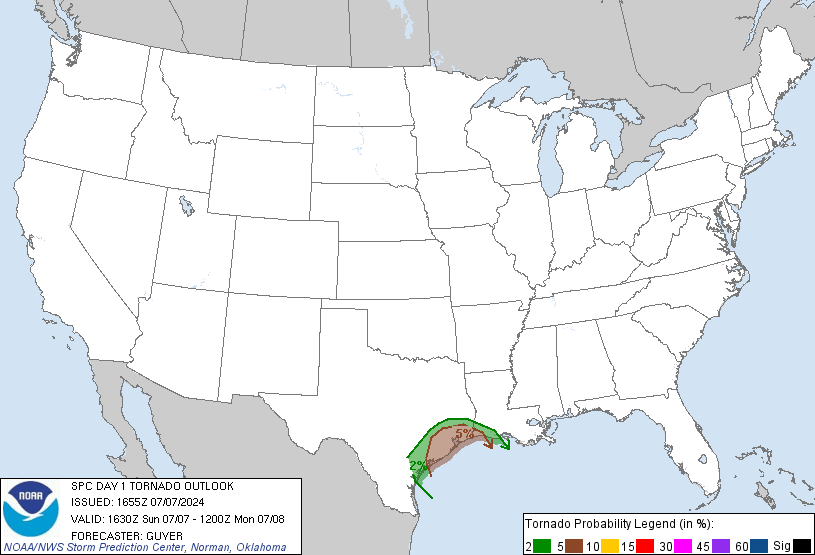
Later today parts of the Midwest will be under the gun, with a high risk of severe weather. NOAA’s  Storm Prediction Center in Norman, OK has released the following forecast.


image

image


For a sobering look at the disaster potential of a `high risk’ day like today, I can heartily recommend a recent blog post by Minnesota Meteorologist Paul Douglas.


Tornado Warning: "One of These Days a Single Tornado Will Claim Over 1,000 American Lives"

Posted: 04/ 4/2012 3:44 pm


Today the residents of Oklahoma City, Tulsa, Omaha, Nebraska, and surrounding areas find themselves at a high risk of severe weather, including possible tornadoes.  Hundreds of thousands more will find themselves at moderate risk.


While we can hope that these predicted storms do not materialize, hope is not a plan.


The smart move for those in harm’s way this morning is to review their emergency plan with all family members, double check their supplies, and ensure that they can keep tabs on approaching threats by way of a battery powered NOAA weather radio.


You don’t have to suffer a direct hit from an F5 tornado to be glad you were prepared.


A severe storm can knock out electrical power and phone service for days, sometimes weeks. Public services (including 911) can be severely disrupted, and something as routine as obtaining food and potable water for your family may be difficult for several days.


There are many legitimate disaster threats out there, which is why FEMA, READY.GOV, and many other agencies actively promote personal, family, and business preparedness.


To that end the Federal government has produced copious toolkits, brochures, pamphlets, and even mobile apps designed to help citizens prepare . . . for just about anything.


One such toolkit is FEMA’s Are You Ready? An In-depth Guide to Citizen Preparedness (IS-22) – which, at 204 pages – ranks as one of the most comprehensive guides to public preparedness available.


image


FEMA describes this guide as:


An In-depth Guide to Citizen Preparedness

Are You Ready? An In-depth Guide to Citizen Preparedness (IS-22) is FEMA’s most comprehensive source on individual, family and community preparedness. The guide has been revised, updated and enhanced in August 2004 to provide the public with the most current and up-to-date disaster preparedness information available.


Are You Ready? provides a step-by-step approach to disaster preparedness by walking the reader through how to get informed about local emergency plans, how to identify hazards that affect their local area and how to develop and maintain an emergency communications plan and disaster supplies kit. Other topics covered include evacuation, emergency public shelters, animals in disaster and information specific to people with access and functional needs.


Are You Ready? also provides in-depth information on specific hazards including what to do before, during and after each hazard type. The following hazards are covered: Floods, Tornadoes, Hurricanes, Thunderstorms and Lightning, Winter Storms and Extreme Cold, Extreme Heat, Earthquakes, Volcanoes, Landslide and Debris Flows (Mudslide), Tsunamis, Fires, Wildfires, Hazardous Materials Incidents, Household Chemical Emergencies, Nuclear Power Plant and Terrorism (including Explosion, Biological, Chemical, Nuclear and Radiological hazards).

<SNIP>


For more publications on disaster preparedness, visit the Community and Family Preparedness  webpage.

Are You Ready? An In-depth Guide to Citizen Preparedness Full Document (PDF - 21Mb)

(Continue . . . )


Disasters happen.


And while they don’t often occur on a national or international scale (an assumption with which residents of Haiti, Pakistan, and Japan might take exception), they can be devastating to large segments of our population.


While some of the more elaborate preparations shown on cable TV admittedly look more than a little screwy (even to this committed prepper), the greater delusion is in doing nothing and simply hoping for the best.


Some disaster plans may be screwy, but having no plan is just plain nuts.

»» Read More

SPC Warns Of Weekend Severe Weather Risk


image


# 6280


Spring and early summer are the time of year that typically produces the greatest number of severe thunderstorms and tornado outbreaks, and this morning NOAA’s Storm Prediction Center has issued a forecast for Saturday that includes a high risk of severe weather across parts of the central U.S.


SPC AC 130602
   DAY 2 CONVECTIVE OUTLOOK RESENT 1
   NWS STORM PREDICTION CENTER NORMAN OK
   0102 AM CDT FRI APR 13 2012
   VALID 141200Z – 151200Z


   ...THERE IS A HIGH RISK OF SVR TSTMS ACROSS PARTS OF OK AND KS . . . THERE IS A MDT RISK OF SVR TSTMS ACROSS PARTS OF NW TX...CNTRL    AND WRN OK...CNTRL AND ERN KS...SE NEB...NW MO AND FAR SW IA...   ...THERE IS A SLGT RISK OF SVR TSTMS ACROSS PARTS OF THE MID-MO   VALLEY...UPPER MS VALLEY...SRN PLAINS AND CNTRL PLAINS...   TORNADO OUTBREAK LIKELY ACROSS THE SRN AND CNTRL PLAINS NWD INTO THE   MID-MO VALLEY FROM SATURDAY AFTERNOON THROUGH SATURDAY NIGHT ...SRN AND CNTRL PLAINS...


AN IMPRESSIVE UPPER-LEVEL LOW WILL MOVE EWD ACROSS FOUR CORNERS  REGION SATURDAY AS A POWERFUL 90 TO 110 KT MID-LEVEL JET EJECTS NEWD INTO THE SRN AND CNTRL PLAINS. AHEAD OF THE SYSTEM...A CORRIDOR OF  MODERATE TO STRONG INSTABILITY IS FORECAST ACROSS ECNTRL KS...CNTRL OK INTO NW TX. THIS COMBINED WITH STEEP MID-LEVEL LAPSE RATES AND  STRONG LOW-LEVEL SHEAR WILL BE VERY FAVORABLE FOR SEVERE STORMS AND  A TORNADO OUTBREAK WILL BE LIKELY ACROSS THE SRN AND CNTRL PLAINS FROM LATE SATURDAY AFTERNOON LASTING THROUGH THE EVENING AND INTO THE OVERNIGHT PERIOD.


image

March, April, May and June generally see the strongest, and most frequent tornadoes, but in truth - these violent windstorms can occur any time of the year - particularly in the south. 


image


In an average year, more than 1,000 tornadoes are reported in the United States, but last year (2011) was unusually active. More than 750 tornadoes and 360 tornado-related deaths were reported during the month of April alone.


image

Credit http://www.spc.noaa.gov


All but a small part of the United States is vulnerable to these storms, but the strongest generally occur in an area we call Tornado Alley (below Left), which runs from middle Texas north though Oklahoma, Kansas, Nebraska and South Dakota.


This is the area where you will generally find the largest and most powerful tornadoes; the F5 wedge type. 

image

TORNADO ALLEY                       DIXIE ALLEY

Fortunately, much of the mid-west is sparsely populated, and so the number of tornado deaths that occur here are actually less than in other areas of the country.   


DIXIE ALLEY (above right) sees more frequent, albeit usually less severe tornadoes.  Due to a higher population density, more deaths occur in Dixie Alley than in Tornado Alley most years.


Which is why every home and office should have a NOAA weather radio. Once thought of as mainly a source of local weather information, it has now become an `All-Hazards' alert system as well.


image


In order to receive these broadcasts, you need a special receiver.  Many of these radios have a built in `Tone Alert', and will begin playing once they receive a special alert signal from the broadcaster.


Like having an emergency kit, a first aid kit, and a disaster plan - having a weather radio is an important part of being prepared. 


Despite dozens of major disasters (often weather related) that occur every year in this country, most Americans remain woefully unprepared to deal with emergencies.  


Agencies like FEMA, READY.GOV and the HHS are constantly trying to get the preparedness message out, so that when (not `if') a disaster does occur, human losses can be minimized.


For more information on how to prepare for emergencies, up to and including a pandemic, the following sites should be of assistance.


FEMA http://www.fema.gov/index.shtm

READY.GOV http://www.ready.gov/

AMERICAN RED CROSS http://www.redcross.org/


You’ll find more than you ever wanted to know about tornadoes available from the SPC Tornado FAQ.

Image Logo for The Online Tornado FAQ

»» Read More

Safe At Home


image

Credit FEMA


# 6230


Although I preach preparedness there is admittedly one glaring lapse in my own emergency preparations   . . .   my current accommodations preclude my having a `safe room’ – designed to protect occupants against tornadoes and hurricanes.


When I lived in Missouri – which gets its fair share of tornadoes – having a full basement/storm shelter was both practical and a great comfort.


But here in Florida – where the water table is so high – basements are rarely practical.


image

EF-3 or Greater Tornado Threat – Credit FEMA


Florida is less at risk for big tornadoes (we have a fair number of small twisters), but is a frequent target of hurricanes. Therefore, when I do eventually move again, one of my hopes is that I can incorporate a hardened safe room to my preparations.


With memories of last year’s devastating tornado season still fresh, now is a good time to consider this potentially life-saving addition to your home. To that end, FEMA has a good deal of advice on exactly how to construct a safe room – either above or below ground.


Residential Safe Rooms

Having a safe room in your home can protect your family and save the lives of those you care about.

Find answers to your Questions about Building a Safe Room, including:

  • What is the cost of installing a safe room?

  • Can I install a safe room in an existing home?

  • Can I build the safe room myself?

  • Where is the best location for the safe room?

  • Where can I find plans for safe room construction?

  • And more....

Building a Safe Room in Your House

For more details about how you can build a safe room in your home, go to the Taking Shelter From the Storm: Building a Safe Room For Your Home or Small Business (FEMA 320) page before downloading it from the FEMA Library.


Residential Funding Opportunities

Grants, funding opportunities and various initiatives are available for individuals wishing to build a residential safe room.  See the resources below for additional information:


Examples and Case Studies

Learn how others have benefited from safe rooms.  See the following resources on the best practices case study web page.


»» Read More

The Tracks Of Our Fears


image
Severe Weather Tracks Feb 28th, 2012 Source NOAA 


# 6183


Yesterday morning, in It Happens Every Spring, I wrote about the inevitability of severe weather during this time of year, particularly from tornadoes in the mid-west and deep south.


As it turned out, overnight a number of severe tornado producing storms swept across Kansas, Arkansas, and Missouri.


The remarkable image above comes from NOAA’s Environmental Visualization Laboratory (h/t @JustinNOAA)


Feb 29, 2012

NOAA Radar Tracks Tornadoes in Midwest

NOAA's NEXRAD system of radars deployed throughout the United States provide meteorologists the most up-to-date information on the ground regarding severe weather, especially when it comes to identifying potential tornado outbreaks. By analyzing both the rotational velocity of the storm systems (the spinning of tornadoes has high rotational velocity compared to the surrounding storms) and presence of hail, scientists at the NOAA National Severe Storms Laboratory have developed a product that approximates the track of tornadoes, shown here for the February 29, 2012 storms in Kansas, Missouri, and Arkansas.

At least four people have been killed and many others injured as these storms swept through the Midwest early in the morning. The NOAA Storm Prediction Center has issued advisories for Tennessee and the surrounding areas for the remainder of the day. Although the tracks shown in this image are not actual confirmed ground tracks, they are helpful in identifying features associated with tornadoes, preparing communities for such potentially deadly outbreaks, and emergency response once a severe weather outbreak has passed.


More storms (and fatalities) have been reported today in Illinois, and as the graphic below from the Storm Prediction Center in Norman, Oklahoma shows, the bad weather is moving eastwards.


image


While early in the storm season, these tornadoes should serve as a wake up call to prepare, and Ready.gov has the tools to help you do so.


image


If you haven’t created, practiced, and updated your family’s emergency plan, now is the time to do so.

»» Read More

It Happens Every Spring


image

Credit NOAA – NWS Storm Prediction Center


# 6178


For very good reasons, during the months of February and March many states across the nation – particularly in the mid-west and the deep south – promote a Severe Weather Awareness Week.


Last year’s record breaking tornado season, which claimed the highest number of lives in a half century, serves as a stark reminder of just how vulnerable we are to these violent weather events.


NOAA provides a State by State listing of Weather Awareness Events, and some states publish severe weather preparedness guides.  A few examples follow, but you can Google `Severe Weather Awareness’ and your State’s name, to see if one is available for your area.


image

image


Some states have Severe Weather Guides online, such as this website maintained by the Texas Department of Public Safety.


image


While it is impossible to predict just what kind of spring and summer storm season we will see, when warm moist air to the south and east does battle with cooler or drier air masses to the north and west, you have the basic ingredients for severe weather.  


And outbreaks of tornadoes can frequently result. 


But it isn’t just tornadoes that we watch out for. Straight line winds, downbursts, hail, lightning, and torrential rains are also hazards carried by these storms, and all can be deadly.


image


March, April, May and June generally see the strongest, and most frequent tornadoes, but in truth - these violent windstorms can occur any time of the year - particularly in the south. 


image

In an average year, more than 1,000 tornadoes are reported in the United States.   It is likely that the actual number is considerably higher, as not all tornadoes occur in areas where they can be seen or confirmed.


All but a small part of the United States is vulnerable to these storms, but the strongest of these storms generally occur in an area we call Tornado Alley (below Left), which runs from middle Texas north though Oklahoma, Kansas, Nebraska and South Dakota.


This is the area where you will generally find the largest and most powerful tornadoes; the F5 wedge type. 


image

TORNADO ALLEY                       DIXIE ALLEY


Fortunately, much of the mid-west is sparsely populated, and so the number of tornado deaths that occur here are actually less than in other areas of the country.   


DIXIE ALLEY (above right) sees more frequent, albeit usually less severe tornadoes.  Due to a higher population density, more deaths occur in Dixie Alley than in Tornado Alley most years.


To keep abreast of severe storm forecasts, you can visit NOAA’s Storm Prediction Center online.  There you’ll find interactive maps showing current and anticipated severe weather threats all across the nation.


image

image


Another resource is NOAA WEATHER RADIO.


Once thought of as mainly a source of local weather information, it has now become an `All-Hazards' alert system as well.


In order to receive these broadcasts, you need a special receiver.  Many of these radios have a special `Tone Alert', and will begin playing once they receive a special alert signal from the broadcaster.


Like having an emergency kit, a first aid kit, and a portable AM/FM radio - having a weather radio is an important part of being prepared. 


Most Americans are woefully unprepared to deal with emergencies.  This despite dozens of major disasters (often weather related) that occur every year in this country. 


Agencies like FEMA, READY.GOV and the HHS are constantly trying to get the preparedness message out, so that when (not `if') a disaster does occur, human losses can be minimized.


For more information on how to prepare for emergencies, up to and including a pandemic, the following sites should be of assistance.


FEMA http://www.fema.gov/index.shtm

READY.GOV http://www.ready.gov/

AMERICAN RED CROSS http://www.redcross.org/

»» Read More

An Off-Season Reminder


image

Photo – GOES Weather Loop 2/5/12


# 6122


The Atlantic Hurricane season runs from June 1st through the end of November, but over the years we’ve seen a number of off-season tropical weather systems develop – albeit rarely in February or March.


Today, NOAA has their eyes on a disturbance off the western tip of Cuba that has a slim possibility of intensifying before it reaches Florida.


Early models drag it up and across the peninsula of Florida over the next couple of days, bringing with it some much needed precipitation. 


image

Model Credit – SWFTMD

There appears to be very little chance that this system will amount to much, but history records at least one February Tropical storm.; the famous Groundhog Day storm of 1952.

image

Photo Credit –Wikipedia


Sporting winds of 50 MPH when this system came ashore near Cape Sable, it did little damage, but surprised a lot of folks with its offseason arrival.


While not of tropical origin, the far more destructive `Super storm’ of March 1993 brought a 10 foot surge tide out of the Gulf of Mexico, pushed by hurricane force winds that battered the coast for 12 hours.  


image


As it raked up the eastern seaboard it dumped record amounts of snow from the Florida Panhandle to New England. Along the way it claimed more than 300 lives and inflicted more than $6 billion dollars in damage.


That storm is a vivid memory for me, as it saw me spending 12 very tense and cold hours aboard my 32-foot sailboat, trying to keep her from being damaged or sunk as the winds and tides battered us.


A not-so-gentle reminder that disasters can occur with little or no warning, and that severe storms can show up even when the calendar says they shouldn’t.


Preparedness is truly a year-round responsibility.


For more information on how to prepare for disasters or emergencies, the following sites should be of assistance.

FEMA http://www.fema.gov/index.shtm

READY.GOV http://www.ready.gov/

AMERICAN RED CROSS http://www.redcross.org/


A few of my preparedness blogs you might wish to revisit including:


When 72 Hours Isn’t Enough

In An Emergency, Who Has Your Back?

An Appropriate Level Of Preparedness

The Gift Of Preparedness 2011


In the meantime, it will be interesting to see if this little-storm-that-could turns into anything more than the answer to some future meteorological trivia question.

»» Read More

Weathering Heights: A Year For The Record Books


# 5996


Last August, in Weathering Heights: Billion-Dollar-Plus Weather Disasters, I linked to the National Climatic Data Center site for a detailed report that showed there had already been 9 billion-dollar-plus weather disasters in the United States in 2011.


This tied with 2008 as the highest number of weather related disasters on record, but given that it was only August, the odds favored setting a new record this year. 


Despite limited impact by the Atlantic hurricane season this year, as of December 7th, this year’s total now stands at 12.


image


Although 2005 remains the most expensive year for weather related disasters, the frequency of these events appears to be increasing.


Half of this year’s disasters centered around the record number of tornado outbreaks this past spring.


NOAA has produced an EXTREME WEATHER 2011 website, with a short video introduction by Jack Hayes, director of the National Weather Service (NWS). The links below provide details on this year’s biggest weather related disasters:


Billion-dollar disasters of 2011 (as of Dec. 7, 2011)


Groundhog Day blizzard »
January 29-February 3, 2011

Midwest/Southeast tornadoes »
April 4-5, 2011

Southeast/Midwest tornadoes »
April 8-11, 2011

Midwest/Southeast tornadoes »
April 14-16, 2011

Southeast/Ohio Valley/Midwest tornadoes »
April 25-28, 2011

Midwest/Southeast tornadoes »
May 22-27, 2011

Midwest/Southeast tornadoes and severe weather »
June 18-22, 2011

Southern Plains/Southwest drought and heatwave »
Spring-Fall, 2011

Mississippi River flooding »
Spring-Summer, 2011

Upper Midwest flooding »
Summer 2011

Hurricane Irene »
August 20-29, 2011

Texas, New Mexico, Arizona wildfires »
Spring-Fall 2011


For a fascinating summary of 112 weather related disasters over the past 31 years, NOAA has prepared a 4 page PDF file which you can download.


image


Each year September is designated National Preparedness Month, and agencies like NOAA, FEMA, and READY.GOV work year round to promote awareness and action.


Truly, the time to prepare for a disaster – weather related or otherwise – is now. 


Like death and taxes, disasters are inevitable. A few of my general preparedness blogs include:


When 72 Hours Isn’t Enough

In An Emergency, Who Has Your Back?

An Appropriate Level Of Preparedness

The Gift Of Preparedness 2011


To become better prepared as an individual, family, business owner, or community to deal with hurricanes, tornadoes, floods, or any other type of disaster: visit the following preparedness sites.


FEMA http://www.fema.gov/index.shtm

READY.GOV http://www.ready.gov/

AMERICAN RED CROSS http://www.redcross.org/

»» Read More

NOAAWatch: Your Daily All-Hazards Briefing


# 5742


One of the most important aspect of preparedness is being aware of the threats and hazards that surround you. It’s known as situational awareness, and without it, you can be forced to make snap decisions instead of carefully considering your options.


In today’s society, perhaps the most basic example is checking the morning weather forecast before deciding whether to carry an umbrella that day.


But there are far more hazards out there than just a chance of rain.  And NOAA, the National Oceanic and Atmospheric Administration has a terrific all Hazards Monitor page for anyone wanting a heads up on what threats to be cognizant of.

 image


While the home page provides links to dozens of resources ranging from the NWS, EPA and USGS  to the World Meteorological Organization, the DAILY BRIEFING PAGE nicely compiles the most important information on a single page.


image


Now, getting a daily all-threats briefing can be as easy as clicking a single link.


Another important resource is NOAA WEATHER RADIO (NWR).


image


Once thought of as mainly a source of local weather information, NWR has now become an `All-Hazards' alert system as well.  Working with Working with the FCC’s Emergency Alert System , NWR provides warning and post-event information for natural disasters, man-made disasters, and local public safety information.


Broadcasts from many of these stations may be heard online as explained by the following from NWR.


NOAA Weather Radio All Hazards broadcasts are available online as live streaming audio. These streams are hosted by third parties such as universities, private companies and individuals, not by NWS. While we broadcast the audio used by these streams, we have no control over interruptions or discontinuation of these streaming audio services. You can find links to the majority of these streams at Weather Underground.


But relying on your internet connection staying up during a weather emergency or other disaster isn’t a good plan. Power outages or ISP problems could leave you in the dark, so it is essential that you have a battery operated weather radio.


image


In order to receive these broadcasts over the air, you need a specialized receiver.  Many of these radios have a special `Tone Alert', and will begin playing once they receive a special alert signal from the broadcaster.


Like having an emergency kit and a first aid kit - having a weather radio is an important part of being prepared. 


While the above resources are U.S. centric, for a more global perspective, NOAAWatch provides external links to:


image


image


image


The astounding amount of information available today - online and for free -can help you make long and short term decisions that can assist you, your family, or your business prepare for the next emergency.


Of course, just knowing about the threats isn’t enough. You have to make use of that information.  And NOAAWatch provides some links for that as well:


· Ready America - DHS
·
Plan Ahead - FEMA
·
Preparedness for    People With Disabilities
·
HHS - Disasters &    Emergencies
·
American Red Cross
·
DisasterAssistance.gov


And lastly, another reminder that September is National Preparedness Month, and you are encouraged to join the NPM coalition.


image

»» Read More

SPC Upgrades Today’s Severe Storm Forecast


# 5522


image


The Storm Prediction Center in Norman, Oklahoma has raised their risk assessment for severe storm to HIGH for later today across Northeast Texas, far Southeast Oklahoma, a slice of Northwest Louisiana, and the Southern half of Arkansas.


WOUS40 KWNS 261153
ARZ000-LAZ000-OKZ000-TXZ000-261800-
 

PUBLIC SEVERE WEATHER OUTLOOK  
NWS STORM PREDICTION CENTER NORMAN OK
0653 AM CDT TUE APR 26 2011

...OUTBREAK OF SEVERE STORMS AND TORNADOES EXPECTED OVER PARTS OF THE SOUTHERN PLAINS AND LOWER MISSISSIPPI VALLEY THIS EVENING AND
OVERNIGHT...

THE NWS STORM PREDICTION CENTER IN NORMAN OK IS FORECASTING THE DEVELOPMENT OF A FEW STRONG LONG TRACK TORNADOES AND WIDESPREAD
DAMAGING WIND OVER PARTS OF THE SOUTHERN PLAINS AND LOWER    MISSISSIPPI VALLEY THIS EVENING AND OVERNIGHT.


THE AREAS MOST LIKELY TO EXPERIENCE THIS ACTIVITY INCLUDE

          SOUTHERN ARKANSAS
          EXTREME NORTHWESTERN LOUISIANA
          SOUTHEASTERN OKLAHOMA
          NORTHEASTERN TEXAS

ELSEWHERE...SEVERE STORMS ARE ALSO POSSIBLE FROM...THE OHIO AND TENNESSEE VALLEYS THROUGH THE LOWER MISSISSIPPI VALLEY AND EASTERN  PORTIONS OF THE SOUTHERN PLAINS.


Tomorrow’s forecast has this area of severe weather shifting east.

image


This comes on the heels of yesterday’s tornado outbreak that left at least 7 dead in Arkansas and leaving the little town of Vilonia, Arkansas nearly destroyed.


There were 38 tornados reported yesterday, along with 97 reports of hail and nearly 400 reports of high winds.


image


To keep abreast of severe storm forecasts, you can visit NOAA’s Storm Prediction Center online.  There you’ll find interactive maps showing current and anticipated severe weather threats all across the nation.


image

image

Another resource is NOAA WEATHER RADIO.


Once thought of as mainly a source of local weather information, it has now become an `All-Hazards' alert system as well.


In order to receive these broadcasts, you need a special receiver.  Many of these radios have a special `Tone Alert', and will begin playing once they receive a special alert signal from the broadcaster.


Like having an emergency kit, a first aid kit, and a portable AM/FM radio - having a weather radio is an important part of being prepared. 


If you haven’t done so recently, now would be a good time to review your family or business emergency plan. 


Most Americans are woefully unprepared to deal with emergencies.  This despite dozens of major disasters (often weather related) that occur every year in this country.


Agencies like FEMA, READY.GOV and the HHS are constantly trying to get the preparedness message out, so that when (not `if') a disaster does occur, human losses can be minimized.


For more information on how to prepare for emergencies, including tornadoes, the following sites should be of assistance.


FEMA http://www.fema.gov/index.shtm

READY.GOV http://www.ready.gov/

AMERICAN RED CROSS http://www.redcross.org/


Meanwhile, keep a weather eye out, and monitor the situation in your area either through your battery operated NOAA radio or from your local broadcasters. 


If severe weather threatens, get to a place of safety.


Oklahoma City has had more than their share of tornadoes, and they offer advice on what to do on their Tornado Safety webpage.

»» Read More