
28 page MMWR Recommendation & Report
# 6492
Recent headlines over the H3N2v flu virus that has jumped from pigs to a small number of humans across the Midwest have made a splash in the media, but the story is neither new, or particularly unusual.
Humans in contact with animals, have always been at some risk of contracting zoonotic diseases.
In a blog last year called The Third Epidemiological Transition, I described how – 100 centuries ago – mankind began to move towards a more agricultural society. Well respected anthropologist and researcher George Armelagos of Emory University dubbed this the First Epidemiological transition.
We began to domesticate animals for food, using their waste as fertilizer, and created more food security than life as a nomadic hunter-gathering society could afford.
As we became tied to the land, families grew into villages, villages grew into towns, and towns grew into cities. But with these societal advances also came new diseases.
Q Fever, Anthrax, measles and tuberculosis all gained access to human hosts from domesticated animals. And with people clustered together in towns, and cities, these diseases were more easily spread among humans.
Influenza, while ubiquitous in humans today, is a disease native to waterfowl. It is unlikely that it spread very much among humans until we began to domesticate ducks and geese.
SARS, Ebola, bird flu, plague, Rabies, Lyme disease, West Nile, Nipah, HIV, Malaria . . . the list of diseases carried by other species - yet capable of infecting humans - is long and growing.
Last June, in That Duck May Look Clean, But . . ., I wrote about a CDC investigation into an outbreak of Salmonella Montevideo involving 66 persons across 20 states linked to the handling of live poultry (baby chicks or ducklings or both) sold via mail-order hatcheries and agricultural feed stores.
Similar warnings have gone out in the past regarding Human Salmonella Infections Linked to Small Turtles. Like poultry, reptiles and amphibians can sometimes carry and spread the salmonella bacteria, which makes good hand hygiene particularly important after handling them.

There was an outbreak of Monkeypox – a cousin to the now eradicated small pox virus - in the United States back in 2003, after dozens of people were exposed to infected prairie dogs at a pet shop in Illinois.
Last March, in How Parrot Fever Changed Public Health In America, I wrote about how Chlamydophila psittaci, or `Parrot Fever’, spread across the country in 1929, sparking fears of a new pandemic.
And just this week (see Typhus alert issued for city of Long Beach) a California city has warned its residents about cases of flea-borne typhus, which may be carried by rodents, possums, raccoons and cats.
With the recent spate of swine flu infections connected with county fairs in the Midwest, the message is going out from local health departments, and the CDC, on the importance of protecting yourself against animal borne diseases.

With the fall school session about to begin, the CDC has published advice on the safe viewing of, and contact with, animals in schools and day care centers.
A few excerpts follow, but click the link to read the CDC’s advice in its entirety.
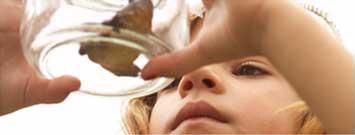
Animals can provide important opportunities for entertainment and learning. However, there is also a risk for getting sick or hurt from contact with animals, including those in school and daycare classrooms.
<SNIP>
What types of diseases can animals spread? Can they cause injuries?
In the United States, the biggest risk of human illnesses from animals, especially to young children, is getting infected with germs like Salmonella, E. coli O157:H7 and others that cause vomiting, diarrhea, fever, and abdominal cramping. Animals can also carry germs that cause other kinds of diseases, such as rabies. Animals may have germs on their bodies and in their droppings, even when they appear clean and healthy. The germs can also get on cages, bedding, and wherever animals roam or walk around, and can contaminate these areas.
Injuries caused by animals in public settings include bites, kicks, scratches, and others. Most injuries from animals can be prevented if schools and daycare classrooms follow proper safety precautions.
How can I reduce the risk of illness from touching or being around animals?
After you touch an animal, or anything in the areas where they live and roam, wash your hands right away to help prevent illness. Read the following tips to learn more about hand washing:
- Always wash hands right after handling animals, their food, and/or their habitats (for example, cages, water bowls, toys). Also, everyone should wash their hands after going to the toilet, before eating and drinking, before preparing food or drinks, and after removing soiled clothes or shoes.
- Adults should always supervise hand washing for young children.
- Running water and soap are best. Use hand sanitizers if running water and soap are not available. Be sure to wash your hands with soap and water as soon as a sink is available.
- Directions for washing hands can be found here.
<SNIP>
Other Animals Not Recommended in School or Child-Care Settings include:
- Inherently dangerous animals (e.g., lions, tigers, cougars, and bears).
- Nonhuman primates (e.g., monkeys and apes).
- Mammals at high risk for transmitting rabies (e.g., bats, raccoons, skunks, foxes, and coyotes).
- Aggressive or unpredictable wild or domestic animals.
- Stray animals with unknown health and vaccination history.
- Venomous or toxin-producing spiders, insects, reptiles, and amphibians.
(Continue . . . )
Read the Compendium of Measures to Prevent Disease Associated with Animals in Public Settings, 2011 [PDF - 1.33MB]
Whether is it raising livestock, encountering animals in the wild, or providing a good home to a beloved pet – our interactions with other species enrich our lives.
But as with everything else in the world, there are some risks involved.
Knowing the dangers, and taking sensible steps to protect yourself from disease or injury, can help make sure these encounters remain positive ones.
