Showing posts with label Shakeout. Show all posts

A West Coast Shake Up Call

image

Los Angeles Seismograph 7:10 AM EST – Credit ABC TV7


# 6780


Residents in Southern California and the Baja Peninsula were on the receiving end of a significant seismic shock overnight, as a 6.3 temblor struck 160 miles off the coast at 2:36 am (local time).


No tsunami was generated, and no warnings went out from the Pacific Tsunami Warning Center. Light to moderate shaking (Max CDI=V) was reported in San Diego and Ensenada according to the USGS.

image


There were originally reports of a second 6.1 shock, but that may have been a false reading as it no longer appears on the USGS earthquake feed.

image

The epicenters of these quakes were well off shore, and not along the famous San Andreas Fault which runs through much of California.


The USGS posted this Tectonic Summary.


The December 14, 2012 M 6.3 earthquake 250 km southwest of Avalon, California occurred as a result of shallow normal faulting within the oceanic lithosphere of the Pacific plate. This event is located some 400-450 km west-southwest of the plate boundary between the Pacific and North America plates – the San Andreas fault system in southern California – and is not associated with that fault system.

Instead, this earthquake represents intraplate faulting along northeast-southwest trending normal faults within the crust of the Pacific plate, just to the west of California’s continental shelf. The causative fault is not known at this time. At the location of this event, the Pacific plate moves to the northwest with respect to the North America plate at a velocity of approximately 54 mm/yr.

While the broad region surrounding the December 14, 2012 event experiences frequent earthquakes along the San Andreas and associated faults in southern California, the area offshore and within 250 km of this earthquake has not hosted any events greater than M 6 over the past 40 years. The largest nearby earthquake was a M 5.1 event 200 km to the northeast in June of 2004, 80 km west of the border between the US and Baja California. A M 3.3 earthquake struck approximately 35 km to the northeast in April 1981, representing the closest event in the USGS earthquake catalog.


While this morning’s wake up calls are unlikely to have caused any significant damage, they are a reminder that much of California (along with much of the world) is seismically active.


In 2010 (see Revised Risk Of `The Big One’ Along San Andreas Fault) scientists using better tools and techniques, determined that big earthquakes occur far more frequently along the San Andreas fault than was previously believed.


Major quakes have occurred – on average – every 88 years along the southern section of this fault line, or three times more frequently than prior estimates.


Which makes southern California long overdue for `the big one’.


Shakeout.org, which promotes yearly earthquake drills and education around the country, has been a leader in earthquake preparedness in California. 

image


And the county of Los Angeles – recognizing the many natural disaster threats that face their residents – has produced an excellent L. A. County Emergency Survival Guide.

image

Well worth downloading, and using, no matter where you live.


To become better prepared as an individual, family, business owner, or community to deal with these types of disasters, I would invite you visit the following preparedness sites.


FEMA http://www.fema.gov/index.shtm

READY.GOV http://www.ready.gov/

AMERICAN RED CROSS http://www.redcross.org/


And finally, some of my own preparedness articles include:


When 72 Hours Isn’t Enough

In An Emergency, Who Has Your Back?

An Appropriate Level Of Preparedness

The Gift of Preparedness 2012

»» Read More

Reminder: ShakeOut Drills On Oct. 18th


# 6632


image


On Wednesday of this week more than a million residents of Georgia, South Carolina, North Carolina, Virginia and the District of Columbia have pledged to take part in the inaugural launch of their The Great Southeast Shakeout.


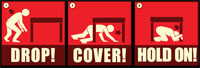
They join a growing list of other states and regions who conduct this yearly earthquake drill, which instructs people how to Drop, Cover, and Hold On during a quake.


A video, demonstrating the technique is available on the California Shakeout Youtube Channel.


This year, there are 14 Shakeouts scheduled across the United States and around the world, with the bulk of them set for  10:18 a.m. on October 18th.


For details on when the Shakeout Drill is being held in your area - and how you or your organization can participate - click the map below:

image

If you live in any of these regions, I would encourage you to participate in, and support, these annual disaster drills.


As the map below indicates, much of United States is seismically active – with Alaska, Hawaii, the west coast, and the Midwest seeing the most – and strongest, quakes.


image

USGS map


Last year, in Estimating The Economic Impact Of A San Andreas Quake, we looked at a report from the U.S. Bureau of Labor Statistics that endeavored to gauge the crippling impact that a highly feasible (and long overdue) 7.8 magnitude Southern California earthquake would have on jobs and local businesses.


image

Download PDF file

A quake of this magnitude, they estimate, could affect  430,000 businesses and 4.5 million workers and deliver a devastating – and prolonged – blow to the local economy.


While huge death tolls are considered unlikely in this scenario, the untimely demise of thousands of unprepared businesses is all but assured.


One of the most vulnerable areas to earthquakes (and tsunamis) in North America is the Pacific Northwest, where just over 311 years ago an earthquake and tsunami – likely on par with this year’s disastrous quake in Japan - struck the coastline.


image


You’ll find a greater description of this event, along with videos and simulations showing what a similar event today would produce, in my essay Just A Matter Of Time.


Since we can’t prevent earthquakes, or predict them, the only recourse is to prepare for them . . .  as individuals, businesses, and communities.

For a comprehensive guide on how you can prepare for `the big one’ (even if you live someplace other than Los Angeles), I would recommend you download, read, and implement the advice provided by the The L. A. County Emergency Survival Guide.

image


Everyone should have a disaster plan.  Everyone should have a good first aid kit, a `bug-out bag’, and sufficient emergency supplies to last a bare minimum of 72 hours.


For more on  disaster preparedness, I would invite you to visit:


When 72 Hours Isn’t Enough

The L. A. County Emergency Survival Guide

An Appropriate Level Of Preparedness

»» Read More

NPM12: A Whole Lotta Shakeouts Going On

Note: This is day 11 of National Preparedness Month.  Follow this year’s campaign on Twitter by searching for the #NPM or #NPM12 hash tag.


This month, as part of NPM12, I’ll be rerunning some updated  preparedness essays (like this one) , along with some new ones.


# 6548


The Great California Shakeout drill, which began in 2008, has now generated 15 spinoffs around the world, and most of those drills are scheduled for the month of October.


 image

(click image to visit Shakeout.org)

Millions of residents, from the United States and Canada, to New Zealand, Italy, and Japan, will take part in this yearly Drop, Cover, & Hold On drill. A video, demonstrating the technique is available on the California Shakeout Youtube Channel.


If you live in any of these regions, I would encourage you to participate in, and support, these annual disaster drills.


As you can see by the map below, much of United States is seismically active – with Alaska, Hawaii, the west coast, and the Midwest seeing the most – and strongest, quakes.

image

USGS map

Last year, in Estimating The Economic Impact Of A San Andreas Quake, we looked at a report from the U.S. Bureau of Labor Statistics that endeavored to gauge the crippling impact that a highly feasible (and long overdue) 7.8 magnitude Southern California earthquake would have on jobs and local businesses.


image

Download PDF file

A quake of this magnitude, they estimate, could affect  430,000 businesses and 4.5 million workers and deliver a devastating – and prolonged – blow to the local economy.


While huge death tolls are considered unlikely in this scenario, the untimely demise of thousands of unprepared businesses is all but assured.


One of the most vulnerable areas to earthquakes (and tsunamis) in North America is the Pacific Northwest, where just over 311 years ago an earthquake and tsunami – likely on par with this year’s disastrous quake in Japan - struck the coastline.

image


You’ll find a greater description of this event, along with videos and simulations showing what a similar event today would produce, in my essay Just A Matter Of Time.


Since we can’t prevent earthquakes, or predict them, the only recourse is to prepare for them . . .  as individuals, businesses, and communities.

For a comprehensive guide on how you can prepare for `the big one’ (even if you live someplace other than Los Angeles), I would recommend you download, read, and implement the advice provided by the The L. A. County Emergency Survival Guide.

image


Everyone should have a disaster plan.  Everyone should have a good first aid kit, a `bug-out bag’, and sufficient emergency supplies to last a bare minimum of 72 hours.


For more on  disaster preparedness, I would invite you to visit:


When 72 Hours Isn’t Enough

The L. A. County Emergency Survival Guide

An Appropriate Level Of Preparedness

»» Read More

The 2012 Great SouthEast ShakeOut


 image


# 6490


While it may come as a bit of a surprise to many southerners, parts of the Southeastern United States have a history of strong and damaging earthquakes.


Just last year, sections of Virginia and Washington, D.C. were rattled by a `surprise’  5.8 earthquake centered in Mineral, Virginia (see USGS Statement On The Virginia Earthquake).


But by far, the most destructive `Dixie quake’ was the (Est. 7.3-7.6 magnitude) earthquake that struck and devastated much of Charleston, South Carolina in 1886. Shaking was felt as far north as Boston, south to Cuba, and west as far as New Orleans.


An earthquake of that size today, in the same area, it is estimated would produce:

  • 45,000 injuries
  •    9,000 hospitalizations
  •      900  fatalities
  • 200,000 displaced or homeless persons
  • 20 billion dollars in Damage


While far less powerful, 26 years later another quake struck the Palmetto state in Union County.

image


And in recent years, geologists in South Caroloina have found evidence of at least 5 large earthquakes over the past 5,000 years (Amick and Gelinas, 1991). Concerns run high enough over seeing a repeat performance that the state has produced their own 5-page Earthquake guide.


image


Below you’ll find an earthquake hazard map from FEMA’s website covering the central and eastern United States. The colors in the map reflect “seismic design categories” (SDCs), which anticipates the likely intensity of seismic shaking in a region.


image

As you can see, the New Madrid region in Missouri, Tennessee, and Arkansas is considered at highest risk, but the coastal region of South Carolina, and areas of North Carolina, Virginia, and Georgia are at seismic risk as well.


Starting in California, in 2008, the Great California Shakeout drill was designed to involve as many citizens as possible in a yearly earthquake drill. 


Over the next few years, Oregon, British Columbia, Nevada, Utah, Guam, and the Central States joined in with their own Shakeout Drills:


The Great Utah ShakeOut
The Great Central U.S. Shakeout:2012
A Whole Lotta Shakeouts Goin' On


This year, there are 14 Shakeouts scheduled across the United States, and around the world.

image


One of the newest is for the Southeastern United States, where residents of Georgia, South Carolina, North Carolina, and Virginia are invited to take part.


Already nearly 200,000 people have signed up.  If you live in any of these Shakeout areas, I would urge you to take part.  


From the Great SouthEast Shakeout Page:


You are invited to join thousands of people who will Drop, Cover, and Hold On on October 18th at 10:18 a.m.* in the 2012 Great SouthEast ShakeOut!

More than 12.5 million people were registered to participate in ShakeOut drills worldwide in 2011. Participating is a great way for your family or organization to become better prepared to survive and recover quickly from big earthquakes.


Start here to be included in the 2012 ShakeOut!


To hear the 60 second drill, which will be simulcast over radio stations, and played in classrooms and offices on October 18th at 10:18am, click this link:

English Narration and Sound Effects (57 seconds, 1.3 MB MP3)


You’ll find a wealth of earthquake preparedness and safety information on the Shakeout.org site. 


For more on earthquake, and `All Threats’ preparedness, I would invite you visit the following preparedness sites.


FEMA http://www.fema.gov/index.shtm

READY.GOV http://www.ready.gov/

AMERICAN RED CROSS http://www.redcross.org/


And for my blog on general earthquake preparedness, see NPM11: Are You Earthquake Prepared?

»» Read More

LA: A Not So Gentle Reminder

image

ABC LA Quake Cam 13:20 EST  8/8/12

# 6480


On the heels of yesterday’s 4.4 magnitude temblor centered in Yorba Linda, California we’ve two more moderately-sized jolts this morning in roughly the same area, coming in first - at 4.5 magnitude – quickly followed by another at 3.4 magnitude.


There no reports as yet of damage or injuries, and at these magnitudes, little is expected.  But these temblors serve as a not-so-gentle reminder that Los Angeles is at risk of much stronger quakes.


image

image


With National Preparedness Month less than 3 weeks away, this seems an opportune time to remind folks that seismic risks extend far beyond California. While large earthquakes in the eastern half of the country are comparatively rare, they do happen.


As you can see by the map below, most of the United States is seismically active – with Alaska, Hawaii, the west coast, and the Midwest seeing the most – and strongest, quakes.

image

USGS map


Last year, in Estimating The Economic Impact Of A San Andreas Quake, we looked at a report from the U.S. Bureau of Labor Statistics that endeavored to gauge the crippling impact that a highly feasible (and long overdue) 7.8 magnitude Southern California earthquake would have on jobs and local businesses.


image

Download PDF file

A quake of this magnitude, they estimate, could affect  430,000 businesses and 4.5 million workers and deliver a devastating – and prolonged – blow to the local economy.


While huge death tolls are considered unlikely in this scenario, the untimely demise of thousands of unprepared businesses is all but assured.


This latest seismic activity makes this a pretty good time to remind my readers about the study from 2010 (see Revised Risk Of `The Big One’ Along San Andreas Fault) that suggests that Southern California may be more overdue for another major quake than previously thought.


Since we can’t prevent earthquakes, or predict them, the only recourse is to prepare for them . . .  as individuals, businesses, and communities.


For a comprehensive guide on how you can prepare for `the big one’ (even if you live someplace other than Los Angeles), I would recommend you download, read, and implement the advice provided by the The L. A. County Emergency Survival Guide.

image


The Great California Shakeout website invites you to participate once again in this year’s state-wide earthquake drill on October 18th at 10:18 a.m. For regions outside of California, you can check here for Shakeout Drills in your area.

image


And lastly, to become better prepared as an individual, family, business owner, or community to deal with these types of disasters: I would invite you visit the following preparedness sites.


FEMA http://www.fema.gov/index.shtm

READY.GOV http://www.ready.gov/

AMERICAN RED CROSS http://www.redcross.org/

»» Read More

The Great Utah ShakeOut

image


# 6287


Later today (April 17th), Utah will stage their very first ever Great Utah Shakeout drill, where nearly 1 million Utahns will practice the `Drop, Cover and Hold On’ technique across the state.


This drill is based on the very successful Great California ShakeOut, which has spawned other drills in the Pacific Northwest and Midwest (see A Whole Lotta Shakeouts Goin' On).


The USGS map below shows that most of the United State’s population lives in a seismically active region.

image

While California has the biggest reputation for earthquakes, the Pacific Northwest, Midwest, Eastern Seaboard, and a number of western states (including Utah) are not immune.


BeReadyUtah.gov has produced a 5 minute video showing what the aftermath of a strong quake in Utah would be like.

image 

If you are living in Utah, plan to take part in today’s drill.  Knowing what to do during an earthquake can literally save your life.


Earthquakes, like Hurricanes, Tornados, Floods, and yes . . . even pandemics . . .  are hazards everyone should be aware of, and prepared to deal with.


Everyone needs an appropriate disaster plan, just as everyone should have a good first aid kit, a `bug-out bag’, and sufficient emergency supplies to last a bare minimum of 72 hours.


For more on  disaster preparedness, I would invite you to visit Ready.gov or revisit these blogs:


When 72 Hours Isn’t Enough

The L. A. County Emergency Survival Guide

An Appropriate Level Of Preparedness

»» Read More

The Great Central U.S. Shakeout: Feb 7th, 2012


# 6119


We are now only 3 days away from  The Great Central U.S. Shakeout, scheduled for 10:15am on February 7th, 2012. Last year, in the first central states shakeout drill, more than three million people registered to participate.


This year they hope to improve those numbers. 


image


This exercise will be conducted in the style of The Great California Shakeout which has been been running successfully for a number of years (see Reminder: Great Shakeout On Thursday).


To date, more than 2.2 million individuals, businesses, organizations, and entities have registered to participate in this year’s Shakeout.


To learn how to join in, click on the image below:

image


And to learn what do during an earthquake,  Shakeout.org has a number of short videos at this link.


You don’t have to live near the New Madrid fault, or in California, the Pacific Northwest, or Alaska to be impacted by an earthquake.


While large earthquakes in the eastern half of the country are relatively uncommon, they do happen. Charleston, S.C. was devastated by a 7.3 magnitude quake in 1886.


image

USGS map

As you can see by the map above, much of the United States is seismically active – with Alaska, Hawaii, the west coast, and the mid-west seeing the most – and strongest, quakes.


Few places, however, can claim to be completely immune to quakes.


Several months ago, during the 2011 National Preparedness Month campaign, I wrote at length about earthquake preparedness (see NPM11: Are You Earthquake Prepared?).


There you’ll find many resources, including the The L. A. County Emergency Survival Guide.

image


To  become better prepared as an individual, family, business owner, or community to deal with all types of disasters, I would invite you to visit the following preparedness sites.


FEMA http://www.fema.gov/index.shtm

READY.GOV http://www.ready.gov/

AMERICAN RED CROSS http://www.redcross.org/


A few of my preparedness blogs you might wish to revisit include:


When 72 Hours Isn’t Enough

In An Emergency, Who Has Your Back?

An Appropriate Level Of Preparedness

The Gift Of Preparedness 2011


Because no matter where you live, its just a matter of time before the next disaster strikes.

»» Read More

The Great Central U.S. Shakeout:2012


# 6057


We are now less than a month away from  The Great Central U.S. Shakeout, scheduled for 10:15am on February 7th, 2012.  You can view a brief (30 sec.) PSA on this event below.


Last year, in the first central states shakeout drill, more than three million people registered to participate. This year they hope to improve those numbers. 


image


This exercise will be conducted in the style of The Great California Shakeout which has been been running successfully for a number of years (see Reminder: Great Shakeout On Thursday)


So far more than 1 million individuals, businesses, organizations, and entities have registered to participate in this year’s Shakeout. 


To learn how to join in, click on the image below:


image


And to learn what to do during an earthquake,  Shakeout.org has a number of short videos at this link. 


This year is the bicentennial of the great New Madrid quake of 1811-12, a series of 4 massive shocks (7.2-8.0 mag.) over a two month period which fortunately occurred at time when that part of the country was sparsely populated.


While large earthquakes are rare in this part of the country, they do happen. 


And today millions of Americans live in this seismic zone.   A quake approaching anywhere close to those magnitudes today would be catastrophic.


The map below comes from the USGS document Earthquake Hazard in the New Madrid Seismic Zone Remains a Concern.


image

image


There are historical accounts of major earthquakes
in the New Madrid region during 1811–12. The geologic record of pre-1811 earthquakes also reveals that the New Madrid seismic zone has repeatedly produced sequences of major earthquakes, including several of magnitude 7 to 8, over the past 4,500 years. These prehistoric earthquakes caused severe and widespread ground failures in the New Madrid region, much like those caused by the 1811–12 earthquake sequence. – USGS.


Given the risks, last year the United States government conducted a National Level Exercise (NLE 2011) designed  simulate a catastrophic earthquake in the New Madrid Seismic Zone (NMSZ).


We live on a violent planet.


One wracked by storms, fires, floods, drought, volcanoes, earthquakes and myriad other natural disasters.  


One need only look at the super-outbreak of tornadoes last spring that damaged or destroyed thousands of structures, injured thousands of people, and claimed the lives of hundreds  as they swept across the Mid-west and into the Carolinas to realize just how violent.


Emergencies happen every day.  Disasters, admittedly, less often. 


But in either event, preparedness is key.


At a bare minimum, every household should have a disaster plan, a good first aid kit (and the knowledge to use it), and emergency supplies to last a minimum of 72 hours during a disaster.


To become better prepared as an individual, family, business owner, or community to deal with these types of disasters: visit the following preparedness sites.


FEMA http://www.fema.gov/index.shtm

READY.GOV http://www.ready.gov/

AMERICAN RED CROSS http://www.redcross.org/

»» Read More

Reminder: Great Shakeout On Thursday


# 5910


Tomorrow (October 20th)  California, Nevada, Guam, and British Columbia will hold their yearly earthquake preparedness drill promoted by the USGS and Shakeout.org.


The Great British Columbia ShakeOut, October 20, 2011 
The Great California ShakeOut, October 20, 2011
The Great Nevada ShakeOut, October 20, 2011
The Great Guam ShakeOut, October 20, 2011


Many radio & TV stations across these states will play audio and/or video earthquake simulations at precisely 10:20 am to add authenticity to the drill.


The Shakeout websites ask residents to register, and to take part in this annual earthquake exercise.  You’ll find plenty of suggestions on how to participate – at home, at work, or at school.


The Great California Shakeout is the oldest, and largest of these drills, and this year more than 8.4 million Californians have registered as participants.

image


As far as what to do  DURING an earthquake, I’ll let the folks at ShakeOut.org explain (and no, it isn’t stand under a doorway):


Drop, Cover, and Hold On!

Federal, state, and local emergency management experts and other official preparedness organizations all agree that "Drop, Cover, and Hold On" is the appropriate action to reduce injury and death during earthquakes. The ShakeOut is our opportunity to practice how to protect ourselves during earthquakes. This page explains what to do-- and what not to do.

(Continue . . . )


The USGS map below shows that most of the United State’s population lives in a seismically active region. While California has the reputation for being earthquake prone, the Midwest and the Eastern Seaboard are not immune.

image


Earthquakes, like Hurricanes, Tornados, Floods, pandemics, and yes . . . even earthquakes . . .  are hazards everyone should be aware of, and prepared to deal with.


Everyone needs an appropriate disaster plan, just as everyone should have a good first aid kit, a `bug-out bag’, and sufficient emergency supplies to last a bare minimum of 72 hours.


For more on  disaster preparedness, I would invite you to visit Ready.gov or revisit these blogs:


When 72 Hours Isn’t Enough

The L. A. County Emergency Survival Guide

An Appropriate Level Of Preparedness

And  reminder that early next year, two other regions will be holding shakeout exercises as well.


The Great Central U.S. Shakeout On February 7, 2012
The Great Utah ShakeOut, April 17, 2012

If you live in any of these regions, I would encourage you to participate in, and support, these annual disaster drills.

»» Read More

A Whole Lotta Shakeouts Goin' On


# 5887


Eleven days from now (on October 20th) California, Nevada, Guam, and British Columbia will hold annual earthquake preparedness drills which are promoted by the USGS and Shakeout.org.


The Great British Columbia ShakeOut, October 20, 2011 
The Great California ShakeOut, October 20, 2011
The Great Nevada ShakeOut, October 20, 2011
The Great Guam ShakeOut, October 20, 2011


These websites ask residents to register, and to take part in this annual earthquake exercise.  There you’ll find plenty of suggestions on how to participate – at home, at work, or at school.


A number of radio & TV stations across the state will play audio and/or video earthquake simulations at precisely 10:20 am to add authenticity to the drill.


The Great California Shakeout is the oldest, and largest of these drills, and this year more than 8 million Californians have registered as participants.

image


As far as what to do  DURING an earthquake, I’ll let the folks at ShakeOut.org explain (and no, it isn’t stand under a doorway):


Drop, Cover, and Hold On!

Federal, state, and local emergency management experts and other official preparedness organizations all agree that "Drop, Cover, and Hold On" is the appropriate action to reduce injury and death during earthquakes. The ShakeOut is our opportunity to practice how to protect ourselves during earthquakes. This page explains what to do-- and what not to do.

(Continue . . . )


The USGS map below shows that most of the United State’s population lives in a seismically active region. While California has the reputation for being earthquake prone, the Midwest and the Eastern Seaboard are not immune.

image


One of the most vulnerable areas to earthquakes (and tsunamis) in North America is the Pacific Northwest, where just over 311 years ago an earthquake and tsunami – likely on par with this year’s disastrous quake in Japan - struck the coastline.

image


You’ll find a greater description of this event, along with videos and simulations showing what a similar event today would produce, in my essay Just A Matter Of Time.


Earthquakes, like Hurricanes, Tornados, Floods, and yes . . . even pandemics . . .  are hazards everyone should be aware of, and prepared to deal with.


Everyone should have a disaster plan.  Everyone should have a good first aid kit, a `bug-out bag’, and sufficient emergency supplies to last a bare minimum of 72 hours.


For more on  disaster preparedness, I would invite you to visit:


When 72 Hours Isn’t Enough

The L. A. County Emergency Survival Guide

An Appropriate Level Of Preparedness


And  reminder that after the first of the year, two other regions will be holding shakeout exercises as well.


The Great Central U.S. Shakeout On February 7, 2012
The Great Utah ShakeOut, April 17, 2012
 

If you live in any of these regions, I would encourage you to participate in, and support, these annual disaster drills.


Note: I’ll be on the road again today, but plan to be back at my desk, and on my regular blogging schedule, tomorrow.

»» Read More

6.7 Magnitude Quake Off Vancouver Island


# 5829


In the past hour a fairly shallow (26km) 6.7 Magnitude quake struck off the northern coast of Vancouver Island. So far, there are no reports of damage and no destructive tsunami is expected to have been generated.


image


 image


It is worth noting that British Colombia will hold their yearly earthquake drill, The Great British Columbia ShakeOut, on October 20, 2011.

image


The Pacific Northwest is considered at greater risk of seeing a devastating 8.0+ earthquake than is southern California.  Last July I wrote a blog about the potential of this region seeing such a disaster, which included several videos simulating the damage that might result.


Those interested may wish to revisit:


Just A Matter Of Time
»» Read More