Showing posts with label Declan Butler. Show all posts

Declan Butler On the CFR Of H5N1


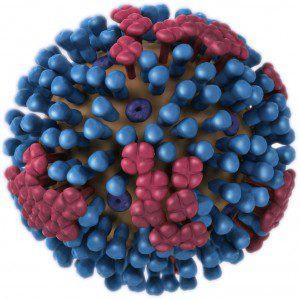
influenza virus


# 6141


Declan Butler, who is a senior reporter Nature.com, was one of the first journalists to call attention to the H5N1 virus.  He holds a degree in biology from Queen's University, Belfast, has a PhD from the University of Leeds, and writes on a variety of scientific topics.


The CFR (Case Fatality Ratio) of the H5N1 virus – which hovers around 60% of known cases - has been the subject of considerable discussion over the years, and is currently front and center in the recent debate over H5N1 research in ferrets.


Some scientists maintain that a great many `mild’ cases go undetected, and that the true CFR is far lower (perhaps `orders of magnitude lower’) than the official numbers would indicate (see Vincent Racaniello’s argument Should we fear avian H5N1 influenza?). 


As we saw in a CIDRAP article last week by Robert Roos (Undetected H5N1 cases seem few, but questions persist), not everyone buys into that theory.


Today Declan Butler talks to a number of experts (including Malik Peiris and Jeremy Farrar), who say they’ve not found much evidence to support a claim that we are missing a lot of `mild’ cases.


While the true CFR may be far lower than 59%, many experts believe this virus is fully capable of producing a pandemic that could far exceed what we saw with the 1918 Spanish Flu.


Very much worth reading, so follow the link to:


 Nature | News

Death-rate row blurs mutant flu debate

Even if a 59% mortality rate for H5N1 is too high, the virus could still cause a flu pandemic more serious than that of 1918.

Declan Butler

13 February 2012

(Continue . . . )

»» Read More

Declan Butler: Lab flu may not aid vaccines


image

Photo Credit – CDC PHIL


# 6129


One of the counter arguments offered by researchers when biosecurity experts have warned on the dangers of `dual use’ H5N1 research, is that these experiments put us in a position to create a vaccine faster, should these genetic changes occur in nature.


Today Declan Butler, writing for Nature, explores that argument and finds that while the logic behind it is appealing, the reality may fall a bit short. 


Lab flu may not aid vaccines

Game-changing vaccine technologies are needed to strengthen global pandemic defences.

08 February 2012

»» Read More

Declan Butler On Growing Mosquito Insecticide Resistance


# 5674


The old adage is true.


If you build a better mousetrap, sooner or later nature will come up with a better mouse.


Bacteria learn to resist antibiotics, viruses learn to ignore antivirals and drift antigenically to evade vaccines, and eventually your neighbor’s dog learns how to burrow under your fence to get at your prized petunias.


Hence the old saying that Nature always bats last.


Adaptation is the lynchpin of evolutionary survival, often making victories against bacteria, viruses, and other pests fleeting at best.


Today Declan Butler writing for Nature News, brings us details of another battlefront where the pests are making gains against our modern technology; growing insecticide resistance among malarial mosquitoes in Africa.


It’s a good article, so I won’t bother excerpting it.  Follow the link to read it in its entirety.


Mosquitoes score in chemical war

Growing resistance is threatening global malaria-control efforts.

(Continue . . . )


For more background on this growing problem, the World Health Organization has produced a 46 page report called The Technical Basis for Coordinated Action Against Insecticide Resistance.


image

»» Read More

Declan Butler On Haiti’s Cholera Epidemic


# 5083


A lot of my readers are no doubt familiar with Nature News senior reporter Declan Butler for, among many accomplishments, his early work in bringing the avian flu story to the public.


But Butler is hardly a Johnny one-note. He holds a PhD in marine biology from the University of Leeds, and writes on a variety of scientific issues.


Today he brings us background and sobering analysis of the potential impact of the cholera epidemic on Haiti’s population over the next year or so.


A hat tip to David Dobbs for retweeting this link.


I’ve just posted his lede.


Follow the link to read it in its entirety.  As with practically anything Butler writes, this is highly recommended.


Cholera tightens grip on Haiti

Those tackling the epidemic are struggling to keep pace with an escalating crisis.

Declan Butler

As cholera rampages through Haiti, some epidemiologists are warning that the country could face more than half a million cases over the coming year. Yet tracking and treating the disease is proving increasingly difficult as civil unrest grips the county.

(Continue. . . )

»» Read More

Experts Weigh In On Allegations Against The WHO


# 4633


A hat tip to Crof over at Crofsblog for picking up this story while I was away from my computer, penned by Declan Butler of Nature News.


Included are responses from such heavy hitters as Michael Osterholm of CIDRAP, Virologist Albert Osterhaus of at Erasmus Medical Centre in Rotterdam, Epidemiologist David Ozonoff of the Boston University School of Public Health, and Marc Lipsitch, an epidemiologist at Harvard School of Public Health.


Frankly, there’s so much quotable material in this article, rather than excerpt any of it, I will just direct you to the link so you can read it for yourself.


Published online 8 June 2010 | Nature | doi:10.1038/465672a

News

Flu experts rebut conflict claims

Reports throw unsubstantiated suspicion on scientific advice given to the World Health Organization.

»» Read More

Declan Butler: Portrait Of A Year Old Pandemic


# 4515


Declan Butler, senior reporter for Nature and a blogger in his own right,  was one of the first journalists to begin covering the avian flu threat back in 2004, and it was his work that helped inspire me to begin this blog.  


But hey, you really shouldn’t blame him . . .


But I digress.  Today Butler brings us a portrait of the H1N1 pandemic on its first birthday.  


I’ll do the wise thing here, and simply give you the link and step out of the way.


Portrait of a year-old pandemic

'Swine flu' isn't over yet, but it already holds lessons for the future.

Declan Butler


One year ago this month, the world watched with trepidation as a novel influenza A virus, to which the global population had little or no immunity, emerged in Mexico and the United States. In the weeks that followed, the H1N1 'swine flu' virus spread rapidly to countries worldwide, leading the World Health Organization (WHO) on 11 June 2009 to officially declare the first flu pandemic in more than 40 years. Nature looks at the lessons learnt from H1N1, and how they will help scientists and health authorities to handle the next flu pandemic.


(Continue . . .)

»» Read More